

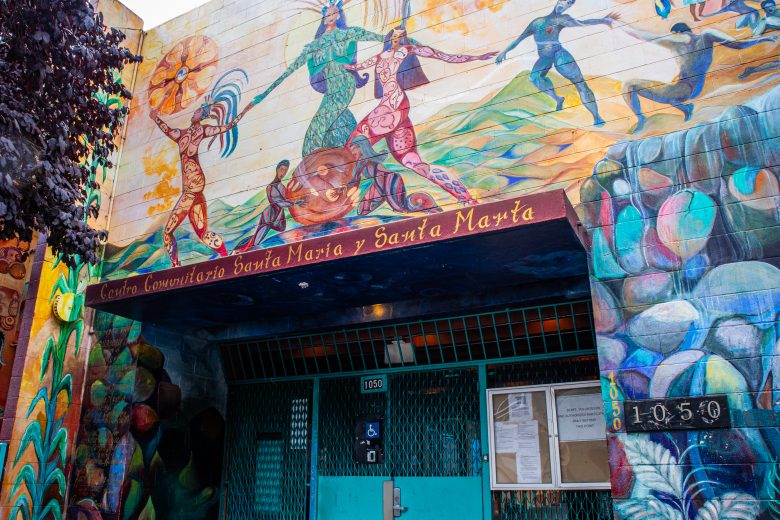

After 10 years, the first queer-only adult homeless shelter in the United States (and the only LGBTQ-only shelter in San Francisco) is expanding to take over most of the second floor of its building at 1050 South Van Ness Ave.
Jazzie’s Place, which opened in 2015 at the Mission District site with 28 beds, is believed to have become the first shelter exclusively for LGBTQ+ adults in the country, according to its founders.
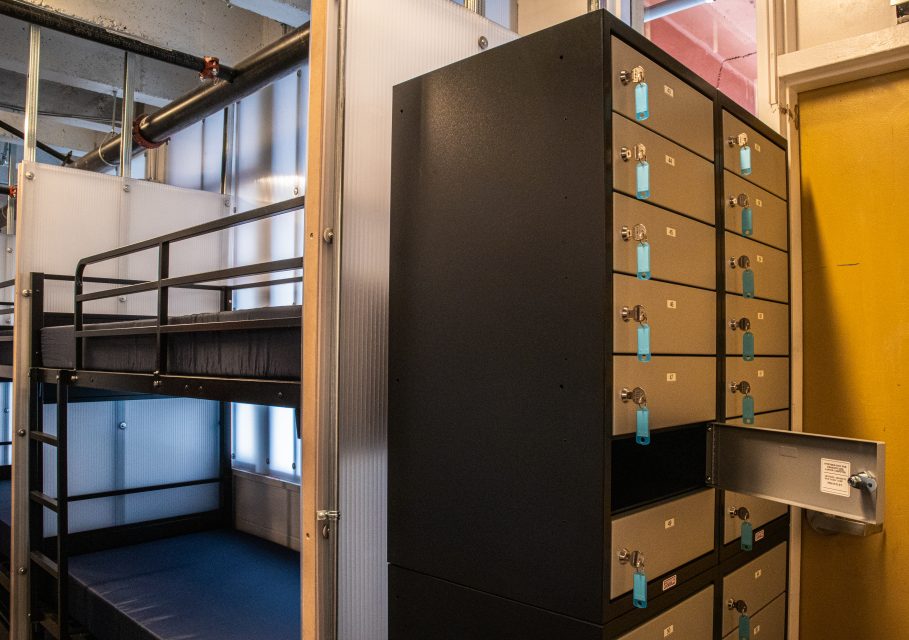
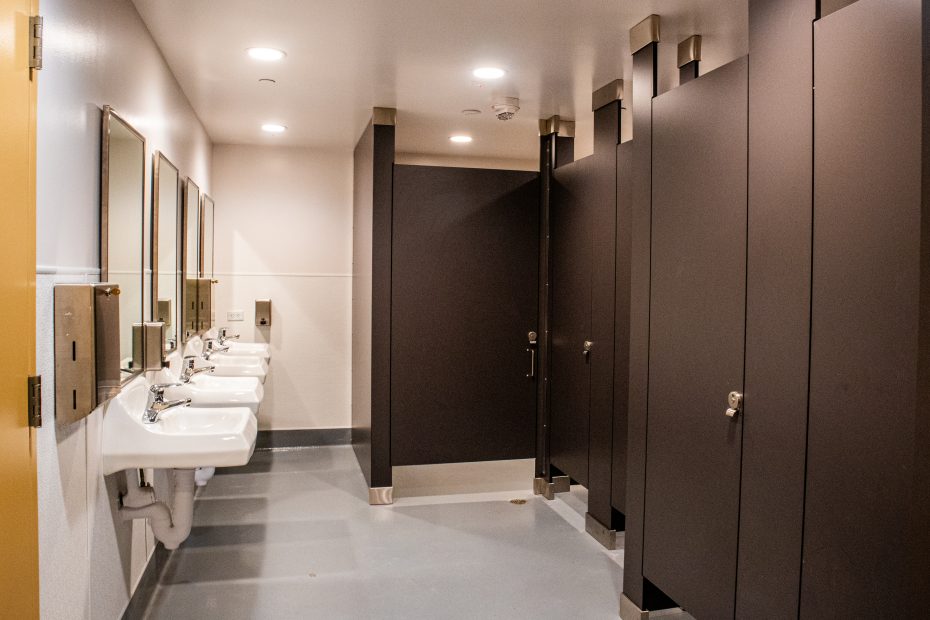
The expansion, which concluded on Aug. 27, includes a dorm with 44 beds, three bathrooms and changing rooms, charging stations and lock boxes.
Work on the building began in February of this year, and Mission Local took a first look at the new dorms and amenities a day after the finishing touches were put in place.
The inner courtyard of Jazzie’s Place is peaceful and warm. Trees shade tables and chairs, and brightly tiled murals decorate the walls. For its first decade, the shelter has provided its guests a safe place to sleep and a space where they feel safe identifying as queer.
Preston, a 26-year-old staying at Jazzie’s Place and a Midwest native (he preferred not to specify where), said the shelter was the only one to take him in.
“I’ve been to other shelters, and they denied me. They took one look at me and turned me away. But this,” he said, waving at the front gate of Jazzie’s Place, “is a sanctuary. A real sanctuary.”
The premise of Jazzie’s Place is simple: It’s a homeless shelter specifically for the LGBTQ+ community. Twenty-eight percent of the city’s unhoused population identify as queer.
They experience a disproportionate amount of abuse by guests and staff at other city shelters, according to the Department of Homelessness and Supportive Housing, so much so that many feel safer sleeping on the street.
But at the same time, San Francisco is sweeping more encampments: Former Mayor London Breed instituted “very aggressive” anti-encampment policies last year, policies that Mayor Daniel Lurie has kept in place.
Budget cuts have also meant that the money allocated to the Department of Homelessness and Supportive Housing decreased by roughly $170 million, a monetary crunch felt by almost every city department.
The city is still funding homeless nonprofits like Mission Action, which oversees the operation of Jazzie’s Place and recently received a grant of $18.5 million to expand the space and its services.
Preston, the 26-year-old guest, said the treatment he received as an unhoused LGBTQ+ man in other states and shelters was disrespectful — and, at times, physically violent. He’s still recovering from a burst tear duct after being punched in the eye at a prior shelter, he said.
San Francisco was not that different, he said: People were often disrespectful, threatening, and “just bad.”
But at Jazzie’s Place, he said, employees have been trained to work specifically with members of the queer community who have experienced violence. That includes giving them privacy, and a sense of independence.
“People need a refuge after the hellish landscape they come from, they need a haven,” said Preston.
Tommi Avicolli Mecca, a long-time queer rights activist and member of the San Francisco Housing Rights Committee, remembers the day in 2009 that sparked the effort to establish a queer-specific shelter.
He was sitting in his office at the Housing Rights Committee’s main building on Grove Street when a young man knocked on his door.
“He was probably in his early 20s … He had some bruises on the side of his face. I asked him what was going on and he said he was gay … He was in a shelter, and the night before, some guys had beat him up, calling him ‘f***ot,’” Avicolli Mecca said.
”When he left, I was just like, ‘Wow, there is no place to send queer folks, and this is unacceptable; we’re San Francisco!’”
That incident prompted Avicolli Mecca to reach out to other activists, one of whom was Jazzie Collins, a beloved and well-known Black trans activist who advocated for trans, homeless and housing rights.
Avicolli Mecca also spoke to members of the city government, including former District 9 Supervisor David Campos, who became one of the effort’s foremost champions.
After years of work by this group and Campos’ staff, which included his successor, Hillary Ronen — who Avicolli Mecca called a “superstar” responsible for patiently navigating them through five years’ worth of city bureaucracy — Jazzie’s Place opened on June 17, 2015.
The founders named the shelter after Collins, who died in 2013.
“We felt it was really important to honor her, for her work with the trans community,” said Avicolli Mecca. Collins helped organize the first trans right march in San Francisco, and was one of the staunchest advocates for the shelter.
“She had this history in the community around trans issues, workers issues, homeless issues, and it seemed the right thing to do.”
Campos, currently the vice president of the California Democratic Party, called the opening of Jazzie’s Place “one of my proudest moments as a supervisor.”
It was, Campos said, symbolic of San Francisco officially recognizing the LGBTQ+ community’s “dignity” and “humanity.”
The “grand opening” of the new dorm will be celebrated on Oct. 1, 2025, at Jazzie’s Place.
I was saddened when Jazzie Collins passed away– as also for many others, now largely forgotten, who brightened our lives just by being themselves. She certainly contributed to helping make San Francisco the special place it is.
I think in life though she was treated pretty shabbily. She was not only trans, she was poor.
By naming a homeless shelter after her was the very least that the city could do.
Was it right?
I dream of a day when we will no longer have to “officially” recognize the dignity and humanity of anyone because we will take it for granted that all people are human and deserving of dignity.
San Francisco has really changed since Jazzie left us. In spite of symbolic efforts– all the lighting of candles rather than cursing the darkness– it is getting darker and more cruel. Especially to those who have always lived on the margins.