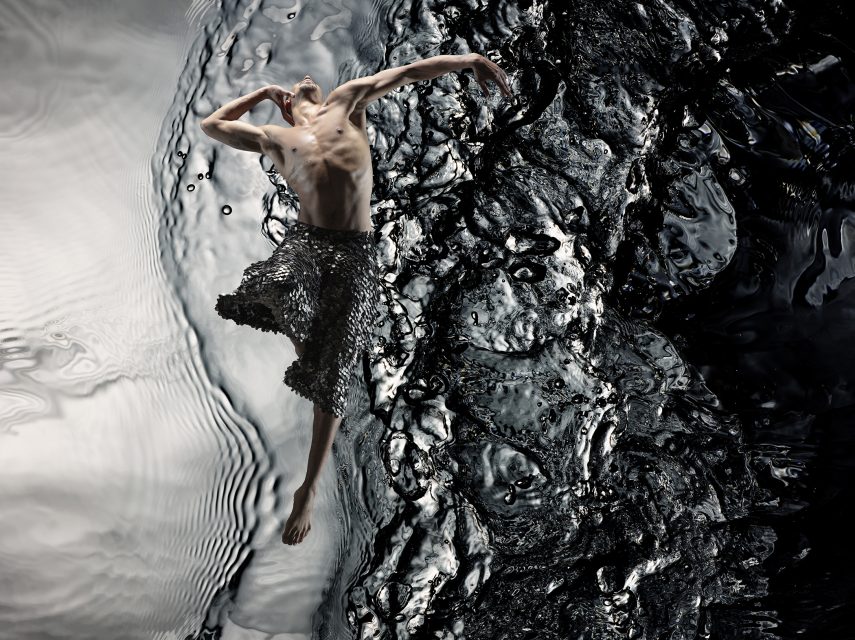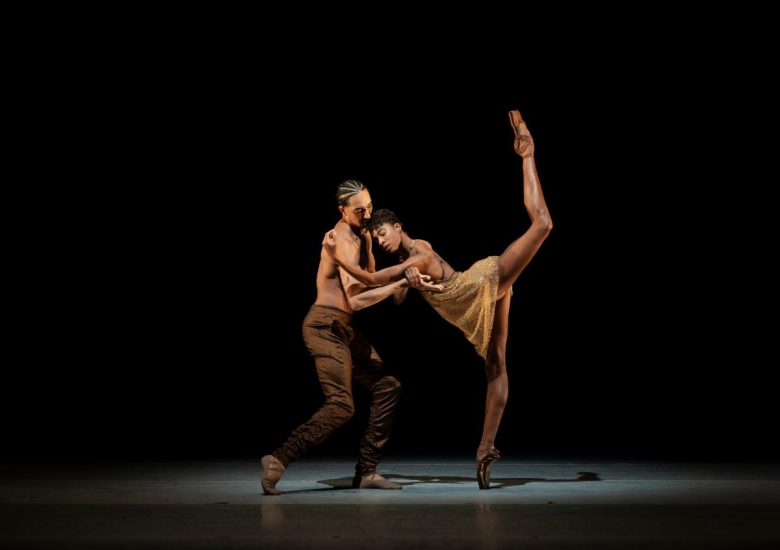

Every new work by Alonzo King is an invitation to an adventure. Over the decades, the choreographer has created an expansive universe of dance with his LINES Ballet, specializing in collaborations with musical artists similarly inclined to search for the sublime.
The company’s 2025 fall season revisits one of King’s recent forays with “Deep River,” a spiritually-infused encounter set to a recorded score by Grammy Award–winning vocalist Lisa Fischer and pianist Jason Moran, a MacArthur Fellow who recently stepped down from his position as the Kennedy Center’s artistic director for jazz.
LINES presents the evening-length work at Yerba Buena Center for the Arts’ Blue Shield Theater Sept. 18-21, while SFMOMA offers two Wattis Theater screenings of the companion documentary “Origins” by director Drea Cooper.
It was a project born out of pandemic necessity, “when there were no more live performances and the company was asking big questions,” Cooper said.
Rather than answers, the company ventured into Kingian territory as Cooper follows the dancers into the Arizona desert and the SFMOMA galleries.
At a time when performers couldn’t inhabit the same space as audiences, he captured the dancers in sumptuously cinematic settings interlaced with interviews offering insights into their inner lives.
“I told Alonzo, ‘I don’t want to document the choreographic process,’” Cooper recalled. “We want the film itself to be the dance. That was the premise, creatively. You’re taken on this cinematic dance odyssey into the heart, mind and soul of Alonzo King.”
Which is to say, into the movement world of his dancers. For Munich-born dancer Adji Cissoko, one of LINES’ most striking members, the film provides an all-too-rare window into a singular interregnum that has rapidly receded from memory.
“Whenever I think about ‘Deep River,’ it was at such a specific time,” she said. “When we all came back together in the studio, there was a new sense of going back to what it’s all about, the origins. How can we go deep? There are so many small moments of sensitivity where we tune into each other. The group sections are just as important as a solo or pas de deux.”
While the documentary stands entirely on its own as a work of art, its relationship to “Deep River” gives it a fascinating spot in the world of dance filmmaking. In many ways, it’s unfortunate that the screenings follow, rather than precede, the YBCA engagement, as “Origins” captures protean forces at work.
“Part of the allure was bringing our human forms to the natural forms of rock, sand, and mountain, and watching the way that Alonzo approaches his work, trying to get at the essence of things,” Cooper said.
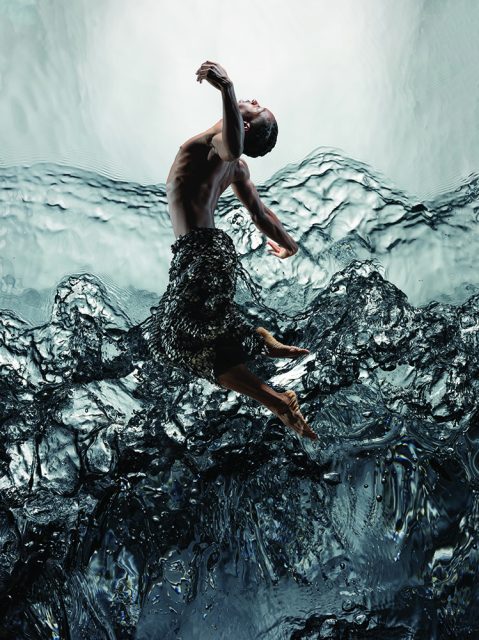
“There’s a mirroring that happens outside. The bodies try to take on the form of what they see. In many ways, his work is a record of the essential connection we have to the landscape and the natural world. These are not entities that we sit above. We are part of it,” she said.
For Cissoko, who’s featured prominently in “Deep River,” the dance-making experience was exactly what drew her to LINES.
Born to a German mother and Senegalese father, she trained at the Ballet Academy Munich and first gained international attention after joining the National Ballet of Canada in 2010.
She had taken a LINES class as a teenager while on full scholarship at American Ballet Theatre’s Jacqueline Kennedy Onassis School, “but back then, I was not ready for them at all,” she said. “I was focused more on classical movement.”
But a mentor at the National Ballet of Canada suggested she look into LINES, and during an engagement in France she met with the company for a rehearsal in Lyon.
At the end of the day, King recruited for LINES and she moved to San Francisco at the end of 2014. Karen Kain, the former principal dancer turned artistic director of the National Ballet, assured her it was an excellent fit, “but the funny thing is, I didn’t know what that meant,” Cissoko said.
“I thought maybe it was someone making me move bigger. It’s been a revelation, in that now I’m participating so much in the work that we set. What are feelings, sensations, ideas and creative energy you’re bringing to the work? Alonzo had to pull that out of me, in the sense of asking questions I’d never been asked before.”
“Origins” offers a glimpse into the communion King fosters within LINES. It’s a realm in which dancers can find themselves amid sandstone buttes, dunes and vernal pools. It’s a deep river into which they’re invited to plunge, surfacing with new ways of moving in the world.
“Most of my career, I was told exactly what to do, hold your head like his, angle your neck here, hold your fingers this way,” Cissoko said.
“Suddenly, you could play with this movement, change the timing, hold your head a different way. I was overwhelmed in the beginning. I had to make new choices every day and to make choices you have to listen to where your body’s taking you. I can’t imagine dancing any other way now.”