

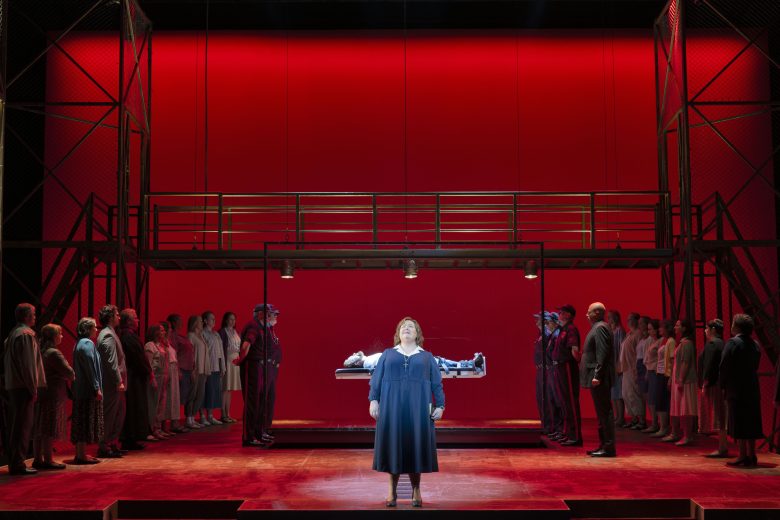

Nearly three decades ago, a nun wrote a bestseller about counseling a man who’d been sentenced to death for killing two teenagers.
In 1995, Sister Helen Prejean’s “Dead Man Walking” inspired a film starring Susan Sarandon and Sean Penn. In 2000, composer Jake Heggie and playwright Terrence McNally premiered their opera adaptation in San Francisco. Twenty-five years later, that opera has returned and will be performed through Sept. 28.
As operagoers remarked during intermission on opening night, the subject matter is “intense.” There is a minute and a half of silence at the end of the show when Joseph De Rocher, the convicted murderer, dies after a lethal injection. A grey-haired man in a suit was so emotional he had to leave the mezzanine.
Equally memorable were the moments that made the audience laugh — unexpected at an opera about the death penalty.
“You saw the king? I can’t believe it!” De Rocher exclaims when Prejean’s character tells him about seeing Elvis Presley as a kid. De Rocher didn’t just like Elvis, he says. He wanted to be him. If he were Elvis he wouldn’t be “talking to no rock ‘n’ roll nun.” He and Prejean sing the words “Jailhouse Rock.”
His death is still five hours away.
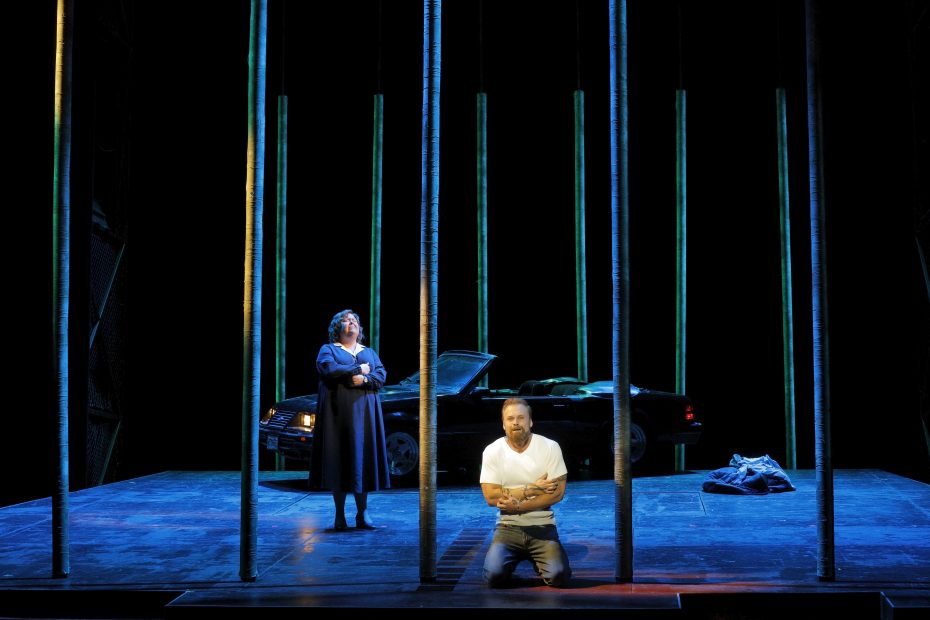
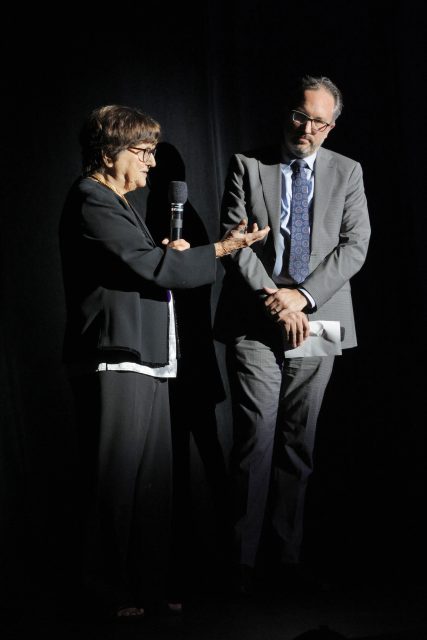
Earlier that week, Prejean — the real nun, now 86 years old and speaking in her snug hotel room near the opera house — described her final conversation with Elmo Patrick Sonnier, who inspired DeRocher’s character.
In 1977, Sonnier was convicted of raping an 18-year-old girl before shooting her and her fiance in the back of the head, a scene rennacted at the beginning of the opera with naked actors.
The night before his death, he and Prejean talked about “his mama’s cooked venison” and “biological facts about animals” he found interesting.
“He’s not dying,” Prejean said of his state of mind at the time. “He’s fully alive. So you talk about life things.”
Prejean is comfortable with conversation. She greeted me with a hug, offered tea and curled up on her hotel room couch. On the day we spoke, an advance copy of the graphic novel edition of “Dead Man Walking,” out Oct. 28, sat on her ottoman.
The death penalty activist grew up in Jim Crow Louisiana around backyard crawfish boils. Used to “three hours of drinking beer and eating crawfish and telling stories,” she initially saw a book as a passive thing. “It’s quiet,” she said. “It sits on a shelf.”
“Dead Man Walking,” she said, showed her how writing forces people to care about issues that would otherwise be invisible. It also made her reflect on what she called her own “terrible mistake.”
Prejean, scared of what the victims’ parents would think of her offering spiritual counsel to the man convicted of murdering their children, did not reach out to them directly. Instead, they ran into each other outside a pardon board meeting.
Prejean’s editor, Jason Epstein, had encouraged her to admit her “cowardice” in the book.
“How come you never sought to comfort us?” The victims’ parents sing in the opera. “I’m sorry,” Prejean’s character, De Rocher, and De Rocher’s mother chorus.
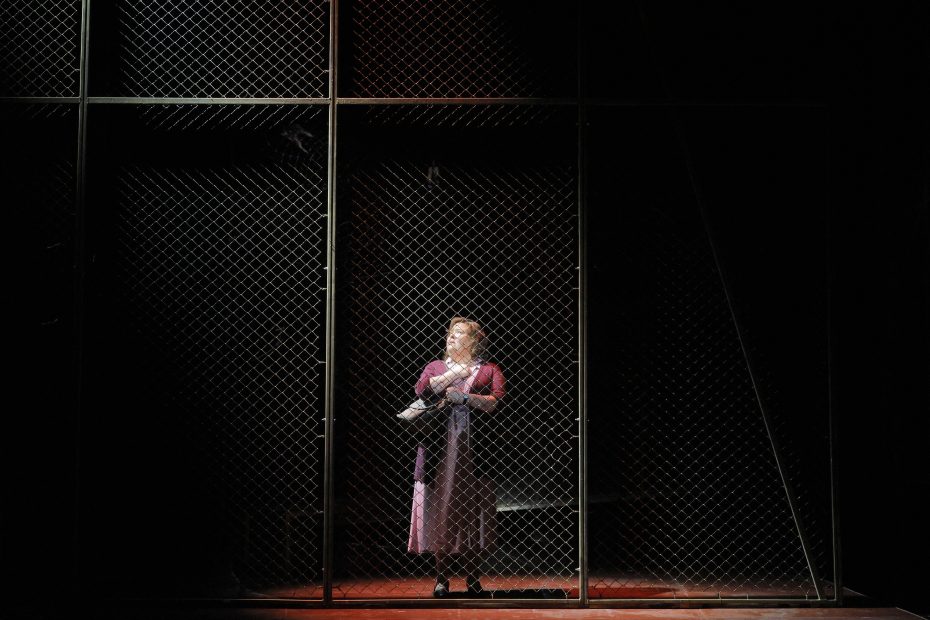
The whole thing was “riddled with so many mistakes, just human mistakes,” Prejean said, fiddling with the thick cross around her neck.
The necklace was a gift from Sonnier’s brother, Eddie, who was also convicted for his role in the teenagers’ deaths and given a life sentence. He sold his plasma for $7.50 to pay a fellow inmate in the prison’s welding shop to make it.
The day before she spoke to Mission Local, Prejean addressed a group of attorneys at the San Francisco Public Defender’s Office. She reminded them that their dedication can save lives and said she believes that Eddie Sonnier avoided a death sentence because he had better lawyers than his brother, who did not meet his own attorney until the day before his trial.
While she’s in California, Prejean has been lobbying Gov. Gavin Newsom to commute all death sentences. Newsom placed a moratorium on executions in 2019, but 581 people are still on death row.
Prejean suggested Newsom is restrained by his desire to look “tough on crime” to win votes.
Prejean still counsels people on death row. She calls them “buddy,” reminds them she loves them, and shares mundane details of her life. Incarcerated people want to hear about life that goes on outside prison, she said.
At the same time, she wants people on the outside to hear about life that goes on in prison — both the “secret rituals” of punishment and the enduring humanity of inmates who have made grave mistakes.
Art, Prejean said, has the power to wake people up: “What the eye doesn’t see, the heart can’t feel.”
‘Dead Man Walking’ will be showing at the San Francisco Opera Sept. 14 to 28. A gallery of artwork by people incarcerated at San Quentin is on display in the opera house.