

On April 22, at exactly 10:11 a.m. according to the meeting minutes, Recreation and Parks general manager Phil Ginsburg and his department’s director of partnerships addressed the board of the teetering and since-imploded San Francisco Parks Alliance.
It wasn’t a fun meeting. Ginsburg and everyone else likely would’ve rather been wandering through one of this city’s many wonderful, verdant parks.
Ginsburg told the board that he believed that the Parks Alliance had contravened its grant agreements. Or, as the minutes record it: “restricted funds not held in restricted accounts.” In other words, money raised for specific uses had been spent on other things — not legal and definitely not fun. Ginsburg, per the minutes, “urges the board to secure an institutional loan to get out of public sector debt. Needs to inform the Mayor and eventually City Attorney.”
The presentation outlined some $2.7 million owed to the city by the Parks Alliance. “Highest priority to be paid first for Phil: India Basin,” read the minutes. Ginsburg wanted to see fundraiser CCS and the A. Philip Randolph Institute — which had partnered with the Parks Alliance and the Rec and Parks Department to create India Basin Park — placed at the front of the line to be remunerated.
Ginsburg, per the minutes, also “needs written assurances of cash” in various Rec and Park accounts to the tune of $869,000. He worried that the terrible news he was telling the board would soon be on the front page, and stressed a need for the city to be compensated: “Fears this will become public soon,” read the minutes. “Need to have paid all formally agreed debts to the city.”
Those fears were well-founded. Within weeks of the board meeting at which Ginsburg spoke, the Chronicle’s Michael Barba printed an email in which the Parks Alliance’s own board chair divulged that at least $3.8 million in restricted funds had been misspent — a situation she likened to a “dumpster fire.” This was helpful: Members of the general public may not fully understand the ins and outs of fundraising and institutional finance. But they know that dumpster fires are bad.
By June, the Parks Alliance had been consumed in this dumpster fire of its own making.
Ginsburg had his eye on ensuring his Recreation and Parks Department and its partners were made whole — those were his explicitly stated priorities to the Parks Alliance board in April. And he knew the house was in grave danger of collapsing more than a year ago.
In a May letter Ginsburg wrote to Supervisor Shamann Walton, he noted that he discovered all the way back in June 2024 that the Parks Alliance was “cash poor” and facing a “dire cash flow shortage.” Ginsburg wrote that he immediately took steps to “ensure funds held at the Parks Alliance for the benefit of the Recreation and Parks Department are secure…” (emphasis ours).
Are you seeing a pattern here? The Recreation and Parks director worked diligently to keep his department shielded from the forthcoming blast. But he failed to tell others who would have benefited from knowing what he knew. Instead, they were allowed to be blown to bits.

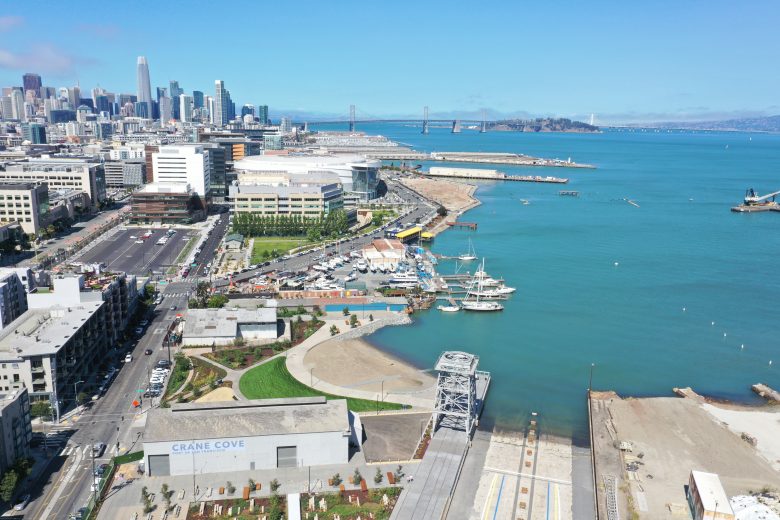
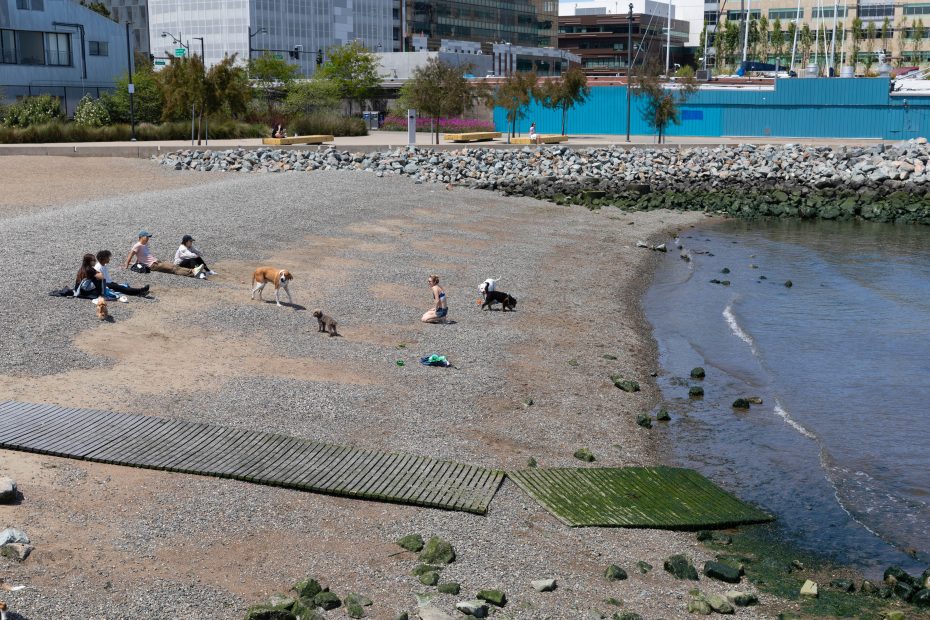
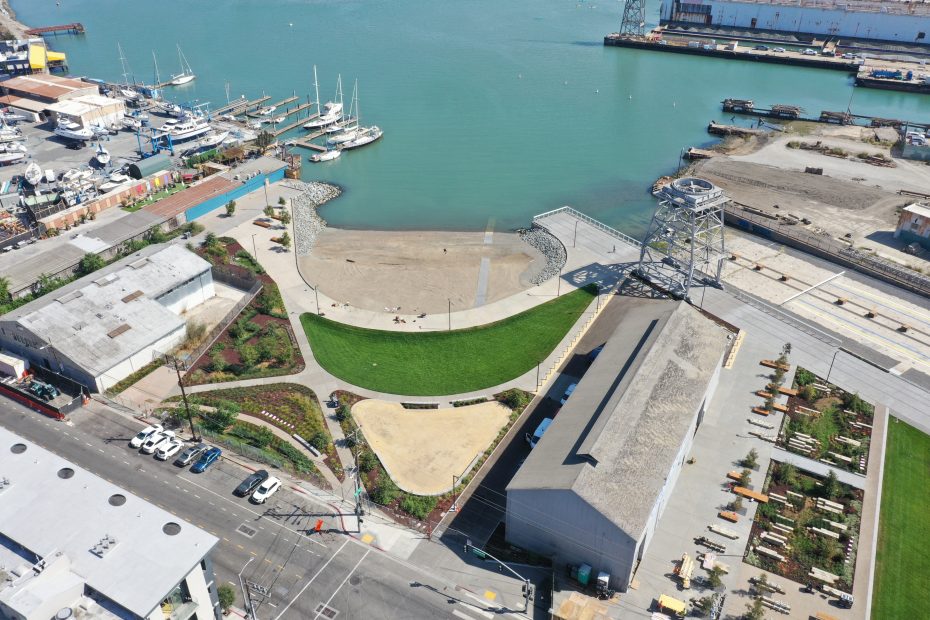
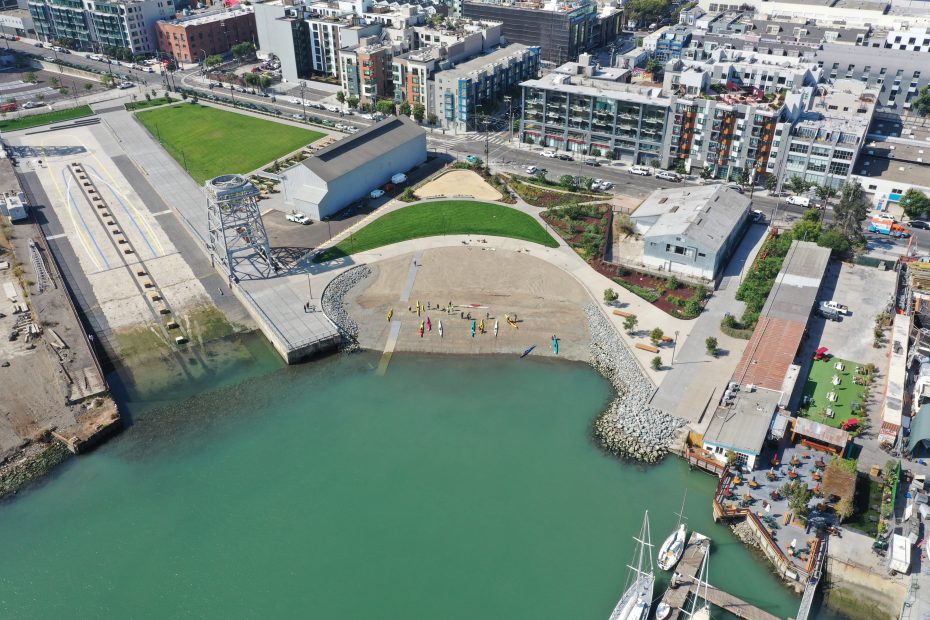
One blast victim was the Port of San Francisco, which is now forced to conjure up $1.54 million it was supposed to receive from the Parks Alliance for Crane Cove Park. A single call from either Ginsburg or former Parks Alliance CEO Drew Becher could’ve prevented this. But nobody picked up the phone.
You’ll recall that Ginsburg learned the Parks Alliance was “cash poor” and facing a “dire cash flow shortage” in June 2024. Becher last month told the Board of Supervisors that he learned of restricted funds being misused by his nonprofit by May 2024. Again, no one told the Port.
That’s important because in July 2024, the Port, counting on millions from the Parks Alliance, went out to bid on a Crane Cove Park construction contract that left it holding the bag in the event things went sideways. They did: The Parks Alliance dissolved with $1.54 million of its pledged contribution still outstanding.
To recap, in May 2024, Becher knew that restricted funds were being misspent. In June, Ginsburg knew about dire financial problems at the nonprofit and immediately took steps to “ensure funds held at the Parks Alliance for the benefit of the Recreation and Parks Department are secure.” But nobody picked up the phone and called the Port when, Jeez, you know, that information might have been a little more useful.
Our query to the Rec and Parks Department for Ginsburg as to why he chose not to share information with the Port was forwarded to the City Attorney — though this is really not a City Attorney question. Becher, for his part, last month told the Board of Supervisors that Crane Cove Park “was a passion project of mine.” He had an interesting way of showing it.
Would the Port have saved that $1.54 million if it had been tipped off in either May or June 2024? Possibly. But that assumes the Port would’ve heeded such a warning. The Port had been offered earlier opportunities to part ways with the Parks Alliance — and passed.
All the way back in November 2021, when the Board of Supervisors was voting on the funding of this project, Supervisor Connie Chan urged the Port to abandon the Parks Alliance.
“The donors have already lined up directly to donate to the Port,” she said during a board meeting. She urged the Port to simply cut a deal with them “without a third party like the Parks Alliance taking an 11-percent fee.”
The Port declined to do this. The Parks Alliance had never failed to come through with the money it promised — until it did. Even still, had the Port entered into a deal directly with the donors, it would’ve saved tons of money.
That’s because the Parks Alliance did, indeed, take an 11 percent cut on the funds it held — less in some instances but more in others. Earning this hefty a cut, it turns out, can drive a nonprofit to accept money from damn near anyone, even dodgy characters like Mohammed Nuru.
These usurous rates would be one thing if the Parks Alliance was beating the bushes high and low to raise money for a project. But, in the case of Crane Cove Park, the donations came from three major benefactors, who were already lined up and ready to give. Following Chan’s advice would’ve shielded the Port from entering into a partnership with a fiscally unsound partner and losing that $1.54 million.
On top of that, it would also have preserved 11 percent of the more than $3 million earmarked for this park — several hundred thousand dollars.
So, if either Ginsburg or Becher had been more forthcoming sooner, things could’ve turned out differently. But not necessarily well: During a July Board of Supervisors hearing on the demise of the Parks Alliance, the outfit’s former treasurer noted that there was reticence to be up front about the dire nature of the nonprofit’s condition as donors would hurriedly flee.
That, of course, came to pass. But it’s hard to say things improved by keeping everyone in the dark for months on end. The Parks Alliance still imploded owing money left and right and, by keeping the Port uninformed, millions of dollars were lost.
Also kept in the dark — by design it would seem — were the 60-odd community groups planting trees and restoring habitats that entrusted their hard-earned savings to the Parks Alliance. Donors gave directly to groups, which turned these hard-earned funds over to their fiscal sponsor, the Parks Alliance. Donors received a tax break and the community groups received the legal ability to accept these donations.
These were modest sums amassed a few bucks at a time, over the course of years. Some $2 million of it evaporated when the Parks Alliance disappeared — the equivalent of a Savings & Loan looting kids’ piggy banks. The many community groups that lost their savings were blindsided. Workers lost money, jobs and health coverage.
Prior to July’s hearing on the demise of the Parks Alliance, the Recreation and Parks Department sent these community groups a list of talking points it hoped their victimized members would tell the Board of Supervisors, bashing the Parks Alliance and boosting the Recreation and Parks Department (“I’m devastated by the lack of transparency by the Parks Alliance and sickened that they kept community groups and Rec and Park in the dark about their financial situation.”).
Well, that’s fascinating: In his April remarks to the Parks Alliance board about who should be compensated, the minutes don’t recount Phil Ginsburg mentioning these community groups at all.
What Ginsburg knew and when he knew it is a relevant query. But it’s hardly the only query, especially when the Parks Alliance had been a de facto slush fund for the Recreation and Parks Department for years. So there are legitimate questions to ask about just whose interests were being served by keeping the severity of the Parks Alliance’s fiscal woes under wraps.
Certainly not the hard-working community groups. Not the Port. And not the city writ large.
It’s been well-known for years that Ginsburg has had problems …
I wish someone could explain why Rec and Park haven’t gotten the same scrutiny (with similar results) that Public Works and DBI have gotten. Here’s thinking of you Nuru and “RodBigo.”
Ginsburg should face trial for fraud and civic fiscal mismanagement. This is a charade. Nobody expected under Breed that the City would be held accountable and bad actors dealt with accordingly – who does under Lurie? Anyone still riding the PR train and yet noticing how the train goes dead silent on significant issues that don’t smell right?
Fire Ginsburg TODAY. Investigate NOW.
I have been waiting for this exposure of Ginsburg’s sliminess for a long time. Thank you for educating others on how he was well aware of what Parks Alliance was doing and was only interested in protecting his pet projects while the rest of us pay more and more for the services of his department. Not only does Park and Wreck get a yearly set-aside from the General Fund, but they also privatize public property every chance they get, selling out public spaces for corporations’ gains while lining their own pockets. There’s no way Parks Alliance could be this corrupt without their supposed benefactor being in on the game.
Has anyone been to Crane Cove? It is less than impressive! Tons of concrete!
Phil Ginsburg seems to have the teflon touch. And he is equally toxic to our parts, having turned JFK and the Concourse into a tawdry showroom for assorted tack from ferris wheel to doggie diner heads to Burning Man “art.”
He privatized the Tea Garden and brought it, the once glorious Arboretum (acres of which have been denuded), and the Park Alliance-appropriated Conservatory of Flowers under the control of a YIMBY import from Southern California.
All of these three were free once, as was everything in Golden Gate Park. Now it costs a fortune to get in (unless we can prove residency), everything is marketed out the wazoo ($25 to see a corpse flower bloom!!!!) and we have to pay for guests.
This all benefits whom?
The same elites that Myrna Melgar, Scott Wiener, Dan Lurie and the whole “city family” represent.
We have no voice, and this is the result.
The fact is that we would be fine with gravel and grass playgrounds, fine with less concrete, fine with less tasteless “artwork” and fine with being able to enter the Arboretum on a summer evening, unrestricted and without payment or penalty.
While piling, on, let’s remember that Just Play app fiasco.
https://missionlocal.org/2023/01/just-play-app-books-sf-soccer-fields-and-sells-games-at-a-profit/
The various and frequently proliferating burning man associated objects are a major eyesore with, imo, the exception of the giant alphabet blocks. Scrap that junk or sell it to a collector if you can, but don’t store your junk in a public park and act like you’re doing us all a favor.
I’ll admit to enjoying the doggie diner heads.
Riding bike, I’m using JFK between DeYoung and the panhandle quite a bit. Regardless of taste, these installations are totally in the way as ppl are now scattered all over the road. When cars were still allowed before the pandemic, riding this stretch felt way safer.
We knew 15 years ago as Gardeners and employees of Rec & Park that Park Alliance, then headed by Isabel Wade, were frauds. Phil Ginsberg should be removed from office. He won’t be happy until GGPark is Disneyland North.
Really want to read more from your perspective if you are able to post a link, or just additional remarks here, or anything really.
Big big thanks to all who work on our parks.
“a de facto slush fund”. And, one hand find the other, a vehicle for influence peddling. How does one explain that not one of the “major benefactors” to the Crane Cove Park project conditioned their donation upon a transfer of their funds to the Port directly?
As someone involved in a fair amount of non-profit stuff: 11% overhead for fiscal sponsors is not usurious—it is maybe a touch high but well in the neighborhood of standard. That cut buys (in theory!) skilled financial management, handling of the day-to-day of funds, ensuring that you’re compliant with the many relevant legal obligations, etc. All of those things are expensive, and the whole purpose of an org like this one is that it makes sense to centralize those costs and share the burden across small orgs (or maaaaybe large orgs that have no experience handling non-profit donations—worth digging more into why an org as large as the Port was using this route).
The problem here is not 11%, it’s that the 11% is supposed to buy the sponsored organization a *more* stable, skillful, reliable home. And instead we got… either incompetence or criminality, maybe both. But what little we know suggests that this would have happened at an overhead rate of 1%, 11%, or 21%.
Me too. The Parks Alliance (PA) was an umbrella org that covered many community groups who were too small, too trusting, or too preoccupied with physically improving bits of the public realm to handle accounts and paperwork on their own. One group I belonged to debated leaving the umbrella to save money but worried about being ostracized by electeds, staff, and fellow volunteers, who were loyal or beholden to the PA. They were powerful: people who knew people who knew people. Sic transit…
Yeah there’s absolutely a story here about what’s supposed to be a neutral, trusted partner becoming a clubby, corrupt 800lb gorilla—groups feeling they can’t leave because of power+politics is absolutely not how fiscal sponsorship is supposed to work! That’s a terrible “smell” and begs the question of how many other sponsored orgs felt coerced rather than supported.
Just saying that the rates themselves aren’t the story.
So Park and Rec is incapable of managing a project like Crane Cove on their own?
Then just what is their area of expertise? I would also like to know if the contracts
in question were actually signed, which would be another layer of fire in the dumpster.
Or was is it only a case of scuttling a potential project?
Thanks for sharing this info. I was aware of the issue but not Park and Recs responsibility and cover up. I hope someone is looking into charging those responsible or will they just skate off scott free!
Everyone and their mother in SF knows that Phil Ginsburg is corrupt to the core. He’s just slightly smarter than Nuru et al. to keep it going for as long as he has. Given the history of the City Hall Family and Ginsburg’s connection to it, I highly doubt if there will be any investigations into Ginsburg’s shenanigans.
There needs to be a grand jury that looks into the malfeasance. Commissioners for city boards have gotten a pass on waste for decades
Thank you for this detailed article on the Parks Alliance debacle. I am worried that Drew Becher and Phil Ginsburg are going to avoid any and all criminal charges because they are connected to San Francisco society. They will make excuses and point the finger at others not well connected to get out of hot water. Imagine providing talking points to members of community groups that want answers. How telling is that. Keep up the great work uncovering this scandal of epic proportions.
Maybe the person with the signs above the 9th ave arizmendi was right about Phil G.
Another of their positions and I quote:
No fee
No ID
Arboretum must be free
Finally Ginsburg and his Commission get some scrutiny!! Tip of the iceberg! Ok Board of Supervisors let’s see some oversight!
Park Alliance and this entity is the same as Recology and Mohammed Nuru DPW. I always wondered why on those volunteer Saturdays, the long winded guest speakers would be too people from the first two entities I mentioned and how we were getting free hats, tshirts coffee and lunch. Now more non profits are doing the dirty work, some at a larger scale under the noise of the newly elected public officials.
Phil Ginsberg is a self important person who can never admit when he is wrong . He will never respond to emails you send to him as a member of the public concerned about park
Issues unless you criticize him.
Then he comes out
Vindictive and tries to humiliate you on Email, copying everybody and their neighbor. He should’ve been fired a long time ago.
I am a member of one of the referenced community groups that developed such a project, and I’m grateful to you, Joe, for mentioning us. It is important to note that we — like all officially designated street park projects — were *forced* by the City of SF to use the Parks Alliance as our “fiscal steward” in order to have insurance. That is the real racket. In our project’s case, there is City-owned property (Department of Public Works because a drain and sewer system that runs beneath the land). This property spans the short side of three blocks. Over many years of fundraising and community labor, we improved these trash-strewn-and-worse parcels. The City told us we’d have to insure what was now a street park, which we obviously could not afford to do as a tiny community organization. The City never explained why, exactly, the City itself could not or would not insure what was already City-owned-and-managed land. But not to worry, the Parks Alliance would manage all the grant and other funds we’d raised, and could obtain and afford (through the 11% they took, as you mention) liability insurance for the “increased human traffic” on the “street park.” It is fascinating to read about Connie Chan encouraging the Port *not* to use the Parks Alliance when small groups like ours were told we had to. The corruption seems endless. On one end of our project were Mohammed Nuru and Sandra Zuniga, who were indicted and served time in prison, and on the other was the Parks Alliance, with Lanita Henriquez (charged by the SF DA for misappropriation of funds) and a board that gave apparently zero oversight. I’ve stopped volunteering and doing anything to work with this corrupt City. It is worse than pointless: it’s damaging.
Excellent article on the SF Park’s Alliance. Well written and so informative. Thank you.
Nancee
Thanks for this article which sheds light on who knew what and when. I have to say to this voter, Connie Chan looks like one of the few principled civil servants left on the BOS. She should run for mayor.
Connie Chan as mayor! Just what I was thinking
Ginsburg is useless. For seventeen years I have watched him and his Commissioners negligence in their Oversight responsibility to Our Zoo. During the last sixteen months of the Zoo in the media, they have all acted shocked at the claims against the former Director. They knew what was going on, they just didn’t care. When it came down to it, the Commissioners refused to asert their Authority to oust the Director. I sent Phil an email, that he needed to ask the Mayor for help. He is a coward.
“I’m sure City Atty Chiu is pulling his sleeves up to root out corruption in SF…”
Any day now…
I may be missing something, and this wasn’t brought up in the article, but – – – Was anyone dipping into the till and funneling money into their own pockets?
It has long been time for an independent audit of all City departments/agencies, with zero interference. Expose the grift and greed, and issue pink slips to EVERYONE caught wasting City money, time and resources.
The collapse of the San Francisco Parks Alliance has left neighborhood groups across the city penniless and betrayed.
Once celebrated as a trusted steward of parks and community programs, the Alliance concealed corruption and financial misconduct that siphoned funds meant for local initiatives. What should have strengthened neighborhoods, instead undermined them, leaving grassroots organizations unable to maintain gardens, playgrounds, and public spaces.
The cost is staggering: children lost safe spaces to play, and neighbors saw community programs vanish. Beyond finances, the deeper loss is trust. Volunteers and donors who gave time, energy, and money, now question whether civic institutions can ever serve the public in good faith again.
This misconduct by Philip Ginsburg and Drew Becher, represents more than mismanagement: it’s a betrayal demanding accountability. If proven, such actions would justify criminal charges and prison sentences, both to deliver justice to harmed communities and to deter future abuses of public trust. Out of this devastation, the community must rebuild with transparency, oversight, and genuine accountability, ensuring this breach of faith is never repeated.
Can the city of San Francisco accept direct donations to fund specific projects? If it did, wouldn’t that create a whole bunch of other problems?
If that were the case, the “humble narrator” would just be writing a hit piece that implicated malfeasance to the bureaucrats or politician who solicited and landed the donation as well as the individuals or corporations donating the money. Accusing them of pay to play or implying some corrupt intention with no concrete evidence, solely coincidence.
Say what you will about Phil G , but the his statement that the Alliance was ‘cash flow poor’ does not indicate that he knew that there’ were underlying larger issues, potentially corruption, at the organization. The City itself is cash poor at certain times of the year and even month and plans payments to vendors so as to not be in in a situation when payments exceed money available to make them. Businesses have the same issue. Even very strong businesses can have cash flow problems. If not managed well cash flow can kill your business. However, just because some organization had a cash flow problem does not necessarily mean it is going to fail. More often than not, it does not.
So for the author to imply that because Phil G. xpressed knowledge of cash flow problems at the organization he was aware that it was on the cusp of catastrophic financial failure is misleading at best. In my fact given the organization had been around for decades; and had always come through despite cash flow issues; wouldn’t it seem to reason that he would worry less about this happening this time?
It is truly tragic that this has occurred. It is right to draw attention to it. But if you are going to draw attention to it you also have the responsibility to make sure you understand the reasons why things were done and the way they were done instead of looking at the situation with your limited understanding of the issue; limited expertise in accounting, limited knowledge of the city’s policies, procedures, and laws; and then implying some sort of corrupt intent of the individuals involved.
It seems like the “de facto slush fund” comment should have been backed up or not made.
Bob —
Try clicking on the link.
JE