


In Noe Valley, an eight-foot-wide store contains thousands of San Francisco landmarks: The Golden Gate Bridge, Haight Ashbury, and the Painted Ladies among them.
Each is depicted on one of the 5,000 or so tin boxes hanging on the walls framing the narrow floor of Chocolate Covered, a candy and gift shop near 24th and Castro streets.
Jack Epstein, the store’s owner, has spent 28 years hand-making over 50,000 of these unique vessels. Each tin box’s decoration — most of the street signs in San Francisco, famous establishments, and natural or manmade wonders — is hand-crafted, with washi paper for the trim and cyanotype photos pasted on top.
The smaller sizes go for $30, while the larger ones are $38. (The prices just went up, Epstein said, because of tariffs on the tins, which come from China).
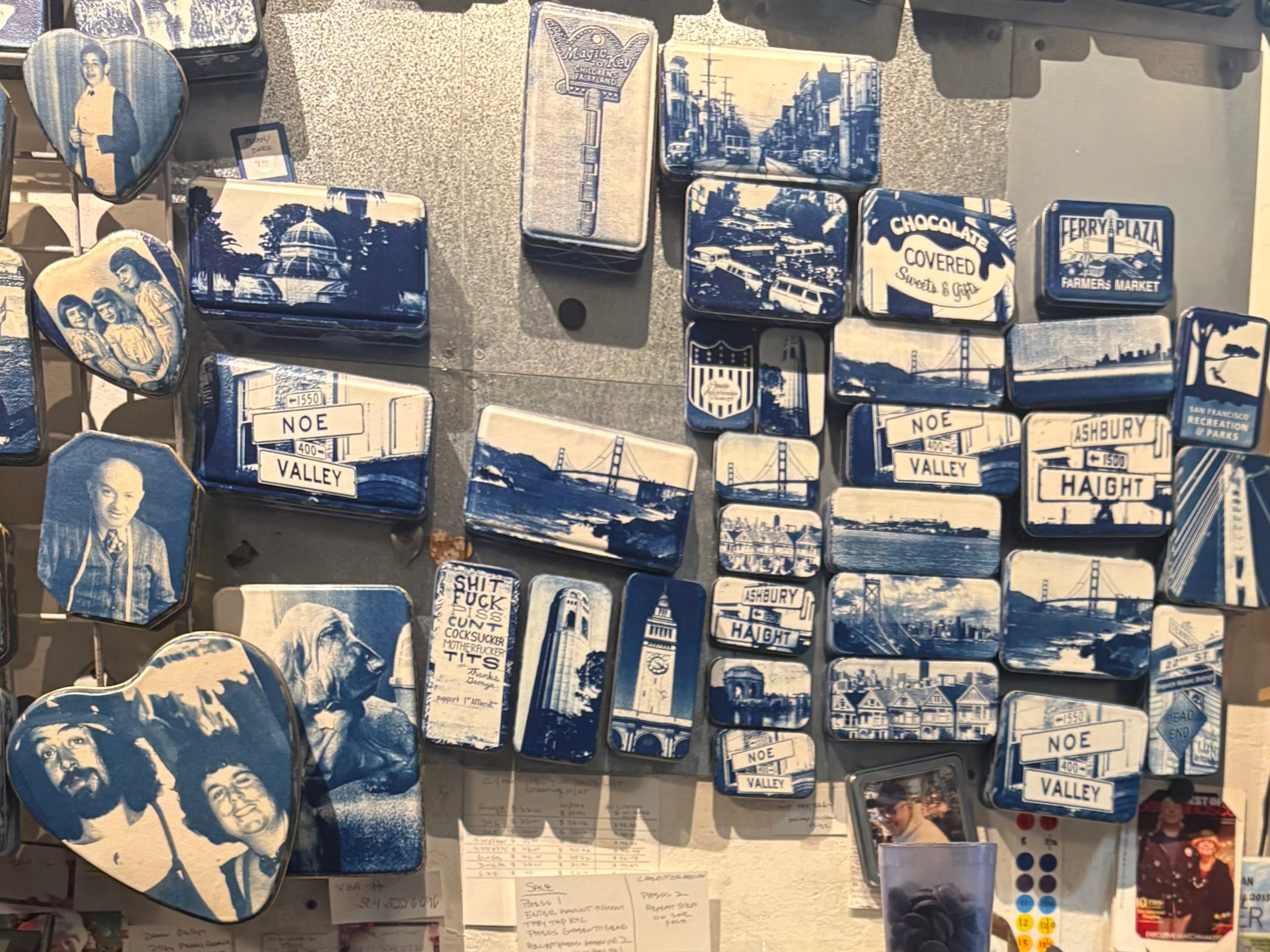
Visitors tend to buy boxes with their namesake, or particularly memorable city landmarks: Elizabeth Street, Linda Street, Noe Valley itself, and the Golden Gate Bridge are some of the best-selling. Inside the boxes — that’s where the chocolate goes.
Sitting below the boxes are shelves of chocolate from around the world in colorful packaging — more than 1,100 chocolate bars in wrappers of every color of the rainbow. It’s a sensory experience that can overwhelm patrons. Chocolate comes from countries as varied as Peru, Vietnam and Ireland.
All of this is stuffed into a space eight feet wide and roughly 300 square feet at 4069 24th St.
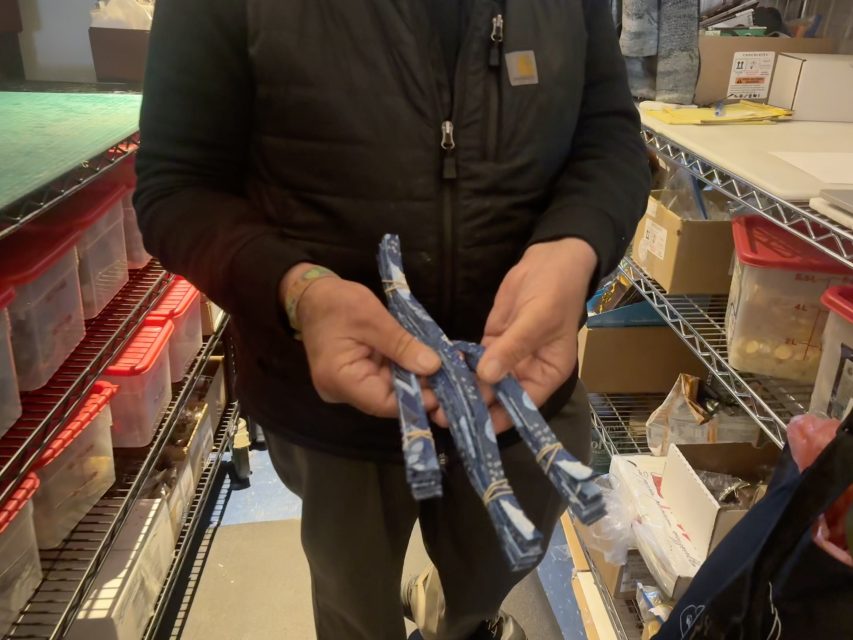
Epstein, who is in his 70s and wears a baseball cap over his shoulder-length white hair, calls his chocolate finds “exotic.” They include a caramelized onion chocolate bar, white chocolate with indigo, and white chocolate with egg yolk and spices.
Since 1994, Epstein and his life partner and co-owner, Marilyn Sitkoff, have run the chocolate boutique. But they were business owners long before that.
Around 15 years earlier in Venice Beach, they started Ocean Front Walkers, a clothing brand specializing in hand-dyed cotton garments. In the 1980s, they moved to Noe Valley for a change of scenery, running their clothing store from their living space.
Ultimately, Ocean Front Walkers moved to Chocolate Covered’s current storefront. The sweets took over in 2006.
Epstein fell into the chocolate world by mistake, he says. A resident of Noe Valley for 42 years, he found himself leaving the neighborhood to buy chocolate as a gift.
“I thought, I live here, and I’m leaving the neighborhood to buy chocolate. So is everyone else. So there could possibly be a niche for a chocolate store here,” Epstein said.
He was right. Many customers make regular visits. Some always get the same thing, like one woman who asks for 10 ounces of small circular chocolates, while others look for new recommendations.
He didn’t start making the tin boxes until three years after the original chocolate shop opened.
When I visited on a recent Monday, Epstein sold at a fair clip.
“That’s 20, dear,” he says while checking a customer out. “That’s 15 dear, nine and six.”
A mother asked, “What’s your favorite milk chocolate bar for kids these days?”
“For kids, just go a few steps over Milkboy,” he said. “That’s the least expensive bar, it’s a really great bar too, the blue one that’s a plain milk chocolate, six dollars.”
That’s a deal. Chocolate habits are not cheap.

One chocolate bar can run you anywhere from $6 to $24. Epstein follows the Keystone pricing model, selling each of his items for double what he paid. At first, making these adjustments was challenging, but he now sees it as part of the job, especially with current cocoa shortages and imminent tariffs.
“When I started, the most expensive bar I had was five dollars. When I had to sell things for six, I gulped. When I had to sell things for seven, I cringed. When it got to eight. I said, ‘It’s just math.’” He makes 20 sales on a slow day, he says, and 100 on a busy one.
His business has gotten stronger each year. Between ordering chocolate, manning the store, and making the boxes, he says he works roughly 60 hours a week. His partner, Sitkoff, also works, and they have a part-time employee who works one day a week.
At 72, he has no plans to retire.
“This is the largest collection of chocolate bars in any retail store in the country, to my knowledge, of this quality, and it’s the only collection of my artwork,” he said of his boxes and the hyperbole of a very good salesperson. “Between the two, it is special.”
why are there no closeup pics of the boxes?
I would love to purchase some of the chocolates Wonderful story
❤️
imagine being a “journalist” but forgetting to show a single picture of the main point of your story…
Sir or madam —
We can find a photo. You could’ve made this point without being nasty and condescending.
JE