


Walk into Tree Frog Treks on the south side of Bernal, wedged between neighborhood stalwarts St. Mary’s Pub and Rinconcito Salvadoreño, and the scene is bustling.
People step inside while they wait for the 14 or the 49 bus to arrive. Kids drop in after school to visit favorite lizards. A jar for donations sits near the door, mostly ignored, but present all the same.
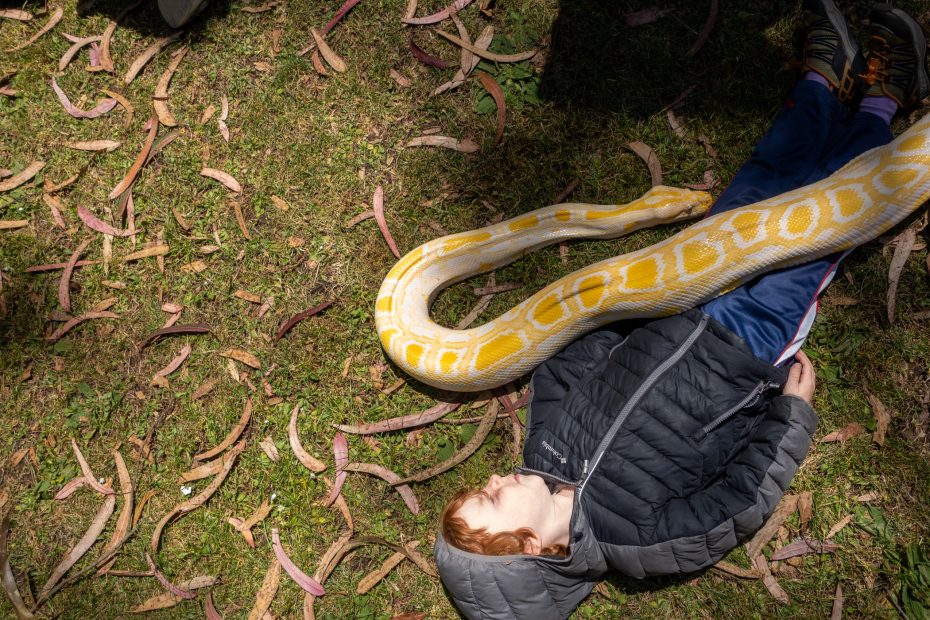
Everywhere, there is the heavy scent of damp wood chips and the feeling of being watched. Geckos blink from their tanks. A tarantula clings silently to its glass-paned corner.
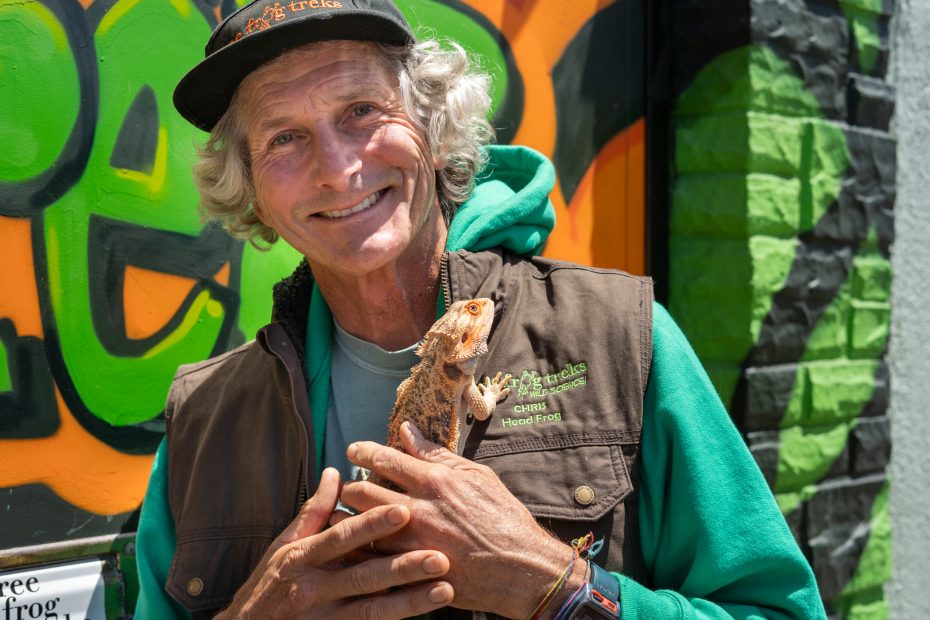
The menagerie started when Chris Giorni, a trained zoologist with degrees in biology from the University of California, Berkeley and San Francisco State, known to thousands of kids as “Mr. Science” or “Head Frog,” began fostering a garter snake and a painted turtle.
“By 2001,” Giorni says, “we had a full-blown animal rescue.” Nearly all of the dozens of reptiles, amphibians and arachnids presently serving as ambassadors for their species were referred from local animal shelters or the San Francisco Zoo.
“Animals are a magnet,” Giorni says. “Put a lizard in a kid’s hands and suddenly they’re observing, asking questions; they’re doing science without even realizing it.”
In the field
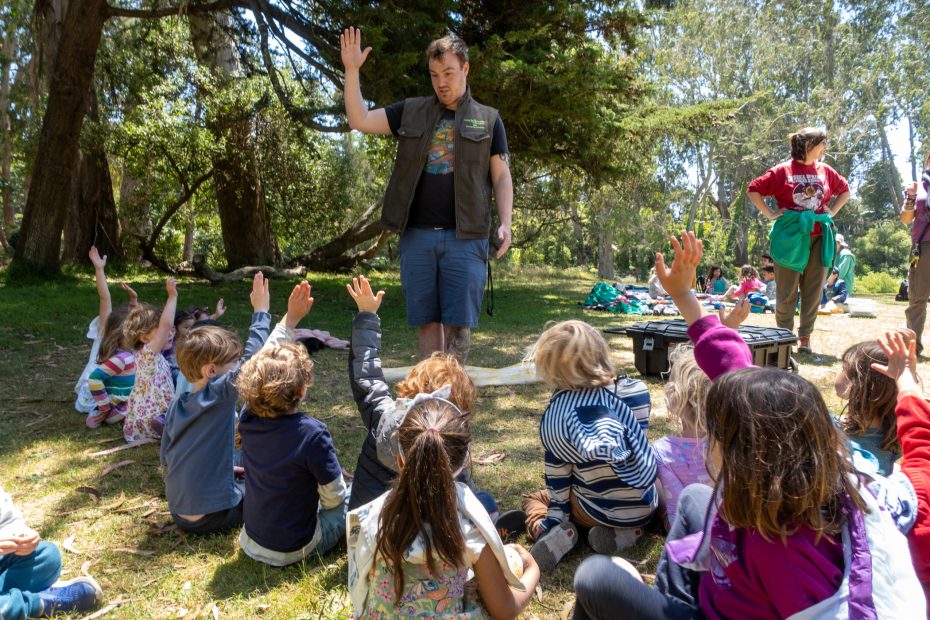
At Golden Gate Park’s 14th Avenue East Picnic Meadow, a circle of kindergarten-age kids crouched low in the shade, their hands cupped.
“You have to show the frog you’re ready,” instructor Jesse Atkins told them as she misted their hands with water.
One by one, the children held out their palms. Atkins placed the green tree frogs in their cool, damp hands, where the frogs sat still.
“Whoa!” a boy yelled as his frog leapt from his arm.
“That frog likes you.” Atkins teased.
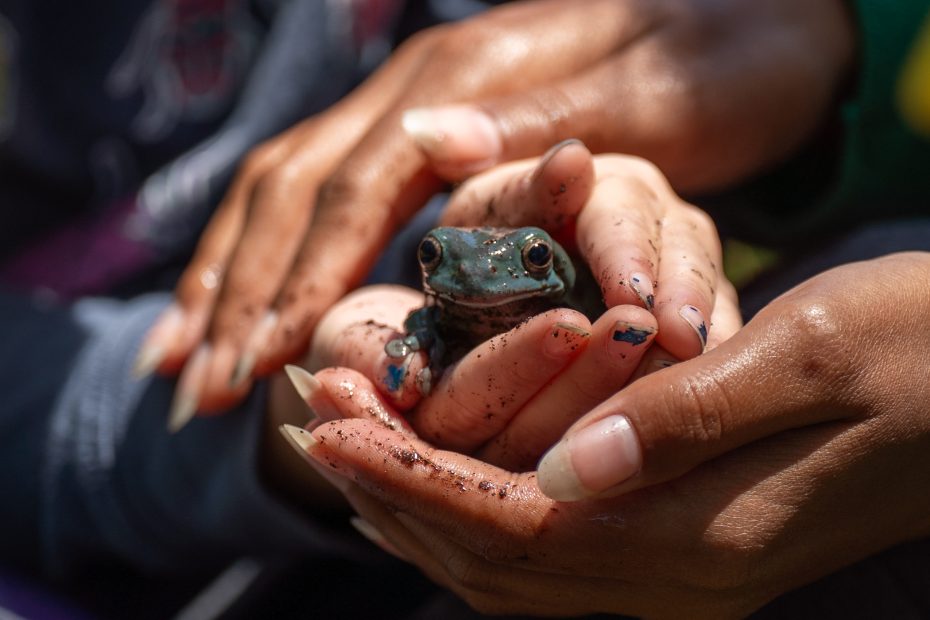
Nearby, a group of six toddlers waited, knees and elbows streaked with grass stains. Atkins scooped soil from the tree frogs’ container into their hands. “The more dirty your hands, the better,” Atkins said. “Frogs love that.”
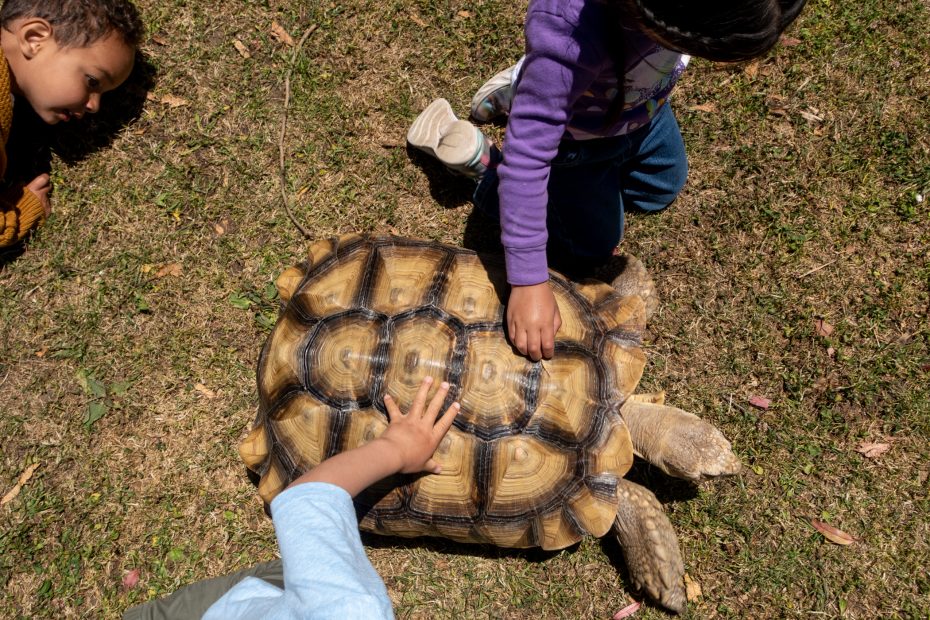
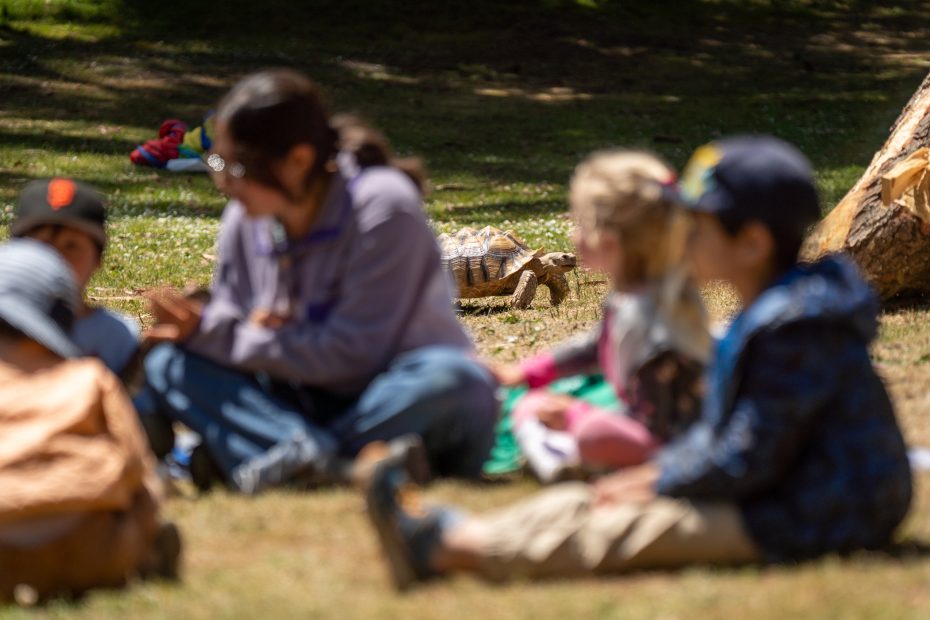
As the clock edged toward noon, the kids drifted toward a shaded picnic blanket for lunch. A few splintered off toward a 20-year-old tortoise named Benny, lumbering slowly in the grass.
“Do you think the shell goes all the way around?” asked Sam Gelmis, animal-care director for Tree Frog Treks. He lifted Benny, whose thick legs paddled slowly in the air, up to show off the hard bottom exterior of the African Spurred Tortoise.
“It’s part of his bones,” Sam explained. “Just like your spine.” The kids reached back to feel their own vertebrae.
The Robin Hood model
Tree Frog Treks’ mission is simple: Get kids outside. Get them dirty. Let them learn from living things. The program serves thousands each year through a mix of fee-for-service camps and subsidized programs using what Giorni calls a “Robin Hood model.”
You charge full price to those who can afford it, and offer scholarships to those who can’t. About 10 percent of campers attend on full scholarships, nearly 350 kids each year. Most others pay $530 to $755 per week, depending on the program.
Tree Frog Treks serves about 2,000 to 3,000 kids each year through its camps, including week-long summer sessions, school-break camps, and one-day programs that provide full days of outdoor, hands-on learning.
In a city with roughly 65,000 school-age children (public and private), that’s a sizable reach for an independent program.
What’s next
Giorni founded Tree Frog Treks in 1999 with his then-partner, Randy Nicolau. When it started, they offered nature programs in San Francisco and Placerville. After a few years, Nicolau stayed in Placerville and Giorni returned to the city with Buddy the green iguana and a growing crew of teaching animals.
It hasn’t always been easy. After years of renting, Tree Frog Treks managed to buy their mixed-use storefront at at 3835 Mission St. in College Hill. But they’ve also weathered the pandemic, inflation, and what Giorni calls “the boutique camp boom” — a flood of smaller, trend-driven camps that popped up in recent years.
In his experience, many of these camps prove short-lived. “It’s not about doing one cool thing for a summer,” Giorni says. “It’s about building a relationship with the community.”
The summer staff now numbers about 60 educators and naturalists, with a smaller year-round team running the core programs. Giorni, now 56, likes to think about what the program’s legacy might look like. He envisions a network of localized hubs, with trained naturalists running programs out of their homes or neighborhood storefronts.
“Every day, a kid reminds me what’s important,” he says. “Looking at a roly poly under a flowerpot? That’s peace. That’s science. That’s the world.”
A very, very good job Gus! So well written and full of fun facts and candid / in the moment commentary. Excellent eye for details and complete reporting.
Thx! Chris – Mr. Science
A mainstay at the Comment household as a summer camp. We’ll be back next year!
And you left out the part where Chris is an avid Bay Swimmer and an active member of the Great Southend Rowing Club…! And, he’s a terrific guy!