

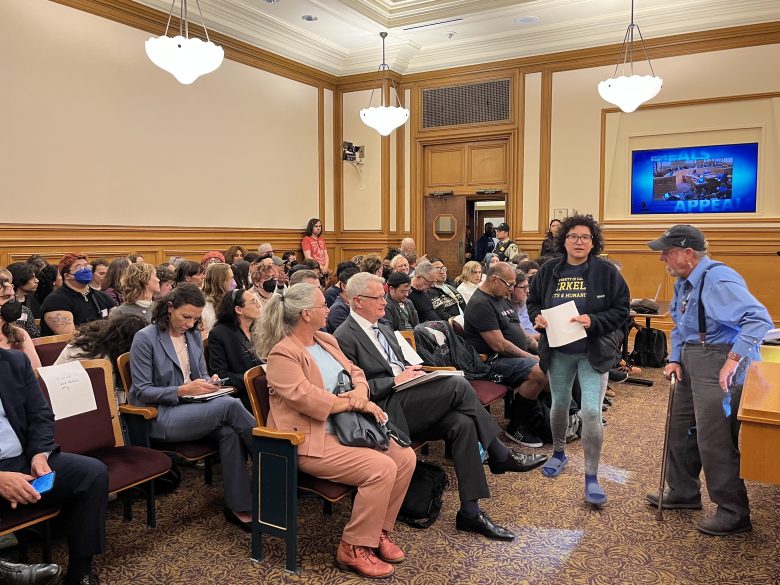

The San Francisco Board of Appeals, in a 4-1 Wednesday vote, rejected an attempt by trans advocates to reclaim the site of the historic Compton’s Cafeteria Riot in the Tenderloin from the private prison operator running housing for former inmates there.
However, the five-member body was sympathetic to the cause to take over the space, and members lent their support for an investigation into GEO Group, the private prison company that, for 30 years, has run housing for formerly incarcerated residents at 111 Taylor St., suggesting that the concerns about the land use could be valid.
They told the more than 100 advocates, who want to transform the Compton’s Cafeteria site into a more community-oriented space, to contact different city bodies and even to urge the Board of Supervisors to amend the city planning code.
Board member Rick Swig, along with his motion to deny the appeal, urged the Planning Department to look into the case, offering “significant encouragement to the [zoning administrator] to continue a path of investigation which may result in enforcement.” Three other board members voted along with him.
The sole dissenting vote on the board, J.R. Eppler, was more supportive of the advocates’ appeal and raised concerns about flaws in the letter of determination process.
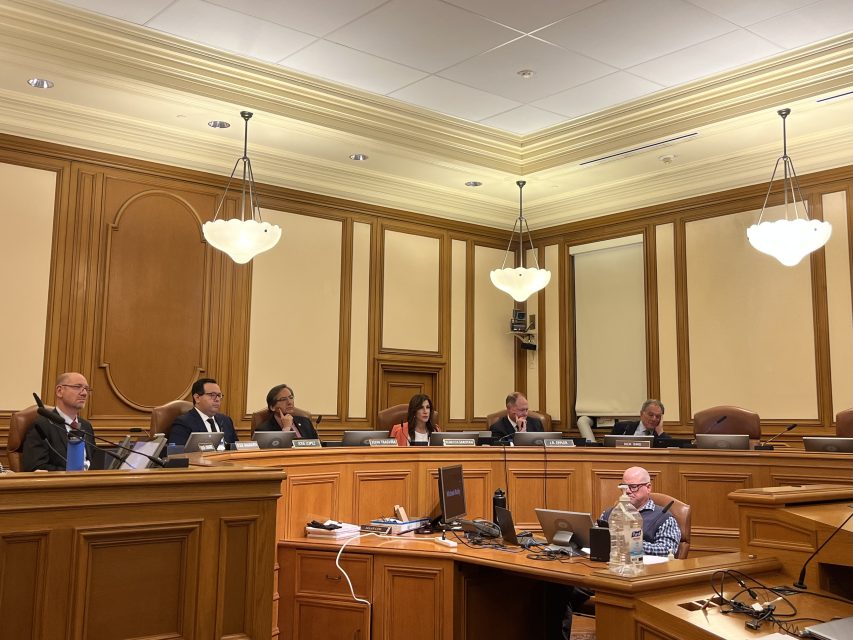
The board said there was no legal reason to overturn the zoning determination of the site, a route chosen by the advocates to interrupt GEO Group’s long tenure at 111 Taylor. Though board members agreed with the nearly two hours of public comment supporting the appeal, they said they were hamstrung.
“I’m with you,” said Swig to the audience, putting his fist to his chest. “Tonight, however, is not a referendum on the issue of trans housing and rights. I wish it was. It’s not.”
People in the audience, many of whom had sat through the four-hour hearing, called out: “Why not?” and “We can’t wait!”
On the ground floor of 111 Taylor once sat Compton’s Cafeteria, a 24-hour diner where a riot broke out in 1966 between trans women and San Francisco police. The incident became a symbol of queer resistance.
The facility today houses formerly incarcerated people and people finishing their sentences, and the company runs prisons, immigration detention centers, and reentry facilities across the country.
In order to renew its contract this year, GEO Group sought a “letter of determination” from the Planning Department, which in January classified the location as “group housing.”
But a coalition of activists and academics long seeking to take over the space for its historical significance and location in the center of the Transgender Cultural District, called the classification inaccurate. They appealed the letter of determination in May.
Thank you for covering the historic Appeal Board hearing on rescinding a letter of determination given to GeoCorp for the prison located on the site of the Compton’s Cafeteria riot. I think, though, that your use of the terms “former inmates” and “formerly incarcerated” misunderstands whats going on in the building.
The people living at 111 Taylor Street are still under the authority of either the CA Prison Department or the Federal one. The contracts that GeoGroup has are with carceral institutions. The people living there are NOT free to leave. They are still incarcerated albeit living in a community-based institution.
I ask you to change your wording so readers don’t get the impression that the people living there aren’t incarcerated any more and are not “formerly” incarcerated.
I would add that real estate in sf is very low right now and likely a good time to buy a property. If they wait to fight this out, the property will be a lot more expensive based on the trends. Has anyone brought this up to the community?
Who owns the building? Is there a lease? Is the trans community trying to buy the building to create the community space? Or is it city owned and they want to evict the formerly incarcerated residents? Seems like this takes away housing at a time when there is a housing crunch. Maybe trying to secure a different space will get a community center faster.