

When Ernest Burden III inherited a trove of some 4,000 images from his architect father a few years ago,he wasn’t sure what he was looking at.
Burden was largely unaware of the government-mandated “urban renewal” program that razed San Francisco’s Western Addition, better known as the Fillmore, in the 1960s, transforming a thriving and diverse neighborhood once called the “Harlem of the West” into a demolition site.
“It took months of sorting and cataloging until I understood what was there,” Burden said. “It was a journey of discovery.”
His recognition of the scope of the devastation, as well his father’s dying wish to make the images known, spurred Burden to bring them to the media last year. Saturday marks another milestone in Burden’s journey to share these photographs with the people of San Francisco: the first museum exhibition of the works.
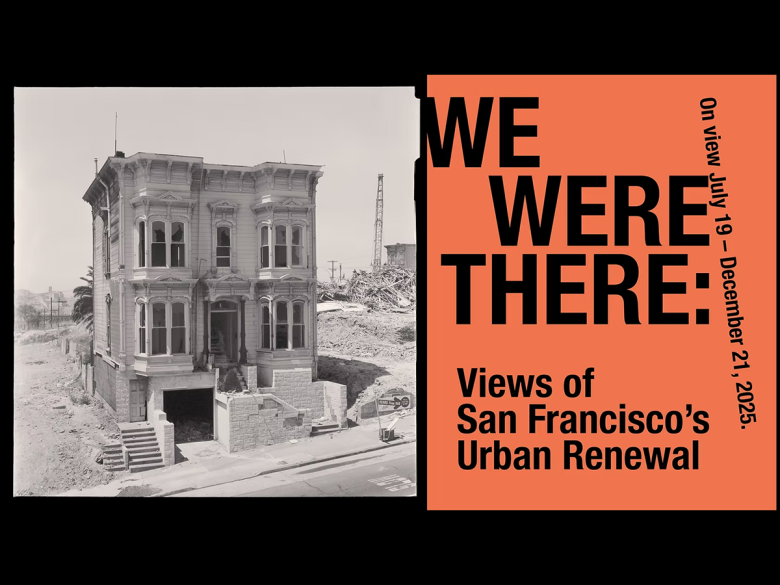
“We Were There: Views of San Francisco’s Urban Renewal” opens Saturday at the gallery of the San Francisco Historical Society and is on view through Dec. 21.
The exhibition displays 24 images from the Burden Archive captured by the architect Erni Burden and his wife Sheila Stover in 1960, along with informational placards and a section devoted to the Japanese experience of urban renewal.
The full-length version of the 1964 documentary featuring James Baldwin, “Take This Hammer,” about the predominantly Black neighborhoods of San Francisco, plays on loop.
“I had no idea my baby pictures would be on the wall,” said Analisa Burden, Ernest Burden’s older sister, who was a toddler on the demolition site with her parents.
The exhibition is the outgrowth of a special edition of “The Argonaut,” the journal of the San Francisco Historical Society, dedicated exclusively to urban renewal. The volume contains images from the Burden Archive as well as community voices like former San Francisco mayor Willie Brown, the Reverend Dr. Amos Brown and Mark Buell, who worked at the Redevelopment Agency.
“We wanted to include a variety of perspectives,” said Lana Constantini, the director of operations at the San Francisco Historical Society, “because it’s a subject with a lot of nuance.”
Constantini had been looking for a special use for a state grant when she happened on the article in the San Francisco Standard and reached out to Burden to see how they could collaborate.
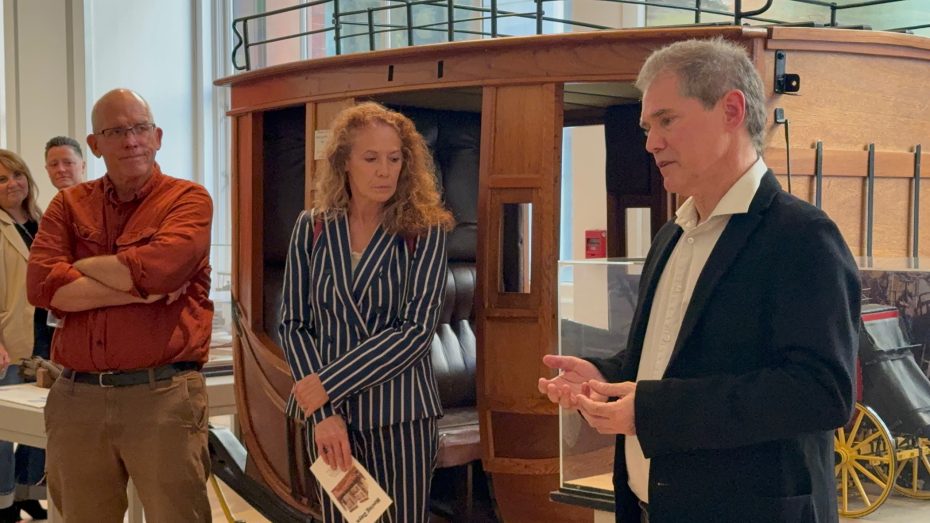
An invitation-only preview of the exhibition last Thursday was well attended and emotional. “He believed in the beauty of architecture and what it could do for people,” Burden said of his father, through tears, during his remarks.
Local artist Ron Henggeler attended the preview as a San Francisco Historical Society member and praised the composition of the images. “Both husband and wife had a real artist’s eye,” he said.
As a photographer, Henggeler particularly appreciated the process behind the images. “They reminded me of when I get into the zone when I’m photographing,” he said. “I’m shooting in the present, but what I’m really seeing is 25 years from now, what the images will become.”
Christine Hult-Lewis, collects images of the American West in her role as curator of pictorial collections at the University of California at Berkeley, also attended the preview. She called the photographs from the Burden Archive an “exciting find” because of their artistry, scope and personal rather than institutional perspective.
“The photos are an important portal to this sad period in San Francisco’s history,” Hult-Lewis said. “They fill in the gaps around official accounts of redevelopment and make visible the scope of the loss.”
In addition to the opening of the show, Saturday also raises the curtain on the newly refreshed San Francisco Historical Society museum, closed for the last three months for renovations.
The gallery space is freshly painted, with new carpet and flooring and pictorial window clings on the exterior.
The gallery has also expanded its collections on display with additions from the recently closed Wells Fargo museum, like a replica stagecoach visitors can climb into— an instant crowd-pleaser during the preview event.
“It was quite an ordeal getting it in here,” Constantini said.
Appropriately, the Historical Society is situated in the city’s historic core on Commercial Street. The museum, just a half block from the original water line of San Francisco, has brick walls from the first branch mint, which ended up saving more than $13 million in silver and gold during fires from the 1906 Great Earthquake.
The society’s physical location perfectly fits the name of the museum’s permanent exhibition: “City on the Edge.”
“It’s really been a city on the edge since its inception,” Constantini said. “The edge of innovation, the edge of the continent, the edge of tectonic plates, the edge of activism and art and technology.”
But in grappling with its history, San Francisco must deal with its rough edges as well.
“I want the work that our parents created to inform the public, to fill in this gap in San Francisco history,” Burden said. “And to help the community feel healing.”
“We Were There: Views of San Francisco’s Urban Renewal” is at the San Francisco Historical Society at 608 Commercial St., Thursdays through Saturdays from 10 a.m. to 4 p.m. starting July 19 to Dec. 21. Admission is free.
“predominantly Black neighborhoods of San Francisco”
Although this redevelopment is often referred to as “harrowing” and “devastation” (to use your words) to blacks, it is something of an exaggeration. In fact only about 25% of those displaced by this project were African-American. But you would not know that from most articles that are written, which present it as solely a black tragedy.