


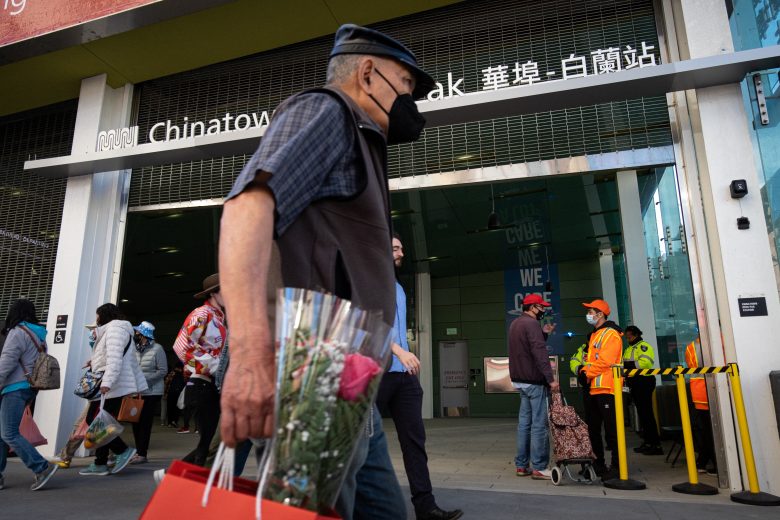

For months, nonprofits across the city have known they were going to lose their funding. That fear came true last week when Mayor Daniel Lurie proposed slashing $200 million over two years in nonprofit spending.
Afterward, however, nonprofits say they are left with more questions than answers.
“The big announcement was made, but no details came with it.” said Anya Worley-Ziegmann, coordinator at the People’s Budget Coalition, an alliance of community organizations and unions. “We are scrambling to find out as much as possible.”
While the budget defines how much funding will be available for each government agency over the next two years, the agencies themselves largely decide which nonprofits get their remaining funding.
Mission Local is tracking which nonprofits are facing cuts, and how that may change in the coming weeks. If your nonprofit wants to be added to the list, please contact: junyao@missionlocal.com and frankie@missionlocal.com.
The Community Youth Center, a nonprofit serving immigrant communities across the city, faces $1.5 million in cuts from the San Francisco Municipal Transportation Agency and San Francisco Public Works, according to Sarah Wan, executive director of the nonprofit.
Chinatown residents will feel the impact as early as June 30. The funding cuts will lay off 12 ambassadors at Rose Pak station of the Central Subway, who have been providing bilingual services to help riders navigate the station.
Activation programs on the upper plaza of the station, from Kung Fu performances to painting workshops, will also end in late August.
The center’s power-wash mobile team, which employs six operators to deep-clean the streets and alleys of Chinatown, will also be eliminated.
Earlier last month, Lurie said the city will partner with a nonprofit Avenue Greenlight, funded by billionaire donors Chris Larsen and Michael Mortiz, to power-wash high-traffic areas across the city. But Wan isn’t sure if that initiative will cover Chinatown as frequently and widely as its power-wash program.
The Housing Rights Committee: Fred Sherburn-Zimmer, the organizing and policy director of the nonprofit, was shocked to learn that the city is ending its $4.8 million Code Enforcement Outreach Program under the Department of Building Inspection.
The money goes to different housing organizations throughout the city, including Chinatown Community Development Center, Housing Rights Committee, Mission Action and Tenderloin Housing Clinic.
The nonprofits, Sherburn-Zimmer said, do outreach work with tenants in “horrible” housing conditions in Single Room Occupancy (SRO) hotels and public housing projects.
Many of these tenants are monolingual immigrants who don’t trust government agencies, Sherburn-Zimmer said. The organizations help to translate, write letters to landlords, connect tenants to city agencies, or just help them take care of the problems themselves.
The Chinatown Community Development Center, which provides code enforcement services and housing counseling to 43 SROs and 80 families in Chinatown, is facing over $1.6 million in cuts, according to Lisa Yu, a policy analyst at the center.
As a result, 15 staff members and housing organizers, including subcontractors, will be affected by the end of June. The center is looking for alternative ways to fund the positions.
It was initially expecting a 25 percent cut in funding, Yu said, but ended up facing a complete slash of their funding for the code enforcement program.
The nonprofit is part of the Chinatown SRO collaborative, which also provides building fire prevention and preparedness trainings in the SROs.
Mission Action, formerly known as Dolores Street Community Services, is another nonprofit affected by the DBI’s $4.8 million funding cut. Laura Valdez, the executive director of Mission Action, said the nearly $1 million in cuts to her organization will defund its Mission SRO collaborative and subcontracts to the Mission Neighborhood Resource Center, Lyon-Martin Community Health Services and SF Anti-Displacement Coalition (SFADC).
“The City’s budget deficit requires belt-tightening across the board,” wrote Patrick Hannan, the building department’s spokesperson. “We are all being asked to do more with less.”
The Latino Task Force, a nonprofit that was pivotal in COVID-relief efforts, is expected to lose $2 million in funding, said Tracy Gallardo Brown, legislative aide to District 10 supervisor Shamann Walton. The Pacific Islanders Hut, a community hub in Bayview, is also expected to lose $600,000, according to Brown.
Many more in District 10 are expected to lose funding, she said. While budget details haven’t been finalized, nonprofits across the city are expecting further cuts to be announced.
Freedom Forward: Francesca Gonzalez runs the nonprofit that operates the HYPE center, a drop-in resource center for youth at 198 Potrero Ave. that aims to prevent sexual exploitation.
Gonzalez applied for $1.4 million from the Mayor’s Office of Housing and Community Development and Department of Children, Youth and their Families, and was informed recently that she will get $150,000.
In February, the organization’s funding from the Department of Children, Youth and their Families was rescinded. A $150,000 grant from the Mayor’s office is pending, but she fears it is at risk.
“We are all in a state of shock and trying to understand,” Gonzalez said. “‘If it’s not us being cut, who will be? If we are not doing the work, who is? if we close our doors and reduce workload, who’s gonna help the community?”
Nonprofit funding cuts are being announced and finalized over the coming weeks. This story will continue to be updated and revised as more organizations learn of definitive cuts.
If you have heard of any nonprofits affected by the city’s contracting and/or grant funding changes, contact junyao@missionlocal.com and frankie@missionlocal.com.
Correction: An earlier version of the story included the nonprofit provider HOMEY. The nonprofit lost in a bidding process for the food pantry contract. The new recipient of the contract is scheduled to be announced on June 26.
Open door legal took my case, but my lawyer didn’t do any job: no discovery, no deposition on another party. He didn’t file any documents I gave him with the court. He was screaming on me and threatening me. He said that he will not go to court and I will be homeless. He wanted settlement and wanted me to pay opposite
party. I was complained to the Directors but nothing was done.
Open door legal should not receive money from City.
Yeah, personal anecdotes like yours, lacking any detail and context at all, should determine who gets funding. Just like that one star review on Yelp should require a restaurant to close.
The city poured 100’s millions of $ in those non profits : where are the results? things are getting worse. Stop, let all the problematic people find a different town; what about moving back to where you were originally from? otherwise i suggest Bali. No more money, free phones, food, free drug paraphernalia, access to dealers and lawlessness. Make the cops work, lazy Covid time is “over”: arrest, arrest, arrest, make them understand the party is over.
But your mom has no where to go!
Many nonprofits are a scam.
Tech companies sell your information and track you all over and deliver crap for products. AI steals private property on the internet and will use it to eliminate jobs. Tech CEO’s buy and sell elections and lobby Congress with all the money they make off us. (fun fact: the Big Beautiful Bill contains language that prevents state consumer protection regulation for AI for 10 years) Their employees drive up rents to levels locals can’t afford. But we roll out the red carpet for them all the time in the form of tax breaks and other subsidies as if they’re going to save the city and the country. And they’re the first to threaten us when their bottom line suffers. I’m not saying we shouldn’t be critical of nonprofits that don’t perform. But we should extend that level of critical analysis to all aspects of any budget. And saying “many nonprofits are a scam” in the context of massive cuts to funding is misleading and insinuating that these cuts are appropriate and assumes no real negative impacts to the community will be felt. That is not the case at all. There are many nonprofits that do good work and provide services private companies can’t or won’t provide. And the work focuses on members of our community that are under served rather than catering to those that have the most resources.
How can one feel bad for these non-profits, when they don’t even track the effectiveness of the services they provide? Should they be able to keep their funding even if it goes into a black hole?
Lets have some accountability on the part of these non-profits– prove your worth, and stop blaming the Mayor.
The Bicycle Coalition should not receive one dime of taxpayer money.
Researchers conducted an academic control study of Open Door Legal and reported, “In a treatment-control study of a set of individuals who initially approached the nonprofit for legal services, the homelessness rate decreased for the treatment group by 5.38% when compared to the control group. We estimate that 46% of those at risk or currently without homes, who received legal representation, were successfully prevented from becoming homeless in comparison to the hypothetical scenario without such intervention. ” See https://papers.ssrn.com/sol3/papers.cfm?abstract_id=4762824
Thanks for reporting
Cqnnot give out money that isnt coming in
Some nonprofits surely have ethics and the monies do go to persons in need ; but historically and when looking at statistics alot has gone to salaries and also fraud .
We all need to compromise when money is tight, work more hours , take drastic paycuts .
I see alot more volunteers in the future who are altrustic . They will help after they get off wok elsewhere.
I find it interesting that once money isnt involved politicians and those that were helping dissapear .
We will see good samaritans stepup . They are the true to the causes and demonstrate the best of behaviors and truely give from their heart to help those in need and the issues that nonprofits were to do.
Only red cross is able to really demonstate that their operating costs are ethical. Most of the money received by them goes to the cause .
Open Door Legal has been operating in San Francisco for 10 years. They have successfully fought for folx with low income against wage theft and wrongful, illegal evictions. Here’s a stat: In the ten year period, 1 in 5 residents in the Bayview accessed their services. That’s between 5 and 10 families PER BLOCK of the neighborhood. They successfully protected approximately $500 billion (that’s not a typo) in housing assets from wrongful evictions and foreclosure. This type theft is a major gateway to people becoming homeless. Arresting people versus helping them stay in their homes is much more expensive to taxpayers and doesn’t solve the problem. Last, people don’t move from other parts of the country be live a life of homelessness in San Francisco. They are mostly born and raised right here and they are our neighbors.
Instead of popcorn, I’m gonna be munching on La Palma Mexicatessen’s organic blue corn tortillas watching the steel cage death match of city funded patronage nonprofits facing the prospect of being cut off the city teat and jonseing like fentanyl junkies on the sidewalk, because everyone knows you can’t eat just one!
Website says they make flour tortillas fresh per order for their burritos, is this true?!?!
I would not doubt it, but to my mind, flour tortillas are an abomination.
To each their own 🌯❤️