
On the sidewalk outside Aunt Charlie’s Lounge, bar manager Joe Mattheisen points out a dozen spots that used to be part of the Tenderloin’s queer corridor.
The Blue and Gold was across the street, with Ram’s Head and Sound of Music down the road. The Peter Pan closed, and Ginger’s moved out of the neighborhood to the Financial District in the late 1980s.
Before Aunt Charlie’s opened in 1987, another gay bar was in its place, the Queen Mary. Mattheisen points out the location of a bathhouse and Compton’s Cafeteria across the street. Today, they’ve been replaced by nonprofits, hotels, temporary housing and convenience stores.
But inside the bar, the drinks are strong, the lights are glowing and warm, and the ceiling is hung with a dozen iterations of pride flags. Mattheisen greets almost everyone who comes in, and decorates for every holiday, but the pride flags are a permanent fixture.
“It’s a good, hometown feeling. Everybody knows your name,” said Olivia Hart, a drag queen and sometimes cocktail waitress at the bar.
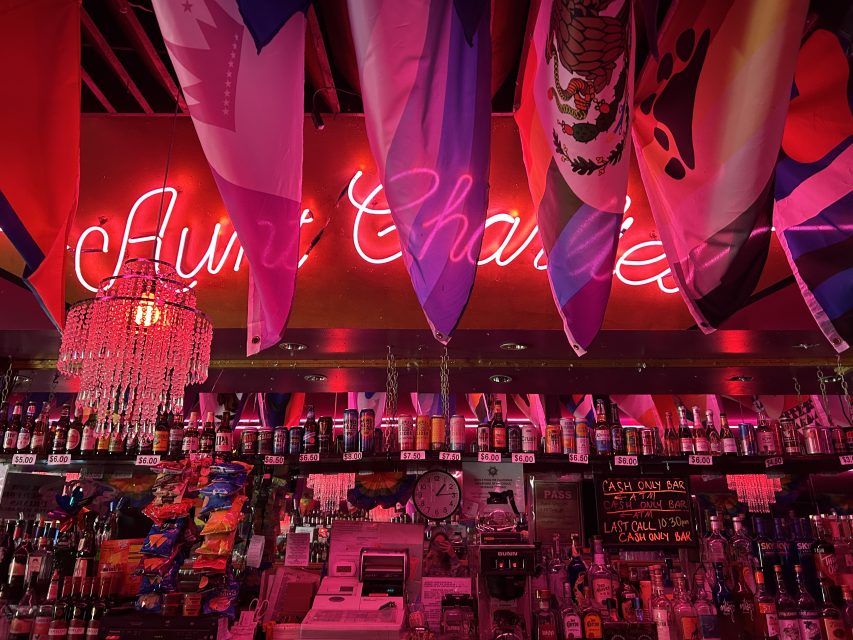
Aunt Charlie’s, the Tenderloin’s only remaining queer bar, is a relic of the times. And it is beginning to feel its mortality. Last year, the owner of Aunt Charlie’s, Bill Erkelens, died in a boating accident, leaving the bar to his wife in a trust.
Mattheisen, who is 76, is in the process of converting Aunt Charlie’s into an LLC and getting a new license to keep the bar going for a few more years.
“I think I probably still have four more good years. At least until I’m 80.”
Mattheisen has been behind the bar at Aunt Charlie’s since 1997, after two previous decades in gay bars, first in Los Angeles, then in Phoenix, Arizona. Phoenix was too hot, and the gay bar scene too small, so he moved to San Francisco.
Before that, he served two years and eight months in Vietnam. Nothing provided the steadiness that he’s found at Aunt Charlie’s, which had been owned by Erkelens for all of Mattheisen’s tenure.
“Each job I got was because somebody didn’t show up for work and I was there,” he said. “Basically all the bartenders here, that’s what happened.”
The bar is quiet on a weekday afternoon, but $5.25 well drinks — $4.25 during happy hour — draw a crowd in the evenings, as do the bar’s enthusiastic drag shows.
On Fridays and Saturdays at 10 p.m., the Hot Boxxx Girls take the stage, as they have for every weekend that Mattheisen has worked at the bar. Their performance is the longest running drag show in San Francisco, and star Davida Ashton has been performing in San Francisco for even longer: 53 years.
She performs to sentimental ballads in sequined dresses and rows of diamonds, reaching out to her audience of about 20 with a gentle knee squeeze before graciously accepting outstretched bills.
Her early performances at Aunt Charlie’s were under the close supervision of Vicki Marlane, one of San Francisco’s pioneering queens, who performed until her death at 76. Marlane’s shows involved dress rehearsals, choreography, duets.
“When I first started, the queens were not very nice,” said Ashton, who is 75. “I think they were scared to death.”
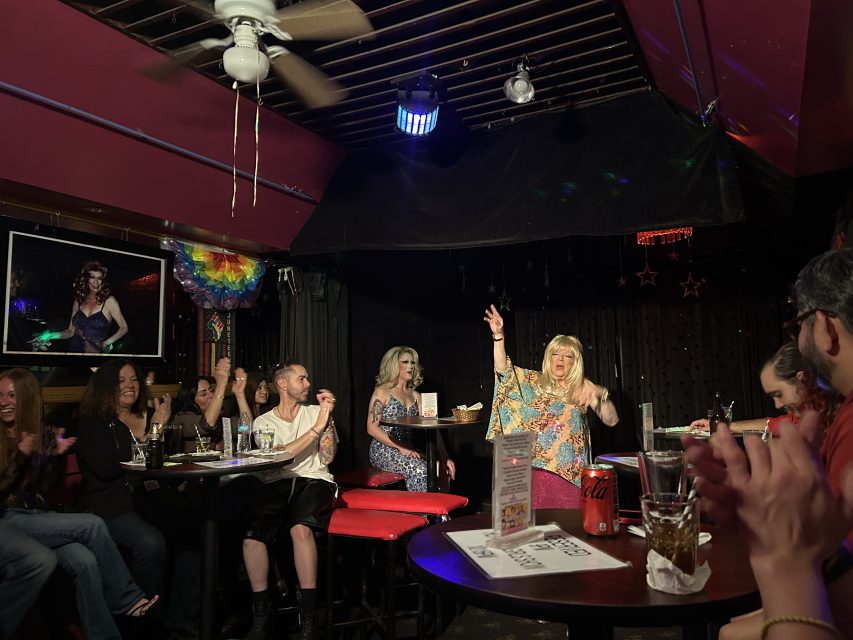
Rules for the audience are still strict — no obstructing the path of a queen, tip well, take a specific route to the bathroom — but the performances today can be irreverent and improvisational.
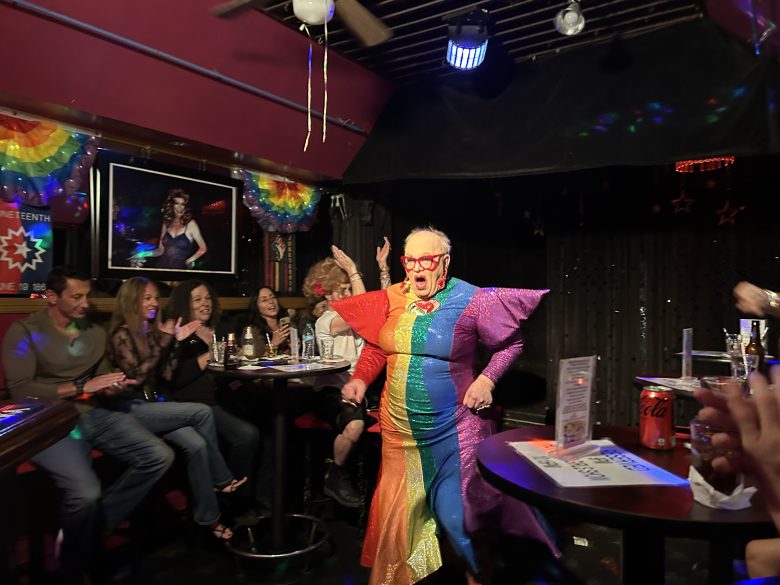
On a Friday night, queen and cocktail waitress Hart escorted guests to their seats in a bright red gown, a bedazzled red heart glittering on her chest. When it was her turn to perform a medley of “The Rainbow Connection” and “Over the Rainbow,” Hart donned a rainbow striped gown and a coiffed wig.
She dropped the wig on the crown of an audience member, arms outstretched as her adoring fans stuffed dollar bills into her bosom.
On Tuesdays, Aunt Charlie’s Angels bring in a younger crowd, and on Thursdays, the bar brings in DJs for dancing, one of whom has been playing for 21 years.
Much of the bar’s customer base came from people grabbing a cheap drink before or after seeing a performance. But shuttered venues, decreased foot traffic and a slow flow of shows at nearby theaters have hurt business, he said. The pandemic was devastating, though a GoFundMe for the bar raised $100,000 to keep its doors open.
At its height, Aunt Charlie’s opened at 6 a.m. Now, it’s closed until noon, and often quiet until the afternoon.
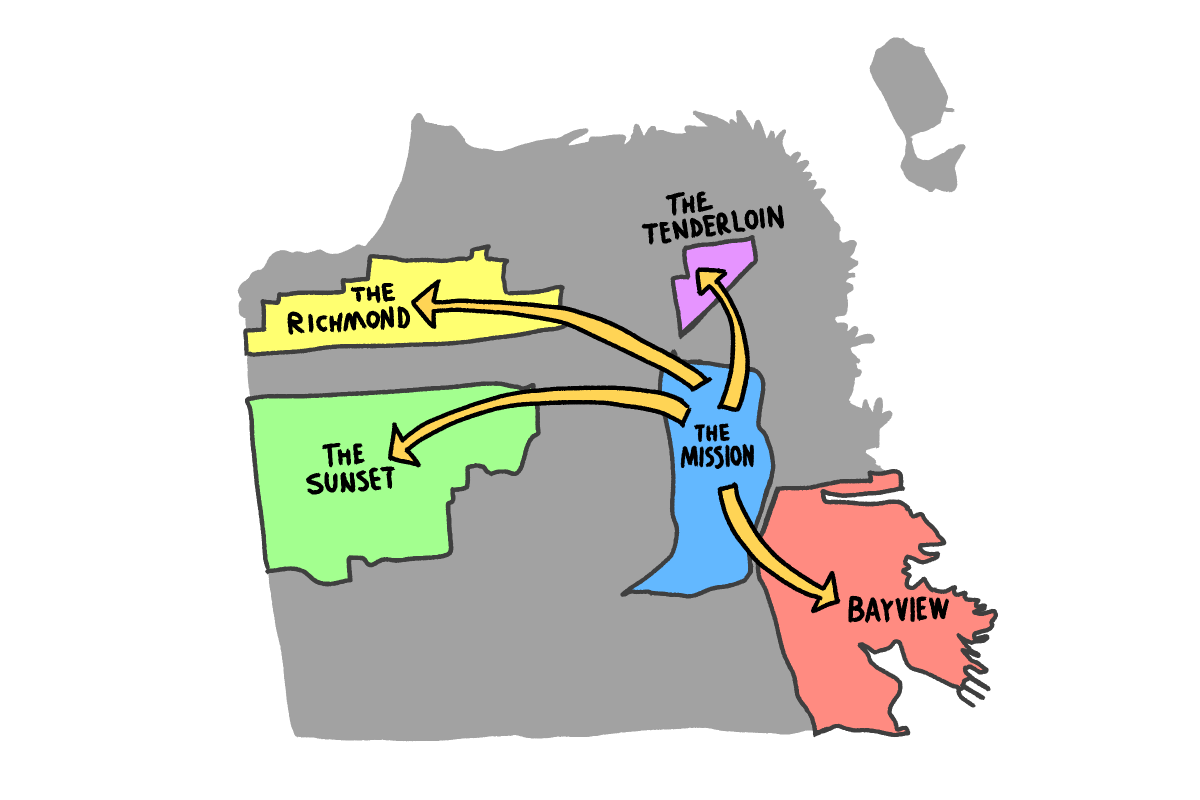
The pandemic and the Tenderloin’s struggles with drug use and homelessness have hurt, but as the culture changed, another phenomenon killed the Tenderloin’s gay bars: Queer people started opening and visiting bars in their own neighborhoods.
Still, late nights at Aunt Charlie’s continue for regulars. That includes Aabbee Aa’Bbee, a transgender woman and Tenderloin resident who came to the bar for the first time when she was 28 years old, more than 20 years ago. The community keeps her coming back every weekend, as do the cheap drinks and the atmosphere.
“We take care of ours,” she said.
Jessica: nice profile of Joe and AC’s, but it’s a euphemism to call what across the street “temporary housing.” The former site of Compton’s Cafeteria is owned by GEO Group, a private prison company. Residents there are exiting incarceration, but still under the control of the carceral system. It’s essentially a jail.
Back in the day I used to live across the street at the Helen Hotel (formerly the La Rosa)
I ‘ve only been there a few times but no longer use alcohol and drugs so, bars are off limits for me.