

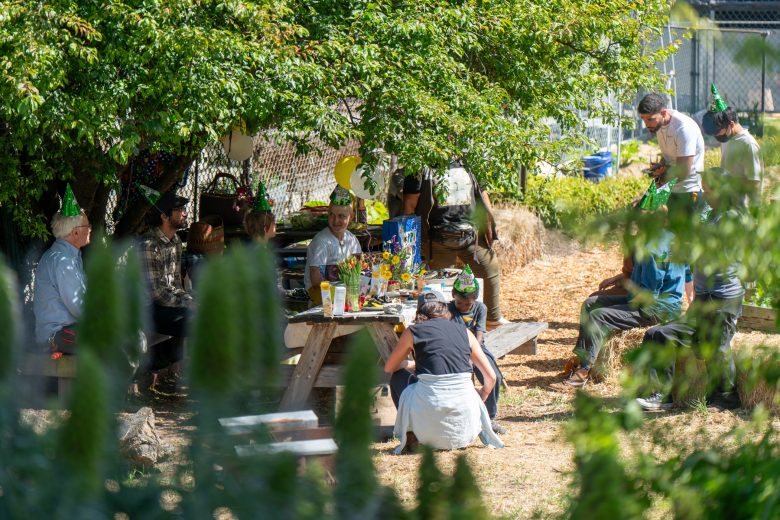

Alemany Farm, nestled on 3.5 acres near the intersection of Interstate 280 and Alemany Boulevard, grows more than 30,000 pounds of free produce each year for San Francisco residents; no IDs, no payments, no questions asked.
It’s the largest urban farm in the city. And it’s at risk of shutting down.
After years of relying on thin public grants and volunteer labor, the farm paused its paid apprenticeship programs at the start of May, scaled back staff hours near the same time, and launched a grassroots campaign to raise $200,000 in late April, an effort to stay afloat in a city cutting costs across public services
The urban farm, structured as a fiscally sponsored nonprofit, is facing a $100,000 to $150,000 gap in this year’s budget after one-time city funding ran out, according to farm organizers. As San Francisco tries to close a $782 million deficit, that means cutting nice-to-haves — like Alemany Farm.
But for those who keep the farm going, it’s not just a perk for the city: The loss is personal; less food disbursed to needy households, fewer hands tilling the soil, and more weight on the ones who remain.
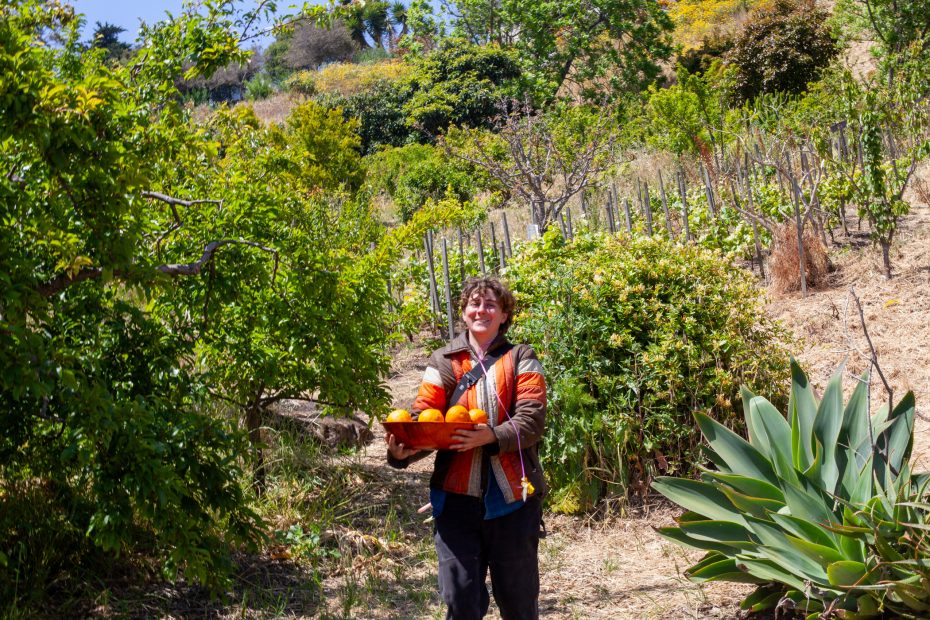
Alemany yields 30,000 pounds of organic produce a year, according to co-manager Vanessa Lieu. That helps feed 700 families a week, many of them low-income.
“For a lot of us, this food is survival,” said one farm assistant, who lives next to the farm and first learned of it through a flyer on her apartment door. “This is how we eat.”
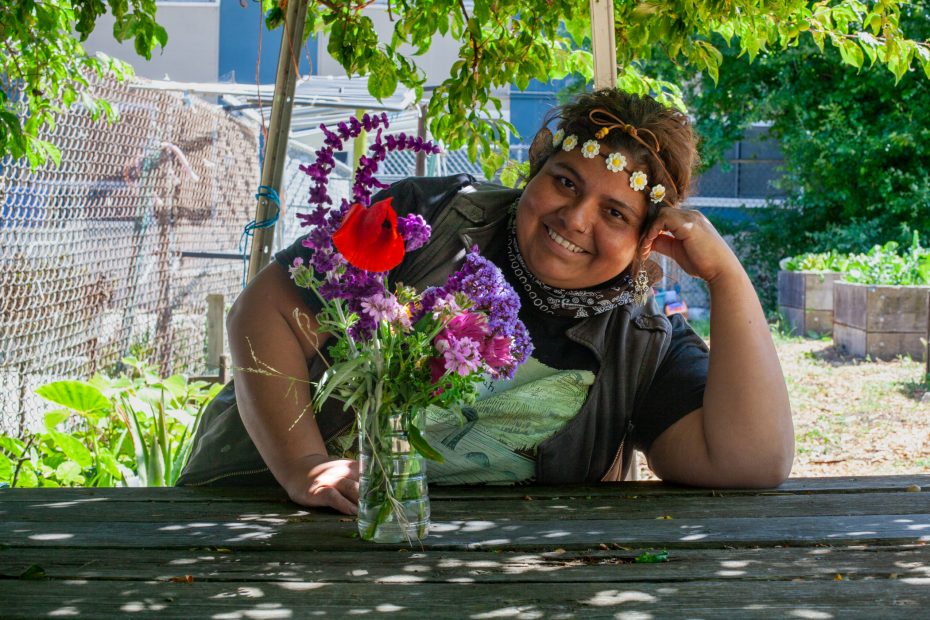
On a breezy Friday afternoon, Tatiana Vasquez maneuvered under a willow tree. In her hands were balloons, bottles of wine and a brown wicker basket filled with plates and utensils. “Here, can you take this?” she asked, passing them off to another volunteer with a smile. A birthday for one of the farm managers was under way.
Just a few years ago, Vasquez didn’t know this place existed. Now, it’s saved her life more than once, she says. She lives next door at the Alemany Apartments with her two kids, just a short walk from the farm she now helps tend.
“I was in a bad situation: Single mom, abusive relationship, no job, barely getting by,” she said. “I saw a flyer on my door about the farm. I almost didn’t go. But I did, and that changed everything.” Vasquez started as an apprentice. Today, she’s a farm assistant, teaching others what she’s learned: how to grow food, how to survive, how to come back from the edge.
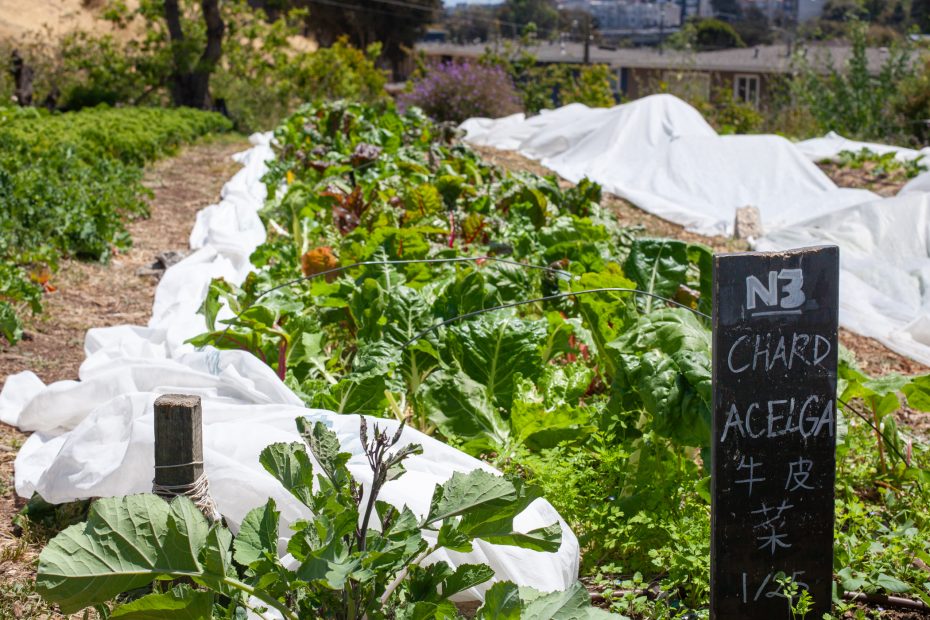
That morning, she and others had moved between rows of chard, kale, and collards, harvesting for the Free Farm Stand, held Sundays in Parque Niños Unidos at 23rd and Treat, which distributes organic produce, again with no payment needed and no questions asked. Much of that food is grown right here at Alemany Farm.
Government grants are increasingly unreliable
Alemany Farm has long depended on a patchwork of grants, including from San Francisco city departments like S.F. Environment and the Human Services Agency. Rec and Parks owns the land, and lets Alemany use it rent-free, while also providing services like compost and water.
According to John Stokes, a longtime board member of Alemany Farm, it takes about $400,000 a year to run the farm sustainably.
Last year, about half of the farm’s total funding came from city sources, according to farm organizers. In April, HSA approved a $186,963 grant extension through June 2026. But it’s still not enough, organizers say.
With public support increasingly unpredictable, the farm is shifting toward a new model: One rooted in small, recurring donations from local donors. The goal is to raise $200,000 this year; not to expand, but simply to survive.
“We don’t need a bigger vision,” said Vanessa Lieu, the farm’s co-manager. “We need a structure that supports what’s already working.”
The farm’s $400,000 annual budget covers salaries for four staff members, five paid apprentices, basic infrastructure, two annual public events, and fiscal sponsor fees paid to the Berkeley-based Earth Island Institute.
The farm operates under the fiscal sponsorship of the Earth Island Institute, but even that support now feels uncertain. In a message to supporters this May, Earth Island warned of looming federal cuts to environmental grants and the threat of losing its nonprofit tax status, adding pressure to the dozens of projects it sponsors across the country.
The apprenticeship program, once a cornerstone of Alemany’s community work, now hangs in the balance. “We really want to be able to pay our apprentices,” said Heather Weiss, a longtime volunteer and former interim director. “That’s been one of the most important things to us, because people told us they couldn’t keep working for free.”
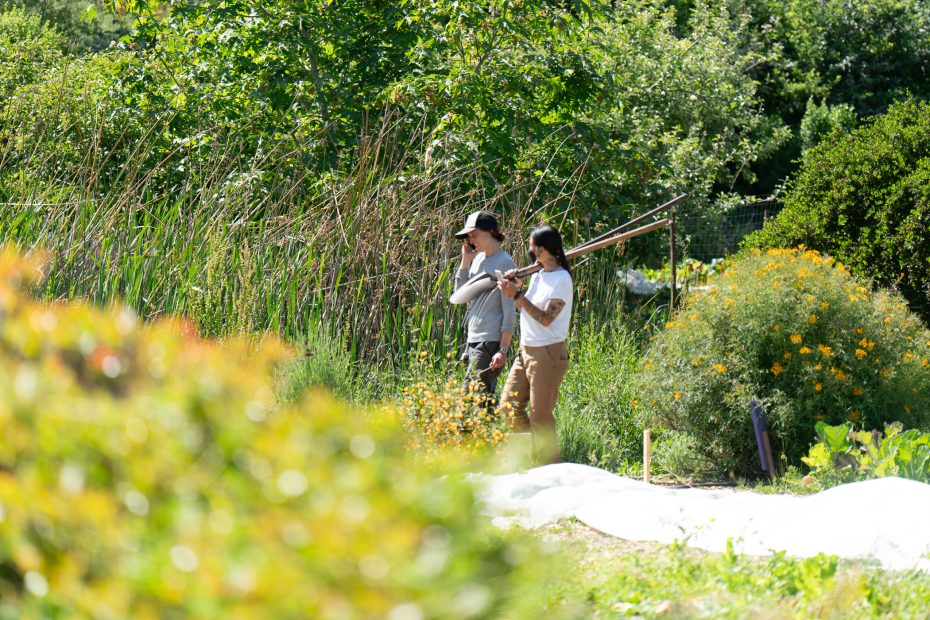
On a recent Friday, Lieu darted between rows, hauling tools, checking irrigation, fielding questions. Lieu seemed to be everywhere at once. It wasn’t until her lunch break that she slowed down long enough to talk.
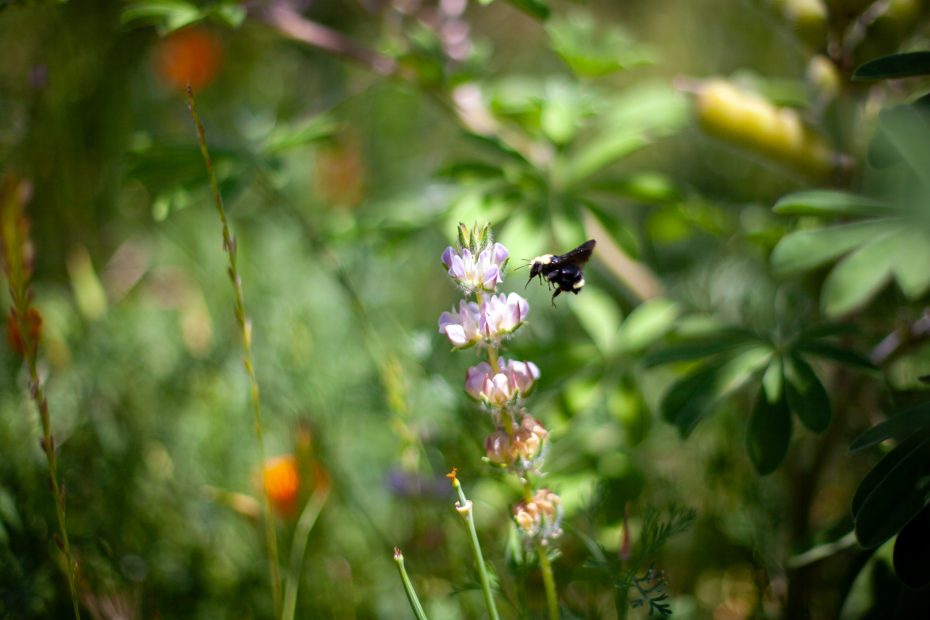
As we followed the path toward the front of the farm, we passed native plant beds buzzing with bumblebees. Hawks circled overhead, birdsong threaded through the air.
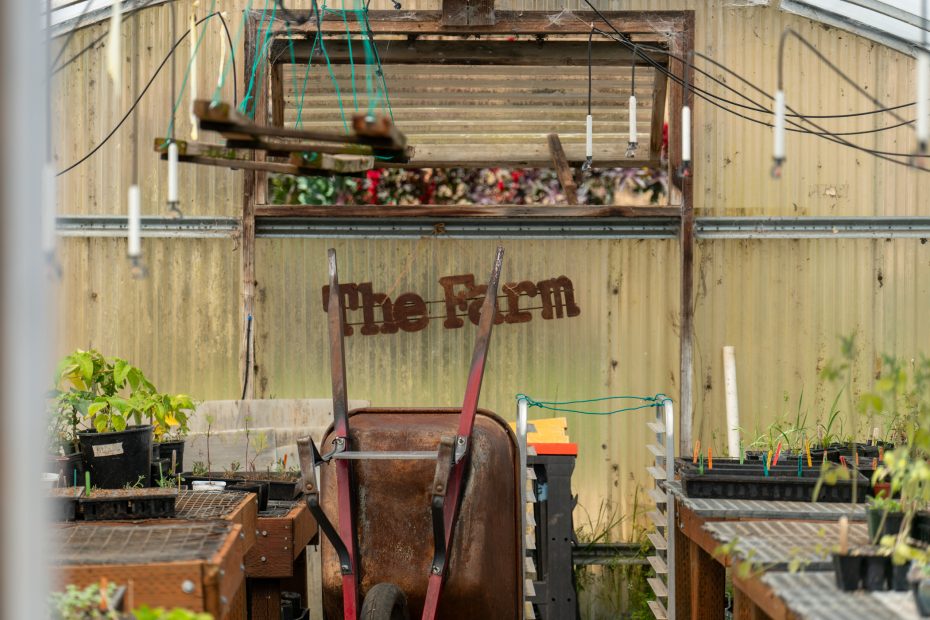
Eventually, we reached a green storage shed that also doubled as a makeshift office. Inside, the walls were lined with shovels, wheelbarrows and other equipment used to keep a place like this operable. Lieu stood by the door, happily filling a strawberry-shaped piñata with protein bars and granola. A pivotal moment for any birthday. And the work never stopped.
Alemany Farm grew from old corruption scandal
Alemany Farm started as a volunteer-led effort to reclaim a plot of land left abandoned after a corruption scandal.
In 2004, a city investigation found that the San Francisco League of Urban Gardeners, a nonprofit with a $3.5 million annual budget that employed 100 staff members and once managed dozens of green spaces across the city, including the plot at Alemany Farm, had coerced employees to vote and campaign for Gavin Newsom’s mayoral bid using taxpayer dollars.
That prompted the city to cut off funding, and SLUG suspended operations at what was then called the Saint Mary’s Urban Youth Farm in the early 2000s. The nonprofit’s habitat-restoration projects and job-training programs for low-income San Franciscans were gone.
The Alemany site was left abandoned, setting the stage for a volunteer-led revival.
Antonio Roman-Alcalá, an educator, researcher, and 20-year food-justice organizer based in Berkeley, was one of them. He remembers walking past the site in the early 2000s, while living with his mom in Bernal Heights. He would walk her dog past the overgrown edge of the site. At the time it was abandoned, but still dotted with fruit trees.
By 2005, Roman-Alcalá and a group of volunteers began reclaiming the lot, clearing weeds and planting crops. “We weren’t trying to ‘fix’ a neighborhood,” he said. “We were trying to live out the world we wanted to see, right where we were.”
He stayed involved for six years, helping shape the farm’s collective model. “We wanted something more grounded, something built by the people who actually live here,” he said.
As he sees it, the farm remains one of the city’s few green spaces shaped by community, not developers.
The spirit of building something together still draws people in. Not just longtime stewards, but those finding their way to the land for the first time.
Herison Leitao, a 30-year-old originally from Brazil, spends most of his week driving for Uber. But, twice a week, he comes to the farm. “It’s very therapeutic,” he said. “All the anxiety or bad thoughts I have when I’m in my car for 10 hours — they disappear when I’m on the land.”
He doesn’t get paid. But he shows up anyway, helping lead volunteer crews, building trellises, harvesting for food banks. “We don’t just grow food,” he said. “We educate people. We support each other. That’s what I’ve found here.”



Correction: A previous version of this story attributed the farm’s projected budget gap to the San Francisco Human Services Agency. The estimate came from Alemany Farm.
So sad that our city seems to have unlimited money for the police, but can’t find a way to afford the things like this that make it truly special and actually build community.
The police are necessary too. Even more so, in fact
Alemany Farm is such a special place, I would be devastated if we lose it. And all of these cuts so that the rich can hoard even more wealth. Why can’t California cities have income taxes like NYC?
Unsure if taxes or revenue is necessarily the issue here — more like priorities. The City unloaded nearly $6M to get the “ 10th St Community Market” up and running, which acts only as a supplementary food/grocery outlet solely for those on assistance already. It has donation and volunteer requests on its webpage but no opening hours are listed. Seems like the squeaky wheel gets the grease here.
Haha, and have even more people leave and businesses close? That’s what is happening in NYC. Horrible idea. We need lower and fewer taxes, not more. It is the out of control city and state SPENDING that is the problem, not the “hoarding” of the rich.
Seems like a public private relationship could work here. It’s good PR for a business or billionaire to fund this project to feed needy folks. It’s really not that much money in grand scheme of things and would get a lot of people to like that business or person. Seems like an opportunity for someone to change their public image. Only costs 600k/year and would probably be a tax write off. Daniel Lurie, which one of your friends needs to not look like such an a-hole?
I have supported Alemany Farm for decades,and will continue to do so. $600,000 USD budget is a shocking amount.
This would be really easy for one of our tech billionaires to support. I hope Mission Local’s coverage of this story is picked up by a publication that they read.
Thank you for including the inescapable numbers, as well as such a detailed look at the farm’s wonderful range of impact!
The bad news is that poor people are getting less food and the good news is that this enables billionaires to receive a tax cut.
Allemany Farm is probably the closest thing we have to a commons, and if you know your history, you know that ruling classes fear and loathe the “peasant” classes having agency and not having to depend on crumbs from the tables of the wealthy for survival.
Allemany Farm and the Free Farm Stand are wonderful, irreplaceable programs serving local residents, and are especially helpful for lower-income people, such as seniors or sub-mimnimum wage service workers. However, the concern trolls commenting on this post illustrate the danger of so-called “public/private partnerships” that are deployed to “save” community-serving programs.
These partnerships, sold to the public as funding solutions when a community-serving project needs (or often, is intentionally starved for) funds, are ways for wealthy individuals and institutions to get their nose under the tent, attach strings to a project, and gradually but ultimately turn the project away from its intended community-serving purpose towards serving the interests of the “private” entity. Charter schools are an example, through which billionaires (e,g, Bill Gates) can influence the subject matter children are taught, thereby helping to raise generations of compliant workers and consumers for the benefit of the billionaires.
In order to keep the influence of self-serving billionaires at bay, the best way to fund these and all-non-profits is for robust progressive taxation and Eisenhower-era marginal tax rates, with the funds distributed by city commissions staffed with members of the communities in question.
If a consolidated City and County of fewer than 1M people cannot manage its eye-watering $15B budget while other city-funded nonprofits skate away with millions, then there’s something quite rotten, aside from self-serving billionaires, of which the City and County is one, each and every single month.
Fewer billionaire-serving multi-billion dollar boondoggles like the Chinatown subway and Salesforce “Transient” Center” – projects that will never be solvent – would go a long way to tame the municpal budget. $600,000 is a rounding error comparatively, but it’s low-hanging fruit, and what’s more fun for oligarch parasites and their professional-managerial class lickspittle than to stick it to lower economic classes? It’s like Trump and Musk going after small-ticket line items while totally ignoring the elephant in the room, which is the unaccounted-for many trillions of dollars in the Pentagon and related federal military expenditures.
MTA should have taken $100k from the Million dollar donation to the Bike Coalition & given to the Urban Farm.
This is a valuable neighborhood resource. Brings many folks together, too. There is a neighborhood tradition to also be preserved. We’re on an “edge” of SF. We must remain supported and noted.
This is a valuable neighborhood & City resource! Pennies & nickels add up! Let’s make sure we keep it! Make sure our Supervisor supports this, too!
GO ONLY GOOD FOLKS THANKS YOU FOR YOU GOOD STORY N WONDERFUL GOOD HOPE
HELP I CAN ?
FROM
MICHAEL GOOD MAN
FORMER FERRY BUILDING FARMERS MARKET HELPER 9 YEARS
VOLUNTEER CLOWN
$600,000/year for 30,000 pounds is $20/lb and some very expensive produce. Why not just spend the funds at a local market?
Concern-trolling noted. Dividing funding requirements for the program with the weight of the food provided ignores the value of the program wrt education, training, recreation, and lower-income family support. This isn’t a commercial farm, tasked with producing calories for a profit, but rather a community-serving institution, providing healthy organic food while teaching residents skills to grow that food, the value of maintaining chemical-free land, and ways of working with each other for a common good. So, IOW, the ruling classes perceive it as a threat to their own power!🤣
$600,000 is an incredible bargain for the many community-serving beneifts the Farm provides.
The phrase “concern-trolling” is a thought terminating rhetorical club used by the excessively online, for the benefit of those readers who are encountering this trick for the first time. In my experience users of this phrase are rarely arguing in good faith although there is a first time for everything.
Anyway I’m open to the “incredible bargain” argument if it can be expressed using numbers. We are talking about budget allocations after all.
Thank you for concern-trolling about concern-trolling!
Clutching handkerchiefs over rounding error -level budget allocations compared to the billions spent on massive real estate bail-out gentrification boondoggles like the Central Subway and the Transit Center is a perfect and illustrative instance of concern trolling, as is the concern-trolling wrt concern-trolling, but I’m sure those encountering your trick for the first time will be appreciative!
$600,000 a year to produce 30,000 pounds of produce is $20/pound (and that doesn’t count the value of all the unpaid labor). That is some horrifically expensive “free” food. This farm sounds great and the people that run it seem very nice. But in terms of actually feeding people, the money could certainly get a lot more bang for the buck buying produce from more efficient farms and handing it out.
It’s a garden that’s open to anyone using who is interested in farming, food production, and ecology that *also* produces 30,000 lbs of food for local residents and gets them involved in growing their own food- a city amenity that’s enjoyed by many. Not everyone, but we support all sorts of recreational and enriching activities through our tax dollars that we might not use ourselves.
Thanks for reporting .
Cannot even place a plant on my block .
It is destroyed by idiots .
Would love to see the city support persons planting trees , plants , flowers and produce .
One billion spent to redo Van ness . The planted trees are destroyed there . Poop, broken branches.
That a main street cannot even be maintained is concerning.
The behaviors tolerated in this city continues to ruin and destroy this place .
Just for context: SF Marin food bank distributed 67 million pound of food in 2024. That’s for about $185M in funding, or about $3 per pound of food.
$600k for 30k pounds of food is $20 per pound.
Alemany Farm seems like a cool place but it doesn’t really seem to be a good way to grow food.
The fact is, city, state, and federal government spending is out of control. We are living beyond our means, and have been for many years. It can’t go on. The garden sounds like a worthy effort, but we should look for other means of funding. Government can’t do everything. Taxes and fees of all sorts are already too high. Lots of foolish spending at endless departments at City Hall. Time to make a realistic budget and stick to it.
30,000 pounds of produce each year, with $600,000 in annual expenses, adds up to $20/lb for the produce this farm produces.
I hate to dismiss people’s positive experiences with getting one’s hands in the dirt, but this does seem like a pretty expensive way to grow food for low-income families.
It teaches everything from gardening to ecology to working with others. Handouts don’t do that
Contact some of the evil corporations to see if they’ll provide funding – this sounds like a pretty good cause. The list of businesses who support the food bank is on their web site.
It’s time to stop depending on the City for support.
Asking corporations for money is fine, but starting out the suggestion by calling them “evil” is probably not the best idea.