Earth Day is approaching, California poppies are blooming in the medians, and San Francisco’s temperatures are in that sweet spot just under 70 degrees. The city is alive, and its wildlife is more visible than ever.

Mission Local recently spent time with two naturalists who spoke to us about over a dozen species that make this city home, and plugged the City Nature Challenge, a “four-day global bio-blitz” in which residents in different cities compete to document sightings of local flora and fauna.

Get a head start below, and take the chance to get to know San Francisco’s urban wildlife, in comics form.
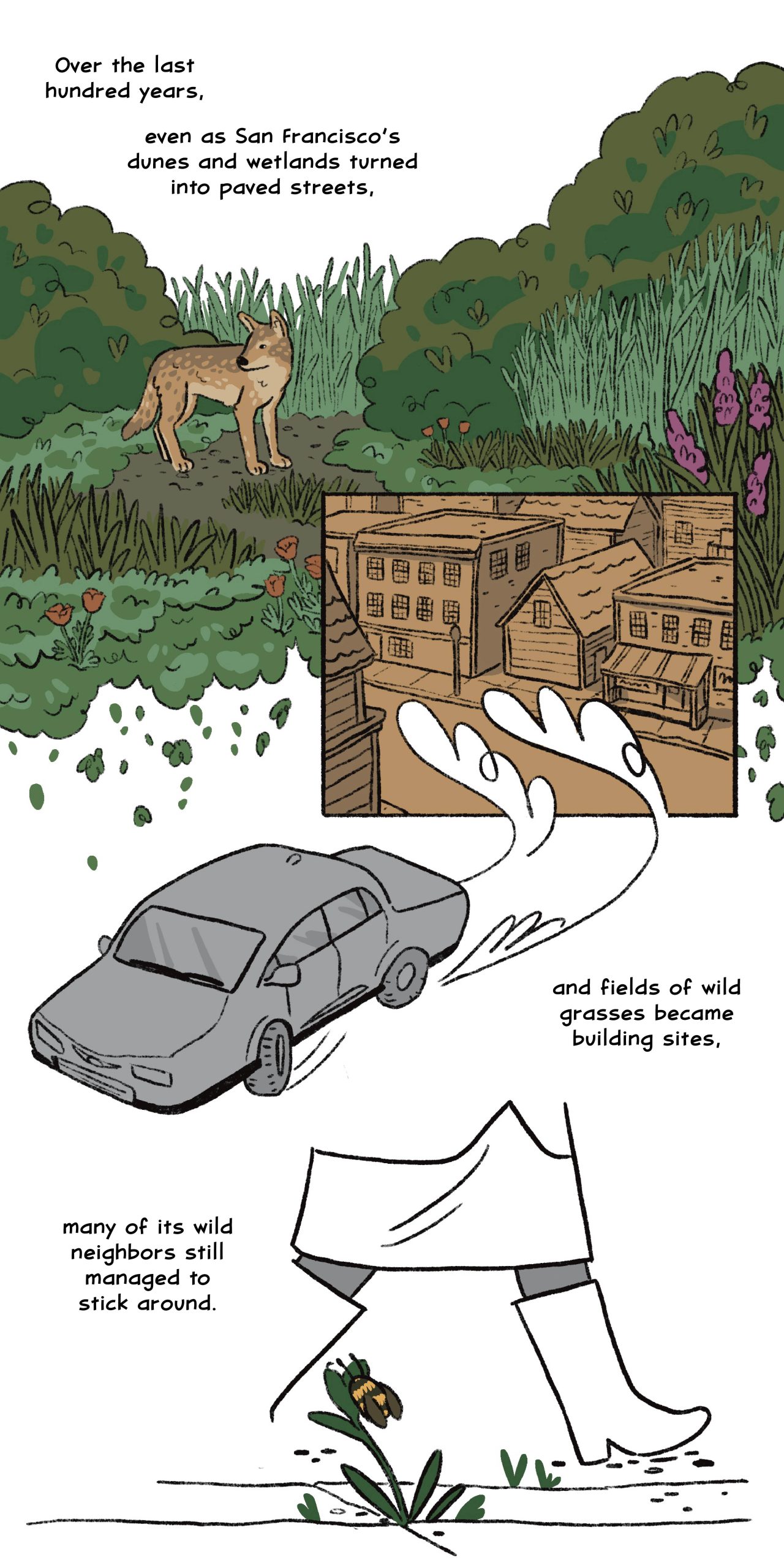
Over the last hundred years, even as San Francisco’s dunes and wetlands turned into paved streets, and fields of wild grasses became building sites, many of its wild neighbors still managed to stick around.
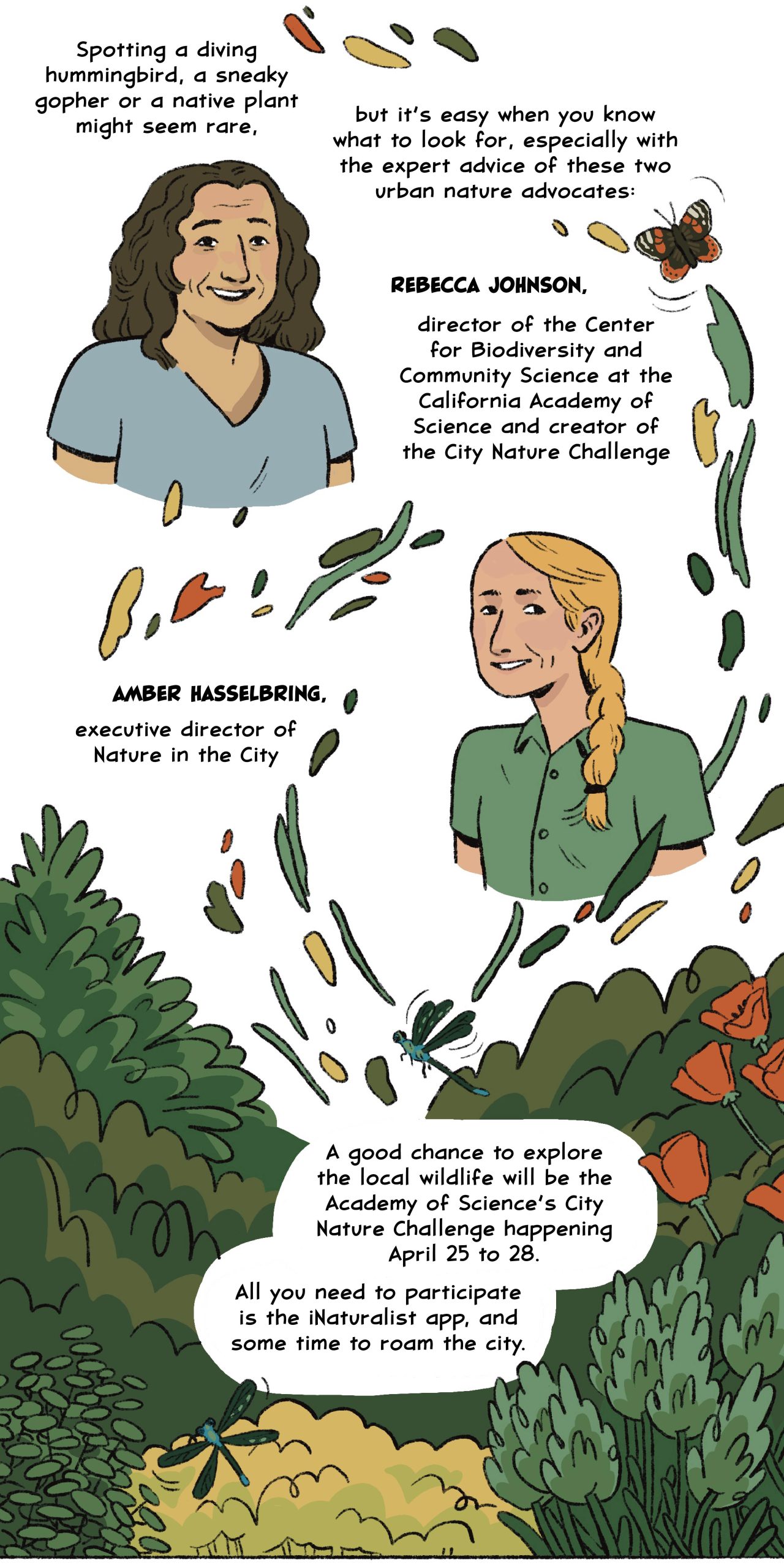
Spotting a diving hummingbird, a sneaky gopher or a native plant might seem rare, but it’s easy when you know what to look for, especially with the expert advice of these two urban nature advocates:

Rebecca Johnson, director of the Center for Biodiversity and Community Science at the California Academy of Science and creator of the City Nature Challenge, and Amber Hasselbring, executive director of Nature in the City.

A good chance to explore the local wildlife will be the Academy of Science’s City Nature Challenge happening April 25 to 28. All you need to participate is the iNaturalist app, and some time to roam the city.
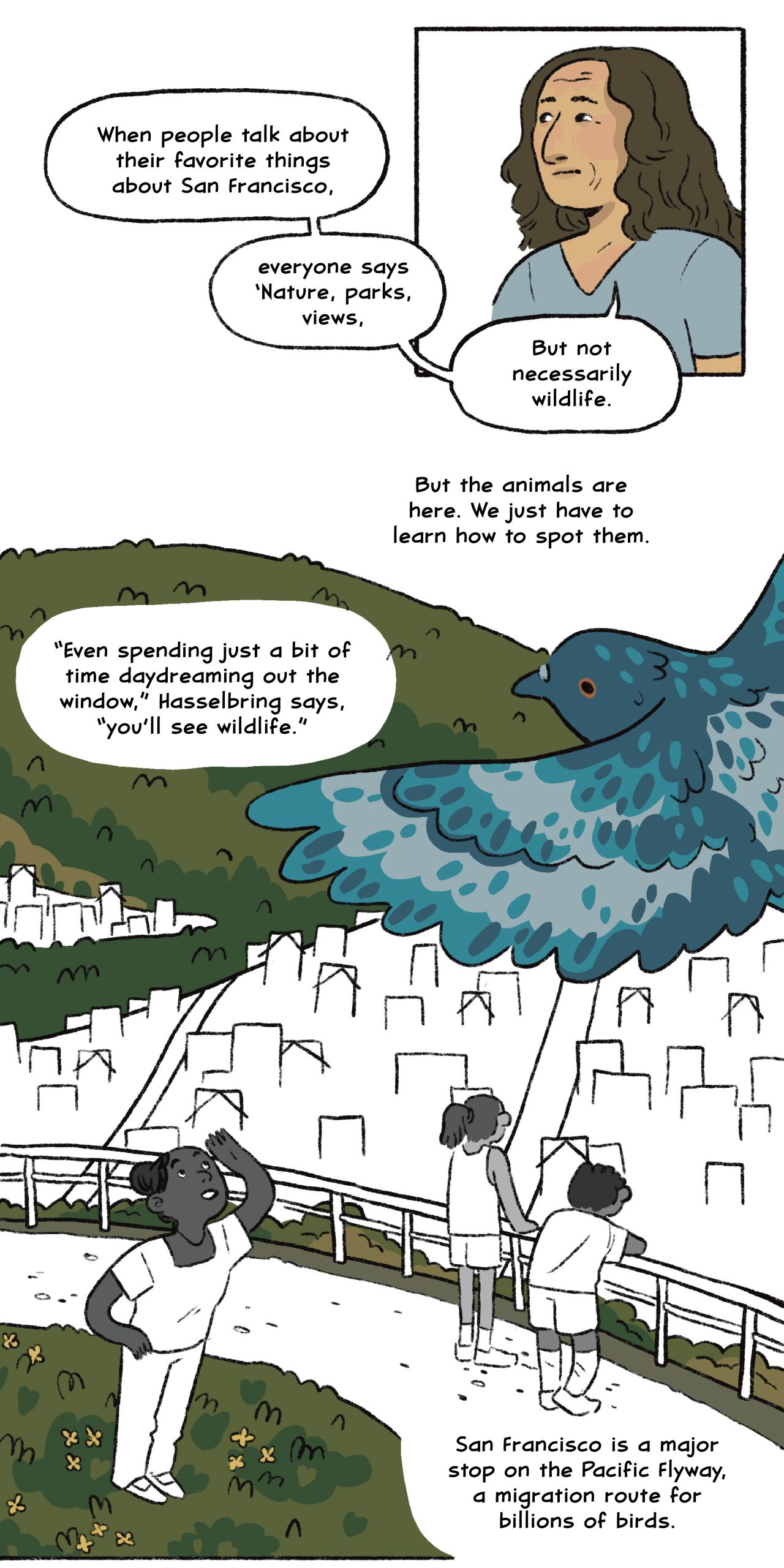
“When people talk about their favorite things about San Francisco, everyone says ‘Nature, parks, views,’” says Rebecca. “But not necessarily wildlife.”

But the animals are here. We just have to learn how to spot them.

“Even spending just a bit of time daydreaming out the window,” Hasselbring says, “you’ll see wildlife.”

San Francisco is a major stop on the Pacific Flyway, a migration route for billions of birds.

Look up

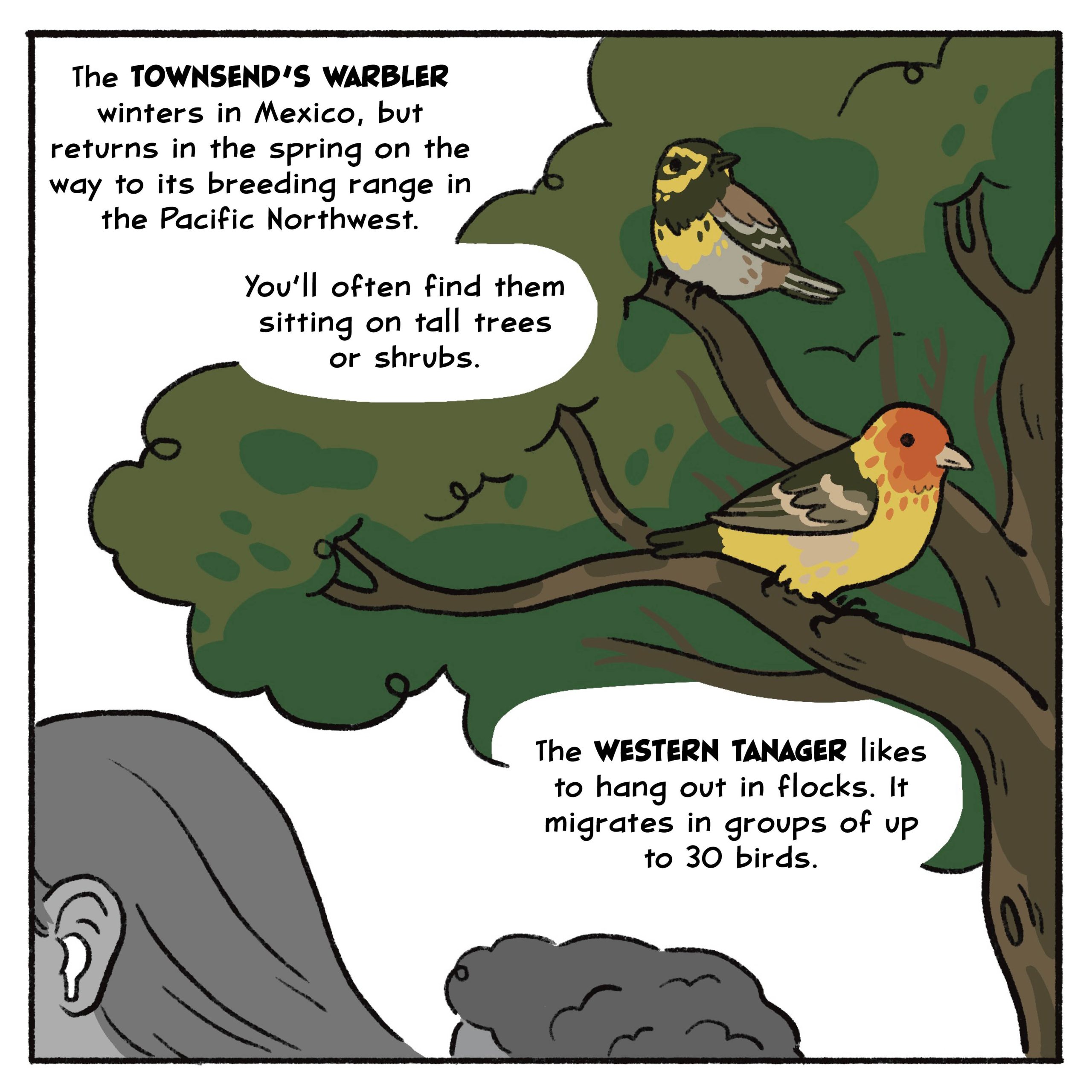
The Townsend’s warbler winters in Mexico, but returns in the spring on the way to its breeding range in the Pacific Northwest. You’ll often find them sitting on tall trees or shrubs.

The western tanager likes to hang out in flocks. It migrates in groups of up to 30 birds.
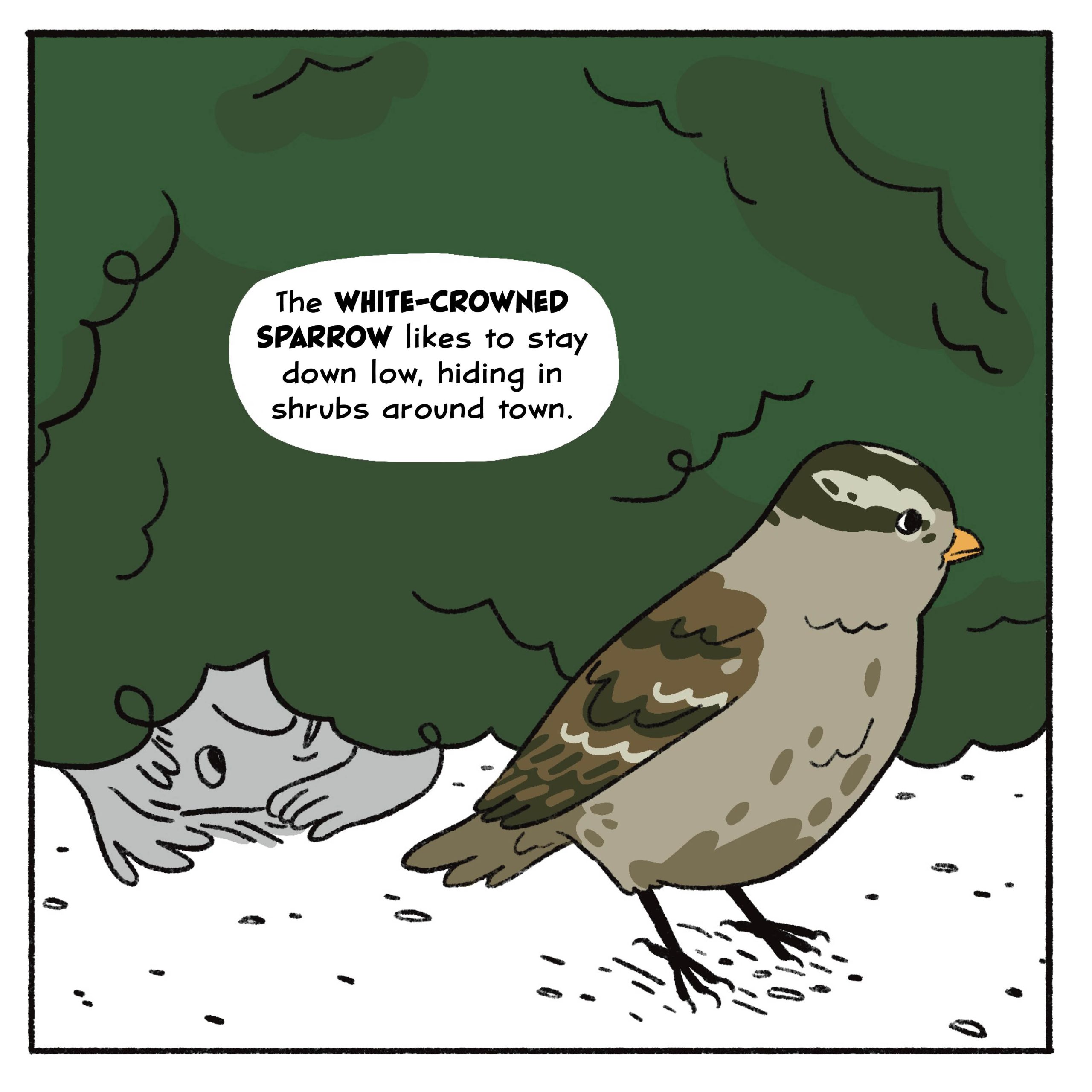
The white-crowned sparrow likes to stay down low, hiding in shrubs around town.
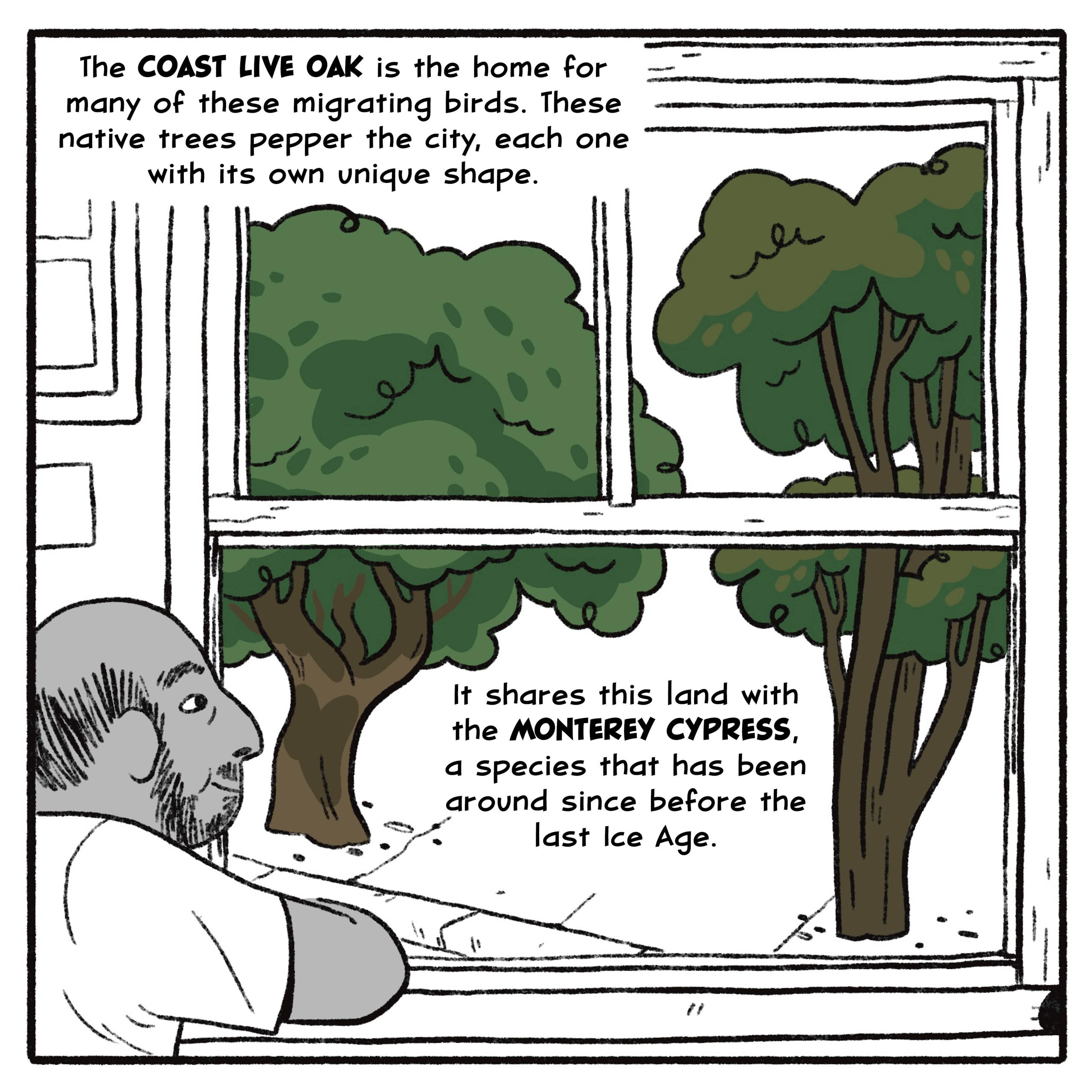
The coast live oak is the home for many of these migrating birds. These native trees pepper the city, each one with its own unique shape.

It shares this land with the Monterey cypress, a species that has been around since before the last Ice Age.
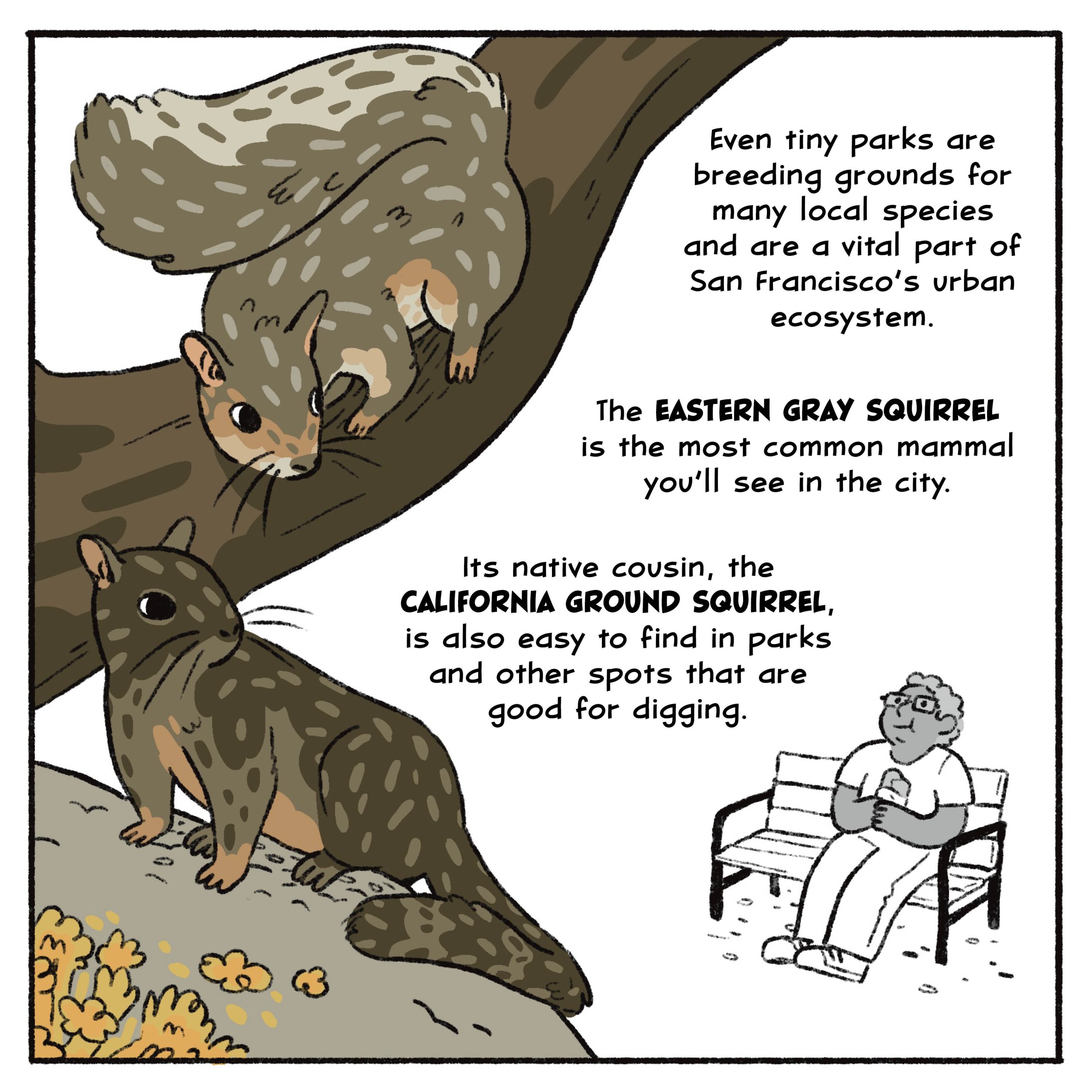
Even tiny parks are breeding grounds for many local species and are a vital part of San Francisco’s urban ecosystem.

The eastern gray squirrel is the most common mammal you’ll see in the city. Its native cousin, the California ground squirrel, is also easy to find in parks and other spots that are good for digging.
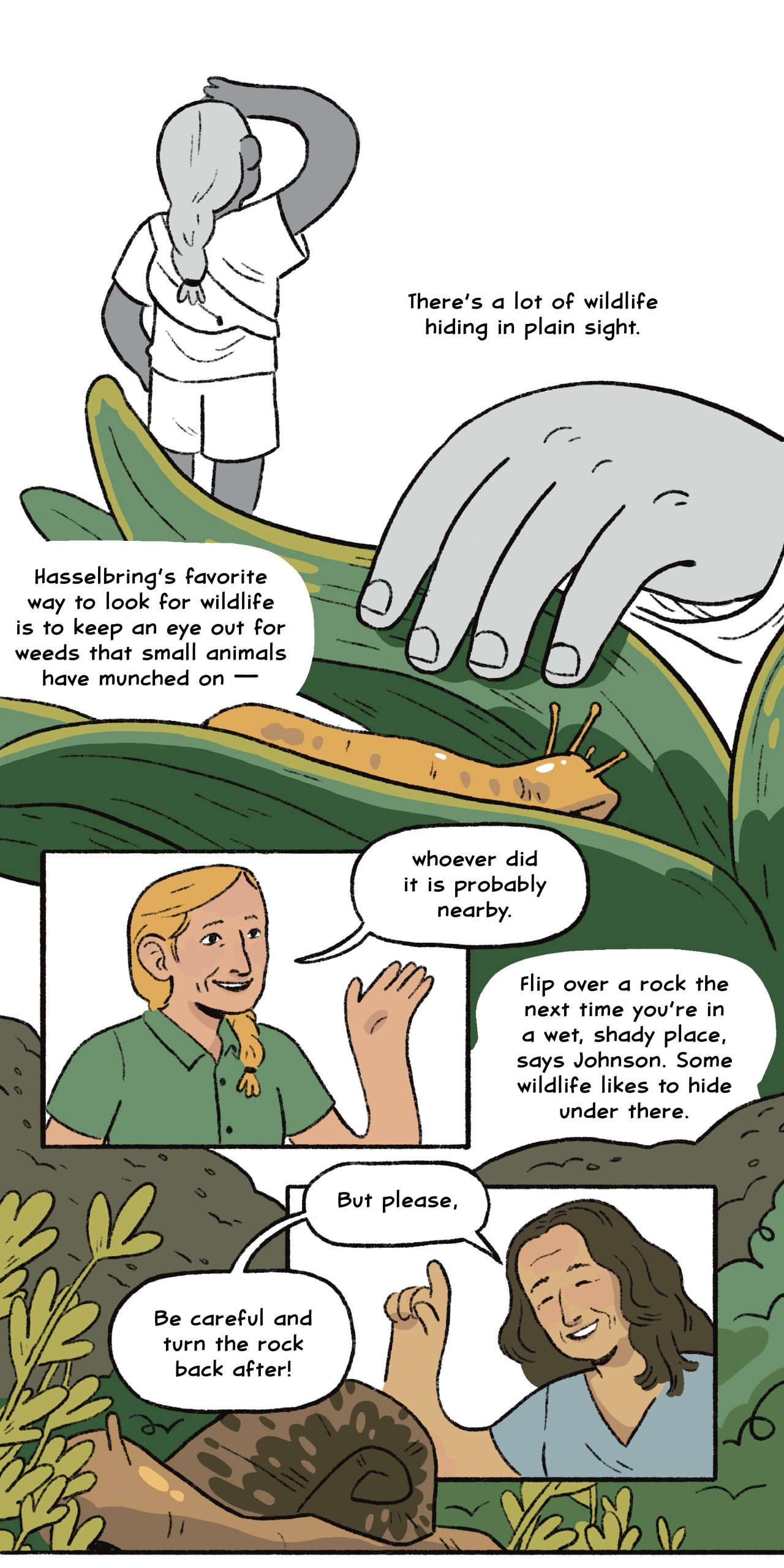
There’s a lot of wildlife hiding in plain sight.

Hasselbring’s favorite way to look for wildlife is to keep an eye out for weeds that small animals have munched on — whoever did it is probably nearby.
 
Flip over a rock the next time you’re in a wet, shady place, says Johnson. Some wildlife likes to hide under there. “But please,” she adds. “Be careful and turn the rock back after!”

Look down

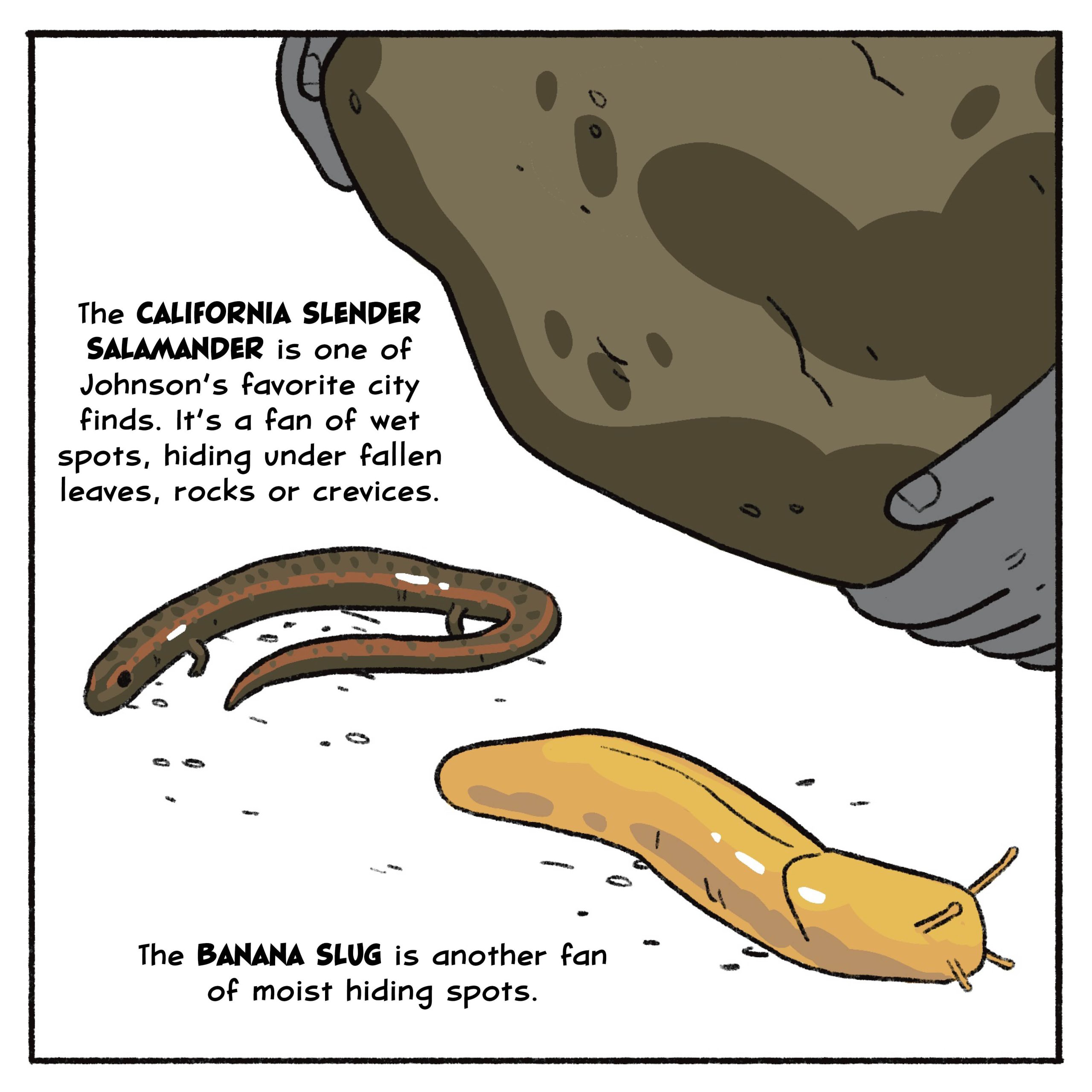
The California slender salamander is one of Johnson’s favorite city finds. It’s a fan of wet spots, hiding under fallen leaves, rocks or crevices.

The banana slug is another fan of moist hiding spots.
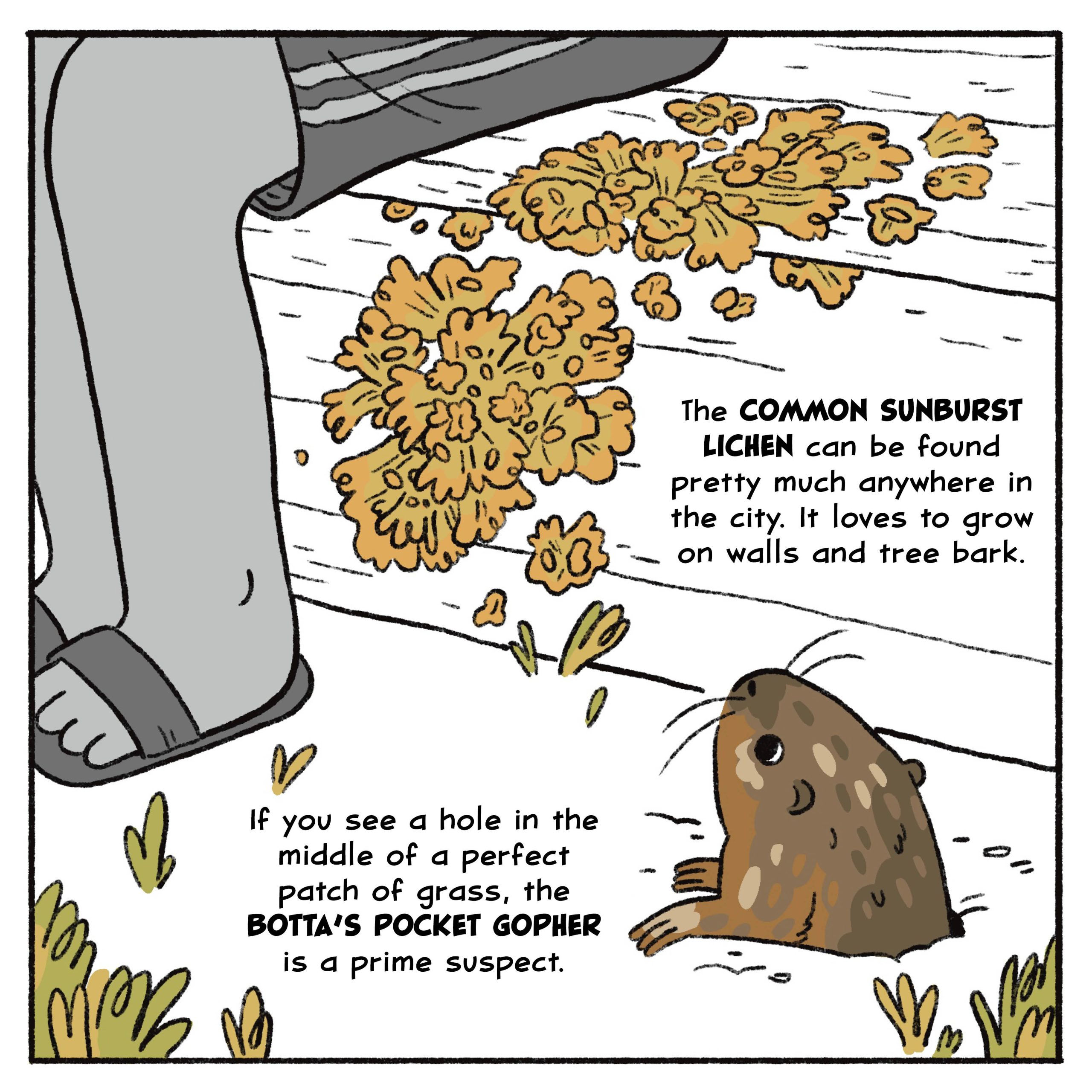
If you see a hole in the middle of a perfect patch of grass, the Botta’s pocket gopher is a prime suspect.

The common sunburst lichen can be found pretty much anywhere in the city. It loves to grow on walls and tree bark.
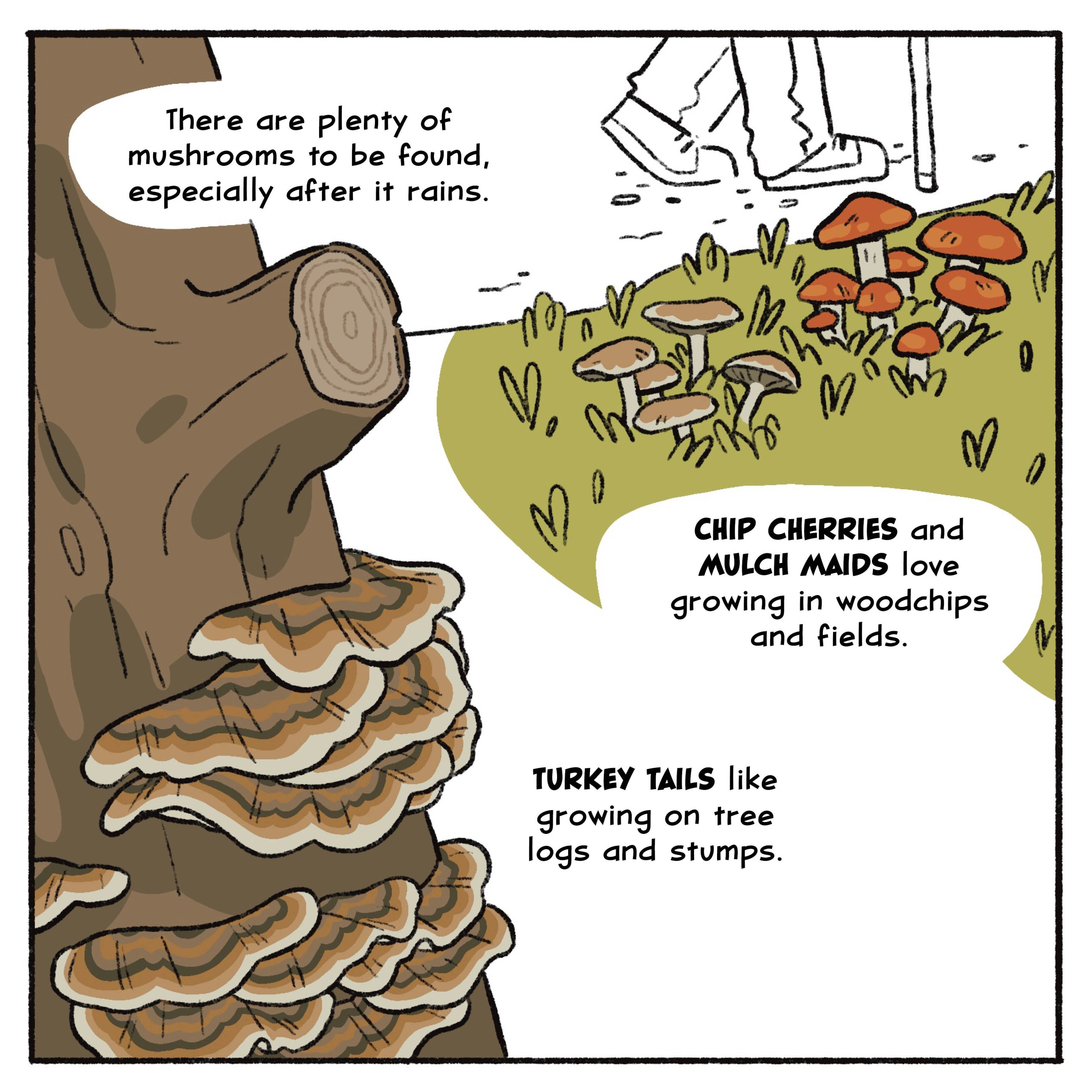
There are plenty of mushrooms to be found, especially after it rains.

Chip cherries and mulch maids love growing in woodchips and fields.

Turkey tails like growing on tree logs and stumps.
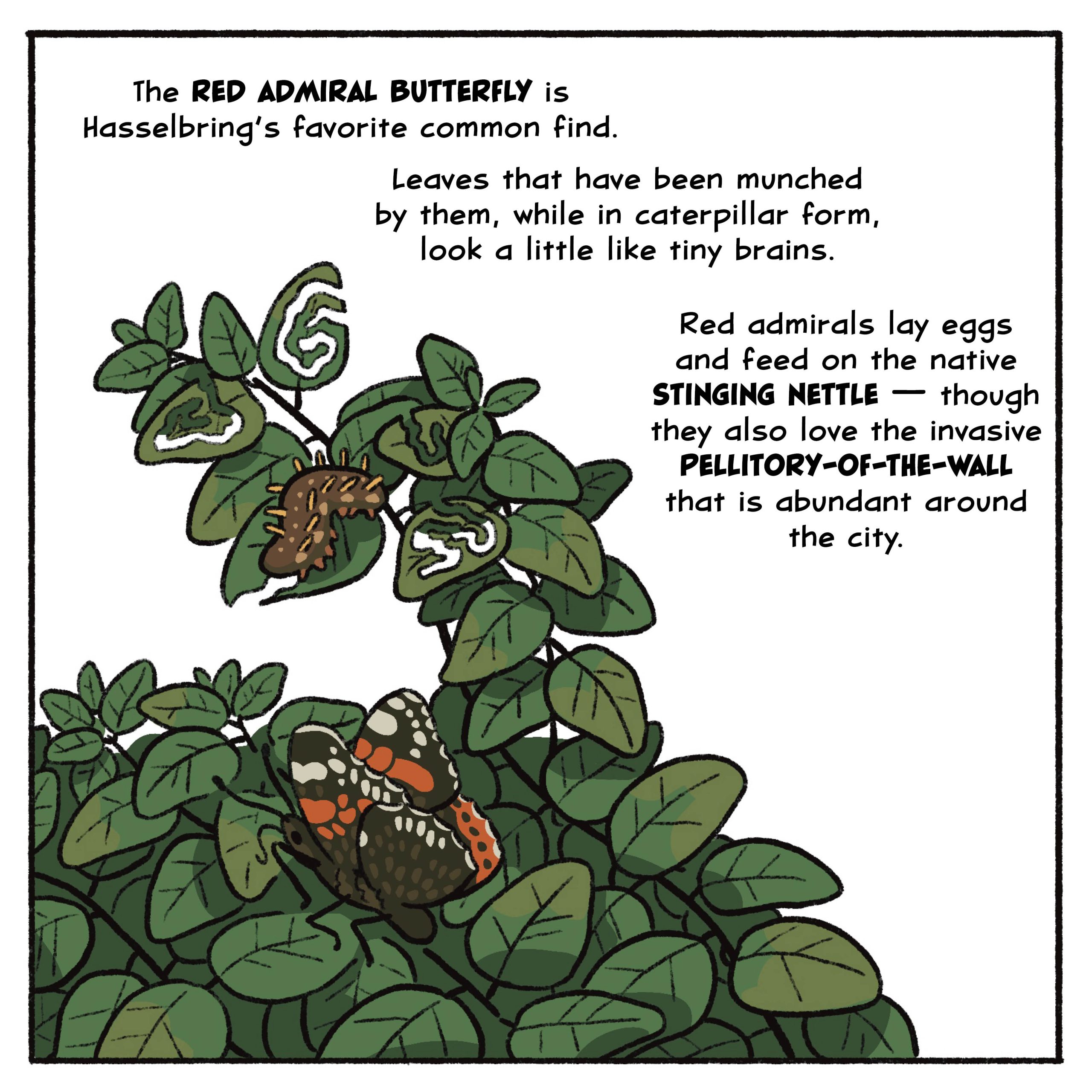
The red admiral butterfly is Hasselbring’s favorite common find. Leaves that have been munched by them, while in caterpillar form, look a little like tiny brains. 

Red admirals lay eggs and feed on the native stinging nettle — though they also love the invasive pellitory-of-the-wall that is abundant around the city.

Bring them to you

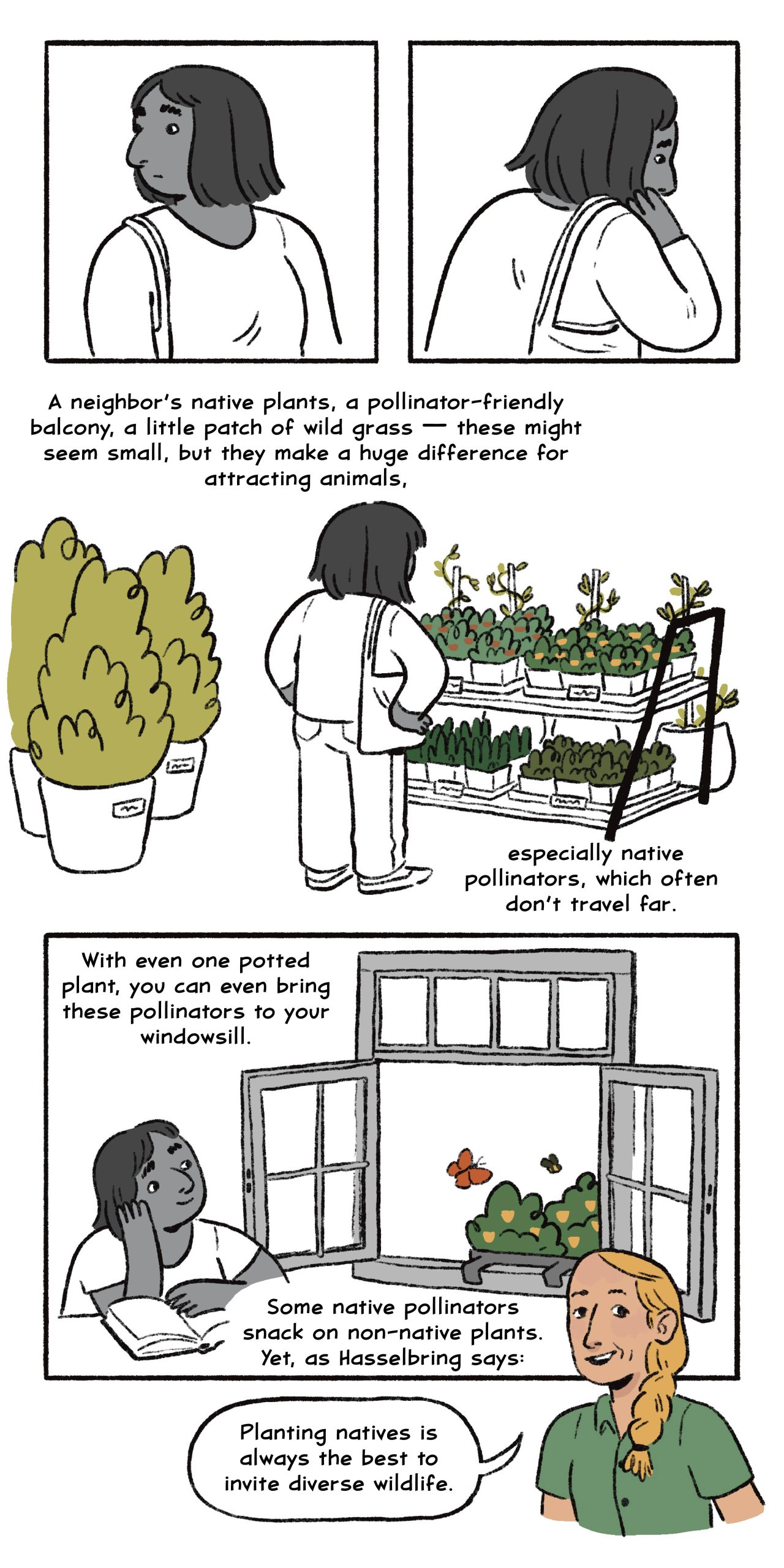
A neighbor’s native plants, a pollinator-friendly balcony, a little patch of wild grass — these might seem small, but they make a huge difference for attracting animals, especially native pollinators, which often don’t travel far.

With even one potted plant, you can even bring these pollinators to your windowsill.

Some native pollinators snack on non-native plants. Yet, as Hasselbring says, “planting natives is always the best to invite diverse wildlife.”
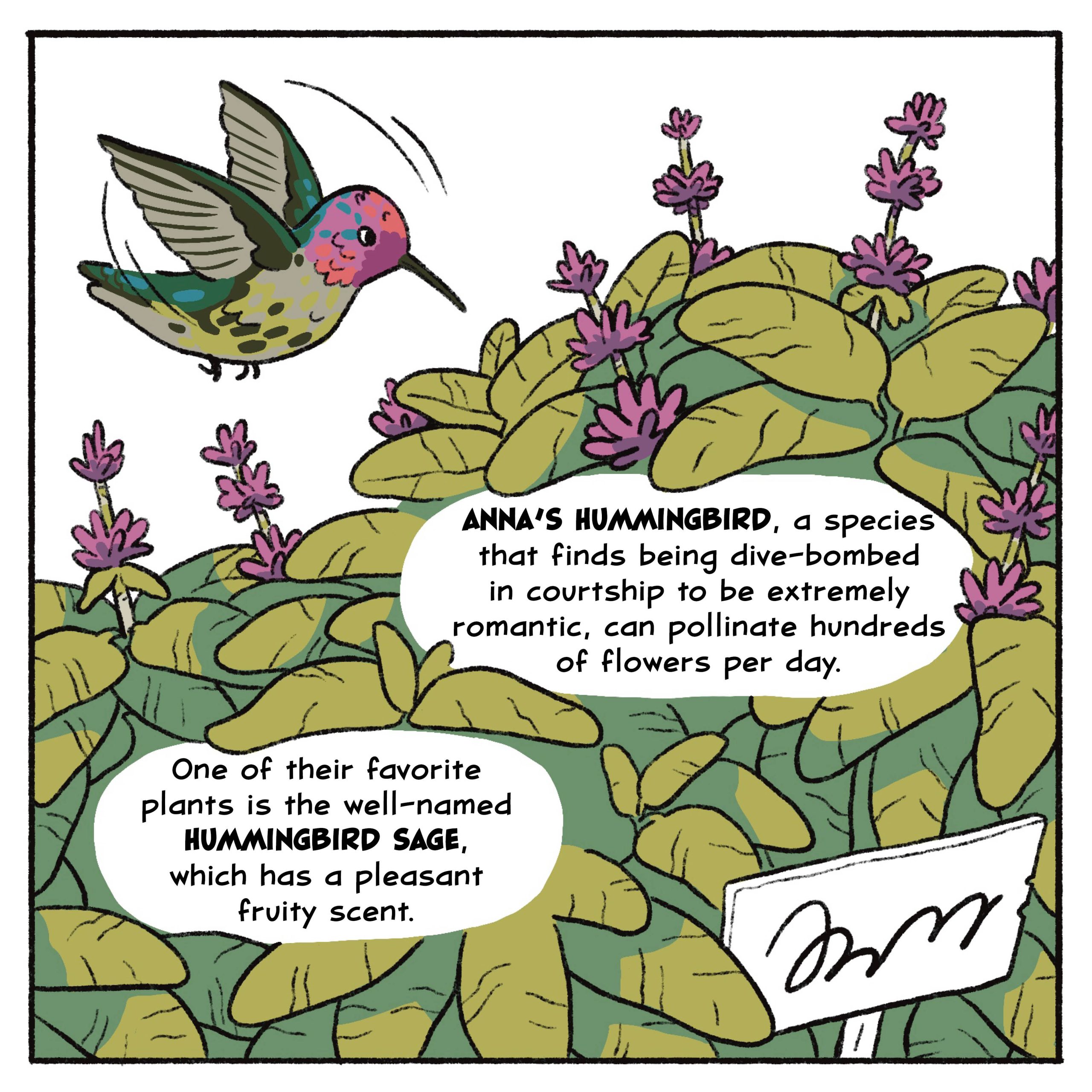
Anna’s hummingbird, a species that finds being dive-bombed in courtship to be extremely romantic, can pollinate hundreds of flowers per day.

One of their favorite plants is the well-named hummingbird sage, which has a pleasant fruity scent.
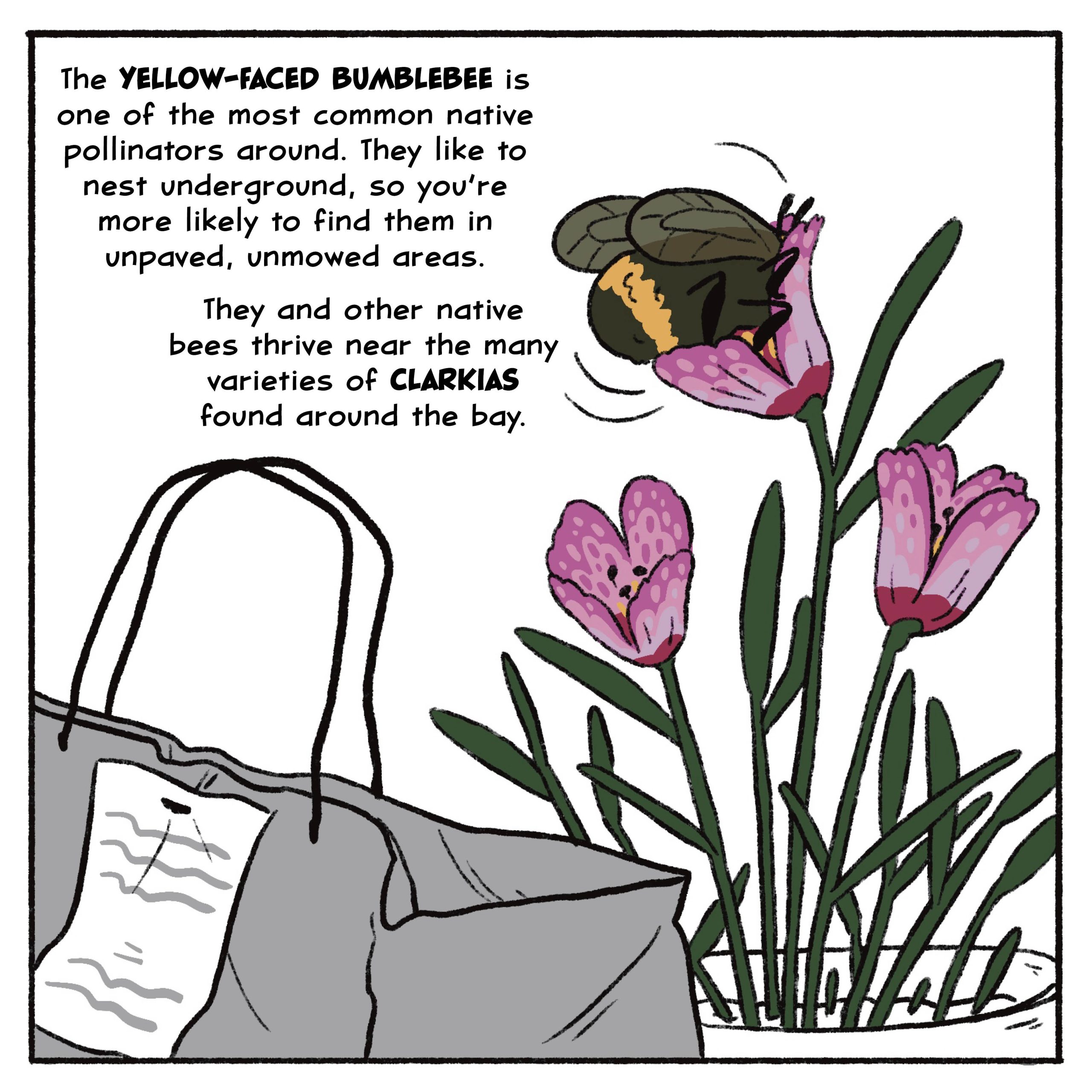
The yellow-faced bumblebee is one of the most common native pollinators around. They like to nest underground, so you’re more likely to find them in unpaved, unmowed areas.

They and other native bees thrive near the many varieties of Clarkias found around the bay.
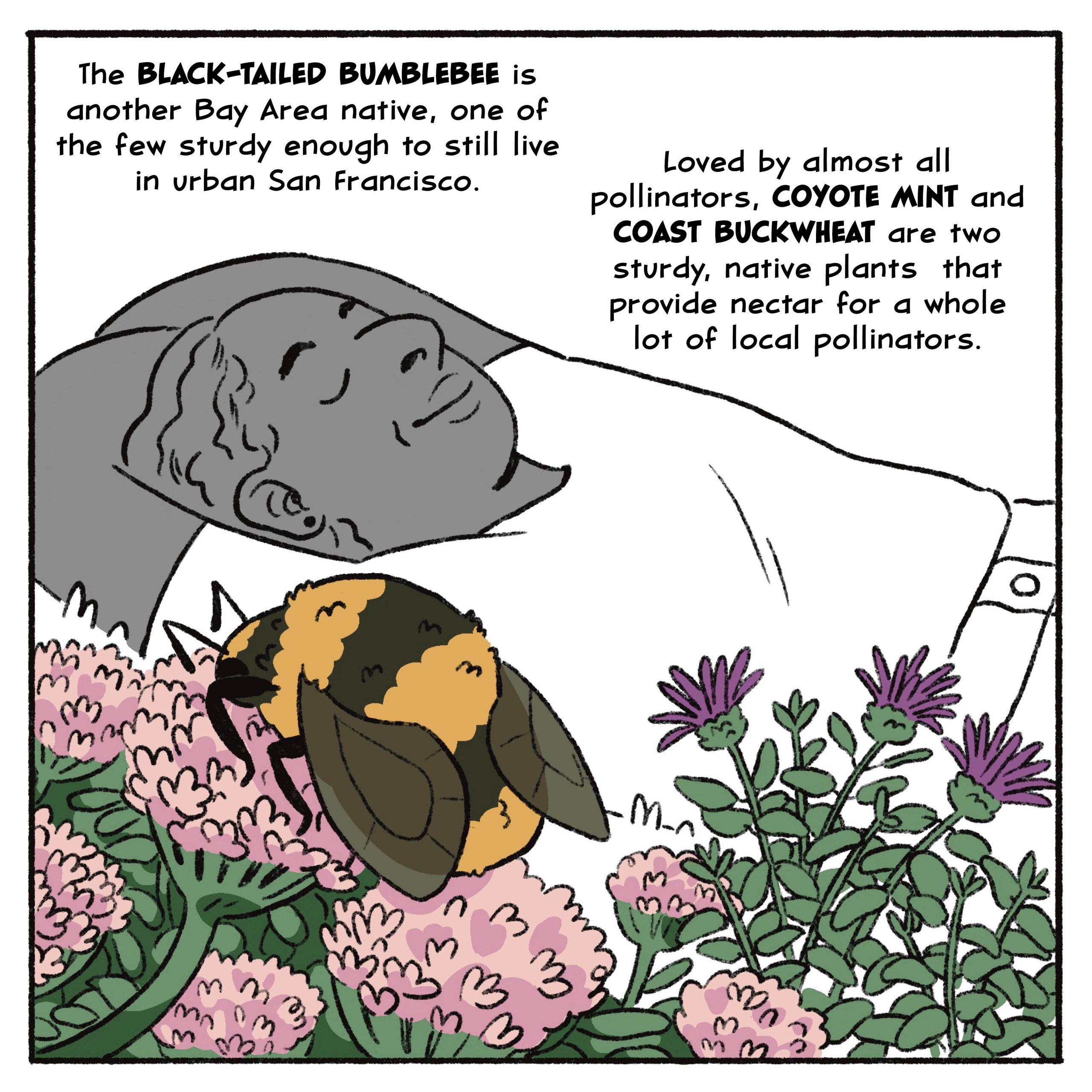
The black-tailed bumblebee is another Bay Area native, one of the few sturdy enough to still live in urban San Francisco.

Loved by almost all pollinators, coyote mint and coast buckwheat are two sturdy, native plants  that provide nectar for a whole lot of local pollinators.
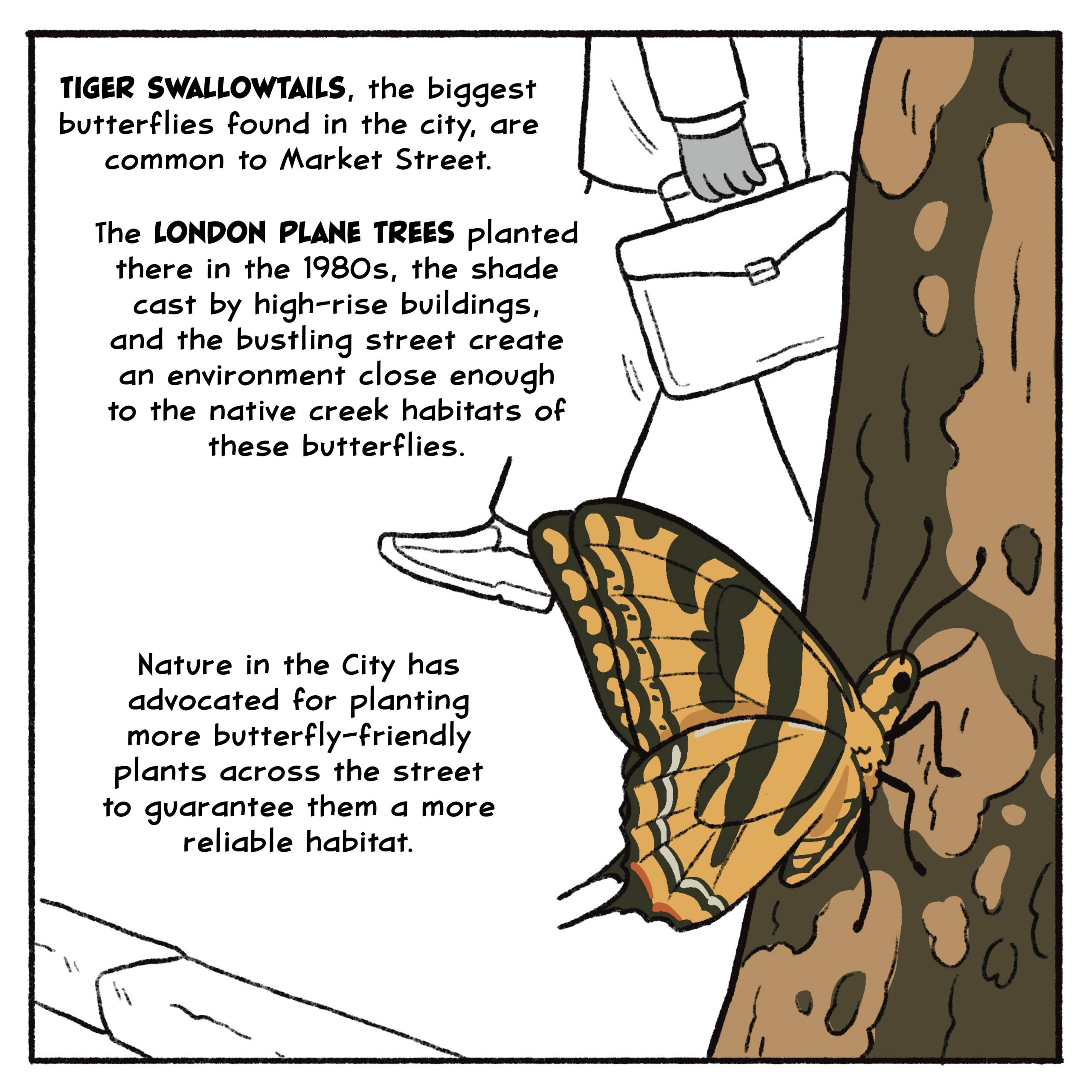
Tiger swallowtails, the biggest butterflies found in the city, are common to Market Street. The London plane trees planted there in the 1980s, the shade cast by high-rise buildings, and the bustling street create an environment close enough to the native creek habitats of these butterflies. 

Nature in the City has advocated for planting more butterfly-friendly plants across the street to guarantee them a more reliable habitat.
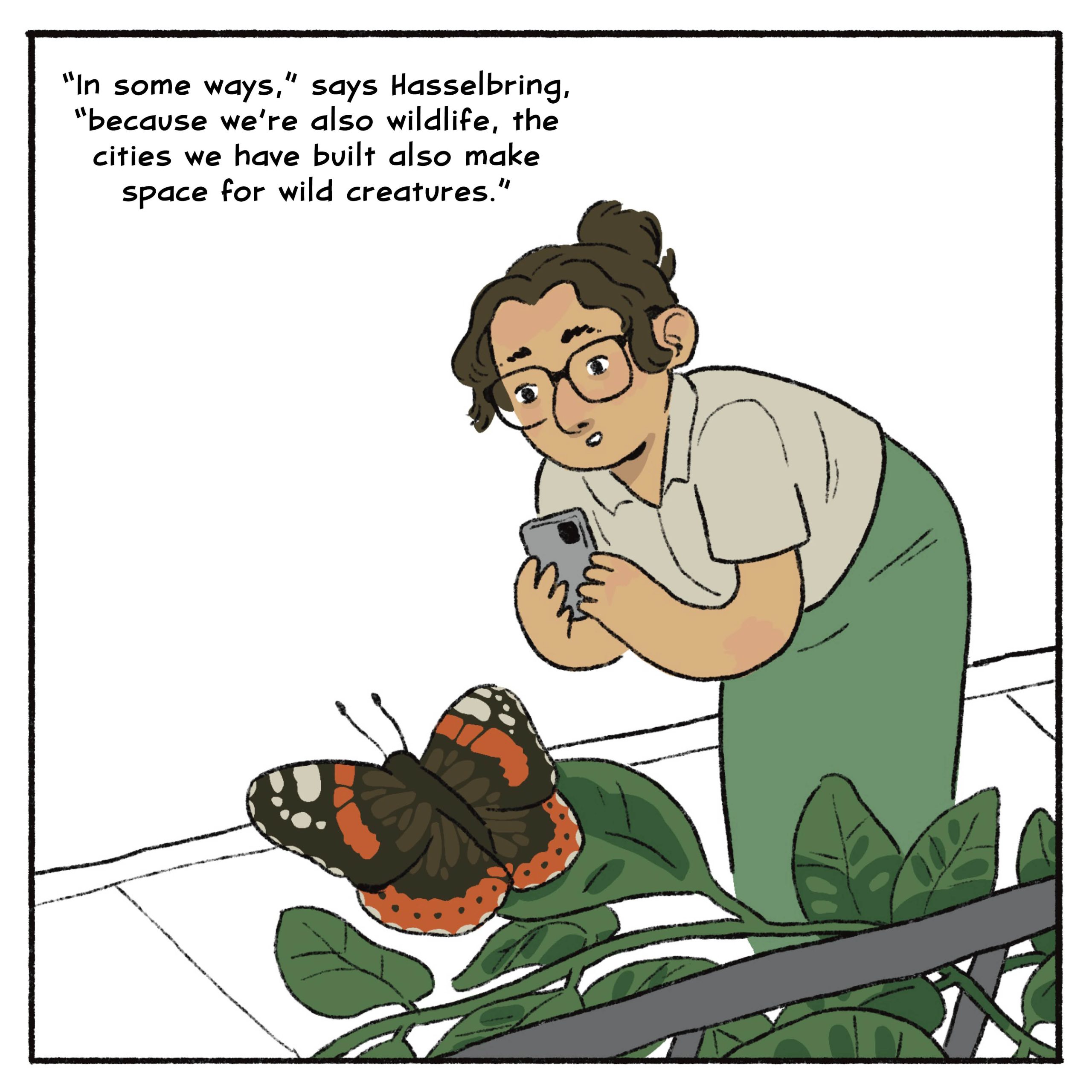
“In some ways,” says Hasselbring, “because we’re also wildlife, the cities we have built also make space for wild creatures.”

Follow Us

Ronna Raz is an illustrator and intern with Mission Local.

Join the Conversation

1 Comment

  1. Love this, and strongly second the suggestion to plant natives! I planted a coyote mint this spring around the edge of a sidewalk tree basin, and it’s doing great so far.

    The City has a tool called SF Plant Finder worth checking out. You put in an address and it gives you suggested plants. You can filter on “Appropriate Location: Sidewalk,” amount of sun/shade, and California or SF natives. https://sfplanninggis.org/plantsf/

    The Mission also has three corridors featured in the City’s Green Connections plan, which encourages gardening with plants that support specific species: the anise swallowtail butterfly along 17th Street, pollinators along Shotwell/Folsom, and bushtits along 22nd Street. https://sfplanning.org/resource/green-connections#info

    0
    0
    votes. Sign in to vote
Leave a comment
Please keep your comments short and civil. Do not leave multiple comments under multiple names on one article. We will zap comments that fail to adhere to these short and easy-to-follow rules.

Your email address will not be published. Required fields are marked *