

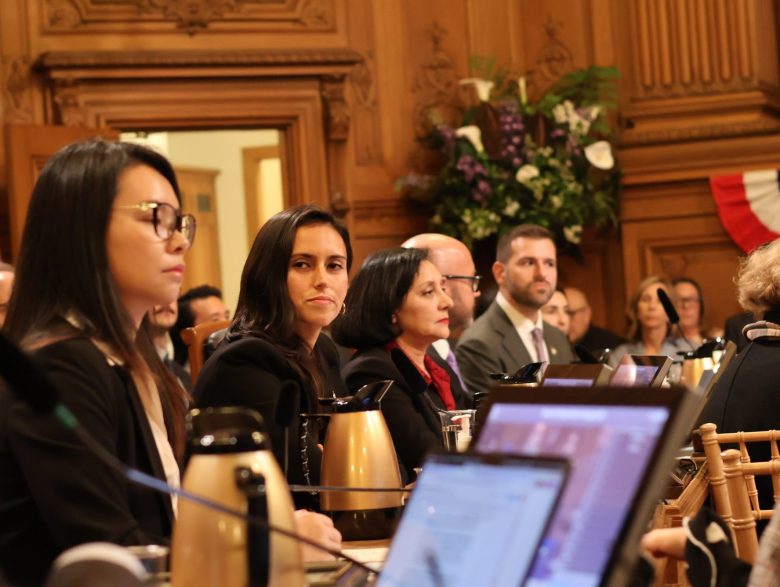

District 9 Supervisor Jackie Fielder on Friday rebutted the city’s argument that a new policy capping shelter stays at 90 days had improved the “flow” of families from homeless shelters into stable housing and led to a 51 percent drop in the city’s waitlist for family shelter.
Instead, she said, the Department of Homelessness and Supportive Housing rejiggered eligibility requirements for the shelter waitlist, and that change created a 51 percent drop.
Fielder’s comments came after a Mission Local article in which the Department of Homelessness and Supportive Housing said that a recent hefty decrease in the number of homeless families on the city’s waitlist came after a new policy, rolled out in December, capped shelter stays to 90 days with possible 30-day extensions.
This change, forcing people to more rapidly move from shelters to housing — or, in three families’ cases, back onto the street — had improved the “flow” of people through the system, the homelessness department says.
“It’s not due to this policy,” said Fielder. Instead, she maintains, the department “redefined homelessness and changed eligibility for family shelter waitlists.”
The homeless department, in a statement, wrote that the improvements were the result of several changes, not just the time limit. “The 90-day length of stay policy does not exist in isolation, but is part of a package of reforms and investments that the city is making in the family homelessness response system.”
Fielder introduced an ordinance this week to extend the cap from 90 days to one year, saying families need more time to get on their feet before they are kicked out of shelters.
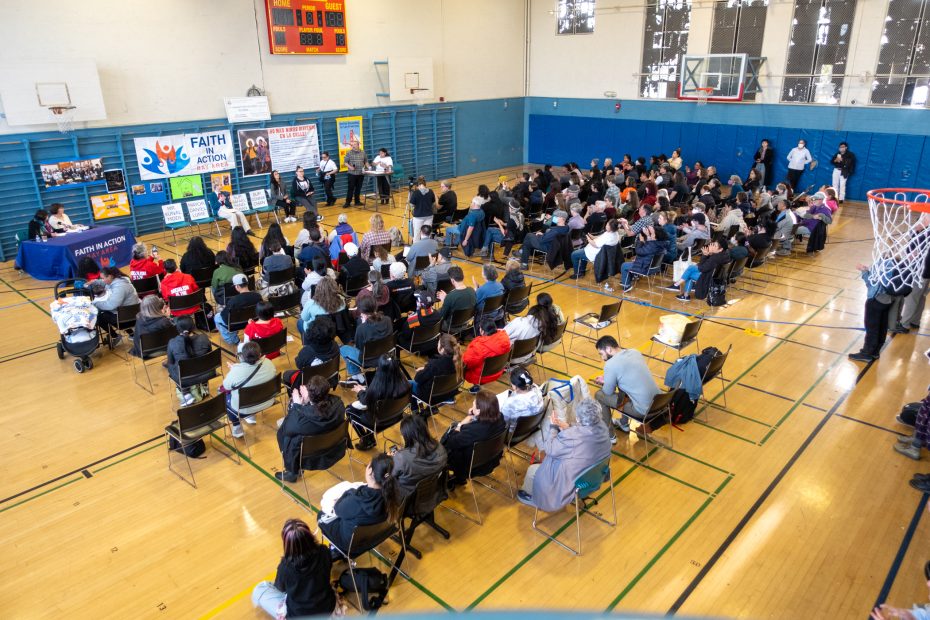
The department tightened its eligibility for the shelter waitlist last December at the same time that the 90-day cap was reintroduced: Those living in single-room occupancy hotels or doubled-up in other people’s houses and apartments are no longer eligible for shelter, and have been stricken from the list.
“If I am living in housing (including doubled up or SRO), am I eligible for shelter?” reads an FAQ from the department. “No,” is the answer.
Fielder said that is the main reason for the waitlist subsequently dropping by 51 percent, from 529 families in October 2024 to 255 families in April 2025.
The stated reason for the eligibility change was to ensure that shelter is available for families that are “unsheltered, leaving their current situation within 14 days, fleeing violence, and living in shelters without 24-hour access.”
Jennifer Friedenbach, the executive director of the Coalition on Homelessness, agreed that the department’s explanation of the data is “misleading, because they decreased the waitlist by just cutting people off.”
“Cutting people off the waitlist for shelter is not a success,” Friedenbach said.
Families who are doubled up in apartments or living in SROs that still choose to seek shelter are often in “very desperate situations,” Friedenbach said. These situations vary from family to family, including living in single-room occupancy hotels with special-needs children, or alongside drug dealers and users. Under the new rules, these families can no longer sign up for shelter wait lists.
“They just blanket cut off all these families,” Friedenbach said.
The homeless department also said the rate of families in shelters getting stable housing went up from 21 percent to 26 percent between August 2024 to April 2025, but Fielder takes issue with that characterization, too.
There could be a variety of factors driving the modest five-percent bump in families getting housing placement, she said, and the department “can’t definitively attribute that to the new shelter stay policy … because the other variable that was rolled out at the same time, that more than likely contributed to that bump, are rapid-rehousing subsidies and other programs.”
Those housing subsidies came from Mayor London Breed’s “Safer Families Plan,” which created a total of 215 rental subsidies that serve a total of some 450 families.
Laura Valdez, the executive director of homeless and welfare nonprofit Mission Action, said the city needs more housing and homeless services, not a time limit.
“Unless the city continues to add housing resources to [the Department of Homelessness and Supportive Housing] portfolio, this 90-day shelter stay policy in essence will create a revolving door of unhoused families that will go from shelters, exit back into homelessness, and add their name back on the waitlist,” she said.
“The real flow that they talk about needing to create will come from resources,” Fielder added. “Not from putting a clock on families.”
Jackie Fielder is looking at this through a very narrow and simplistic lens. In a world of limited government funds and limited government-funded housing and shelters, choices need to be made about priority. Should someone currently housed in an SRO or shared apartment be able to take a shelter space from someone sleeping on the street? Should an undocumented immigrant family be provided with a shelter space instead of a long-time SF family who has been evicted? Should people be allowed to stay in a shelter for a year or longer and deny those spaces to hundreds on the streets? Should SF be responsible for housing people who might be able to afford their own housing in a lower cost area? There are no “right” answers, but these policy choices need to be addressed head on rather than going for sound-bite actions like “no putting a clock on families.”
You seem to want to provide answers to those questions without committing to them. A bit sound-bitey. Yes, we know there’s a tradeoff between housing one family vs. another, that’s obviously not news. That’s also not the question. The question is whether 90 days is even sufficient to get someone into sustained long-term housing, as a hard and fast number for all situations and families. Obviously it’d be “nice” to have that pipeline work more efficiently, but if you’re providing shelter for 90 days and they can’t even get an appointment with the housing agencies to get into the lottery pools in that period, what is the point? Revolving door, musical chairs, family is back where they started. That would likely then repeat for the next family, immigrant, native locals, evicted, any. What is the point of transitional temporary housing if not to get them to long-term stable situations as quickly as possible? And if it’s not possible within 90 days in some cases, do you just say “screw it, back of the line” and kick the family to the curb? That seems to be what you’re trending towards.
The volume of people who can relocate to San Francisco and expect free housing and services is capped at only 8 billion. So we can just plan for that number and we will be just fine….
As a mom of 4 kids, we moved multiple times, a total of 5 different shelters, 4 different towns/cities. It is hard to get on your feet, and alot of factors play into doing so, which was the problem I had. Due to running out of time at the last shelter, I was forced to sign a lease, that i can’t keep up with, and now fear that I will have to find another shelter to go. They need to give more time, need more housing, and open the waitlists up.
Jackie Fielder needs to seriously do some research into San Francisco shelters. The demand is incredibly high for homeless shelters and unfortunately there is not enough space for everyone.
What is not being discussed here is how families are allotted up to 6 months time to stay in a shelter. However, there are some families who stay in shelters who have refused to enroll their children in basic childcare, school, or even enrolling in cal works for state benefits. So if a family is not working towards any goals for several months, and we have families who show up to access points every day pleading for a space/bed, what do you do?
We also need to give access to families who need space, and are working towards their goals.
“So if a family is not working towards any goals for several months”
What are the social/shelter workers doing during this time, watching this unfold? There are requirements just to be in those programs that you enroll, there are supposedly well-paid people in “non-profits” guiding them and managing their applications, etc… so while no doubt there are several families that are dropping the ball for all kinds of reasons, who is there being paid to sit and watch it go down? Why aren’t they speaking out about it, why isn’t there an immediate response from all of these shelters and organizations to call this to the attention of the legislature? If they don’t work the program, they lose their spot. If that’s the big issue, why is nobody talking about it?
She’s obviously promoting more shelter construction ASAP… you can’t omit that, can you?
Thanks for the article .
Homeless families are challenging .
Everyone should get Temporary shelter and services . In fact if offered and refused then they should not be allowed to remain on the street and arrested and removed.
But many more questions need to be asked ?
Where are they from? A verified history must be obtained .
Asking and expecting SF taxpayers to pay for anyone who shows up in SF to cover housing etc without a time limit really wrong .
Where are these families from? SF is not a refugee camp.
I think since the homeless are only coming more and more , actual refugee camps like the un has and houses 6 million is what is best for these persons and the taxpayers .
Some may live at the sites for a couple years .
They should be located away from neighborhoods.
Part of Golden Gate Park , the old race track by Oakland , Alameda naval base , or rent property from another city outside of SF .
There is no reason that homeless , addicts and displaced persons need to all be placed in the Tenderloin.
Clean the mess up.
Still would love to see a report on what the city has done to require and help people get jobs .
There can only be so many drug dealers .
Most move and would be willing to go where they could find work.
The welfare state and learned helplessness which is seen in the Tenderloin, only allows people to hang out get high and drunk on the street in front of government paid for buildings . People are rotting away .
The way to survive in this billionaire city. Look for rent rooms in the laundry mats. Get 2 to three jobs. The city housing is a snowball in a fire pit
Families double double double or in
sris are almoat always next to drug activuty, so that.means about all would have been eligible for shelters. And, they themselves are able to be addicts, so that’s an absurd cause for an exemption.
It’s nice to have someone like Fielder asking the hard questions no one else asks.
I like the word “rejiggered.” Also, if it goes up to a year, where do the other families who become homeless go because the first group think they have housing for a year? Ask for more money that isn’t there, will ya?
Fundamentally it’s: If you can’t see it, it doesn’t exist. Or out of sight, out of mind.
I think the Mayor is part of and responding to a political majority evaluating him based on reducing/eliminating visible homelessness. Essentially people living outdoors on public property. Secondarily, people living in vehicles on the street. Drug dependence and mental illness aren’t concerning to SF as long as they aren’t visible.
Fact is the public is far less concerned about people living in any conditions as long as they are indoorss. Substandard housing is considered a public heath/safety problem for DPH, DPW, planning department, adult protective services, and police(domestic violence) to address administratively outside the public eye.