


Before journalism moved at the speed of social media, before photos could go live within seconds, Robert Nickelsberg loaded 35mm film into three separate cameras and put his undeveloped rolls on a plane to New York. Days later, he might see just one image in Time magazine. The rest sat in a box, waiting for their moment.
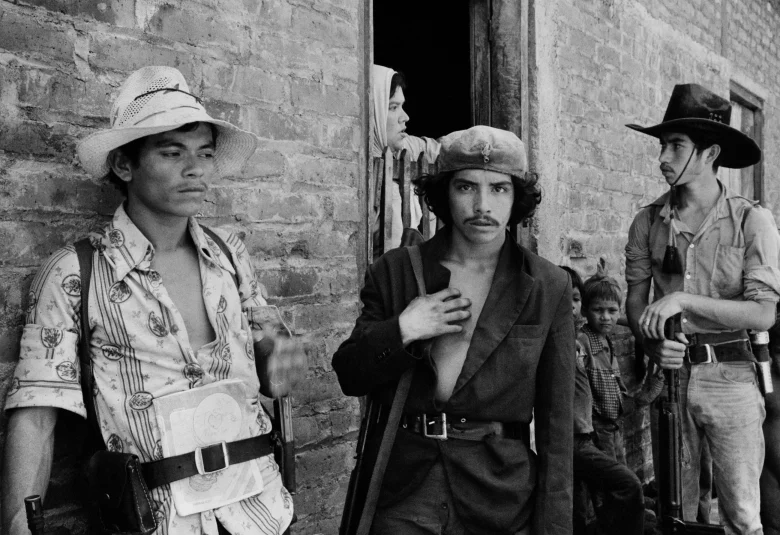
Nickelsberg has spent decades in conflict zones. In El Salvador, during the early 1980s, he walked with guerrilla fighters, followed government troops, and captured the violence that shaped daily life..
His new book, “Legacy of Lies: El Salvador 1981–1984,” features a powerful selection of black-and-white images, many of them images that went unpublished for decades. At Time, only a handful of photos from each assignment made it to print. The rest stayed in the dark, overlooked completely once the magazine shifted toward color. Decades later, Nickelsberg and a small team of archivists finally reviewed the dozens of three-ring binders filled with images. The result is both a historical record and a personal reckoning.
Nickelsberg will be speaking about the book and his career in a live Q&A hosted by The Guardsman at the City College of San Francisco on Thursday, April 24. The event is 6-8 p.m. at the Mission Campus, 1125 Valencia St., Multi-Use Room 109.
This interview has been lightly edited for clarity and length.
When you got the chance to comb through those stacks of archived negatives, what was it like emotionally to revisit those images?
I never saw my film back then. I sent everything to New York unprocessed, and the editors made the choices. Maybe ten frames would get looked at, one or two might run, and that was it, remember Time was and still is a weekly hardcopy magazine. I didn’t even get to see the contact sheets. I never knew if I had mis-framed something, or if I had actually done something really effective. But I never really saw my mistakes. And photography, when you look at it rationally, is a series of mistakes. There are 36 images on a roll of film. You hope two or three are good.
So when I opened that box of black and white film and contact sheet in 2013, it was the first time I was truly able to be both photographer and editor. I reviewed frames I’d forgotten I shot. I saw people I had lost track of. I spotted moments that were too raw or complex to make the cut at the time, but now felt urgent. It was like watching history with new eyes; sharper, slower, more honest.
Your photos often contradicted what the Reagan administration was saying about El Salvador. What was it like being the counter-narrative?
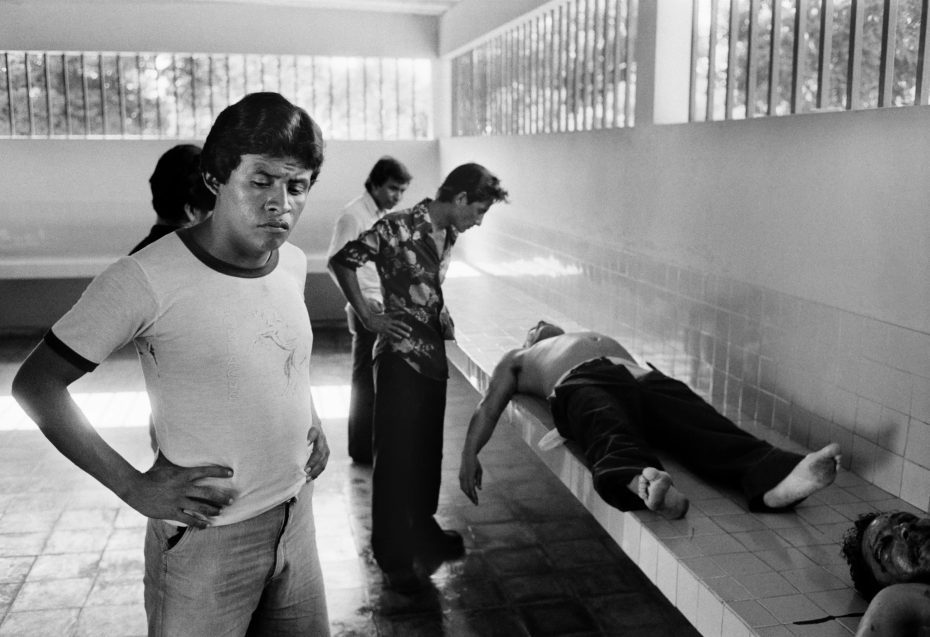
That’s the key word: Counter-narrative. What we were showing graphically contradicted what the Reagan administration was saying or testifying to at Congress, that the violence was reduced, that the economy was improving, that the Salvadoran military was reforming itself. And we were reporting and photographing the opposite. Death squads still existed. Morgues were full. Disappearances were still happening. We were also writing about that. And there was this contradiction that wasn’t welcome in Washington.
You know, I was living in a house the Time reporter, and I would tell him what I saw during the day either in the city or the countryside. And then he would write the story with his interviews and reporting and send it to editors in New York. So the contradictions would be built into the images and the text. And that, I think, ultimately had an effect. Not so much immediate, but eventually, the U.S. government realized that this war wasn’t going to be won militarily. And they started putting pressure on the Salvadoran military to negotiate.
What was your relationship with the FMLN (The Farabundo Martí National Liberation Front), and what was your experience like embedding with both the Salvadoran military and the guerrillas?
In early 1981, I spent two weeks with the guerrillas near the Salvadoran-Honduran border. After that trip, my meetings with the FMLN were spontaneous and rarely for more than a few hours. It wasn’t necessary to constantly spend a lot of time with the guerrillas if you were living in the capital, San Salvador.
I wasn’t interested in glorifying or romanticizing the guerrillas. They were serious, they were committed. But there was also violence. There were a lot of people killed.
I also spent time with the Salvadoran Army — , which in some ways was easier because they had more resources. We had access to trucks and planes. I would follow trucks carrying coffins of Salvadoran soldiers back to their home villages. That kind of access gave me a much broader sense of the war. You can’t just go to one side and expect to understand what’s happening. That’s why I tried to be on both sides—to understand the totality of it.
What do you think photography can do that a written report can’t? What is the power of the image?
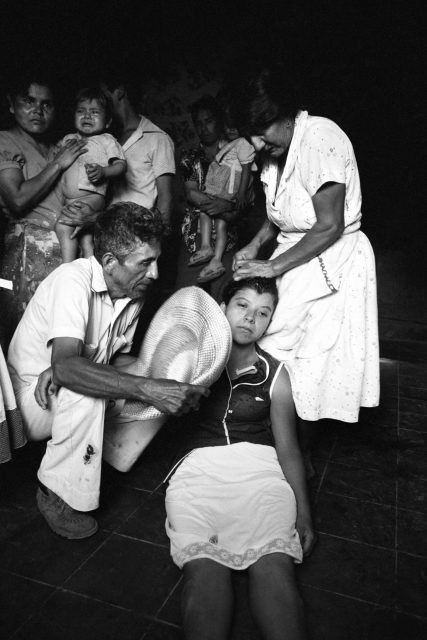
You know, I think words are often more rigid than photographs, they require more time to get right. A photograph kind of interrupts that. It can be disturbing. It can be contradictory. That’s where its power is. It’s not linear. It’s not something you can necessarily explain. But if it holds people for more than two or three seconds, if it draws them in and provokes a response, then they’ll start asking questions. That’s where I think the power of photography is.
I tried to be as accurate and credible as possible. That was always the starting point. I wasn’t interested in creating sympathy or pushing an agenda. I just wanted people to ask: what’s going on here?
Do you think visual storytelling still holds up in 2025?
Yes, it does, although there’s a lot more choice than before. And with that choice, you also have a shorter attention span. So for long-form journalism, which we all used to do up until maybe 2010, there’s still appreciation, but it’s a different game. There’s a difference between doing daily work and doing investigative work. Not everyone can do investigative work properly. But stories still matter. The ability for someone to tell a good story, visually or otherwise, is still a priority for many. The appetite is there.
Whether it’s sustainable is another question. Making a living at this is a real conundrum. It’s not like before, when you could do an assignment, get paid, and buy gear or a plane ticket. Now, that money disappears fast. Grantsmanship and resourcefulness have become essential.
Nayib Bukele recently put a stop to the El Mozote trial. Does it feel like the “legacy of lies” is persisting in El Salvador’s present?
That didn’t surprise me. Governments try to shut things down all the time. That’s part of their toolbox. They deny, they distract, they change the narrative. But you can’t erase a massacre. You can tear down a monument, you can attack a journalist, but the story remains. People remember. The community remembers. And there are still journalists doing the work, many of them in exile, some of them under surveillance. They’re being tracked with spyware. Pegasus spyware has been used on Salvadoran journalists.
I mean, look at El Faro [an internationally recognized digital news outlet founded in El Salvador]; those journalists are now mostly based outside the country. But even so, they’re still asking questions. They’re still trying to find accountability. The story doesn’t disappear, it just shifts location. That’s how I see it. There are always people who will dig. They may have to do it quietly, or from a distance, but they keep going.
What can a photograph convey about war and truth that perhaps written journalism or official reports cannot? And, maybe more urgently, does that power still hold in 2025?
I don’t want to sound ambivalent, but photography can force a response. You publish a photograph and the Salvadoran government might say, “Well, we’re going to investigate,” even if they never actually do. You can pause an atrocity. You can shine a light on it. It’s not activism. It’s not charity. It’s something else. It’s revealing. That’s what I believe in.
You can push back against a lie with something visual that has layers, that holds contradiction. And I’m not keeping score; I’m just trying to maintain a steady feed of what I think matters. I’m not saying this one photograph stopped the violence, or this one gallery show changed policy. But you put it out into the world, and maybe it lands somewhere. Maybe it helps. I hope these images help people understand how we got here. Especially when it comes to something like the war in El Salvador and the migration that followed. That’s not ancient history. That’s now.
The story isn’t short, nor civil. Why ask readers to post comments? Why is that president still alive, and able travel to the U.S.
I’ve been multiple times to El Salvador. The gangs were ruthless and extorted everyone. They murdered several bus drives to show how powerful and immune from justice they were. Bukele is the only guy with the tools and working plan, to free the people from their oppressors.