

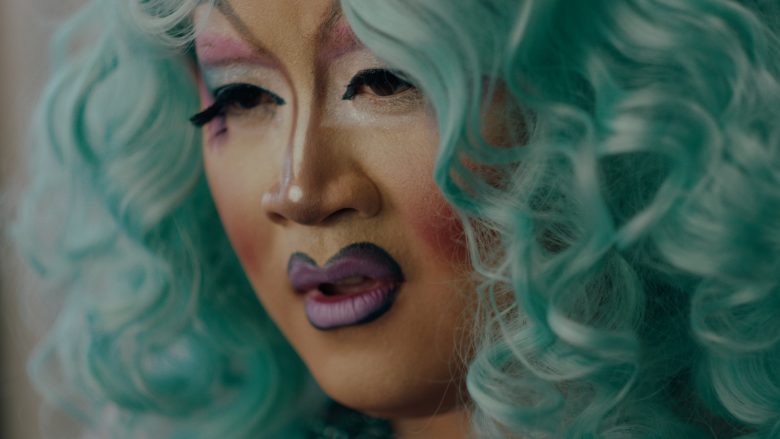

It was all over the national news in 2022: Actor, writer, and musician Kyle Casey Chu, in her drag persona Panda Dulce, was reading to a roomful of children and their parents during a Drag Story Hour at the San Lorenzo Public Library when a group of Proud Boys stormed in shouting transphobic slurs.
The incident was, understandably, traumatizing for Chu. But looking back, what shocked her most was the aftermath, as reporters descended on her, eager to hear her story — as long as it conformed to the tale they wanted to tell.
In “After What Happened at the Library,” which screens on Wednesday, Apr. 23, as part of the SFFILM Festival’s “Shorts 2: Under Precarious Circumstances” program, Chu reclaims her own story in a darkly funny fictionalized form. Written by Chu and Róisín Isner, directed by Syra McCarthy, and starring Chu as drag queen Akita Yaheart, the short explicates what victims go through when the media circus comes to town.
Chu and Isner were already longtime creative partners — “writing wives,” says Chu — when the Proud Boys invaded Panda Dulce’s space. Afterwards, during their weekly writing session, Isner told her, “Let me know when you get tired of being called brave.”
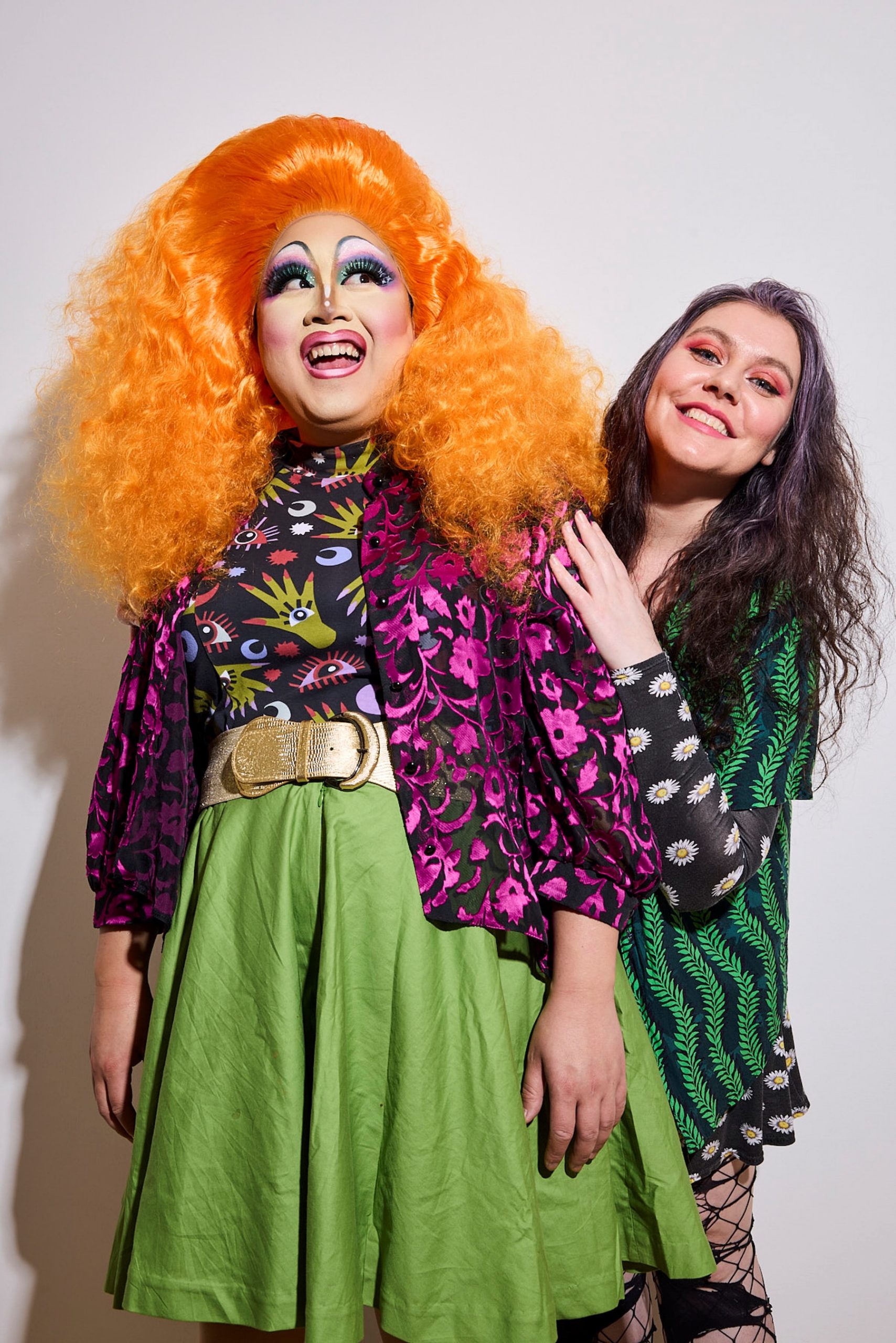
Isner, it turned out, had also experienced a traumatic experience followed by a media feeding frenzy: In 2007, when she was 17, the musician and community organizer was in Dolores Park on July 4 when she was hit by an errant firework. The accident cost her a finger. Not only did local and national press come calling, what happened to her became a cautionary tale in public safety campaigns.
“We realized that we both had this unique positioning as public victims that were used as a football in a culture war, or about an issue that made us become symbols,” Chu says. “I think in that resonance between us, we were like, ‘We should talk about this, because this is unique. And also, you know, healing in its own way.’”
The pair decided to write a screenplay based on what happened to Chu at Drag Story Hour that also embroidered into the narrative some of Isner’s experience. Their first impulse was to write about what happened at the library, but when Isner wrote a treatment, she wasn’t satisfied.
“What is this saying?” Isner remembers asking. “It felt sort of like just leering at a weird situation that happened, but without actually having anything to say, besides the very obvious, which is like, ‘Don’t do hate crimes on drag queens.’”
“We were trying to find a way into the story when we realized, maybe this is the story, this aftermath,” she adds. “When people become public figures due to being victims of something, we often think about the incident. We don’t think about what the experience afterwards is … what is it like to be the subject of cameras pointing at you? What happens in the parts that get cut out, that you don’t see on TV? And how does that influence your own perception of what happened? Your own memories of what happened start getting overwritten by a narrative that gets assigned to you. The reality is [often] much messier and stranger.”
‘A lack of accountability’
One myth that surrounds the attack on Drag Story Hour that Chu hopes to dispel is that it was investigated as a hate crime. In fact, no charges were filed at all, let alone hate-crime charges.
“This resulted in nothing,” Chu says. “The sheriff’s department contacted me and said, ‘We’ve filed everything we need to do, and unfortunately, it’s out of our hands.’ And then we realized that they were the ones who were responsible for taking action on this. There was just a lack of culpability [and] accountability throughout that obviously belied what they told the media.”
“After What Happened at the Library” is a proof-of-concept short, which means that she and Isner are expanding the story into a feature. Chu is currently a resident at SFFILM FilmHouse in order to advance that goal. The longer script, she says, expands on the surrealism of the story and strikes a more comedic tone.
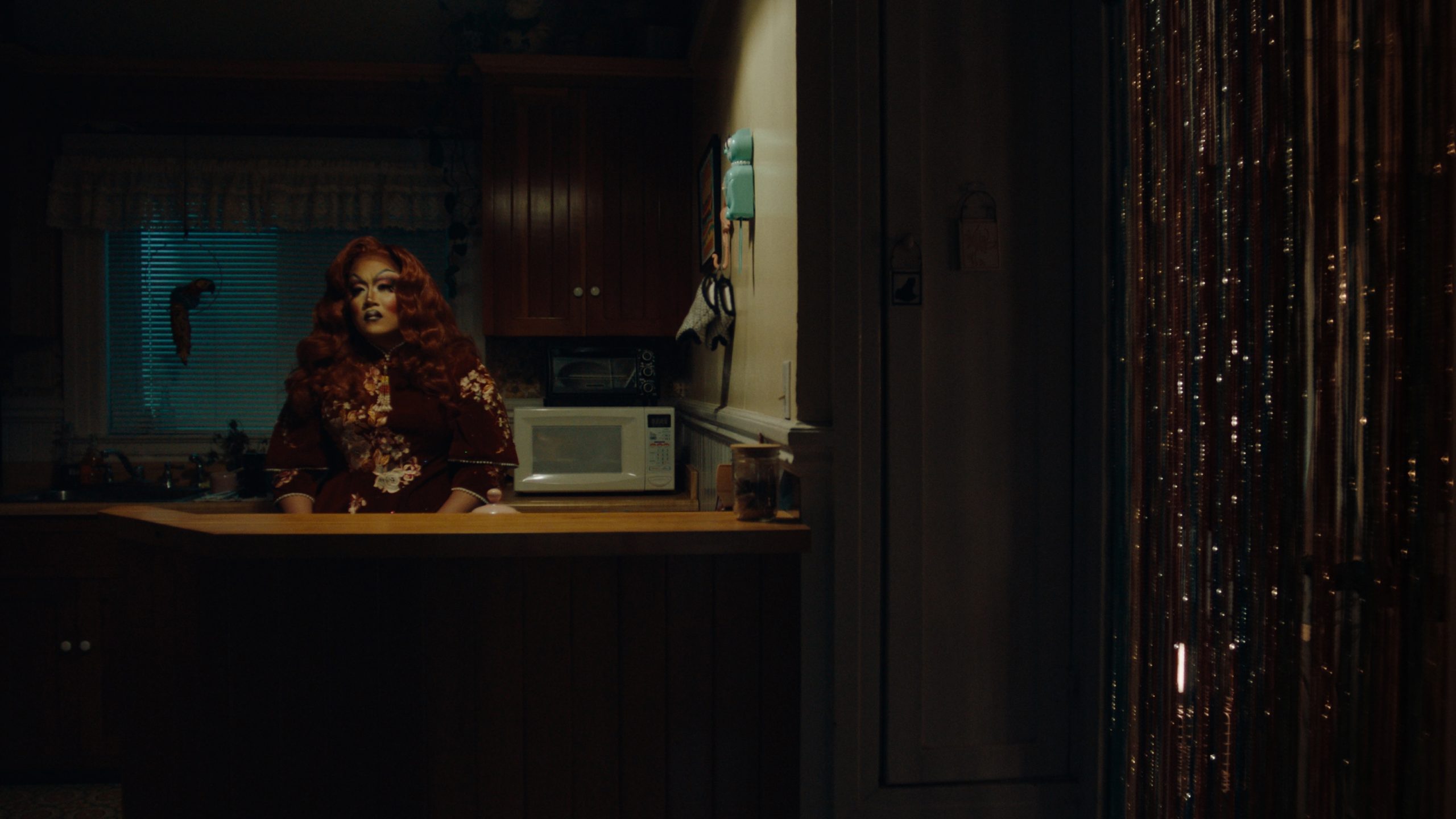
She never intended to star in the short, but took on the role when none of the actors who auditioned were quite right. Then, Chu insisted on auditioning herself. She wanted to be the right person for the role, not simply put in the part for being the victim of the incident. But the casting director and the director agreed she was the actor born to play Akita, which is how she found herself back in the San Lorenzo Public Library reliving her Drag Story Hour experience.
“It was really daunting to enter, because I didn’t know what to expect,” Chu says. “I didn’t know, emotionally, how it would land for me. It ended up being really cathartic, and I was kind of able to revisit this incident, and the site of the incident and the various circumstances and psychic space on my own terms, and with a lot of people around who really cared for me, and were actively monitoring to make sure everything was going well.
“We had an on-set social worker,” she adds. “A lot of care was put into it for me and for all the other actors involved, even the actors who were playing extremists. We had a pre-Zoom with them to say, ‘Okay, this is how we’re going to enter this mind space. Let’s be very mindful about how we exit this mind space, so you don’t take it with you off set. So, it was a very positive experience, I’d say. And in it, I also learned that I really like acting. It’s really fun and it’s empowering. So, yes, that is the plan is to star in the feature.”
“After What Happened at the Library'”screens as part of “Shorts 2: Under Precarious Circumstances” at 5:45 p.m. on Wednesday, Apr. 23 at the Marina Theater (2149 Chestnut St.). Tickets ($17.50-$21.50) and more info here.
The PB probably saw some folks from that ‘secret’ bar they like to go to on the weekends.
Love to see Pam Greer’s writing on film. She always invites us into the beautiful intersection of humanity and creativity and helps us to view art with curiosity and discernment. There’s a generosity of spirit in her work that is sorely missing in the world and on this page.
Since when are drag queens a protected class covered by hate crimes legislation? Are drag queens born that way, or is this discretionary conduct? The best legal option might be to charge the Proud Boys with interfering with drag queens doing for profit businesses.
What on earth was Michelle Tea thinking when she conjured up DQSH as a way of introducing youth to LGBT via cross dressing, often sexualized, clowns? Did she expect for conservative and Christian parents to just roll with it? How many LGBT do these cross dressing clowns accurately represent? Why are we celebrating the validation before young, impressionable youth, of so many oppressive stereotypes of oppressed groups crammed under one frightwig?
There is a complete lack of consideration of risk by those in these identitarian bubbles, their personal identity, emotional needs and feelings are elevated over any strategic concerns that might be based on observed, empirical reality and the survival strategies that those of us who grew up sexual minorities had to learn and master or else.
To the right wing, this offers up weak, vulnerable fish confined to a barrel that eliminates the need for skilled markspersonship, all while confusing youth about what LGBT really are.
But the font of victimhood is encouraged to run over, and in the end, that’s what really counts, isn’t it?
Yet, how many drag queens have been mass shooters, or caught with kiddie porn?
What does the lack of violence perpetrated by drag queens have to do with the fact that cross dressing clowns in youth spaces are all but guaranteed to piss off the Christians and conservatives and pull a scorching backlash, the likes of which reelected Trump?
Drag queens didn’t get Trump elected, racism did.
So this narcissist wasn’t happy with what happened — no charges being filed in the Bay Area says all we need to know — and decided to create a fictional version of the story.
AND of course the narcissist has to play the starring role.