

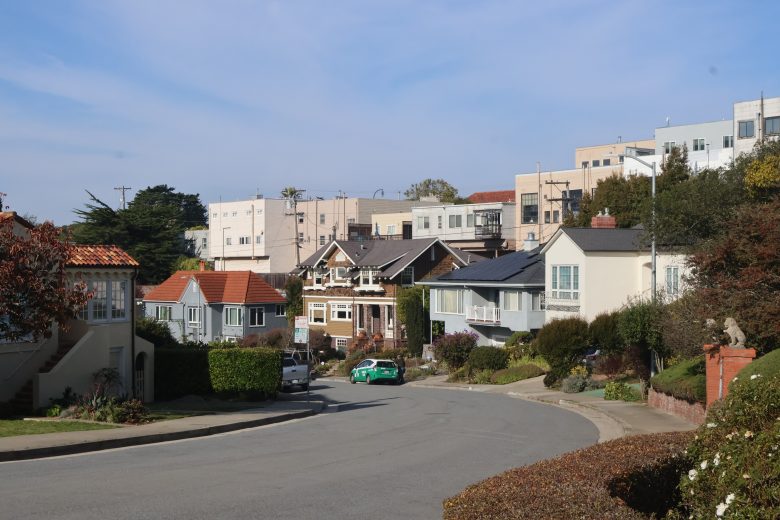

The San Francisco Planning Department unveiled a plan on Thursday to add tens of thousands of homes to San Francisco by raising height and density limits across large swaths of the city.
The “family zoning plan” focuses, in large part, on the city’s Westside, where it envisions adding taller, denser housing.
For Mayor Daniel Lurie, this was a political statement, complete with some risk: He has pleased the pro-development YIMBY groups that did not support his candidacy while potentially irritating Westside neighborhood populations that did.
The city is mandated by the state to build 82,000 housing units by 2031, and the city’s upzoning plan was first initiated in 2023 under former mayor London Breed to meet that requirement. The proposed changes would accommodate 36,000 units in addition to those allowed under current zoning.
The consequences of failing to meet the state requirements could be dire, but housing took a distant backseat during Lurie’s mayoral campaign to public safety, street conditions and accountability. It was incumbent mayor London Breed who ran on urbanist issues and gained the endorsements of pro-housing organizations like SF YIMBY and the Housing Action Coalition.
In a voter guide from Neighborhoods United (a coalition of neighborhood groups that oppose the upzoning) regarding mayoral candidates’ housing platforms, Lurie was marked as against the city’s “blanket upzoning plan” and of the perspective that the state housing element is “unachievable” and “counterproductive.” The voter guide was developed using survey responses and public comments from candidates.
Meanwhile, on his campaign website, he took a different tack, pledging to rezone to meet the state-required housing element.
In a pleasant surprise for pro-housing organizations, now that he is in Room 200, Lurie is taking a pro-upzoning line.
“It is courageous, right?” said District 7 supervisor Myrna Melgar, who was quick to point out that many voters in Lurie’s base (and her own district) have expressed hostility toward the city’s upzoning goals. The neighborhoods bothered by the zoning changes overlap almost entirely with Lurie’s base.
“He gets it. Sometimes in politics, you do the right thing, even if some people who supported you may not fully agree with you,” said Sen. Scott Wiener. “That is called leadership. That is what the mayor is showing here.”
The new plan proposes higher height limits across parts of certain corridors like Polk Street (six to 25 stories), Geary Boulevard (six to 49 stories) and Van Ness Avenue (six to 65 stories). In addition, virtually all residential areas on the West Side — that’s across Districts 1, 4, 7 and 8 — would see density limits scrapped. In other words, those areas would have “density decontrol,” which means there would be no limit to the number of units that can be included in a parcel, provided they fit within the height limit.
The move has already disgruntled some residents and neighborhood housing groups that have been engaged in opposing the upzoning plan. Neighborhoods United described the plan as “excessive” and “unrealistic.”
“London Breed lost because she embraced this agenda. [District 4 supervisor Joel] Engardio may be next. The Lurie administration should take note: YIMBYs were all-in on Breed, and voters rejected it,” said Lori Brooke of Neighborhoods United.
The new map of zoning changes effectively bolsters a previous one from February 2024 issued under Breed. By and large, it will affect the city’s more affluent and well-resourced districts that have seen little development in the last few decades.
“San Francisco should be a city with space for more families, more workers, and more dreams. Our administration wants to build enough housing for the next generation of San Franciscans, so that kids who grow up here have the same opportunity to raise their own children here,” wrote Lurie in a statement. “This family zoning plan will help us do that.”
While the move has angered some, implementing changes to meet the 82,000 unit housing goal is a state requirement. Not doing so would risk the city losing tens to hundreds of millions of dollars in state funds, or losing the ability to control local zoning rules. It would also in all likelihood open up the city to litigation; the city of Lafayette is currently being sued for not complying with the state housing element, as is Los Angeles.
“Anyone who was going to be mayor was going to need to commit to an aggressive upzoning,” said Eric Kingbury, Breed’s former campaign manager. “This is something that every single candidate was going to have to deal with, regardless of what stance they took during the campaign.”
The mayor has recognized that risk. “The state has given us a clear mandate to build more housing,” wrote Lurie, “with real consequences if we don’t.”
Additional reporting by Joe Eskenazi.
I’m sure the discussion will be calm and rational.
😉
Even developers themselves admit zoning was never the problem with housing construction in SF. Everyone needs to read more and stop believing the politicians who sell out to developers and Billionaire interests every single damn time.
Good.
In a word, exactly wrong. Selling out is selling out.
Increased shelters in the Bayview, increased housing on the west side. Seems like the Mayor is making each area give a little to the various problems impacting the city. Smart move.
Lurie bought the Yimby developer lie (or vice versa?) to bulldoze our fair city for condo towers. Shame.
100% flip flop from his campaign promise. We won’t forget, oligarch.
The Yimby lobby and the Mayor would have such an easier job selling this policy if new housing brought affordability to the city’s working and middle class families. It hasn’t. The record is clear: skyrocketing rents, displacement of long-time residents and gentrification. Democrats should acknowledge their shortcomings on housing and try a very different approach. Bonus points for any immediate relief.
Upzoning San Francisco while Muni transit service is in contraction is a prescription for making a city unlivable.
Unlivability + profitability = YIMBY agenda.
That said, my view from the Mission in the Colony is one of schadenfreude. D1, D4 and D7 have been 3 of the 8 votes to extract sales and property tax revenues from the Colony, D9, D6 and D10 to keep their districts pleasant while containing all undesirable social issues in the Colony.
I warned west siders 20 yr ago that it was just a matter of time before real estate pressures visited the same upzonings on the west side as they were imposing on the Colony, trying to keep the developers at bay.
Instead of solidarity, they closed ranks and screwed the Colony. They are still screwing the Colony. But at least we colonial subjects get to watch residents of the nice districts squirm.
I raised the issue of standing together in solidarity at one of the Neighborhoods United public meetings and that went over like a loaf of feces. There was no self consciousness amongst the terrified older, whiter hypocrites that they were fixing to be served what they dished out. Just the usual condemnation of the warning as if it conveyed support.
I don’t support upzonings in D1, D4 and D7, but I am going to break out the popcorn and enjoy the entertainment watching them squirm from the Eastern Neighborhoods as it is too late for solidarity. Peskin did not make the 40% progressive bench running on that agenda. Game over in that regard.
Now, when is Cortland in Bernal going to be upzoned to 40-60 story towers, huh? That’s where the progressive grandees who have sold out the Colony are domiciled. Watching them squirm as well is high on my agenda.