



As San Francisco politicians increasingly embrace abstinence-first approaches to drug and substance use, a panel of four University of California, San Francisco doctors today issued a note of caution: Prioritizing abstinence, if it comes at the expense of alternative policies like harm reduction, can itself be deadly, they warned.
“Abstinence-only approaches to opioid-use disorder kills people,” said Dr. Scott Steiger, a UCSF internal medicine and addiction doctor. He worried that a strictly abstinence-only approach could result in people not being offered life-saving medications like methadone, which can prevent overdoses.
The question lately animating city officials is whether those struggling with drug addiction should be given safe-use supplies and spaces to use them, or whether San Francisco should prioritize abstinence-first treatment, in which those in recovery could get kicked out of treatment for using illicit drugs, or sent to jail.
Harm reduction, an approach to addiction popularized during the AIDS epidemic, aims to reduce negative consequences from using drugs, like infection or overdose. It popularized programs like needle exchanges and safe consumption sites, even proffering liquor to alcoholics in withdrawal with the goal of connecting people to treatment.
But it has grown toxic among some San Francisco politicians and residents who are increasingly concerned that it enables public drug use without consequences.

This month, Mayor Daniel Lurie took aim at programs that hand out smoking supplies, like foil and pipes, to drug users. He told reporters that he would take a hard look at harm-reduction programs, and that “the days of just handing things out with no treatment … are over.”
A Lurie official, meanwhile, reportedly said the administration would emphasize recovery rather than maintaining a “treadmill of Narcan and foil.”
District 6 Supervisor Matt Dorsey introduced his “Recovery First Ordinance” in February, which aims to make “the cessation of illicit drug use and attainment of long-term recovery” the “primary objective of the City’s drug policy.”
Dorsey, a recovering addict himself, has long been vocal that “abstinence-first” recovery is backed by “overwhelming scientific evidence.” A stint in jail, Dorsey said in a recent interview, “can be life-saving.”
The doctors on today’s panel did not comment on any specific policies, saying they were speaking in a personal capacity and not representing UCSF. But all four did stress that recovery involves more than merely quitting addictive substances.
There is “not an on-and-off switch where you are abstinent or not,” said Dr. Leslie Suen, an addiction-medicine physician.
The doctors were explicit about “myth-busting” the notion that harm reduction precludes treatment.
“Harm reduction and treatment are part and parcel,” said Dr. Ayesha Appa, a clinician investigator in addiction medicine. She described harm reduction as “one of the most important tools” in her kit.
For instance, she said, one of her patient’s relationships with people offering safer use supplies made him feel valued, and that it would be possible to get on methadone. Since then, he’s been moving forward with recovery.
Dorsey and others in the recovery movement agree that recovery and harm reduction can go hand in hand. But city resources are limited, and Lurie has lately echoed former mayor London Breed, who turned against harm reduction in her final years.
Dorsey introduced legislation last year, for instance, that would bar the city from funding any permanent homeless housing unless it allows people to be evicted if they use drugs. The ban would apply until the city’s total stock of “recovery housing” reaches 25 percent of its portfolio.
According to the federal Substance Abuse and Mental Health Services Administration, the government organization that sets guidelines for clinicians, recovery is a “process of change through which individuals improve their health and wellness.”
Dorsey, however, uses a different definition. According to his Recovery First Ordinance, “‘Recovery’ means abstinence from illicit drugs, and shall include participation in a Medication-Assisted-Treatment program administered by a qualified healthcare provider in accordance with applicable laws and medical guidance.”
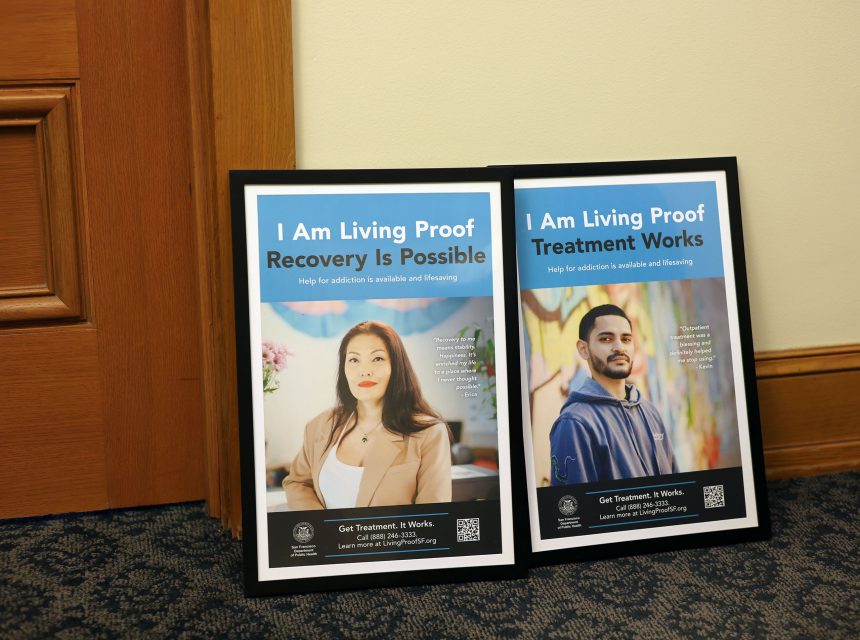
The doctors acknowledged that it can be painful to see people suffering from drug use on the street. In her experience, Suen said, these people don’t want to be there either.
Sometimes, she pointed out, there aren’t enough treatment beds available even to those who seek help: “There are so many ways that even when people are motivated and do want it, our system is not yet well equipped to meet them there.”
“I’ve heard this thing where it’s like, ‘So many people don’t want treatment, which is why we need strong-arm approaches to drag them into treatment,’” psychiatrist and epidemiologist Dr. Alex Bazazi added. “There’s almost no one who doesn’t wake up in the morning and think about some way that they wish their life was a little better.”
The doctors agreed that even small steps can move people suffering from addiction further along in the “nonlinear” recovery process, including distributing naloxone in public housing and running community groups.
Bazazi added, “There are softer ways of making our services more available and accessible and acceptable that will make people want it.”
Thanks for reporting this important context.
Four Pillars is the way to go. Not just enforcement, not just harm reduction, but both of those plus prevention and treatment. We need all of the above. Four Pillars worked in Zurich and according to last year’s analysis by the nonpartisan Budget and Legislative Analyst, it could work in San Francisco too. Despite this, only Jackie Fielder is calling for Four Pillars right now. The other supervisors and the mayor need to get on it if they’re serious about actually solving the public health crisis of drug addiction, and not just doing splashy PR with failed, supposedly “tough” strategies and raids that accomplish nothing.
Link to the Four Pillars report (it’s a good read!):
https://sfbos.org/sites/default/files/BLA.Zurich_4_Pillars.111924.a.pdf
Don’t get your hopes too high. That was the 90’s and Switzerland is a small country. Many addicts were sent back to the cities and towns of origin. Those in turn were enabled and obligated to treat their citizens locally, where they found environments that weren’t permeated with readily available hard drugs.
I’ve yet to hear Supervisor Fielder actually endorse the “enforcement” part of the four pillars. Zurich strictly enforces against public drug use and drug dealing. It would be interesting if Fielder actually supported enforcement. But it’s unlikely considering her support of the “Defund the Police” movement. It seems that the aspect of Zurich’s approach that Fielder and others most want to copy for San Francisco is opening safe consumption sites. The other components are likely to be downplayed or totally ignored.
The foundation on which Four Pillars is based is one buttressed by universal health care that includes psych and substance treatment.
There needs to be foundation work done in San Francisco, because the absence of universal health care, we have universal poverty and substance nonprofit corruption that has every incentive to keep outrage high to continue to receive city funding.
“There are so many ways that even when people are motivated and do want it, our system is not yet well equipped to meet them there.”
Unfortunately, the street-dwelling addicts are largely part of the surplus army of the unemployed whose only utility for the ruling class that determines how resources are allocated is the downward pressure they, the surplus army of the unemployed, put on the bargaining power of the working class. Hordes of helpless, hopeless, deadend drug addicts are exactly what capitalist oligarchs, especially under late-stage financialized capitalism, require to maintain and increase their extractive economic leverage.
it’s a feature, not a bug
*harumph*
weiner wants to solve the muni deficit problem by taxing the poor more.
dorsey wants to solve the street drug problem by killing the poor.
either way, problem solved, eh?
“Harm reduction” certainly sounds good – but how long are we going to suffer the results of this (failed?) method. Reducing the consequences of hard drug use is enabling the users. What message are we telling -everyone – when we expect no accountability from people?
Have there been any studies done about what happens when a major city cedes its major thoroughfares and plazas to illegal drug users, using taxpayer money to give them drug paraphernalia through unaccountable nonprofits, while doing nothing to stop the Honduran mob to run open-air markets for drugs and stolen goods? Asking for a friend.
This one seemed most relevant to the situation in SF: https://pmc.ncbi.nlm.nih.gov/articles/PMC3202661/
It is time to prioritize the health of the city and its law-abiding residents.
We also matter, and are tired of being left out of policy discussions.
What does this even mean? Recovery is a “process of change through which individuals improve their health and wellness.” I understand that zero tolerance expectations of no relapse is unrealistic, but this is so vague as to be meaningless. No wonder people are frustrated with harm reduction. The article about drug court has a better approach because that program has actual goals (housing, work, counseling, etc.).
Shocker. People who get their research participants, patients, or funding by providing “harm reduction” do not like the idea of a recovery-first strategy.
It is blindingly obvious that the strategies SF has followed have not worked. You just have to look at the streets to see.
Whenever people use addictive opiates, unlike Matt Dorsey’s gay sex party drugs, there are tremendous risks, harm reduction or not. Let’s not delude ourselves as to the likely outcome for most opiate addicts.
Until San Francisco can figure out how to do safe supply to shut down the illegal markets and ensure quality and purity to reduce harm, and how to house poor people, San Francisco is going to need to ensure that public substance sales and use does not impact the rest of the community.
I have no confidence that SFPD can see this through to completion. And I have every confidence that the progressives will ride the “be compassionate, do nothing” bandwagon of casting every negative prejudice onto people disgusted with public squalor over the cliff, further reducing progressive political power and clearing the way for direct rule by the crypto swindlers.
What we are doing now and have been doing kills. Handing out drug paraphernalia to people fluctuating between overdose and withdrawal is only causing more harm. What worked for heroin only causes more suffering and chaos with current street drugs.
Let’s not forget taxpayer-funded vodka shots for homeless alcoholics. You have to love progressives, they only focus on enabling bad behavior and conveniently forget enrollment into the rehab and detox part!
https://www.dailymail.co.uk/news/article-13406037/San-Francisco-giving-taxpayer-funded-shots-vodka-homeless-alcoholics.html
While speaking truth to someone pushing Daily Mail outrage-links is probably futile: the managed alcohol program saved SF $1.7 million dollars ” in reduced calls to emergency services, including emergency room visits and other hospital stays.” Furthermore: “In the six months after clients entered the managed alcohol program, public health officials said visits to the city’s sobering center dropped 92%, emergency room visits dropped more than 70%, and EMS calls and hospital visits were both cut in half. ”
Oh, and, one more: “Previously, the city reported that just five residents who struggled with alcohol use disorder had cost more than $4 million in ambulance transports over a five-year period, with as many as 2,000 ambulance transports over that time.”
But who cares about any of that when you are mere putty in the Murdoch Family’s rage machine, eh? Why look at the big picture when there is angry moralizing to do!
all quotes from : https://www.sfchronicle.com/politics/article/sf-free-alcohol-homeless-19446850.php
I’d say another solution to save money on drunks and crackheads using ambulances as their personal Ubers is to stop sending them ambulances. That could save even more money.
That would be illegal, Jake. And who do you think should be the one to decide who gets a ride and who is denied? Would you be upset if you were denied life-saving treatment because the cause of your injury was deemed insufficient?
I think me. I’m more than qualified to be the decider.
Agree! An even less costly solution would be that the city provide free unlimited fentanyl, this should efficiently kill the market, taking care of both the supply and demand curves.