


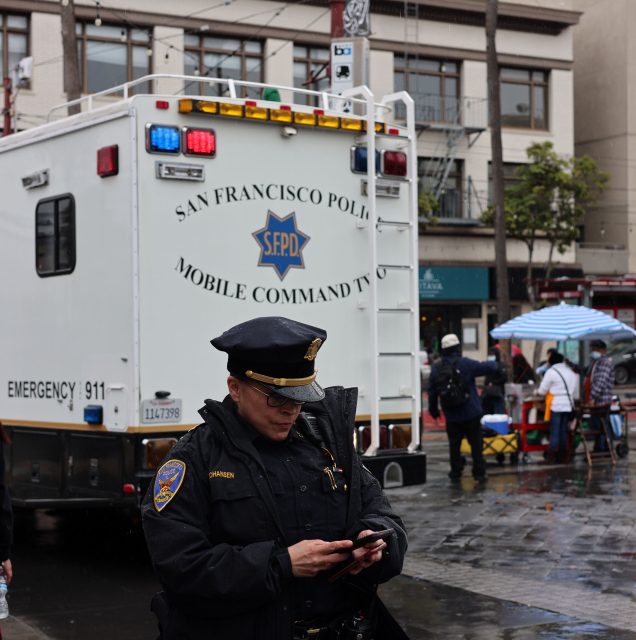
Mayor Daniel Lurie told a standing-room-only group on Wednesday that even though the 16th Street plaza looks “a little bit better” since a police command van rolled onto the southwest plaza nine days ago, the drug use in the surrounding area remains “unacceptable.”
The newly-appointed Mission captain Liza Johansen, who stood alongside him, needs more resources, he added. “We’re going to work on that.”
The promises to the assembled 50 or so neighbors underscored what he has spoken and tweeted about often in recent weeks.
The group, many members of the recently formed 16th Street Alliance, an informal collective of landlords, tenants, residents and merchants, applauded. The mayor had arrived late to the 4 p.m. meeting, but explained he had been delayed by an attempt to clear people off Julian Avenue and Wiese Street, two notoriously chaotic alleyways down the block.
Johansen acknowledged that the 16th Street plazas and nearby streets had been impacted by an earlier operation in the Tenderloin.
“There were effective things being done in the Tenderloin that, as we all predicted, would push things into the Mission,” said Johansen to applause. She was referencing the opening of a police “triage center” near Sixth and Market streets, which Mission residents have said worsened conditions at the plaza.
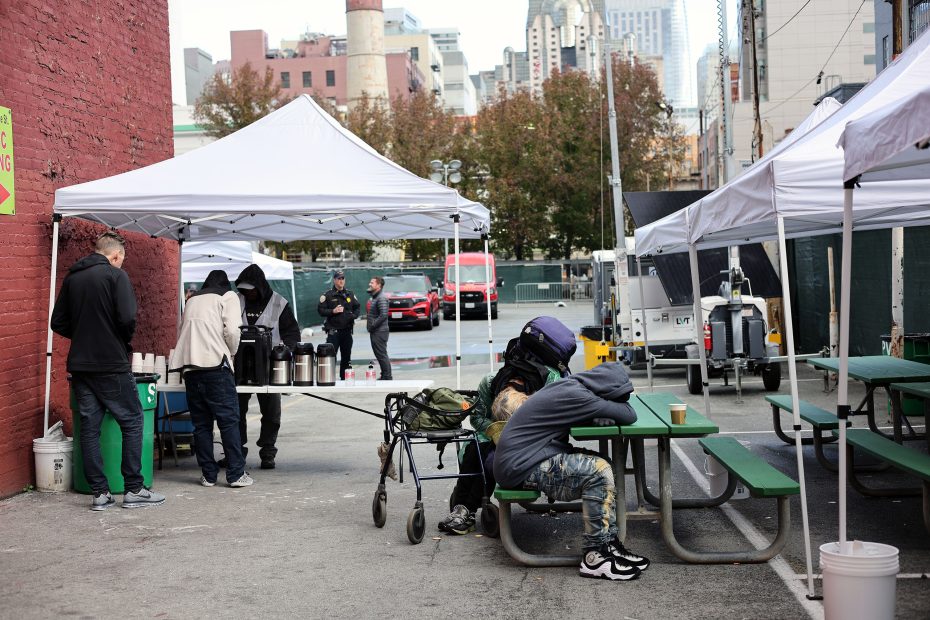
In response, Johansen said she pulled plainclothes cops and put them in uniform to do drug enforcement.
Now, “the resources from downtown are being focused on Caledonia, Wiese, Julian and the plazas,” she added, referring to nearby alleyways.
Lurie said he has three priorities: fully staffing the police force, adding treatment beds, and streamlining a permitting system for new businesses. All were promises he made on the campaign trail and not specific to the conditions at the plaza, however.
The goal is to grow the department “to where they were 20 years ago,” Lurie said, promising more foot patrols. SFPD has in recent years struggled to attract officers to the department, but is not lacking in funds to hire them. “You have my commitment that as we get there, we’re going to have more officers walking the beat.”
In the meantime, Lurie continued, SFPD drones will help officers “get situational awareness” and “understand what’s going on in this alley before [officers] show up.”
Officers are producing daily scouting reports noting where people are being displaced in alleyway sweeps. As predicted, Johansen said, it seemed they were moving to Capp Street between 16th and 17th and to Mission Street between 15th and 16th. But housed residents say they are just as regularly seen on Caledonia, Wiese and Julian.
Still, Johansen remained optimistic.
“I really believe if we stay hitting this area over and over again, it’ll give you guys back your community,” she concluded.
It was the 16th Street Alliance’s second meeting in three weeks. As a 10-year Mission and Castro resident familiar with the issues, Big Finish owner Adam Manson later said he was proud to host. It happened to be on the same day his wine tavern opened on the corner where Monk’s Kettle closed last June.
It was also a full-circle moment for Manson: He recalled asking Lurie about opening a business a year and a half ago.
“I appreciate him owning problems that were years in the making,” Manson said of the mayor.
Conditions at the plaza, as Lurie noted, have improved in recent weeks: The sidewalks appear cleaner and partially cleared of street vendors and other loiterers, though only near police. At night and across the street, fencing of stolen goods continues.
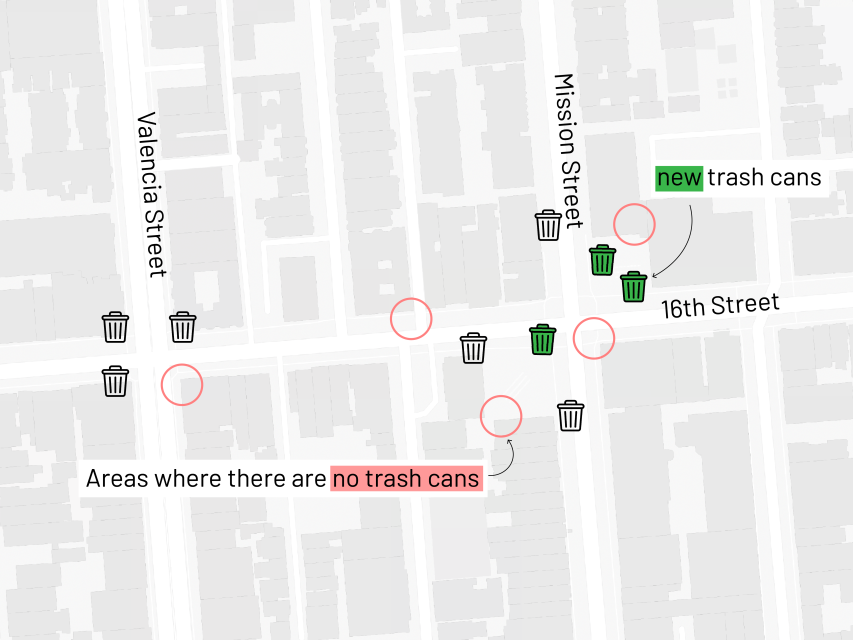
The city added three trash cans to the plaza on Thursday, after a Mission Local article highlighted a dearth of receptacles.
As of last month, four Department of Public Works employees have been manually sweeping and pressure cleaning the corridor 24 hours a day, said Jonathan Vang, who oversees street cleaning, public works, and graffiti abatement, during the meeting.
Experts told Mission Local it is unclear the city’s response will be effective at deterring crime unless more longer term changes are made. Without a steadier presence, they said, people will simply shift around to other blocks.
Some attendees pointed out that police don’t always come. “I call every Friday and Saturday about gang activity and drinking in public and I get no support,” said a resident who lives across the street from the plaza. “Two officers from our station are great, but everyone else — I don’t see any of them.”
But others, including business owners Bryan Tublin and Manny Yekutiel, said they walked away from the meeting feeling like city officials were listening. The mayor, Yekutiel said, would “walk the walk, not just talk the talk.”
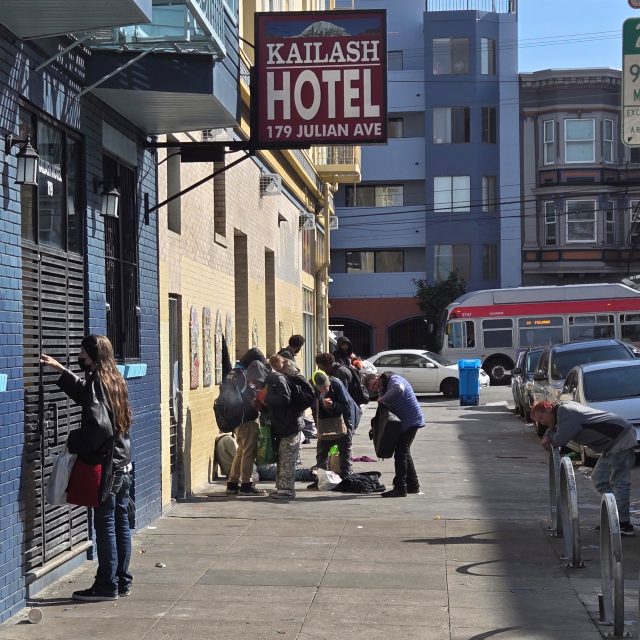
After the meeting, Lurie walked down Julian Avenue and into the Kailash Hotel, which had been pointed out to him during the meeting. There were “unfortunately” just two or three users outside, an observer later said — nothing close to the “drug paradise” often on the corner.
“Wherever the problem goes, we will,” Lurie had told the crowd of neighbors. “I know it sounds like a simple answer. I don’t have a better one, but we have to send a message … that you don’t come to San Francisco to do the things that we’re seeing on our streets anymore.”
Comrades,
Bring back Feinstein’s Police Kobans.
Literally.
Walter Wong has at least one in his extensive yard which also has the first ‘Tiny home’ proposed prototype for the homeless that Jimmy somethingorother built.
There was another at the Hyde Street Cable Car Tourist Hub being used as ticket booth for the cable cars.
We can do it.
Parts are there.
Mayor is at Manny’s in 28 minutes and I’m bringing my dog.
Also, someone is opening my mail.
Left a check that was in one so not for money.
Trump ?
Probably Hillary still with the grudge.
Elect our Police Chief !!
h.
Thank goodness we finally have a Mayor that knows what the City needs in order to clean it up and gets involved.
Let’s check in 6 months to see results of the cleanup on our streets .
Thank you.
He’s proving to be a fantastic boots on the ground mayor.
We are getting exactly what we voted for! Thank you Mayor Lurie.