


Over the past two decades, San Francisco’s CubaCaribe Festival of Dance & Music has often provided a devastating mirror for the region it champions. The dance performances, film screenings, workshops and discussions showcase local abundance, while the Caribbean communities celebrated at the event experience every hardship imaginable. This tension isn’t new.
But the 19th annual CubaCaribe Festival, which takes place March 28 and 29 at ODC Theater and at various other San Francisco locations through April 4, unfolds amid a backdrop of perhaps unprecedented crisis.
Cuba’s chronically underfunded infrastructure has suffered a series of nationwide blackouts over the past year as the energy grid has repeatedly crashed. Meanwhile, a combination of economic desperation and repression sparked the largest wave of migration since the revolution. Haiti has no functioning government, and gang violence has swept across Port-au-Prince. Puerto Rico, still uneasy after an island-wide blackout greeted the new year, seems only of interest to Washington, D.C., as a target for immigration raids.
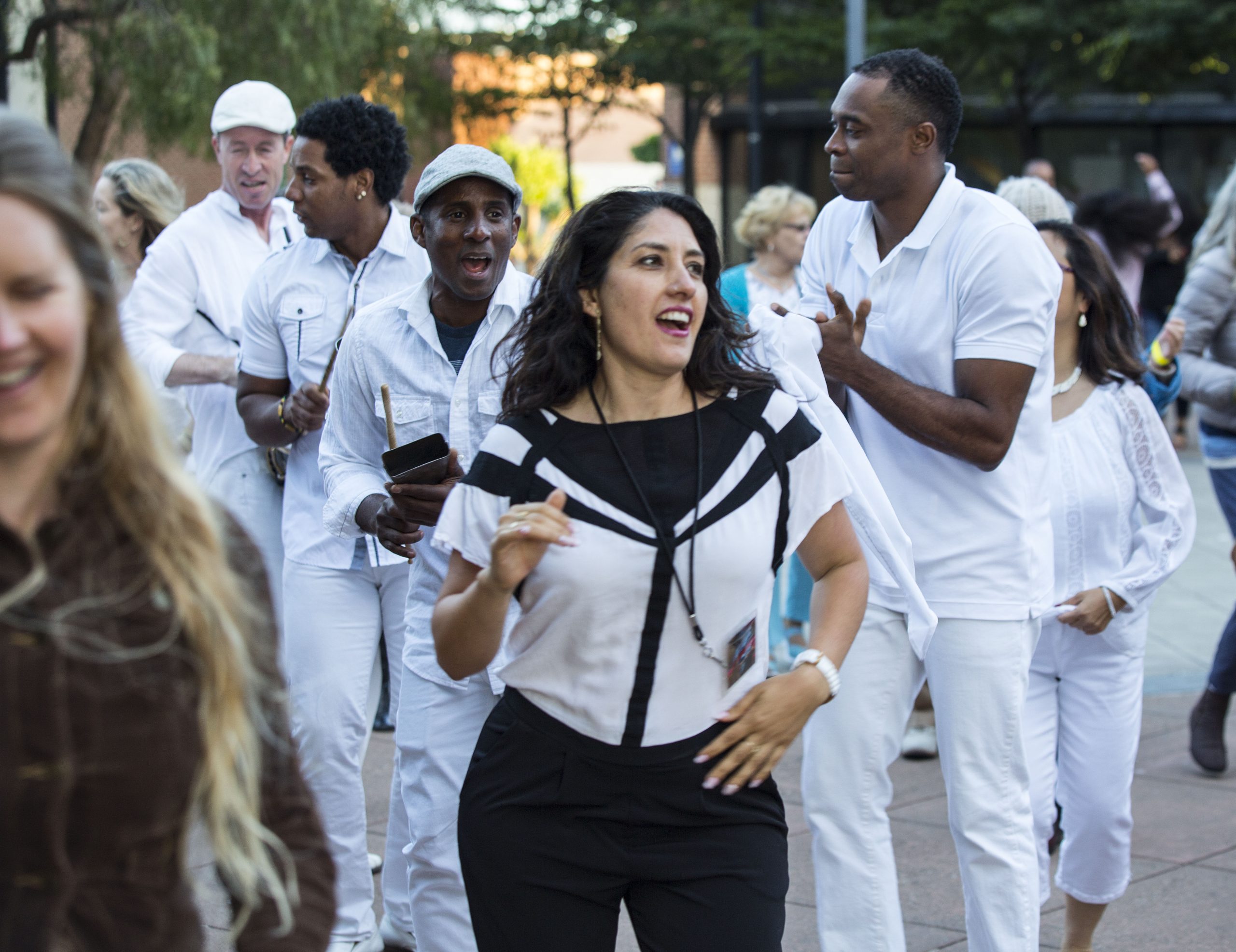
The contrast between cultural riches and underdevelopment is familiar, of course. “In so many ways, we’ve been dealing with a lot of these issues for many years,” says Jamaica Itule, CubaCaribe’s curator and co-founder. “It gets worse and it gets better, but it does feel like the worst right now. Cuba is in blackout half the time.”
Still, says Itule, “We’re going to continue to create more opportunities for the artists we work with.”
The theme of this year’s festival is “A Fire Within,” and the main production takes place Friday, March 28, and Saturday, March 29, at ODC Theater, with a program featuring an impressive array of artists. There’s the Bay Area Afro-Puerto Rican women-led bomba company Batey Tambó, which often collaborates with Esoterica Tropical (a.k.a. Maria Jose Montijo), and Oakland’s Dimensions Dance Theater, which has been connecting Black American dance idioms with other African diaspora currents since 1972.
San Francisco-based Batuki delivers an original fusion of samba, hip-hop, funk, and Afro-Caribbean grooves via Brazilian percussion, dance and vocals, and the South Bay’s long-running Los Lupeños de San José has played a leading role in maintaining folkloric Mexican dance for more than half a century.
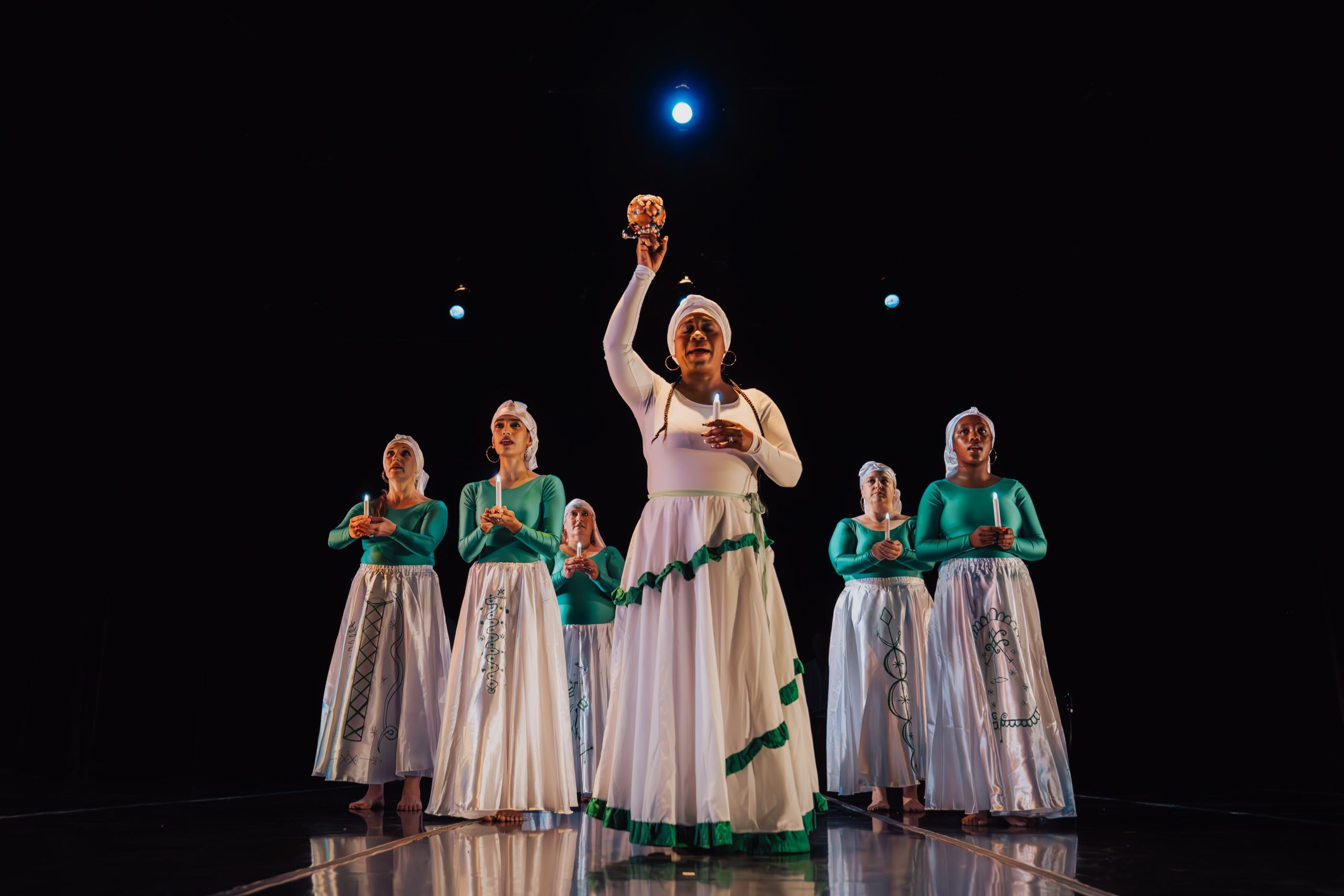
Folklo Ayisyen Lakay, which translates in Creole as “House of Haitian Folklore,” is a local Haitian dance company led by Laurie Fleurentin, a master dance teacher and choreographer born in Port-au-Prince. And Herencia Guantanamera celebrates the Afro-Cuban Haitian cultural traditions of Guantánamo in eastern Cuba, where an influx of Haitians sought refuge from violence and instability during the revolutionary period, circa 1800. The young company made its CubaCaribe debut last year, “and we want to support people just getting started,” Itule says. “That’s always important to the festival.”
Paying tribute to elders
Also important is celebrating the master culture bearers within our midst, like Cuban vocalist Bobi Céspedes, whom CubaCaribe will honor at a brief ceremony preceding Saturday’s ODC Theater program. The Oakland-based artist hasn’t been performing much in recent years, but she’s been a creative force since serving as the lead vocalist in the 1980s with Conjunto Céspedes, a band that introduced the Bay Area to the glorious sound of the foundational Afro-Cuban style known as son.
She reached new audiences during her years touring with Grateful Dead drummer Mickey Hart’s Planet Drum and Bembé Orisha projects, but established a powerful musical identity in her own right with a series of solo albums. “This area really wanted to hear my music,” Céspedes says. An arresting performer with a deep, resonant voice who’s also a master of the gourd chekeré, Céspedes embodies the music’s sacred roots as a priestess in the Yoruba-derived Lucumí faith.
“We’ve had an incredible special relationship with Bobi over the years as an artist, educator, and culture bearer,” Itule says. “Every couple of years, we try to pay tribute to a community elder, and it made complete sense to have her. She’s a singer, songwriter, priestess, historian. The list is endless.” During the pandemic, Itule adds, Céspedes taught a virtual songwriting class for CubaCuribe, a course that continues strong to this day. After Saturday’s performance, the celebration continues that night with an afterparty at Bissap Baobab.
A deeper perspective
There’s also a film screening Wednesday, April 2, at Casa de Carnaval Indigenous Peoples Cultural Arts Healing Center, including two Cuban documentaries and Marco Palomino’s short dance film, “Raw Emotions,” in partnership with MoAD. The 27-minute doc “La Tumba Mambi” was filmed over six years by Canadian anthropologist Alexandrine Boudreault-Fournier, Cuban DJ Jigüe, and members of the Tumba Francesa La Caridad de Oriente, a traditional cultural group located in Santiago de Cuba. Following the screening, there’s a Q&A with DJ Jigüe and choreographer and CubaCaribe’s artistic director, Ramón Ramos Alayo.
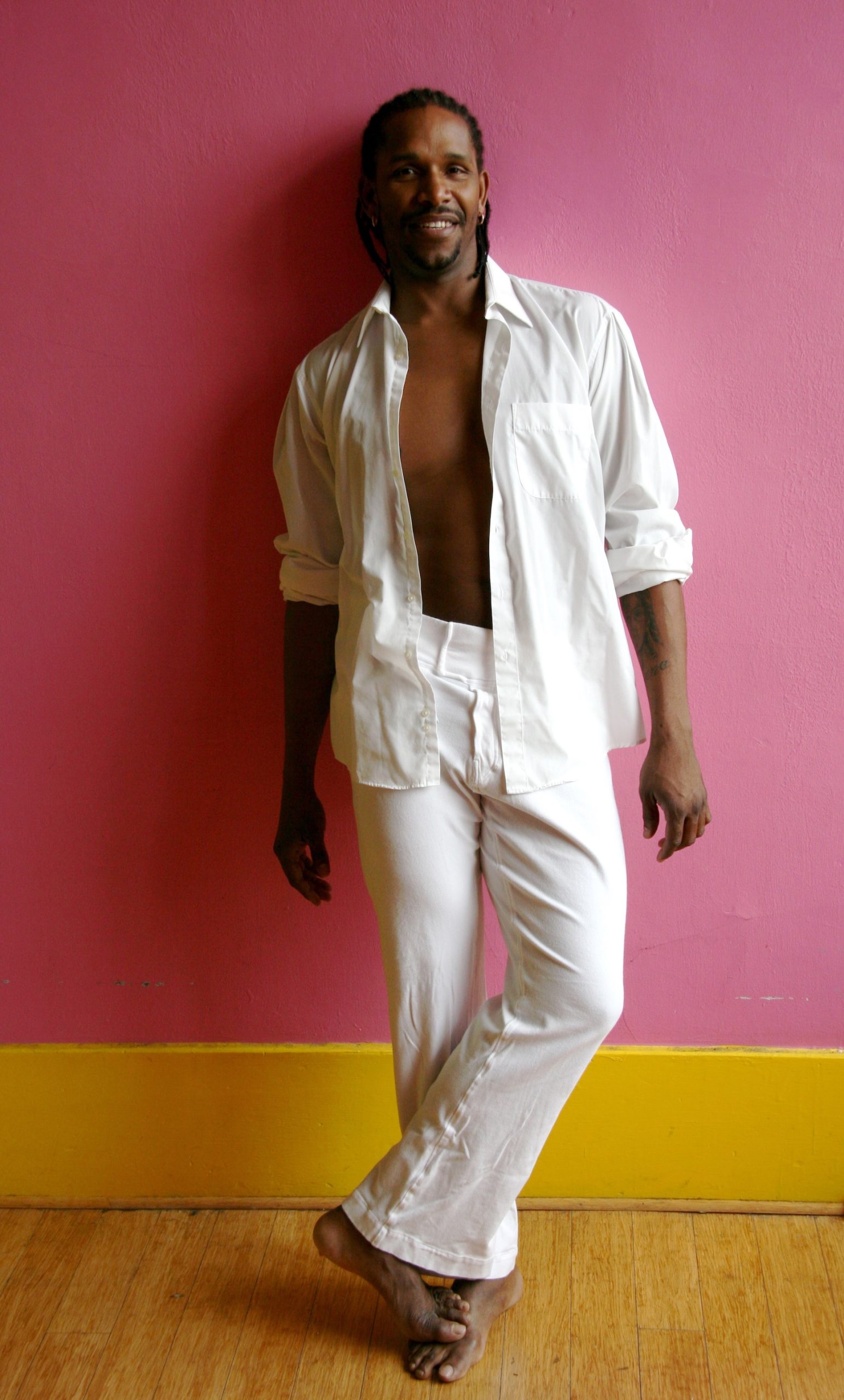
The Casa de Carnaval hosts a panel discussion Thursday, April 3, with six artistic directors of Bay Area Afro-Latino/Caribbean dance companies, including Denise Solís of Batey Tambó, Batuki’s Pedro Gomez, Laurie Fleurentin of Folklo Ayisyen Lakay, Samuel Cortez Balderas of Los Lupeños de San Jose, Sidney Weaverling of Rueda Con Ritmo, and Dimensions Dance Theater’s Deborah Vaughan.
The festival concludes Friday, April 4 at the Community Music Center on Capp Street with “Afro-Cuban Sound: A Legacy That Survives Over Time,” an overview of the evolution of popular Cuban music. Leading Cuban DJ Jigüe follows the presentation by spinning tropical Afrofuturistic music with live drumming by Einar Leiebre Nuñez.
“Our dance perfornances are always a highlight,” Itule says. “But I’m really excited about special events, which are often less attended and smaller, where people can get a deeper perspective and knowledge. DJ Jigüe is really at the center of the Havana scene. He has an indie label there, and blends electronica with traditional beats.”
Moving forward, with relationships between the United States and its neighbors looking increasingly fraught, the CubaCaribe Festival seems more important than ever. As the Bay Area struggles to maintain its status as a refuge for artists fleeing strife and repressive governments in the face of Washington’s anti-immigrant agenda, the festival’s spotlight is also a beacon.
“The Bay Area does have a lot of master artists who live and work here,” Itule says. “Continuing to do our work is so important. It’s what we can do, though we’re always looking to do more. The last few years we’ve done Donations for Dance, collecting dance clothing and distributing it in Cuba. People are more afraid and anxious about immigration, but it’s a natural human condition. You can’t imagine the Bay Area without it.”
CubaCaribe’s 19th annual Festival of Dance & Music opens March 28 at ODC Theater (3153 17th St.) and continues through April 4 at venues throughout the Mission. Tickets and more info here.
Another more encouraging perspective is that Cuba just gave 200 scholarships for medical school to Palestinian youngsters, in solidarity against the genocide they’re suffering from Israel.