
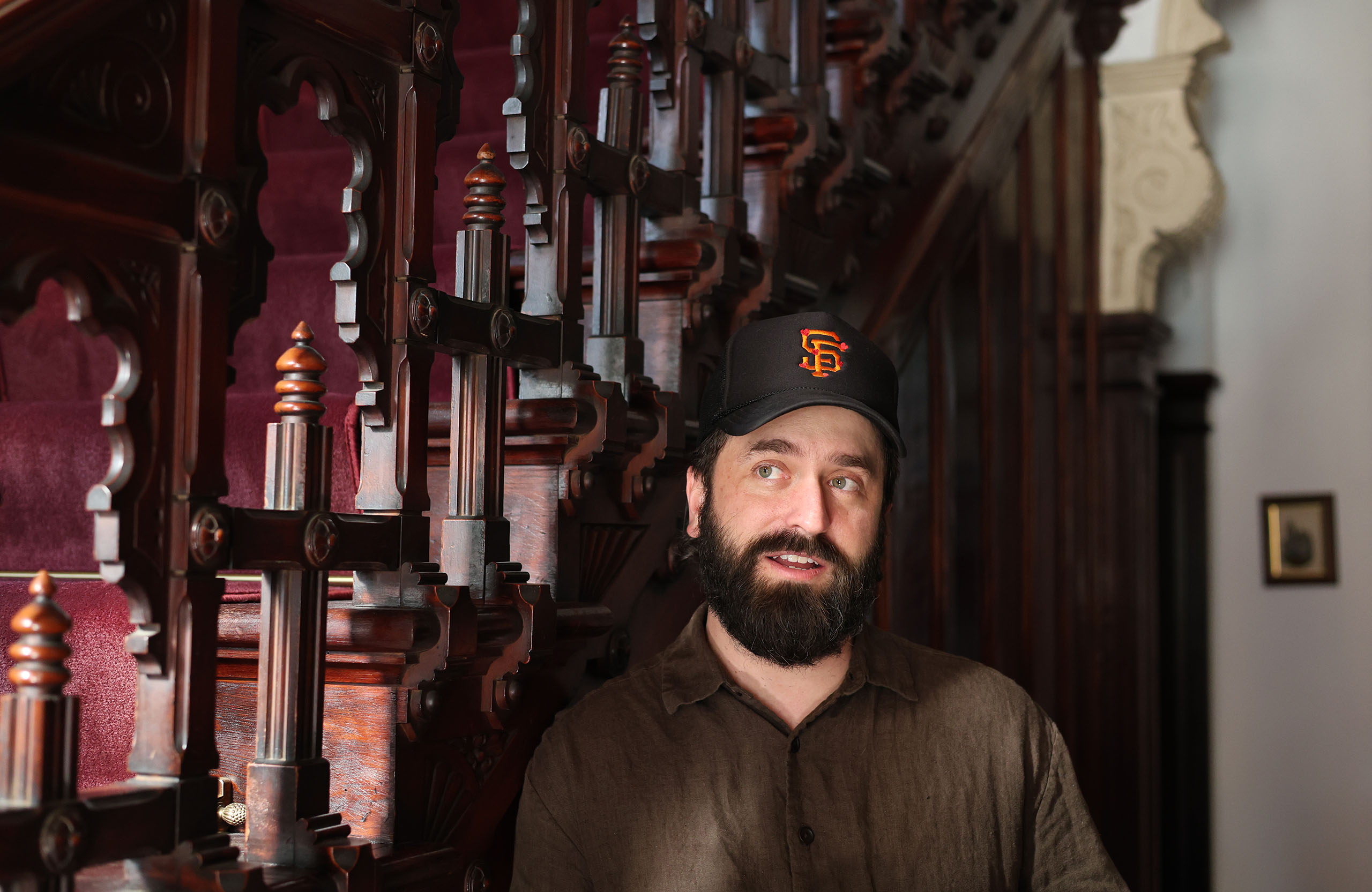

“Last Black Man in San Francisco” collaborators Joe Talbot and Jimmie Fails started making movies together when they were kids in San Francisco.
“He was the only friend that consistently allowed me to put him in movies,” laughed Talbot. “Everyone else sort of grew tired of it and frustrated with me and my obsessiveness, which has not changed.”
That collaboration continued into adulthood, and ultimately 2019’s award-winning “The Last Black Man in San Francisco.” Now, Talbot and a group of collaborators from the film have planned a summer film workshop for teens (15+) to replicate their experience of learning by doing together. The workshop crew includes:
- Jimmie Fails, star and co-creator of “The Last Black Man in San Francisco” will teach acting.
- Adam Newport Berra, Kendrick Lamar’s go-to director of photography, whose credits include “The Bear” and “Euphoria,” will teach cinematography.
- Emile Mosseri, Oscar-nominated composer and touring musician, will teach film scoring.
- Liam Moore, whose work includes music videos for Adele, BIllie Eilish, and Bad Bunny, will take on production design.
- Ntombi Moyo, an Australian-born stylist and costume designer who has dressed Beyonce and Rhianna, will lead the camp’s fashion department.
A guest judge from the independent studio A24 will sit in to help choose which of the kids’ pitches will be made into a short film, to be shown at the Roxie on July 20.
Applications are now open. The camp will run from June 16 to July 3, at a space near Oracle Park. Tuition is $3,900, but financial aid is available. Talbot promised that no one will be turned away because of cost.
Mission Local sat down with five members of the team, who shared their vision for the summer and their own beginnings as young artists, from pet turtle home videos to falling in love with Winona Ryder.
This interview has been lightly edited for clarity and length.
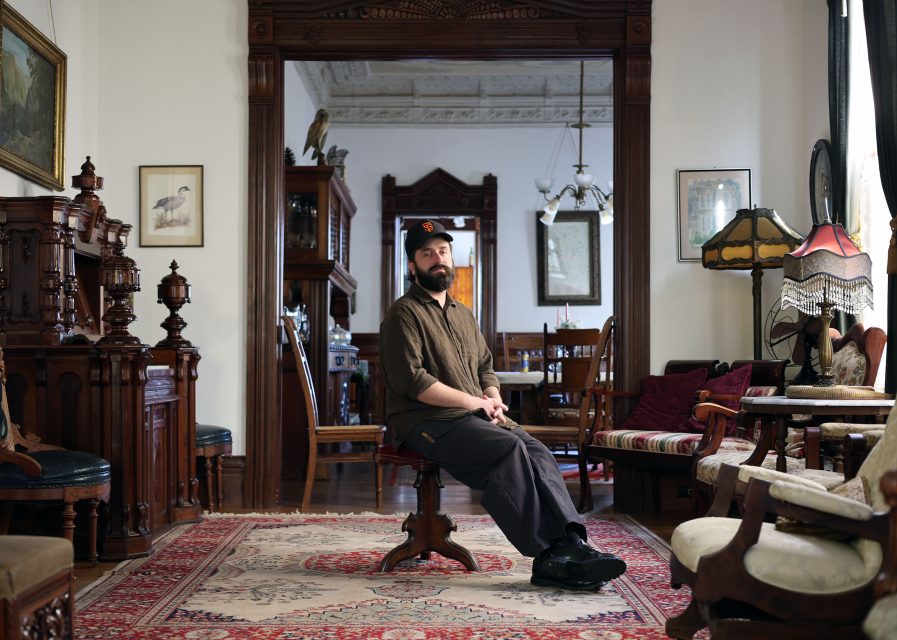
Joe Talbot: I’ll start by saying we’ve experienced an exodus of lots of wonderful people, including artists, from San Francisco over the last decade and change. So it’s always a treat when you get to bring in some of the best working professionals and artists in their space back to San Francisco. One of the things I’m really excited about is giving our young students a chance to be learning from some of the best people working right now.
When you do something like this, you never know what the response is going to be. They’ve been so earnest and excited and written these long letters in their applications. We had our first 7-year-old apply the other day. I’ve been moved by that response.
Mission Local: Are there any applications that have stood out to you?
Joe Talbot: One thing that I’ve seen consistently is kids saying they haven’t found their collaborators yet. They love movies and they want to make movies, but they haven’t found their people.
One of the best-case scenarios from the camp is that kids find people who they keep collaborating with. When you find your people, you just want to keep making things together and it becomes such an essential part of your creative life.
I send Adam scripts that aren’t finished. Emile and I write music for movies I haven’t even written yet. Liam lives across the way from me, so he and I are always brainstorming on our way to coffee in the morning.
We hope the kids find their people in that way, too.
Mission Local: Were there moments as a kid that inspired you to do something creative, or made it feel possible to do full-time?
Adam Newport Berra: The first one is when I got my hands on my parents’ video camera. I realized that I had control of how people could see the world, and that I could show people how I saw the world, even if it was literally shooting videos of my pet turtle.
The second one was the first time I premiered one of my skate videos. I grew up skateboarding, and when I invited people to watch it I felt the electricity of people getting excited about what we were making.
Liam Moore: I was a big Disneyland kid. The world-building was so wild and there was so much detail and animatronics and fake mountains and lasers and fog.
I was like, who is making all of this stuff? How is this happening? How is this real?
It provoked me to start researching who these people were. I realized that a lot of the people who made Disneyland were actually film-set designers.
Ntombi Moyo: I’ve worked in fashion since I was 13, but at 17, I started working at a fashion photography studio. That was the first time we curated a perfect image, where styling met great photography, great sets, great model, great posing, great art direction, everything.
Emile Mosseri: “Edward Scissorhands.” I fell in love with Danny Elfman’s music. Well, I fell in love with Winona Ryder as a little boy. But Danny Elfman’s music was doing a lot of the work to make it this punishing love that I got all bent out of shape about.
The combination of this unapologetically romantic, melodic score and Winona Ryder — the whole thing was too powerful for my little brain. I had a piano in my house where I learned all the melodies.
Then I got into “The Godfather.” That was when I realized it was a job.
Joe Talbot: I started making movies with Jimmy when we were kids in San Francisco. He was a little bit younger than me, and he was the only friend that consistently allowed me to put him in movies. Everyone else sort of grew tired of it and frustrated with me and my obsessiveness, which has not changed.
I went to School of the Arts. I had really wonderful teachers there that I think had a big hand in my taste.
We had one teacher there named Scott Eberhardt, who’s frustratingly ageless. He looks younger now than he did when I was in high school. And he’s still doing God’s work, teaching the next generation of great San Francisco filmmakers. He’s been advising me a lot on this camp, because he has been in arts education here for so long. I remember, as a kid, really wanting to make Scott laugh. That was a weird guiding light, wanting to make this older person who I thought had really good taste laugh.
In a wonderful full circle moment, Scott plays a gentrifier in “Last Black Man” who goes to an open house at the end of the movie. Someone jumps out from behind this secret doorway and scares Scott, and that often gets the biggest laugh in the theater, because it’s this brief moment of levity in this otherwise kind of brutal ending. It felt like a perfect way to honor him and all the teachers that really were important to me.
I dropped out when I was 16, and I didn’t go to film school. A lot of my path was, over the six years it took us to make ‘Last Black Man,’ Jimmy and I finding our people who we wanted to make movies with.
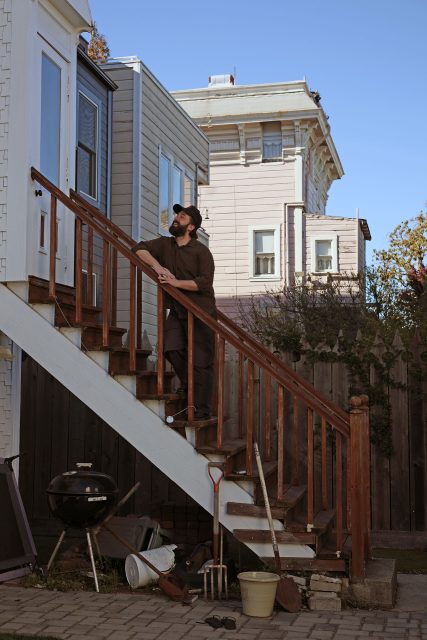
Mission Local: With the pandemic and social media, local teachers say it’s harder for kids to find in-person connections. Is that something that you all have noticed and that you’re thinking about going into the summer?
Joe Talbot: A lot of filmmaking takes place on a computer, like writing and editing. So, there is an important digital aspect to it. But one of the things I’m excited about is going back to what Adam was describing: Being a kid, making skate videos, running around with the cameras. I want the kids to go outside, and go on a lot of field trips.
One of the big creative pushes for this camp is teaching kids how to mine their city for creativity. You can’t do that inside.
A big part of our process on Last Black Man was casting people off the street or wandering down certain blocks we’d never been down in all of our years growing up, talking to people we wouldn’t have talked to otherwise.
All those things are essential for the kind of filmmaking that I love. Really engaging with your city and developing this curiosity about how it exists now and how it existed back in the day. What brought us to this current point?
Those skills also extend beyond filmmaking. It hopefully leaves kids more curious participants in this city, which in some small way combats some of the loneliness.
Adam Newport Berra: Making movies is really communal. Social media is a great way to relay information at times. But for the most part, it’s pushed people away from each other and left out a lot of spontaneity of human interaction.
So it’s important to get people in the same space to put a little pressure on them to take on a project and speak out and take risks and make things.
I would have loved to do this when I was young. I never had any opportunity to do anything like this, maybe because I didn’t seek it out enough or it didn’t exist. It’s a pretty rare experience to be able to get to make something with a bunch of other people, and to be able to learn at the same time and not have the stakes of your project being good or bad.
Liam Moore: Set design is collaborative in the truest sense. You need so many people to find really specific things, or build things that don’t exist, to create a world that feels cohesive. It takes a lot of talking to people that you don’t know, and trying to communicate an idea visually.
The best thing about being on set is seeing these ideas you’ve had in your head come to life. That’s something that really has to happen physically.
As a kid, I made little sets out of Lego that I could kind of escape into. This is making the scale of it a bit bigger and using more people to create a more dynamic thing.
Emile Mosseri: There’s so much of composing that I’m alone in my room writing music. But getting out of the house and creating a network of people opens everything up. You could think, “Oh, this person’s voice would be really interesting to sing these melodies,” or, “This person plays the oboe; let’s try that.”
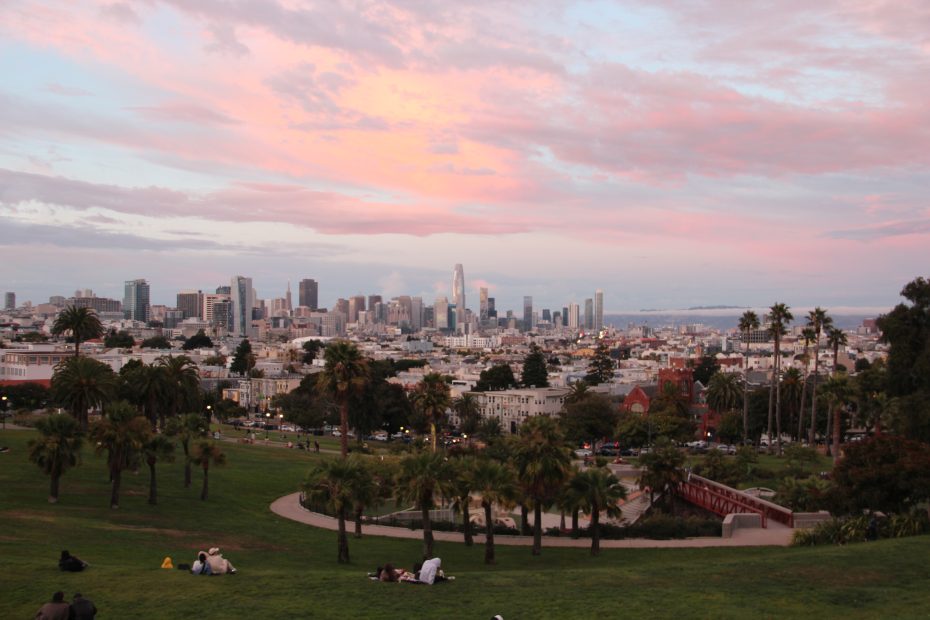
Mission Local: Do you have any San Francisco-specific lesson plans?
Joe Talbot: What feels so richly tied to San Francisco film history is chase scenes.
There’s a Buster Keaton chase scene. They carry through all the film noir movies of the ’40s, and into even some of the beautiful hippie movies like “Harold and Maude,” which I claim as a San Francisco movie. All of the copaganda movies, like “Dirty Harry” and “The Laughing Policeman” in the ’70s. This is just a city that begs for chase scenes. The hills are perfect for it. It feels like a great place to put teenage energy.
I’m really curious to see how these kids want to portray the city. There is this exciting opportunity to alter it and slightly reimagine it.
As much as we wanted to capture San Francisco, it’s also our weird version of it that comes from a mix of movies I grew up on.
Liam Moore: What is the idea of San Francisco? How do you communicate the idea of San Francisco through set design? What does a dreamscape of San Francisco look like?
Since I’m not from San Francisco, I have a very rose-tinted view. The idea of the fog and the Victorian buildings and the amazing culture that has been birthed out of there. I think there’s a way to interpret that visually. It’s cool to think about how to portray the city in a way that feels exciting and fresh, and maybe not as literal.
The city is so gorgeous, and it’s one of my favorite cities in the world. So how do you capture that and how do you elevate it? “Vertigo” is one of my favorite movies, and it does that in such a cinematic, gorgeous way. And then it has these moments where it’s more about the psyche.
Joe Talbot: To further emphasize Liam’s rose-tinted view of San Francisco, he somehow brings out the city when he’s here.
We were walking around Chinatown, and Liam was talking about how Francis Ford Coppola is the ultimate San Francisco world-builder. So we trickled down to Cafe Zoetrope, and Francis was sitting there, and Liam’s looking at me like, does this just happen? Is Francis Ford Coppola just always here in San Francisco? And I’m like, “Oh yeah, this is every day. He’s just always out sitting, waiting for us to meet him.” We talked to him for like at least 30 minutes, and he was so sweet.
We had this amazing day. When you’re wandering around with a friend, you’re already sort of in love with the city. We’re walking through the Tenderloin and Nob Hill and North Beach and Chinatown, and happening upon these amazing artists, the ones that do remain.
Liam Moore: It was a truly wild moment. He was just smoking a cigar and drinking espresso outside. I’m very much not the one to be like, “Let’s talk.” I observe. But Joe just started talking to him. It was a very magical moment.
Mission Local: You’ve already read some applications; what are moments you think the kids will get really excited about?
Joe Talbot: Coming up, everyone wanted to be a director or an actor. But I was talking to one girl, and she was like, “I’m so excited to be a producer.” And I was like, really? And she was like, “Yeah, I really love helping my friends’ visions come to life.” She already felt that that was her calling at 16.
There’s a kid who is going to support Adam named Phil Elliston, who I met when he was 14. He wrote me an email 10 years ago, saying he’d heard we were trying to make “Last Black Man in San Francisco.” And as he described himself: “I’m a black kid who skateboards in San Francisco.”
Now I bring Phil on in some capacity to most things that I work on. He’s created this incredible network of young people who he creates with in San Francisco.
When Phil met Adam, he couldn’t contain his excitement, because Phil wanted to be a cinematographer. He was like, “Wow, this person does what I want to do.”
You don’t always get to have that opportunity in San Francisco. It’s uncommon to meet someone who’s not just in the field you want to go into, but making the work that you most adore.
I’m excited about the lesson plans, but beyond that, just the moments at lunch or in between takes when they get to ask Adam a question, or Ntombi or Liam or Emile. Those conversations end up being so important, because you’re not with someone where you get 30 minutes and you really got to maximize it. You get to work with them, and ask them whatever comes to mind. The few chances I got to do something like that never left me.
Mission Local: Did anyone else have a really important teacher in their lives? Or any really good advice they got from a teacher?
Emile Mosseri: There was a guy that taught me guitar when I was 10 years old. He lived three houses down, and was just the coolest guy I ever saw. He was obsessed with reptiles. He drove a pickup truck. He played blues guitar.
When you’re young, you’re so impressionable; one person can make such an impact.
Liam Moore: Linda Tenenbaum was my mom’s friend when I was five in North Carolina. She was a teacher, but she was also a puppeteer and made her own puppets. She taught me how to make puppets, and she made me a puppet that I still have. His name is King George.
I was so in awe of the world that she created, that she was able to do this thing that she loved so much as a job. She would talk to me through the puppets, and it really opened my mind as to what was possible for someone to do. She was the kindest, most loving person. And she had this incredible passion for something so niche.
Ntombi Moyo: I found mentorship from clothing store owners, my fairy fashion moms and dads.
There was this really cool couple who used to travel all over the world, and they’d bring back these amazing pieces to Melbourne, Australia. They’d connect me with all their cool, quirky friends who made jewelry.
They took care of me. Whenever I had a project, they were the people that had my back.
Adam Newport Berra: I’m really lucky I got to go to film school. But the most formative moments of my education were on set, or with people who responded to my cold calls and said yes when I asked if I could watch them work.
The most important thing was finding people who would push me out of my comfort zone and just offer the time of day to answer my stupid questions.
Mission Local: There are probably lots of people who would love to do something like this camp but, for whatever reason, won’t be able to, this time around. If you had one piece of advice for them, what would it be?
Liam Moore: To keep creating, you have to follow your inner drive. It never really goes away.
Trusting my gut and doing the thing that makes me happy has never driven me the wrong direction. The only things that have ever driven me in the wrong direction is doing something that I don’t want to do.
Ntmobi Moyo: Lean into what makes you happy. Creating and being in this world has been one of my greatest joys. I feel like it’s healed me whenever I wasn’t in a great space mentally.
Adam Newport Berra: Dream big, but think small in terms of everything you’re doing.
A lot of people are led to think that success happens overnight, or that successful people were just meant to be successful. It takes just really working away at things and taking the small actions that lead to the bigger dream.
Emile Mosseri: Find your people. Follow the fun. If you create something, and you’re chasing something that’s interesting to you, you’ll be able to smell that on the work.
Get outside and make things before you even know what you’re doing. “Last Black Man in San Francisco” is a perfect example. None of us really knew what we were doing. You figure it out while you’re doing it.
Joe Talbot: Each of us had difficulty and loneliness in our paths. There’s an emotional component to being an artist. We tend to be more sensitive than other people, and see the world a little differently. Sometimes we carry that intensity in us.
In some ways it gets easier, and in other ways it becomes difficult. One of the ways to combat that is to surround yourself with good people. It sounds corny, but it’s actually, genuinely, really true. Your friends who understand the throes and the difficulties of being an artist are often the ones who keep you going.
If you’re not able to do this camp and you’re feeling a little afraid, or not sure exactly where to begin, be patient and keep putting yourself out there. You’ll find another camp like this one, or another way to meet people. Eventually, you’ll meet your people.
Other beginner filmmaking summer camps are available in the Bay through programs like BAVC Media, Reel Stories, and Art & Film, and at City College.
Wonderful interview! Such a great opportunity for these kids! I hope there is a public screening of the films they make.