


Sixteen-year-old Alejandra Rubio was hanging out with a neighbor in the hallway of their apartment complex on 21st and Capp streets when she smelled smoke.
She looked out the window: The Mission Market building, on the corner of 22nd and Mission streets, was engulfed in flames.
Firefighters spent hours trying to save the building. They aimed hoses at the flames late into the night as the streets filled with onlookers. Rubio was one of them.
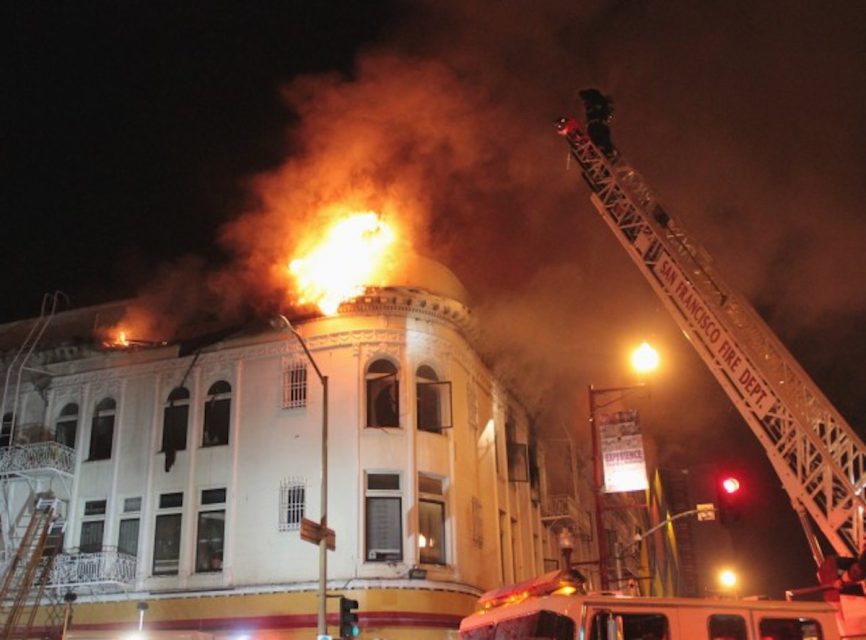
Since that night, Rubio has been haunted by the image of the burning building at 22nd and Mission. One resident of the complex, Mauricio Orellana, died of a heart attack shortly before firefighters were able to reach him. Dozens lost their homes.
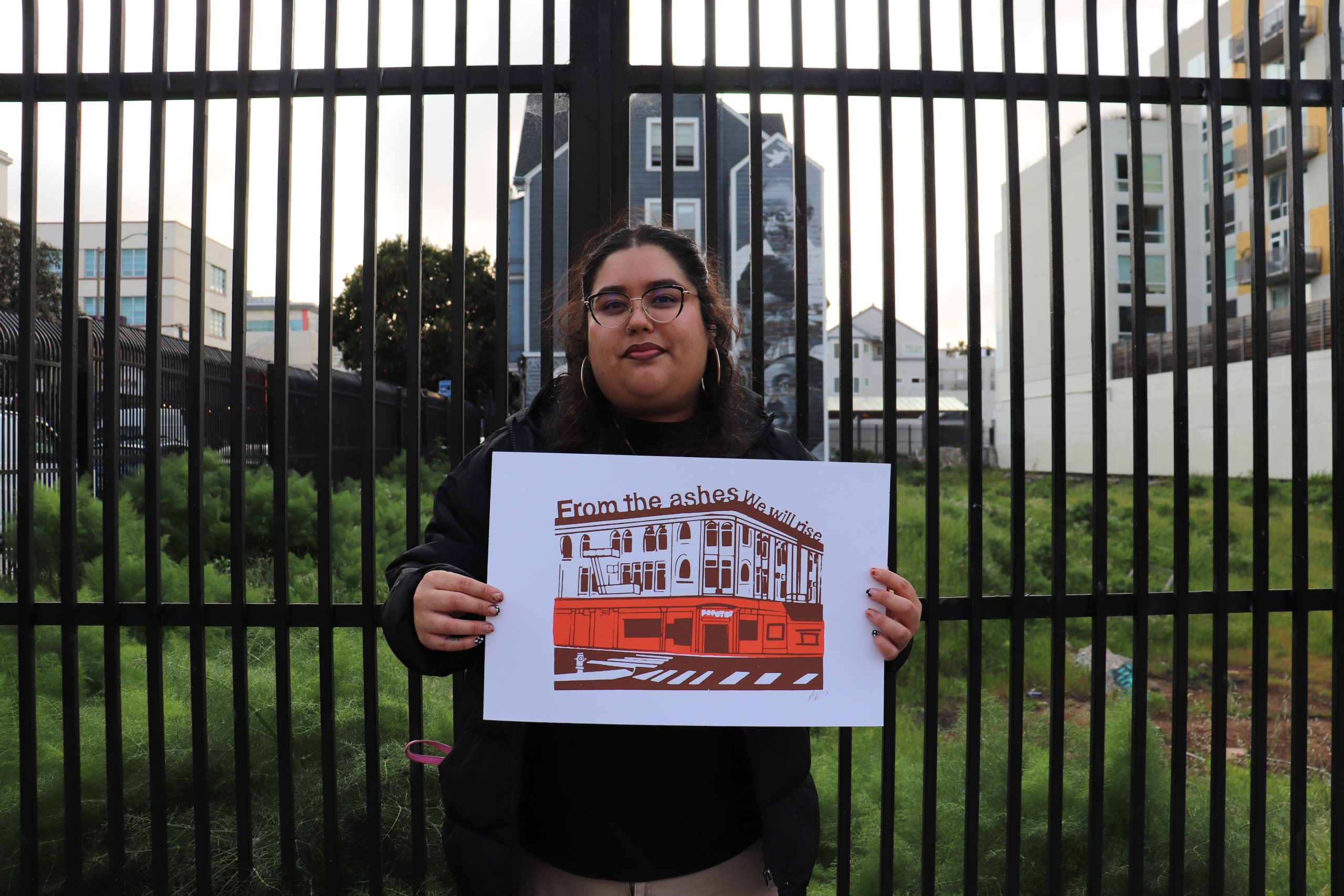
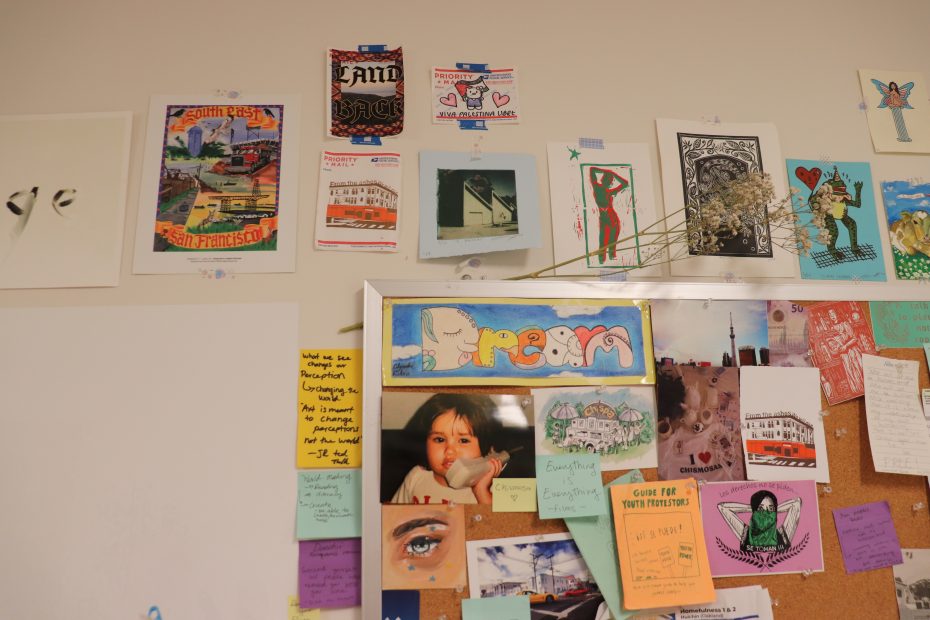
In college at the University of California, Santa Cruz, Rubio studied psychology and printmaking — both the art of it, and the history of its use as a tool for organizing social movements. She drew an image of the Mission Market building, but hesitated to share it with anyone.
Then, in 2022, something changed. She turned the drawing into posters and stickers and took to the streets, fastening them to telephone poles and fences, and encouraging passersby to take one home. When she posted to social media, to her surprise, it blew up. Some people asked how they could buy prints, but Rubio refused. “I felt uncomfortable profiting off of people’s collective grief and trauma,” she said. “I, myself, am still grieving.”
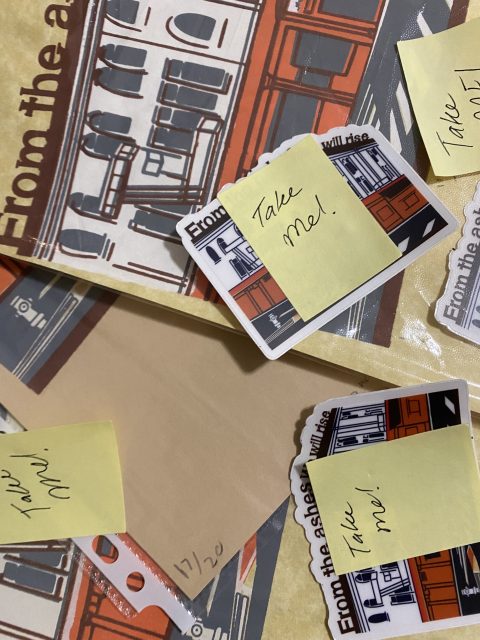
Instead, she planted free stickers and posters throughout the neighborhood, posting clues on her Instagram to where they could be found. She distributed them at community meetings at the Mission Cultural Center and San Francisco City Hall.
“I made it kind of like a scavenger hunt,” said Rubio. “I would hide them in places, post it, and then tell people to go and find them. It was just a fun thing for me, and then I found myself distributing them at community meetings.”
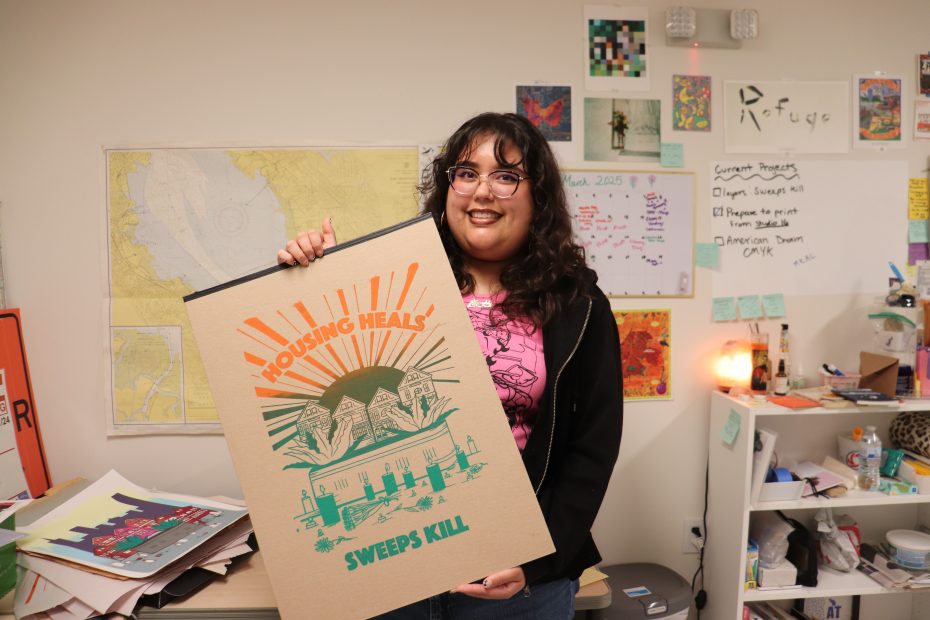
Now, as a R.A.I.C.E.S fellow at Galería de la Raza, Rubio is working on an even more ambitious project: To collect as many memories Mission residents have of the former building at 2588 Mission St., as well as dreams of what the vacant, overgrown lot where the building once stood could be. She is documenting these memories to inform her final image of the property.
It’s a continuation of something that began, informally, years ago, when people began sharing their memories of the 22nd and Mission building with her, and she began giving them art in exchange. She encourages participants to dream big.
“It feels like when I do something for the community, they do something for me,” said Rubio, on the memories she has received from neighbors. “It’s feeding me so I can continue my work.”
Memories of sanctuary, cheap rent, and neglect
The former landlord of the Mission Market building, and current owner of the vacant lot, Hawk Lou, also has dreams: A 10-story building with 181 units of market-rate housing. Community members have argued for years that Lou’s neglect of the building means he should not profit off its destruction. The San Francisco Fire Department said the fire was electrical, tenants claimed there were no smoke alarms on-site, and a Mission Local investigation revealed that, across Lou’s 19 Bay Area properties, maintenance could be shoddy.
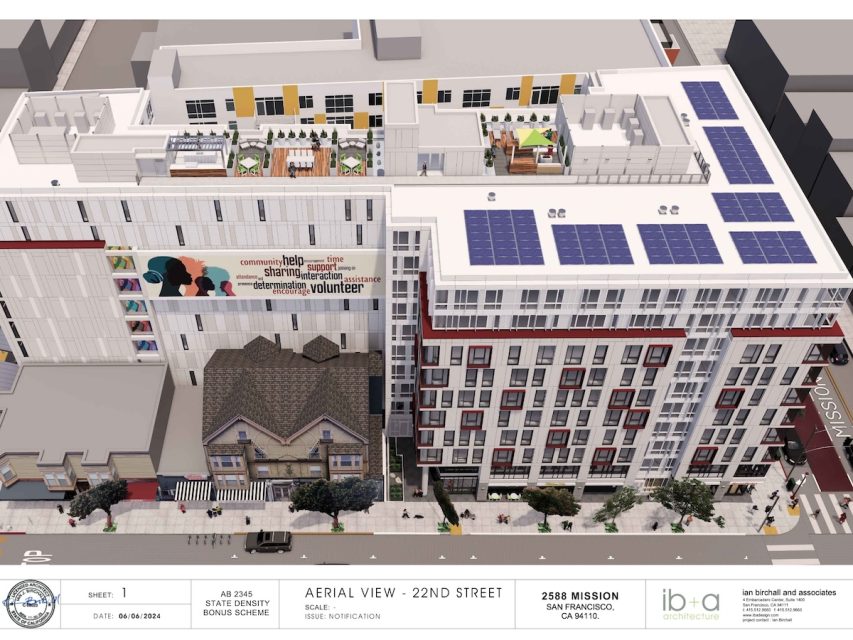
But opponents are unlikely to prevail. The San Francisco planning commission delayed a decision on the project until April 10, but changes to state law make it likely that Lou’s permit request will be approved.
The building held what once was a corner Popeye’s, a grocery store, more than a dozen offices, including Mission Local’s former office, and dozens of apartments on the third floor.
Many of the memories that Rubio has collected so far are fond ones. Some residents referred to it as “home.”
One memory Rubio received recognizes the Mission Market as an integral part of their family’s routine. “We were raised to see the neighborhood as our home, and the Mission Market was a piece of that home,” the submission reads, expressing their sadness after learning that an “integral” part of the Mission would be “gone forever.”
“There is no moment I don’t walk down Mission towards 22nd that I don’t think about once was, and how beautiful home felt as a child.”
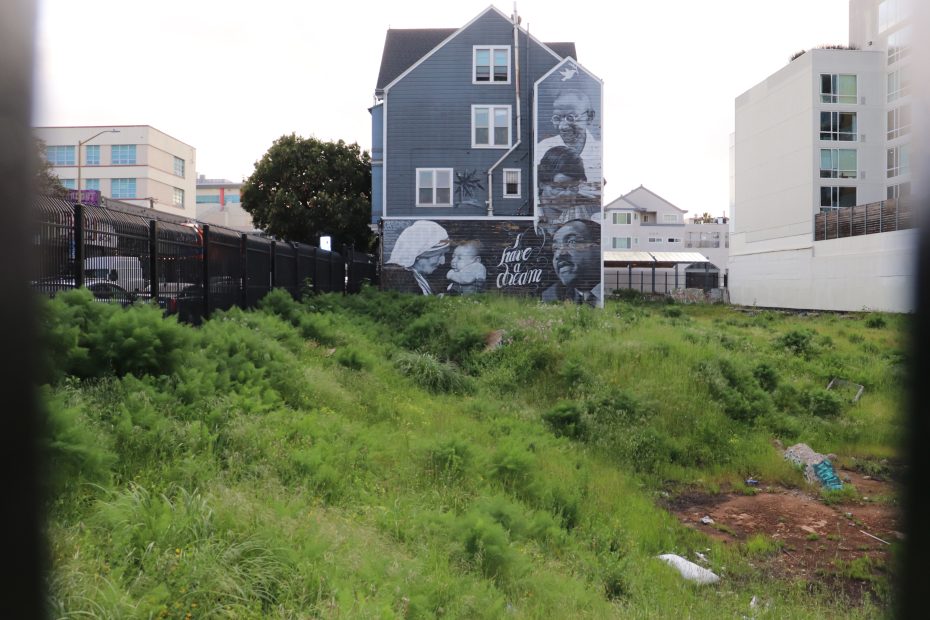
Others are more complicated. Many were nostalgic for the businesses on the ground floor of the building, and the relatively cheap rent of the apartments above. Following the burning of the building, some who Mission Local interviewed described overcrowded spaces and a landlord who was often slow to address repairs. One senior resident, Eugenia Aldama, pointed to a scar she acquired falling down a staircase Lou failed to repair.
Rubio’s nostalgia extends to the Giant Value discount shop right next door that she and her mom used to visit. A year before the fire, Vida, a luxury-condominium complex, was built there. When she saw the Mission Market building on fire, Rubio said, she knew the building that replaced it would look more like Vida than what had stood there since 1904.

‘This building will not be rebuilt to be what it was’
Rubio grew up moving from one apartment to another when her mother’s rent increased or her work hours changed. She sometimes shared a unit with other families, other times bunked four to a room with her mother and two siblings, until they finally landed in public housing in the Bayview.
She says her memory of the Mission Market building was the first time she truly understood gentrification.
“I was watching it burn, and the firefighters working on trying to put it out, it just sunk in,” said Rubio. “I understood it completely, whereas before I understood it as a concept, that made it real … It was just this understanding that I know that, most likely, this building will not be rebuilt to be what it was.”
Rubio’s new print will be displayed at Galería de la Raza in August as part of her final project: An image depicting a park, a community art space, affordable housing, or maybe something else, depending on the memories and feedback she receives. Once she compiles these memories, she will start working on her print.
For now, Rubio is hyper-focused on collecting as many memories of the building as possible. Those who wish to share their memories can submit them through a Google form listed on the Galéria de la Raza website and on flyers distributed throughout the neighborhood, or they can drop them off in a mailbox set up outside of the gallery at 2779 Folsom St.
(The mailbox, she said, came after an elderly Mission resident asked how he could help. Rubio told him to submit a memory online, but he admitted he couldn’t use his phone.)
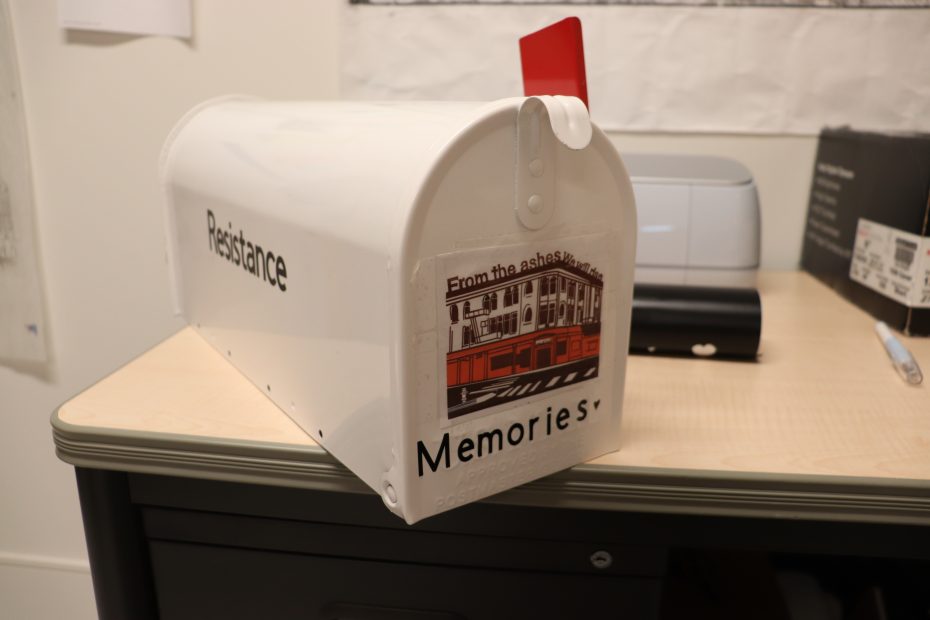
Rubio has already begun receiving responses; 15 as of Monday, March 31. Though she expected most answers to point toward rebuilding affordable housing at the site, when prompted to dream big, many have asked for a park, and some a community arts space.
For her part, Rubio would like to see the lot turned into a park, but her job, she says, is to be a “container” for others’ dreams. “I’m containing all of these memories and ideas,” she said, “and seeing it take on a life of its own.”
Rubio will be accepting memories of the Mission Market building until April 15, five days after the upcoming planning commission meeting. She plans to read them all at once to give herself, and those who contributed, a dedicated day to sit with their memories before compiling them into a final design.
She thinks it will be overwhelming. “Maybe I can gain some inspiration from it. Sometimes I tend to spiral,” she said, chuckling. “But maybe that’s part of the process.”
An abomination that it is still a vacant lot 10 years after the fire, as there are so many people desperately in need of homes.
The local activists want this. They prefer blight over residents who, god forbid, can pay rent without being hopelessly dependent on the nonprofit complex.
I find it sad when people seem proud of hating poor people.
It’s sad. It’s in the past. It’s been too long. Let’s build a thing a get people into housing.
As a former resident of the Powell and Union burned building that displaced residents about 11 years ago, and still sits vacant, I think this is a very nice idea.
This is really cool. I took remember the day it burned down, and the feeling that something was being lost that wouldn’t be coming back.
Maybe a legal open marketplace?
It is good to maintain continuity. The past should never be forgotten, nor should it overshadow the future so much that we cannot change. The lot has stood empty for a decade when we know the great need our city has for housing. Time to release the open wound and allow something new to grow. There will be new people making new memories for the future.
I’m not from the Mission but a gringo from the Sunset who loved that market inside at street level. Was such a cool, unique place. Loved getting food there. Landlord/property owner seems pretty shady in how he didn’t even have smoke alarms – that can’t be legal. Can’t help but wonder if he was actually upset it burnt down given the bank he can make on it now. But it also shouldn’t stay undeveloped forever. We need the housing.