



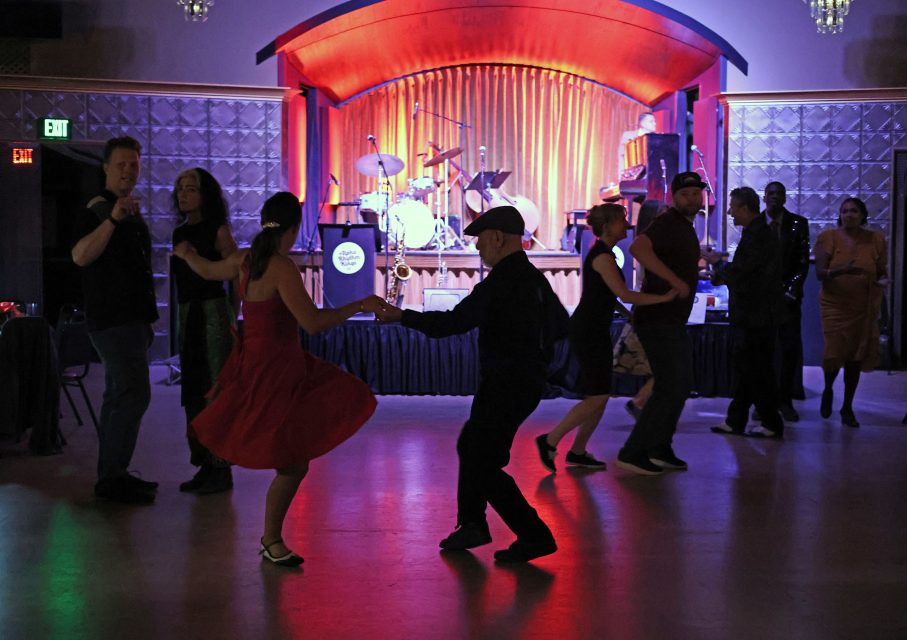
Attending one of the Verdi Club’s regular dinner dances is like stumbling into an Art Deco “Brigadoon.”
The Club has occupied a historic event space at 2424 Mariposa St. near Hampshire Street since 1935. The events inside varied over the years: The spaghetti dinners and boxing matches have been replaced by weddings, storytelling events, and milonga, swing, and bachata dances. But the building itself had been largely unchanged since the Roosevelt administration.
Then the Club was sued for failing to comply with the Americans with Disabilities Act.
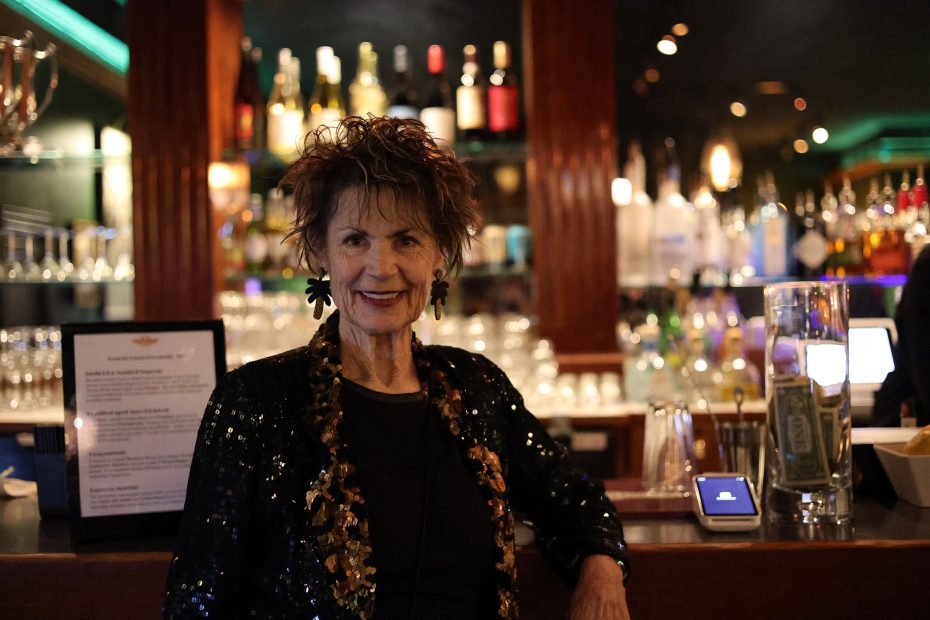
“That was stunning to us,” said Bonnie McGregor, the club’s newly appointed public relations chair. “It was right before the pandemic, and we needed every doggone dollar to get through it.”
This is not uncommon. A few individuals in California are known for filing thousands of ADA lawsuits. More than a decade ago, a serial litigator named Thomas Frankovich sued so many local restaurants that the Mission Merchants association held info sessions on how members could protect themselves.
The club hired a lawyer and settled, signing a non-disclosure agreement about the suit, according to McGregor. Their redesign of the historic building, however, is still ongoing. Specifically, the construction of an approximately $300,000 ramp entrance.
The Club’s 160 members pay $102 in annual dues, and receive an ownership stake after five years. But the bulk of the cost of running and maintaining the building is covered by income from renting the space out. Some events, McGregor said, have balked at booking the Club because it was not accessible to anyone who couldn’t easily walk up stairs.
So the Club is holding special events to subsidize the ramp: a performance of Frank Sinatra songs and anecdotes on Feb. 13 by Perry D’Andrea — winner of the 2022 Hoboken “My Way Sinatra Sing-Off” — and a retro dinner dance with live music on Feb. 8 by Halsey & the Hi-Hats.
‘Impossible geometry’
Much of San Francisco was developed long before ADA protections were signed into law in 1990. The high density of neighborhoods like the Mission make accessibility all the more difficult. Many buildings have elevated first floors, steep staircases, narrow entranceways, and construction right up to the edge of property lines.
Even for businesses that want to be accessible, “the geometry of it can actually be almost impossible,” said Catherine Chang, an architecture professor at the University of San Francisco.
The state-certified accessibility specialist the Verdi Club hired, McGregor said, “was helpful in identifying interior remedies,” like lever door handles and a wheelchair-accessible bar, but not helpful when it came to transforming the entranceway, which is currently only accessible up a flight of stairs.
“We literally spent years trying to understand how to crack the code,” McGregor continued.
Ultimately, with the services of a hired historical architect and members who volunteered their design expertise, the club settled on a solution: Renting part of the sidewalk from the city and building a ramp. It will cost more than the club has ever spent on remodeling.
“This is a big one for us to swallow,” said McGregor.
Still, the Verdi Club’s most dedicated volunteers remain optimistic. They say they’re ready to embrace a new era of the 108-year-old club, without shedding its old-world charm.
They’ve done it before. Ten years ago, the members of the Club were faced with a choice: Let the building be sold, leveled, and redeveloped into condos, or spruce up the place to host the kind of events that could pay for the cost of maintaining the building.
“The club wasn’t going to make it unless there was a change,” said Anette Schutz, the club’s volunteer historian. “And so there was a group of us who decided that we would roll up our sleeves and try.”
McGregor, a designer by trade, took down the ’70s-era vinyl wood paneling and the Ikea lighting. She ripped out the carpet squares. For $10,000, she remodeled the bar.
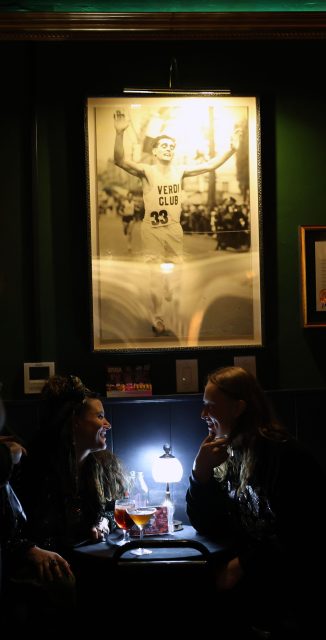
Schutz wiped off dusty photographs she discovered in cardboard boxes in the basement to reveal the faces of handsome men — players in the Verdi’s once-famed sports leagues — and hung them on what, for decades, had been blank white walls stained by cigar smoke.
‘Spaghetti on a Saturday night’
In the years after its establishment in the back of a barbershop in 1916, the Verdi Club was the kind of place where “old Italian guys would have spaghetti on a Saturday night,” McGregor said.
Many of the men had just immigrated without their families and were “trying to find their people,” said Schutz. They formed an award-winning soccer team, then bought the current building in 1935, naming it after Giuseppe Verdi, an Italian composer known for both his opera and his advocacy for Italian unification.
Aside from a police raid for illicit card playing and some high-profile members in the early years (one of them Joe DiMaggio, current members still like to brag), the club was a pretty tame scene.
After World War II, Schutz said, “life changed, and so did the club.”
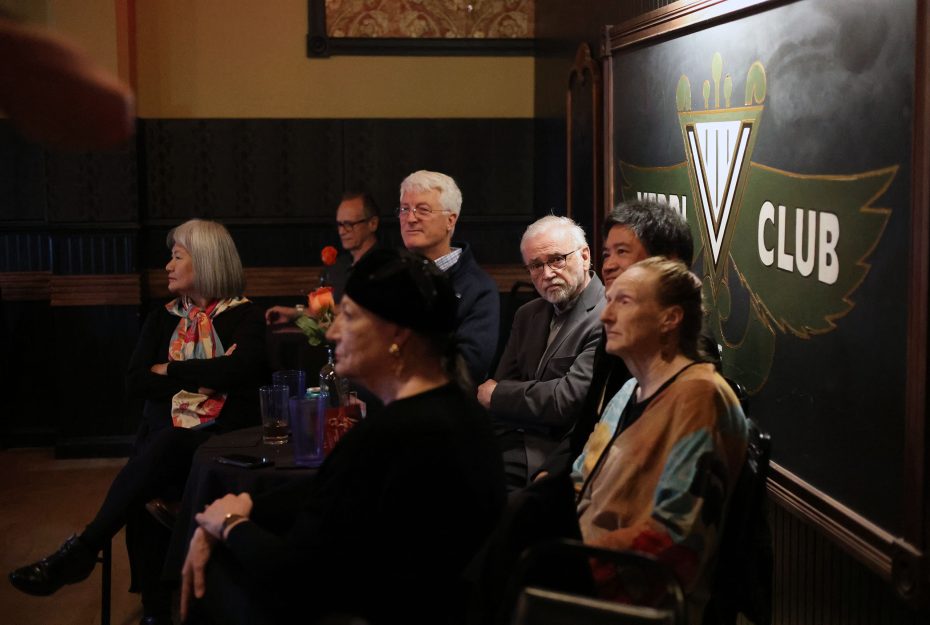
In the “rough” years between 1950 to 1980, there was a “beer guzzling” wrestling ring in the middle of the ballroom. Live barnyard animals were auctioned off at a fundraiser in the ’70s.
It was not until 2015 that the Verdi Club opened membership and board positions to all genders. For most of the club’s history, women joined the ‘Verdiettes,’ who had a separate leadership structure. “It was just so antiquated,” Schutz laughed.
Schutz and McGregor were brought into the fold through a mixture of charm and emotional blackmail. Older friends and relatives invited them to join in a way that felt, well, like an offer that could not be refused.
They found that what the place lacked cosmetically, it made up for with community.
Nine years ago, “I walked in here and I saw couples on the dance floor in their 80s and 90s. And not only did it remind me of my parents, which was sweet and heartfelt, but I thought, ‘That’s who I want to be,’” remembered McGregor, “And that began my love affair with this place.”
‘Came for the swing, stayed for the burlesque’
These days, members say, public events at the club attract four kinds of people: Swing dancers, Art Deco fanatics, “classics” in their late 60s and 70s, and curious friends dragged along for the ride.
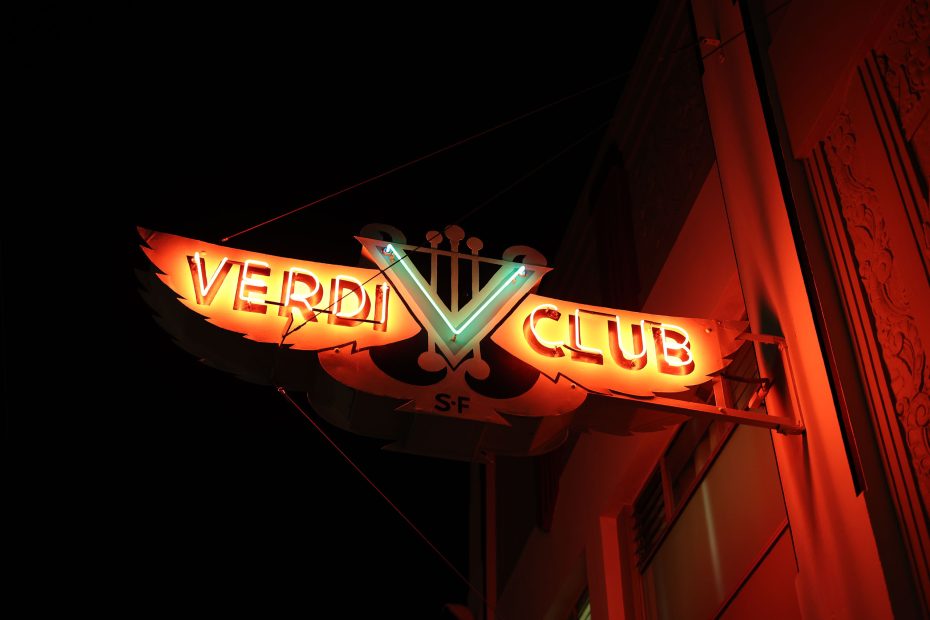
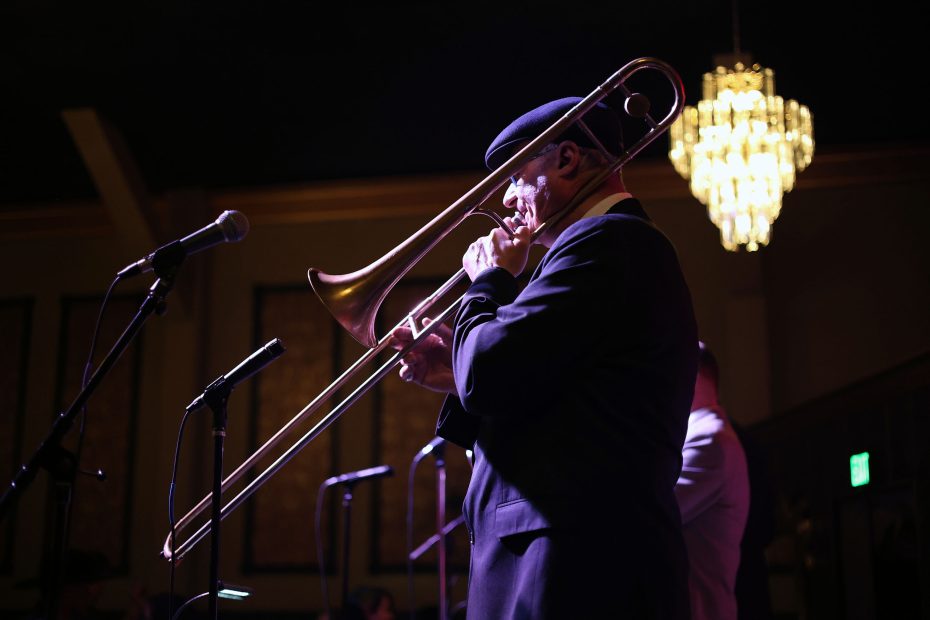
On a Friday night in January, visitors chatted outside on the sidewalk, smoking cigarettes under a neon sign. Inside, they wore practical kitten heels and danced to a jazzy rendition of “When You Wish Upon a Star.” They leaned over the bar in dim jewel-toned lighting; the kind of thing Edward Hopper would have liked to paint.
“It’s the new ‘Great Gatsby’ underground,” a woman in a black fringe flapper dress whispered, with a grin and an air that she, alone, knew a great secret. “I can’t say any more.”
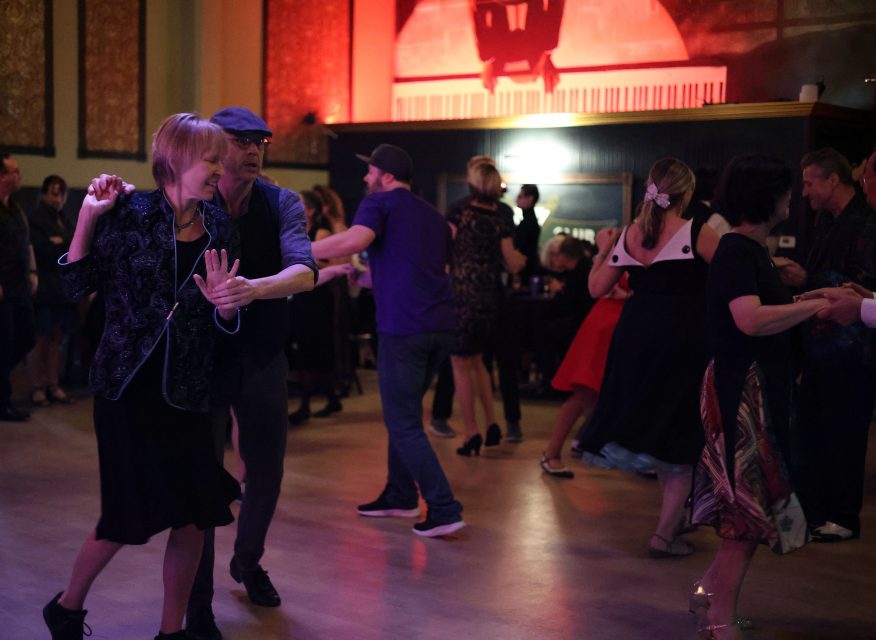
The club’s dance floor is one of the best, according to Inga Grace, a 68-year-old from Santa Rosa who still retains her native Swedish accent. Everyone dances with everyone, she and her regular dance partner Steve Smith explained. “You can ask whoever you want, and everyone looks out for each other.”
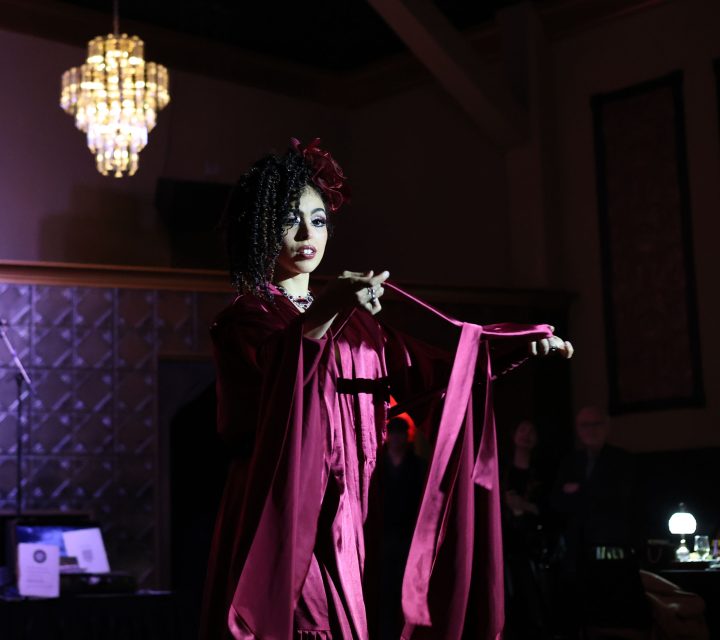
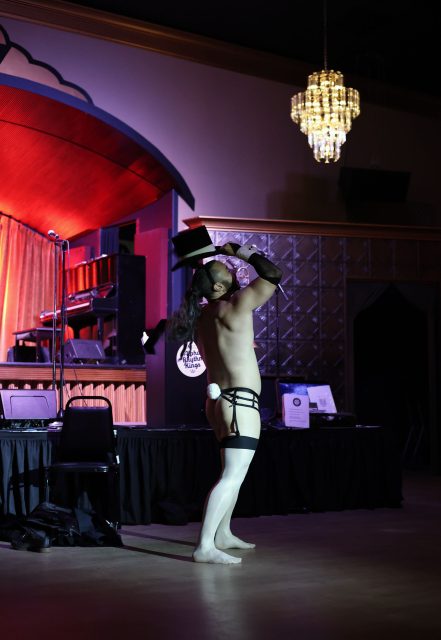
On this night, though, there was an unexpected divergence from the club’s live band and swing dancing bread and butter: Two magicians. One had been billed as a magician but, to the surprise of most of the audience, was actually a burlesque dancer who went by the name of Leon G. Ray.
The dancer stripped down to a thong with a clip-on white bunny tail, while the second magician roamed between tables, performing card tricks. No one could remember having invited him.
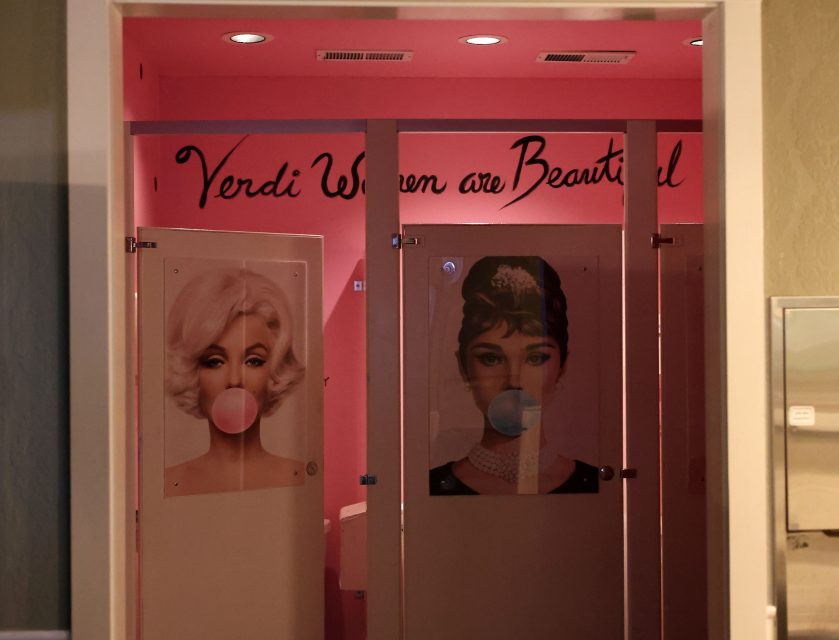
Ray was the talk of the upstairs women’s room, which was outfitted with lush velvet couches and coffee table books about Audrey Hepburn, Botticelli, and Roman gardens.
“The music is fantastic,” someone said from one of the stalls, “But the male striptease was terrible.”
Back on the dance floor, others celebrated the break from tradition. Erica Lipanovich, a first-timer, beamed: “I came for the swing, stayed for the burlesque!”
A great article. We danced there often and have many great memories, cumulating in getting married there 15 years ago. I’m glad to see the place is thriving.
Hi Abi,
Great article!
Really nice to meet you.
Greetings,
Inga