

Mission Local is holding intro interviews with incoming and incumbent supervisors, including Shamann Walton, Chyanne Chen, Jackie Fielder, Joel Engardio, Danny Sauter, and Stephen Sherill. You can read those interviews as they are published here.
Mission Local also held exit interviews with elected officials leaving office after the Nov. 5, 2024 election: London Breed, Aaron Peskin, Hillary Ronen, Ahsha Safaí and Dean Preston.
On Jan. 8, District 8 Supervisor Rafael Mandelman was elected by his peers to become president of the Board of Supervisors.
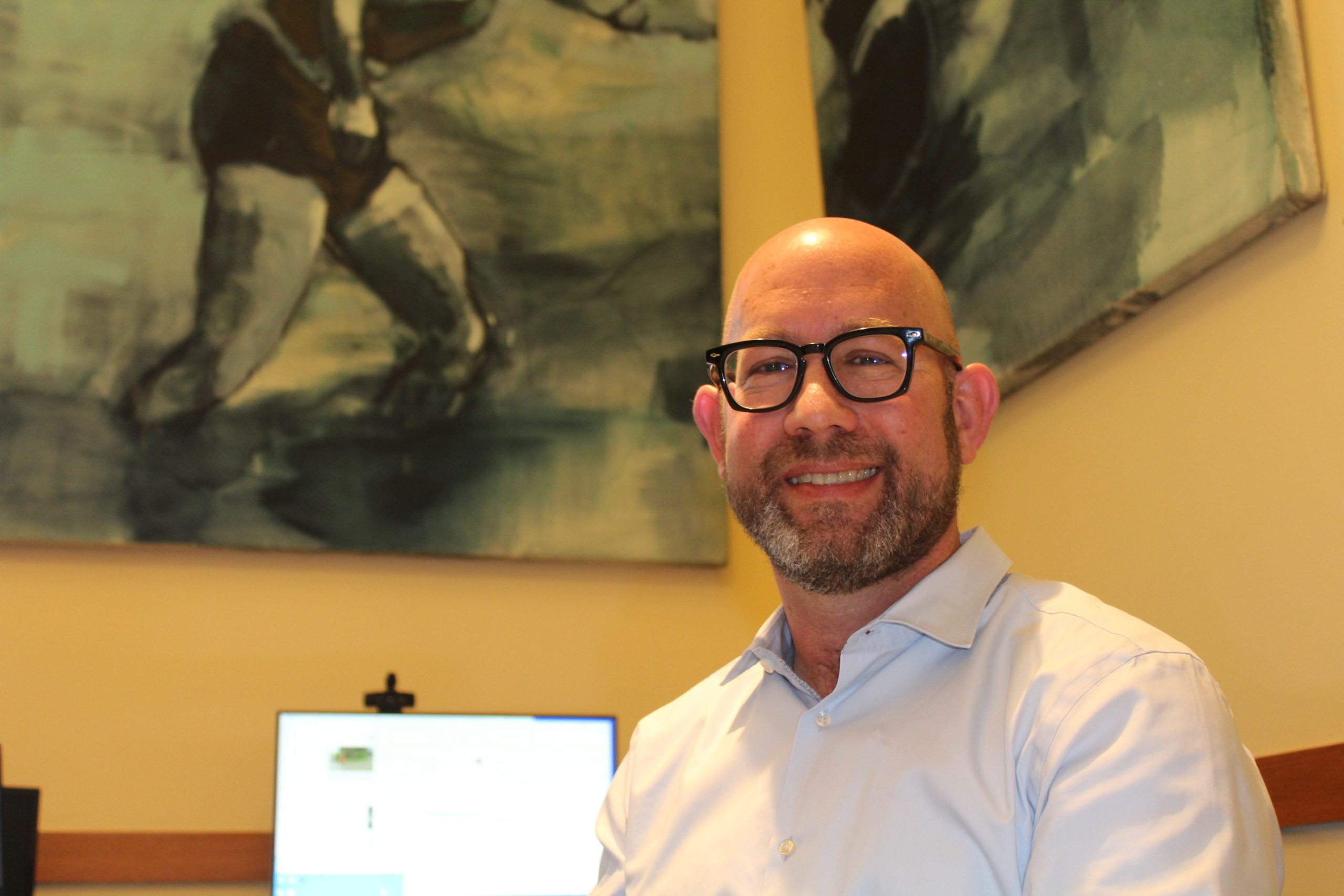
In a sit-down interview with Mission Local earlier this month, Mandelman, who represents Noe Valley, the Castro, Diamond Heights, Glen Park, Mission Dolores and Cole Valley, didn’t label himself a progressive or moderate, and said he is ready to start working across the board with new colleagues at City Hall.
Mandelman said his top priority is to provide services to unhoused people with mental illness and substance abuse.
And, he said, the feeling at City Hall is “very different” from his time under Mayor London Breed’s administration.
The interview took place on Feb. 5, 2025, at Mandelman’s office at City Hall. It has been edited for clarity and readability.
Mission Local: It’s been a month since you became the president of the Board of Supervisors. How’s it going? What have you learned about this new position, and how do you feel about it?
Rafael Mandelman: I feel good so far, but it’s been less than a month. I don’t think this has anything to do with me being the president; there’s sort of an aura of good feeling in City Hall right now. There continues to be, I think, a lot of goodwill in both the mayor’s side and the Board of Supervisors’ side. I think people are really interested in trying to work together and cutting each other some slack. The vibes are very different from my prior six and a half years on the board. I think it’s probably good for the city.
There are clearly areas of disagreement. There will be things that cannot be worked out. But it seems like there’s a shared desire to try to work as many things out as we can.
ML: How were they different? Those feelings and that previous sense at City Hall?
RM: I was elected in the same election as London Breed. When she was elected as mayor, a significant number of the supervisors on the board had voted to remove her as mayor. [In 2017, after then-Mayor Ed Lee unexpectedly died, Breed, then president of the Board of Supervisors, briefly became acting mayor. She was replaced during a bitterly contested board vote, on the grounds that serving as both acting mayor and board president was untenable and would also give her an unfair, incumbent advantage in the forthcoming mayoral election.] I don’t think people gave her a fair shake, but I don’t think don’t think she necessarily was interested in being super collaborative with a set of people who she had developed some real deep animosity for.
Our system is very complicated. It requires a level of checks and balances; that works best when there’s some goodwill and willingness to try to work things out. And when there isn’t that, it gets really hard to get anything done.
I think Lurie is working hard to try to keep that goodwill going.
ML: Mayor Daniel Lurie is a newcomer to City Hall. You are the board’s president. How are you working with his administration to make sure that everyone is on the same page?
RM: We’re not all on the same page. We’re not all going to be on the same page. But it’s important for him to know when he’s picking a fight.
One disadvantage of him coming in new and bringing in other people who haven’t served in city government, or haven’t served in city government for a long time, is that they may not be aware of where they may be picking a fight without knowing it. I can be helpful to them to be thoughtful about: Who cares about what? Who might they want to talk to before they make a move? I’ve done some of that.
ML: What are some of the powers or responsibilities that you have now that you didn’t have before?
RM: The president’s powers are limited, but there are some that matter.
The president appoints the committees that do the board’s work, so decides which skill sets are going to what committee, and then who’s going to lead those committees. The president can assign different pieces of legislation to different committees.
I do believe it is important for us to be as collaborative and above-board with each other and try to give each other advance notice when there’s going to be a hard vote or an area where we may disagree. I want to be as transparent with my colleagues as possible.
ML: Walk us through what a board president does to get 10 votes for the Lurie fentanyl ordinance. That didn’t have to happen. That could have been six votes, but it wasn’t. Among other things, you were the one who called for the 45 days. [The ordinance gives the board a 45-day ‘shot-clock’ to review contracts between $10 million and $25 million.] How does that relate to what you said earlier about collegiality and working together?
RM: Each of my colleagues who voted for it had to get themselves to that position, and they all took a different path to it. I agreed to waive — typically legislation sits for 30 days before a committee considers it. I waived that.
You could also say that the budget and finance committee was a committee that I put together. I talked through with Lurie’s team some of their ideas that they were thinking of putting into the legislation. One of the things they were thinking about putting in was a delegation of contract approval authority up to $50 million. And at the time, I wasn’t sure exactly, whether that would have been able to get my vote. I knew that it would be a pretty tough thing for some of my colleagues to swallow, and suggested to them that maybe they think about that. At least we should have the ability and the members of the board to be able to weigh in on each of these contracts and say yes or no.
ML: But you did more. You actually put the authority with the mayor’s office and not with the department heads. [The initial proposal, some department heads would have power to approve contracts. Now, it’s the mayor’s office.]
RM: I’m not sure that was a change many of my colleagues would have cared about necessarily.
ML: I think it’s a very big deal.
RM: I thought it was important that if we were delegating authority to these departments, that when the mayor is stepping in to act for us, that he takes responsibility for it in his office, and that it be clear that the contract was approved because the mayor felt that it needed to be approved.
I felt like that helped with my vote. I don’t know who else cared about that.
Then, it worked its way through the board. Jackie Fielder ended up supporting it, but she had some concerns about the “behest” language. She got that addressed. [The ordinance eases the requirements around making it easier for Lurie and nine selected officials to solicit money from private donors, or “behested payments,” for six months. Before Fielder’s input, the number of officials in the ordinance that could solicit these payments was around 180.]
Connie Chan, I don’t think Connie would have supported it just because of the changes that I made. I think that she needed some additional things that she was concerned about: How long are we giving you this authority? She needed to see this in the legislative process. Different supervisors had different needs.
For Shamann, he wasn’t going to get there. I respect that. He made some pretty cogent arguments about why he wasn’t going to support it. Everybody’s going to do their thing, and we all represent different constituencies and have a different role to play.
ML: What do you do to work people through and get them on the same page? Because that was 10 votes and you’re the board president. I mean, you’re not leaping up to take credit, but certainly you deserve some.
RM: I saw this as Lurie’s legislation. I wanted to be helpful, because I want his mayorship to be successful. I didn’t lobby my colleagues. I didn’t tell them they had to vote for this. The most important thing I did for Lurie was to explain why the board might have a problem with the delegation of the contracting authority, what I have seen using our contract approval authority to address real problems at HSH, at [Department of Public Health], making the departments address things they would not otherwise if we didn’t have the ability to hold their contracts up, or to vote no. They didn’t necessarily know that they were reversing the Magna Carta; they wouldn’t have known that they were taking away something pretty significant to us. So I explained that, and I think it made a difference.
ML: Since 2018 at least, you’ve supported Sen. Scott Wiener’s legislation on conservatorship. Now, looking at the number of people who were experiencing homelessness in San Francisco last year, and looking at the estimated beds the city has available, do you think San Francisco has the capacity to offer not only a bed, but all the resources that come with that?
RM: I have always believed that we need to get severely mentally ill people who could not care for themselves and have been relegated to our public spaces, jail or wherever — that those people belong in care. It is a failure of our state government, but we, even as a city government, need to try to do whatever we can to get to get care for those folks.
I have supported expanding conservatorship. I’ve done everything I can to get more beds for people, particularly people with severe mental illness. We had our beds working group last year that was specifically charged to look at the people with the greatest acuity, which is not thousands of unsheltered homeless people on our streets. It’s hundreds. But it’s hundreds that really matter. I think we can say that’s my top priority in this job.
ML: The progress has been very slow.
RM: Terrible. It gets worse. In the ‘60s, before Lanterman-Petris-Short, the state of California provided mental health care to severely mentally ill people and, unfortunately, to some number of people who were not severely mentally ill — but they did it to the tune of nearly 40,000 people a year in state mental hospitals. The care of those folks was either the first or the second largest line item expenditure in the state budget. Now we have about 5,000 people in state mental hospitals.
I don’t believe there are 35,000 people on the streets because of deinstitutionalization. But I believe that a significant number of the people who are without shelter in California are people who might have been in mental hospitals 30, 40, 50 or 60 years ago.
I’m going to continue to push the administration to try to address it. I’ve encouraged them to stop talking about shelter beds and to talk about more generally about beds. Specifically to talk about beds for severely mentally ill people; that is the type of beds we are least likely to do.
Breed successfully brought more than 1,000 shelter beds online in her time in office. We’ve added 400-odd behavioral health beds, like Hummingbird. They’re shelter beds, drug treatment, but not long-term care for someone with severe mental illness. Some of them are beds where people get on their feet and get their jobs and stabilize their sobriety.
That’s not what I’m talking about, in terms of the need. I’m hoping that this administration will really prioritize that chunk of homelessness, both through investment in locked beds that San Francisco manages, controls or owns, and through making it a high priority in Sacramento and, to the extent that lobbying in D.C. is even a thing, to get the state and federal government to get back in the business of taking care of people with severe mental illness. When I was advising Susan Leal when she ran for mayor in 2003, I was trying to get her to talk more about conservatorship. So, it’s longstanding.
It is really important for San Francisco’s future, our ability to attract and retain businesses, have people want to live here, have tourists come, have a general fund that is growing, have public spaces that feel safe and usable by all. That means we can’t have people living in them. We can’t have people selling and using substances in them. I think San Franciscans expect that if someone says, okay, ‘I’m ready to come off the street, I’d like a shelter bed,’ that we’re going to meet that need.
There’s still a need for more shelter beds. There’s a moral obligation around shelter beds for kids and families. I think for a lot of folks who are on the streets, addiction has taken over their lives, and they’re not in a place where they want to be going into treatment necessarily. So, I don’t actually think you need a shelter bed for every single person who happens to be in a public space. I’m a little leery of the notion that we need to, particularly in shrinking budget times, be going for a very large number of additional shelter beds, particularly if that investment is going to crowd out an investment in long-term behavioral healthcare or other kinds of things.
I’m not opposed to the 1,500 bed commitment, but I want to know a whole lot more about it.
ML: Six months is pretty quick for 1,500 beds.
RM: I agree. I’ve conveyed my concerns about that commitment to the administration. I think it’s a lot of money and I think it’s still a little bit undefined what they mean by those beds.
ML: Do you see eye to eye with Supervisor Matt Dorsey’s vision of sober living?
RM: I’m sympathetic to Dorsey’s position. He’s got a lived experience that I do not. He has struggled with addiction, and has strong feelings about how people get sober and stay sober. I think where I agree with him is, I think we want to be a city that supports sobriety and that does everything we can to communicate that if you are someone who’s using and can’t stop, we want to keep you alive as long as we can.
Our goal is for people not to use substances that are highly likely to kill them or destroy their lives. I think there’s a minority position in the public health community that’s uncomfortable with telling people how to live their lives. I’m a little more in the Dorsey camp of, ‘We need to try and nudge or push or cajole people into a different relationship with substances.” Dorsey also leans into the criminal justice response.
ML: Has that worked anywhere?
RM: You could argue that it’s worked in Europe.
ML: But they have the resources …
RM: You could argue it both ways. You can say Zurich and Portugal have worked because they have robust treatment resources that exceed what we have. You could also say those places and others work because, in addition to those robust treatment resources, they make clear that you cannot use in public spaces. They would never tolerate the level of public use and sale that we have in San Francisco. They have robust safety nets that San Francisco alone cannot create. We will try to do as much as we can, and hope we can get some help from the state and federal government. I also think we need to have rules to enforce around how our public spaces get used.
What we’ve been doing is very labor-intensive. We have been arresting people for use, for public intoxication. None of that is remotely ever going to work with someone whose crime is they can’t stop getting high in public.
You have these officers go out to do a day of a day arresting users to get them off the streets and try to provide some relief in the Tenderloin. Officers go find the person — maybe they’re prioritizing people who they know are a challenge. They get that person and they drive to jail, and they spend a couple of hours processing that one person, for that person to then sober up in jail and then, six hours later, be released.
Nothing more will come of it, because who’s going to prosecute that? Why would we prosecute that? We wouldn’t prosecute that.
The whole point is to get that person off of the streets so they’re less of a burden for the surrounding community. We have a police shortage, and 10 officers spend their whole day getting eight or 10 people off the streets for a few hours.
Maybe that’s some relief to the block where they were operating. Maybe some small business owners are like, ‘I guess today was a little bit better,’ but that does not feel like bang for your buck.
So I assume that what they are trying to do is try to scale this up by using the threat of an arrest and time in jail to get people to say, ‘okay. I don’t want the criminal justice option. I’ll take the public health option.’
ML: Or the bus.
RM: Or take the bus.
ML: Is this going to work? Are these treatments going to stick? Also, our bus programs are not as comprehensive as they were, even a few years ago
RM: I haven’t been briefed on this, but I could imagine some of the thinking or the motivation. On the treatment side, or at least the ‘Have you go to a police-friendly drop-off that is run by DPH,’ we hope.The real benefit of that is the volume; you’re getting more folks off the street. You’re providing more relief.
When you are high, and when you are out of your mind in public, you are impacting others. So whether we are able to change the course of your life or not, whether you have a moment of insight in your six, eight or 12 hours, or however long we can keep you in the police-friendly drop-in, whether in that time somehow they manage to figure out that you are so out of it that they can begin can initiate conservatorship proceedings for you. Maybe at some point of the day program, you start getting a little bit more stabilized or start going to a DPH facility voluntarily, or something happens that breaks the cycle.
That doesn’t strike me as crazy. It strikes me as ‘It might not work at all. Let’s give it a try.’ I don’t hate that. I don’t think it’s a civil-rights violation.
ML: People using drugs, homelessness; do you see that as an issue that is coming from other parts of the city? Or do you see those as an issue in your district?
RM: Objectively, if you walk around the Castro, and then you go to the 16th Street BART station on a particularly bad night, you’re looking at a different problem.
But the problem is real for merchants and residents in the Castro, and it is more than the neighborhood can absorb. I think it is impacting businesses. I think it has caused businesses to shut their doors. I think it makes it hard for new businesses to come in, and I think it makes it hard for the Castro to thrive. I hear merchants are continually having to defend their employees, who are not getting paid to be social workers, cops or nurses.
I think it’s Castro’s biggest problem. I think it’s the biggest impediment to the thriving of that neighborhood.
I don’t know whether you can solve this problem in the Castro without solving the problem in these other neighborhoods. Paradoxically, sometimes the effort to solve the problem in other neighborhoods, I think, does increase some of the challenges in the Castro, because people start looking for other places to be.
ML: Have you had a chance to meet with Captain Liza Johansen?
RM: Yeah.
ML: How do you describe the meeting?
RM: I appreciate it when the Mission station captain is willing to take seriously the problems of my constituents, because their officers are running around dealing with shootings and violent assaults and other real challenges. Not to say that the things we experience in the Castro are not real; break-ins are disruptive and costly and can be deadly for a business.
ML: I found this quote by Mark Leno who referred to you as a ‘rare leader who is neither progressive or conservative. You were able to work through the lines.’
RM: That sounds like a campaign quote. It sounds like something somebody made him say.
Mark and I were strongly supporting each other. At the time, we were trying to convince District 8 that I was moderate enough to represent a district that had never elected a progressive.
ML: In the 2018 election, do you think people expected you to be more progressive? Hillary Ronen appears to have hoped so.
RM: Many were. I think we were quite honest in 2018 about who I was at the time. As Leno described, I have some pretty progressive values, like a lot of San Franciscans.
I also think, like my district, I’m pretty practical and am willing to part ways with the left when I think the left has done something wrong. Supervisors have to reflect their district, or they’ll get thrown out.
ML: How have you changed from your unsuccessful 2010 campaign in District 8 to your successful campaign in 2018?
RM: So, in the sense of how I changed between 2010 and 2018, there’s a set of people who have been supportive of me in the past who are really disappointed. One of the papers, the day after the election, had the photo of me hugging Hillary Ronen, who was so happy because finally she was going to have a kindred spirit on the Board of Supervisors. I remember we’d have these conversations and she was so excited for me to win.
I didn’t know exactly how this would play out, but I knew, ‘I’m going to be the District 8 supervisor. We’re going to disagree on stuff. I can’t represent my district and agree with you on everything.’ I knew that would happen. I’m glad that, with Hillary, we were able to work together on some things, particularly on the mental-health stuff.
In 2010 and before, the things that motivated me to get involved in politics were the ways in which the world is screwed up. My sense that we were not doing right by people who were on the losing end of all these problems. I was pretty motivated by notions of justice. I was a lawyer. I’d gone to law school, and lawyers care about that stuff.
I was liked by progressives and moderates because I could talk to them and didn’t hate them. What I was trying to do in politics was about working with the movements and pushing as hard as I could to move as much of this country in a better direction.
We don’t have the social safety net that European social democracies do. We’re not creating the kinds of opportunities for kids that we should. There’s all these people getting left behind who shouldn’t be. That’s bad for everybody. It was a very easy fit to be an Aaron Peskin appointment to the Board of Appeals. I was interested in preventing rapacious developers from robbing us blind.
In 2010, it was a little bit of a problem that I’d been the president of the Harvey Milk Club. I had these sort of democratic socialist values. We knew we needed to talk about it in a way that did not signal to these voters who had never elected a progressive candidate that I was still okay.
In 2010, we still thought that a progressive could really win and stay true to who I was at that point. We did not come close. I became the progressive alternative to Scott Wiener. The voters spoke, and they elected Scott, and Scott was a very able representative for District 8.
I think between 2010 and 2018, the experience of being on the board at City College did impact my thinking about my relationship to the left and whether I wanted to be the elected vessel for progressive ambitions for a better society, because I saw people who saw themselves in that way doing terrible things at City College.
City College has a significant chunk of people who see their primary motivation as advancing justice and pushing for a better society, and you do that in everything. Every board meeting was an organizing opportunity. Every choice around the budget was a choice between left and right. Everything was framed in the lens of “more justice” or “less justice.”
I think that framing was part of the ‘We don’t need to pay attention to state laws. We don’t need to follow the Ed Code. Numbers aren’t real. There are vast right wing educational conspiracies that are trying to privatize everything and we just need to resist;’ I did that. When I was first elected, it was kind of appropriate for me to identify with that, because we did have to push back on the state and the accreditor. The fight was right, and I believed in that.
But then we came back, and we had to run the place. I was the president of the board. We needed to balance the budget. We needed to comply with state laws. There was no understanding or appreciation for that among my friends on the left. I started thinking, ‘Part of the job of being an elected official is knowing when you have to part ways with the people who you generally agree with.’
Some of the lefties who were associated with City College were not entirely sure that I would be better than Jeff Sheehy when I ran in 2018. I then got elected, and there was a set of things that I think accelerated my parting ways with the left. The balance of the board changed, so people who were more progressive than me got elected. So instead of being the decisive sixth vote, I became like the seventh or eighth or ninth vote. In that environment, what did the progressives need me for?
I do think some of the fights about conservatorship and the autonomy of people with severe mental illness definitely divided me from a chunk of folks and caused me to look a little bit differently. I was not going to be probably as believing of the Coalition on Homelessness after we’d had that fight.
ML: Do you regret the photo of you yelling into the microphone?
RF: Not a great photo.
ML: It is literally not a good look.
RF: It’s not, but you could find photos of me from 20 years yelling into megaphones when …
ML: You were in front of a microphone yelling and there was a woman behind you, in fact, an aspiring supervisor, holding a sign reading “homeless industrial complex.” Seeing where that went and how that worked out, could we have handled that differently?
RM: I regret the photo that shows my face apparently contorted in rage … not a good look. I don’t regret engaging San Franciscans who disagreed with the Coalition on Homelessness on the right response to street conditions. I don’t regret protesting a magistrate judge who is issuing decisions that were so disconnected from my understanding of reality.
Another thing that kind of pushed me more to the right, or the center, or whatever, is that I would go to hear from my constituents about what they were experiencing. I would come into City Hall for hearings on these topics, and there was no overlap between the views that I heard expressed by my constituents and the voices that I was hearing in City Hall. What I really wanted to do was to make these people get in a room and listen to each other.
The most important thing in policy-making is to listen to people who you think disagree with you. Either your arguments get better, or you get convinced.
In San Francisco politics — and maybe this is just life or the United States right now — people tend to talk to other people who agree with them. I do not regret playing a part in engaging the people I was hearing from as a supervisor, but were not expressing themselves in city politics, except maybe around elections, getting those people more engaged on the day-to-day.
TogetherSF got so deep into the Mark Farrell show that they became less valuable. What they were valuable for, at least initially, was providing a way for lots of San Franciscans who have views about homelessness, or safety, or the state of the city to get engaged.
ML: Do you see yourself running for a seat in Sacramento in the near future?
RM: That depends. I have an account to run for the state Senate in 2028, which is when the state senator will be termed out. The challenge with that is I will have been out of office for two years, so am I still relevant? I’d like to think that I will be able to run.
I do think that the things that are wrong with San Francisco are really, for the most part, California problems, and need to get solved at the state level. I do think that our failures around severe mental illness and people with severe mental illness go back to the original sin of closing the mental institutions without anything to replace them. That’s a state-level problem. No county can solve that problem on its own.
Some people have nobly tried. Darrell Steinberg, Susan Eggman. People in the state legislature have worked on it. They still haven’t solved it.
There’s work to do: Transportation issues around large infrastructure projects that we need. Whether or not cap and trade gets renewed, and we unlock the funds that we need, and on what timeline.
How we plan for large infrastructure projects is a state thing — even housing policy. If we really want to produce hundreds of thousands or millions of units for middle-income-and low income people — the only way that is going to happen is through aggressive action by the state. There’s lots of areas where things that I care about depend on what the state does.
I have to be a supervisor for the next two years. But I think I’m going to think a little bit about whether I think I can make a difference on those kinds of issues in the state.
“Mandelman’s top priority: to provide services to unhoused people with mental illness and substance abuse.”
It would be nice to have at least one political leader in this city whose priority is to protect law-abiding citizens from unhoused people with mental illness and substance abuse.
You don’t think you would benefit from the drug addicted homeless being cared for in programs vs. languishing with pants askew on the street?
But you could use that argument to justify any and every piece of spending on the poor. And that way socialism lies.
I asked a question and you dodged, then applied a superfluous strawman to an argument nobody was making. I didn’t say “any and every piece” was justified or useful, what I asked was whether keeping drug-addicted mentally ill homeless in programs rather than on the street was a public good that you personally would benefit from, or not? You tell us – just try to keep your answer limited to the question asked.
I do not support paying more tax to save these people. Is that clear enough for you?
Again you are dodging the obvious and repeated question – because you are afraid of the answer, apparently, that yes you do benefit from keeping drug-addicted mentally ill off the streets – which various parts of our taxpayer budget go to pay for and accomplish from police to courts to social workers to DPW pressure washers and trash sweepers. Fact, you benefit from them. Since you were afraid to admit it, I’ll just admit it for you.
Safety for most citizens is not a big problem. I’m sorry to be dismissive of your concerns but I’m in my 60s, lived in SF most of my life, walk and run through *all* parts of the city and I’m convinced it’s relatively safe. But people living on the streets, the problems they have and the problems they cause for other citizens is a huge problem. I believe the safety you wish for will improve if Mandelman’s priority is addressed well enough.
Mandelman’s “priority” is feeding city money to connected non-profits and developer groups, then higher office, period. The Scott Wiener model. He gives lip service anywhere he sees political dryness.
No kidding. It is wild that politicians are scared to say their number one focus is the taxpaying, rentpaying working people and families that make this city run. These are the people who vote!
The issue is the marginal voter on who you win the election is following some random slate card featuring endorsements from groups like UESF hijacked by PSL left wing nutters.
As opposed to totally legit “moderate” liars backed by Billionaire developers who don’t live here, absolutely?
Switzerland and Portugal also have universal health care, which is a big piece of the puzzle that we are missing here and n SF and the US as a whole.
If we are missing it then that is because the voters did not want it.
We didn’t vote on that Tom. Try harder to think.
Sure we voted on it. In fact we do it every 4 years. There is always a Green candidate advocating for socialized healthcare.
That doesn’t mean the actual proposal has been voted on Tom, or any specific proposal along those lines. The candidate would have to be elected to propose it, Tom. But as many have noted, taking basic preventative care of people who can’t afford it saves money in the long run that is currently stressing and bankrupting emergency rooms and other care options for critical care. It saves money to spend a little up front. Surely even you can comprehend that concept, prevention of problems being cheaper than solving them?
Great interview, but I believe Supervisor Mandelman inadvertently articulated one of the central causes of our sclerotic and often adversarial/ineffective city gov’t when he observed (about district supes) “Everybody’s going to do their thing and we all represent different constituencies and have a different role to play.” The political expediency/self-preservation that system motivates is exactly what’s wrong with SF; the supes should not represent “different constituencies,” they should be working to improve the city as a whole and keeping that principle at the center of their thought process when voting. District elections create more problems than they solve. Each supe taking care of a small slice of the city (and their own reelection within that slice) has distorted the way our city gov’t operates in a profoundly damaging way. Many use their supervisorial position as a springboard to higher office, so their motivation is largely to capitulate to their district’s narrow interests and survive to fight another day, not to look at how their votes will affect the rest of our city in the long term.
Lemme guess. If all supervisors just agreed with you and did your bidding, everything would turn out perfectly.
Why try to distill someone else’s point instead of making your own?
Mandy supports the Engardio recall.
RM is my Supe and has been a pleasant surprise. I did not vote for him as I assumed that he’d be the typical lefty coming out of City College. And my previous Supe was Scott who was highly effective.
But RM has navigated deftly to represent and reflect his affluent constituency, placing our needs over any personal ideology he might admire. Joel E might learn from him.
That it took Rafael 37 years of life on this earth to realize the American left has no interest in governance and is innumerate is a huge indictment of his judgment. At least guys like Haney knew exactly what game they were playing and pretended to be left aligned out of shrewd political calculation.
Seems to make fake-azz “moderates” did ok… for now.
You prefer bootlicking sycophantry, we understand Tom. Breed backer.
As district constituents, our household emailed Mandelman’s office urging him to prioritize and protect our neighborhood MUNI and public transit lines. A top priority of each district supervisor is (and should always be) listening to and engaging with their constituents on issues that impact them every day. We were told to “reach out to SFMTA” (which we have already done). Don’t forget: Mandelman is THE guy who spearheaded an end to remote public comment at all public hearings at City Hall. Weiner and Haney both started as district supes. Now that they are in Sacto, they revel in their lack of accountability to individual San Franciscans, and their allegiance to their billionaire Tech and corporate funders.