

At the age of 24, Kelli Dillon began showing signs of early menopause. Her periods stopped. She lost 100 pounds. She began waking up at night in a sweat.
It wasn’t until a lawyer helped her gain access to her medical records that she saw what had happened: A prison doctor who told her he needed to perform a biopsy to check for cervical cancer had actually removed her ovaries and part of her fallopian tubes.
“How do you possibly sum up this level of pain? This level of violation?” asked Dillon, breaking into tears as she took the stage at University of California, San Francisco’s Pride Hall on Tuesday.
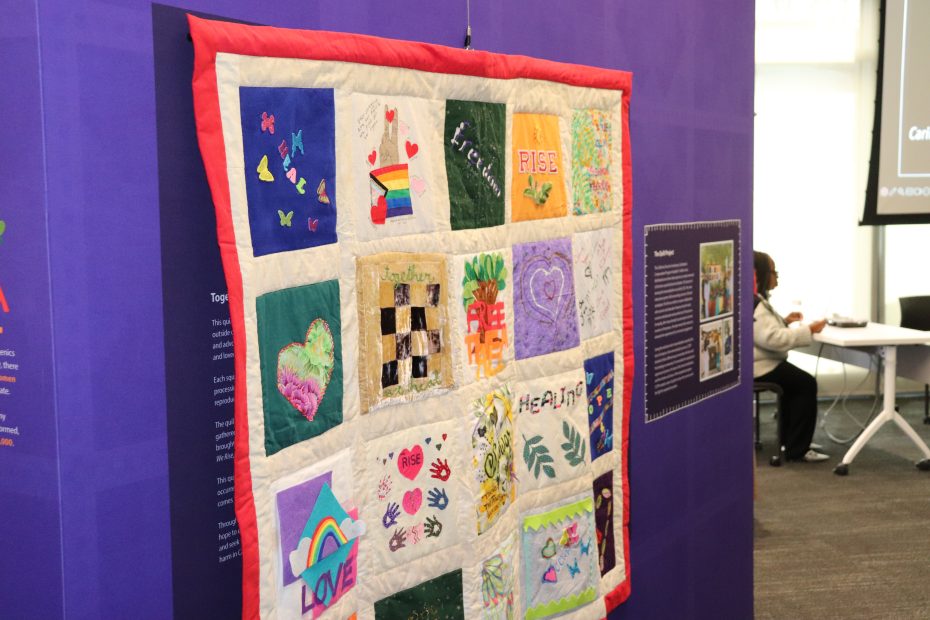
Dillon, along with six other attendees, were there for the unveiling of a painstaking project: A quilt honoring the nearly 600 victims of forced sterilization in state prisons who are still alive today. For months, victims and advocates inside and outside of California prisons have pieced it together, square by square.
The small quilt is made up of scrap fabric and decorated with patchwork hearts, butterflies, and messages written in glitter felt-tip pens, some reading “freedom,” others “healing.” It’s made up of “just what people had around,” said activist Linda Evans with the California Coalition of Women Prisoners, who coordinated the quilting project.
Because of a long history of sterilization of incarcerated women — between 1909 and 1979, an estimated 20,000 forced sterilizations occurred in state-run institutions in California alone — sterilizations are banned in state prisons if federal funds are used. When California prisons used state funds to bypass this rule, a 1994 law demanded that sterilizations using state funds be approved by outside medical authorities in Sacramento on a case-by-case basis.
But the law largely went ignored. Dillon’s surgery took place in 2001. A 2013 report by the Center for Investigative Reporting found that, from 2006 to 2010, about 150 women in California prisons were sterilized without required state approval. This led to a 2013 law explicitly clarifying the illegality of sterilizing prisoners for the purpose of birth control.
In 2021, another state law passed, promising compensation: $35,000 to each victim. Yet surprisingly few have benefitted. As of Dec. 7, 2024, just 122 of the 574 applications received by the state have been approved.
California estimates there are at least 600 victims alive today who are eligible for compensation.
Dillon and Moonlight Pulido, who also underwent a full hysterectomy in prison without her informed consent, were both compensated after applying to the California Victims Compensation Board in 2021.
Sharon Fennix and Zyaire Smith, two other attendees, were less lucky. They only received compensation after challenging the board multiple times; both received “endometrial ablations” from prison gynecologists. Neither were told that the procedure, which destroys the uterine lining, makes pregnancy rare and far riskier for the mother.
Still, despite the known risks, the California Victims Compensation Board does not consider ablations to be a sterilizing procedure.
“I would have bled for the rest of my life before I let them take my uterus,” said Fennix, who didn’t learn until years later that the ablation she received to stop menstrual bleeding would affect her ability to have children. “It’s about time someone pays for it.”
Smith, who is a transgender man, said he was never informed of the consequences of the procedure. When he realized what had happened and confronted medical staff, he said he was told: “You people wouldn’t want that [children] anyway.”
The quilting project, titled “Together We Rise! Together We Heal!” is meant to bring attention to this struggle for compensation. Though a ruling last summer lets victims request additional review of their cases, many applications remain denied.
Speaking to legislators has been an “incredibly demoralizing process,” added Jennifer James, a sociologist and associate professor at UCSF who has researched reproductive injustice with the California Coalition for Women Prisoners. “There was no desire to figure out what do we create that honors this level of harm.” So the coalition, said James, “decided to do their own form of memorialization.”
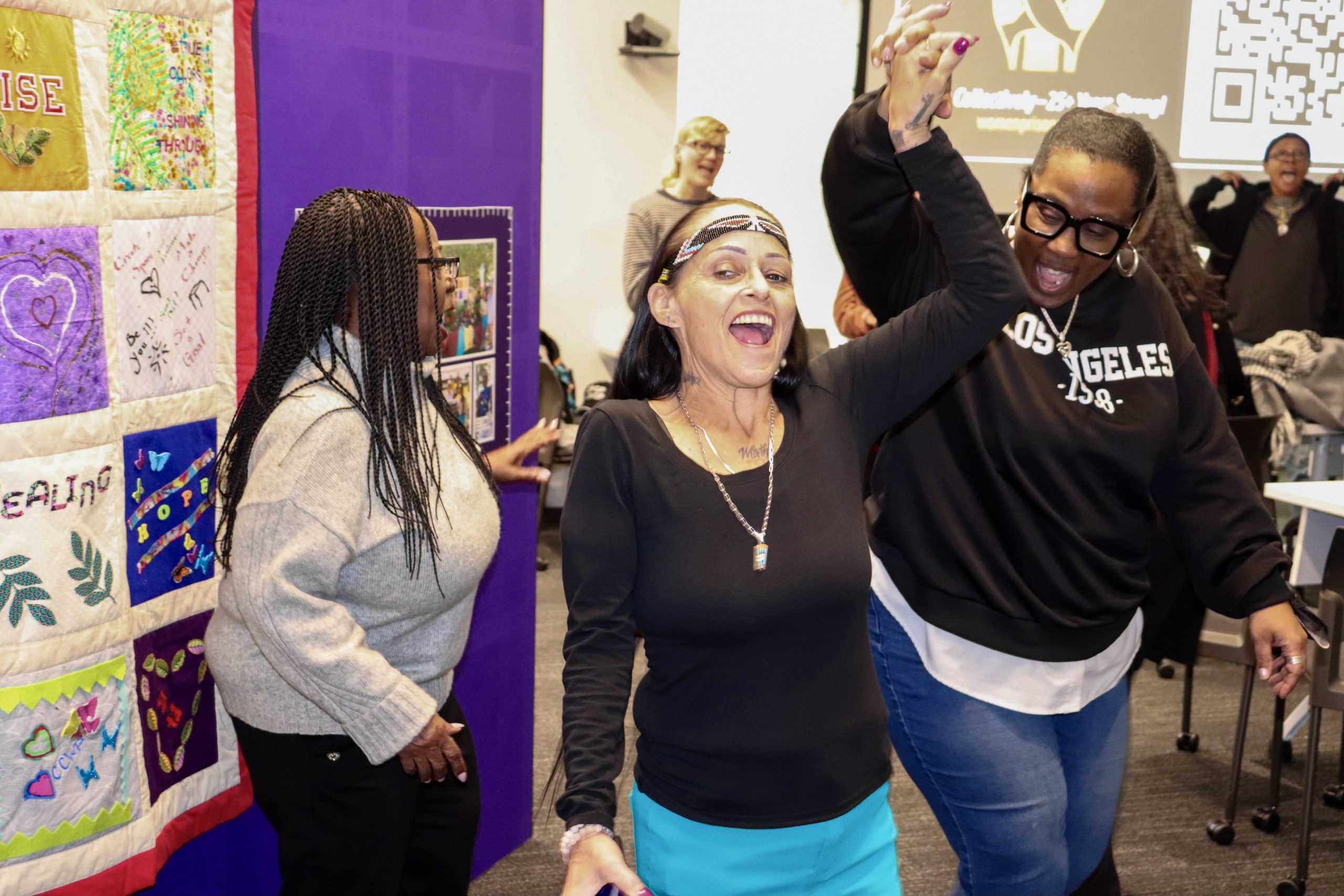
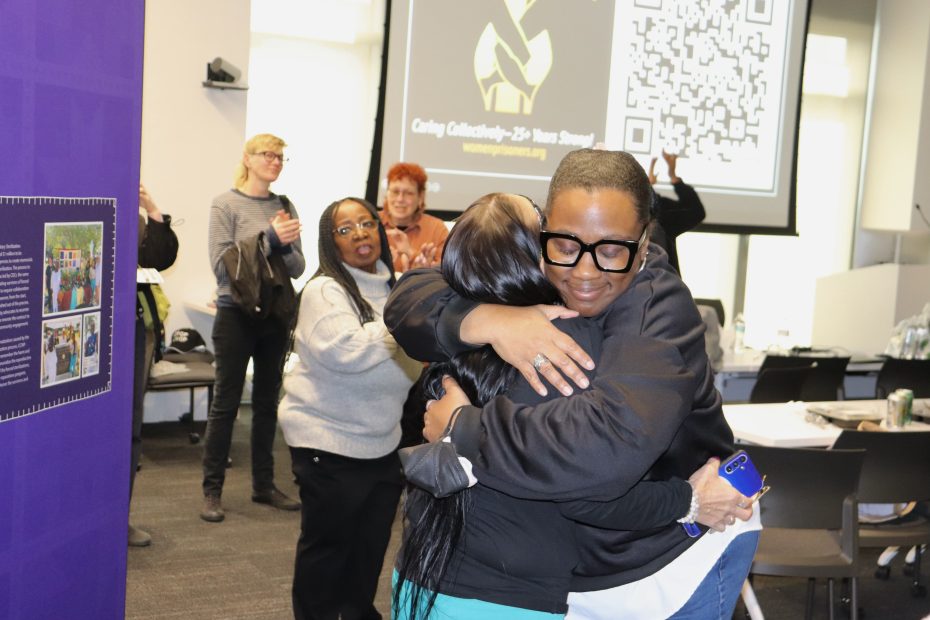
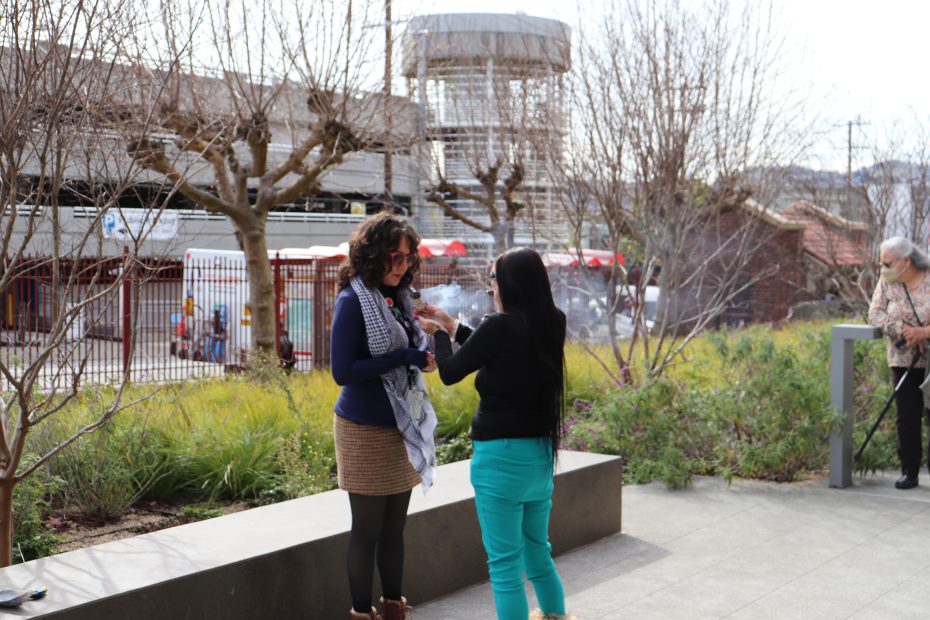
At the end of the gathering, Pulido blessed attendees by brushing them with burning white sage, enveloping volunteers in a cloud of smoke. Survivors and advocates laughed, cried, and embraced one another. Dillon twirled Pulido, who celebrated her 60th birthday at the event, to the tune of ‘Happy Birthday’ sung in chorus.
“Looking at the quilt, I have mixed emotions,” said Dillon. “There is a gratefulness, a humility that we made it out, but I’m still so angry. Yet I feel comforted that I and my sisters made it through.”
“…sterilizing prisoners for the purpose of birth control.”
Excuse me, what?
How is someone in prison going to get pregnant, other than rape by a guard?
If that’s why they are sterilizing these people, maybe you need to talk about that part
Other than that, thank you for an excellent article. Informative and upbeat is a difficult combination to pull off these days, and I appreciate it!
It doesn’t say “for the purposes of birth control, while in prison” quite. Does it. So instead once can take it to mean the broader long term purpose as denoted, because sterilization is a one-way process, albeit perhaps for different underlying motivations or rationales depending on circumstances and location. Eugenics, preventing indigent mothers passing on generational poverty, what have you.
To Anonymous: sterilizing people was to prevent them from having kids in the future when they were out of prison.Not everyone is going to prison for life.That was the plan of the “masterclass”, make sure they don’t reproduce and have kids since they believed that the new born kids would be as “bad” as the parents…Very evolved society right?
This country has committed so many crimes against their own people, native Americans, tribes in general, prison population, racial groups, Blacks, Japanese, Chinese, Italians, etc.They even built some concentration camps…No surprise they brought over the “scientists” from Germany after the war;They wanted to learn from “the best”..It is appalling. No wonder we get some nazis right now hanging around the white house; apathic population. Sad.