


The Bay Area has long been home to some of the world’s greatest folk singers: There’s Joan Baez, who lives on the Peninsula; Ramblin’ Jack Elliott in Marin; and the late Malvina Reynolds, who would surely be shocked at the real estate prices now garnered by the Daly City “little boxes made of ticky tacky” that she immortalized in her most famous song.
Then there’s Faith Petric, a name not as well known outside of folk circles but a linchpin of the Bay Area music scene nonetheless, and a figure who cut a wide swath through American history during her long life. Petric, who died at 98 in 2013, is the subject of Estelle Freedman and Christie Herring’s 2024 documentary “Singing for Justice.” The film screens Saturday, Feb. 22, at the Roxie Theater ahead of its PBS debut during Women’s History Month, when it will air on KQED on Friday, March 14.
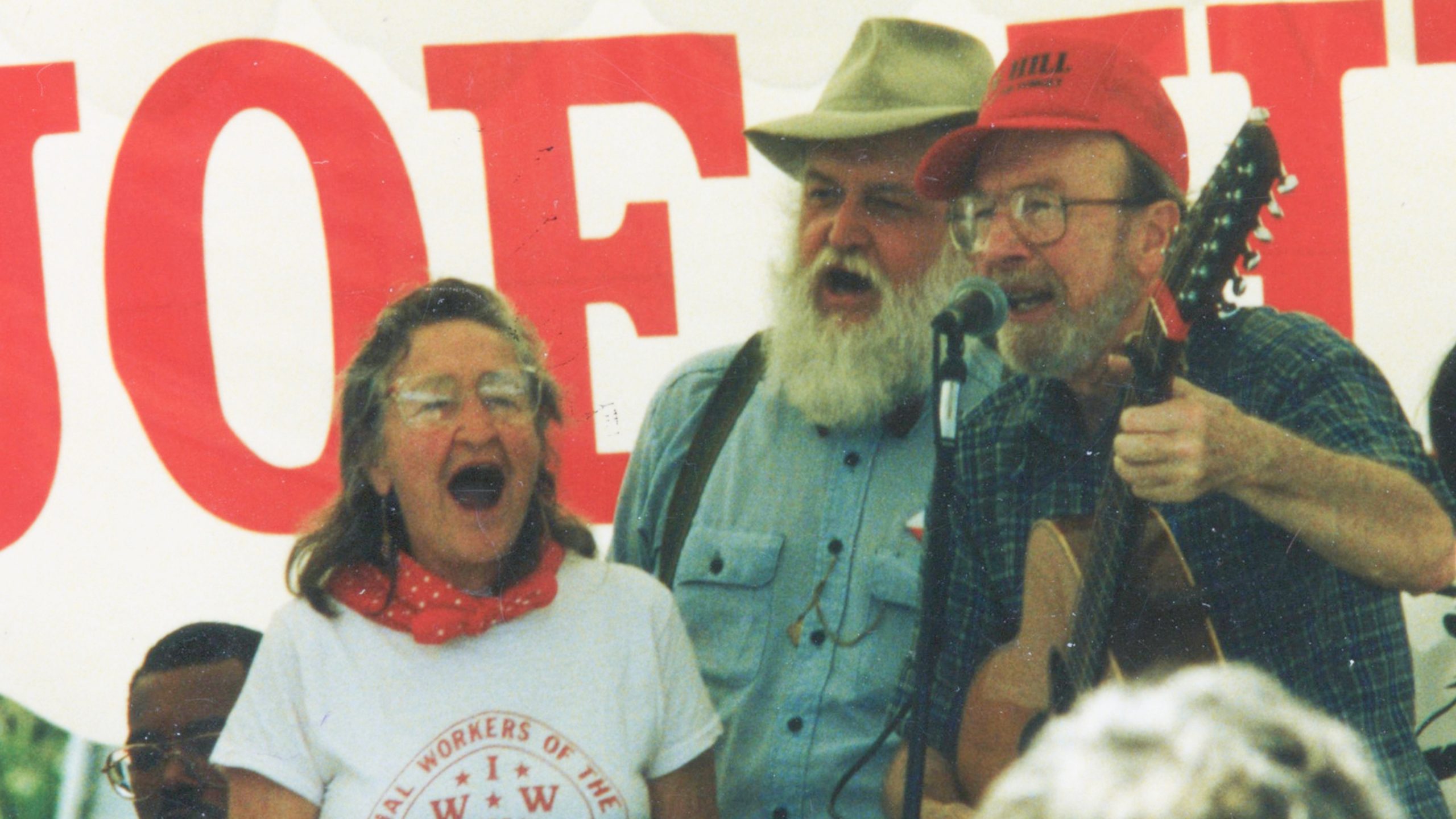
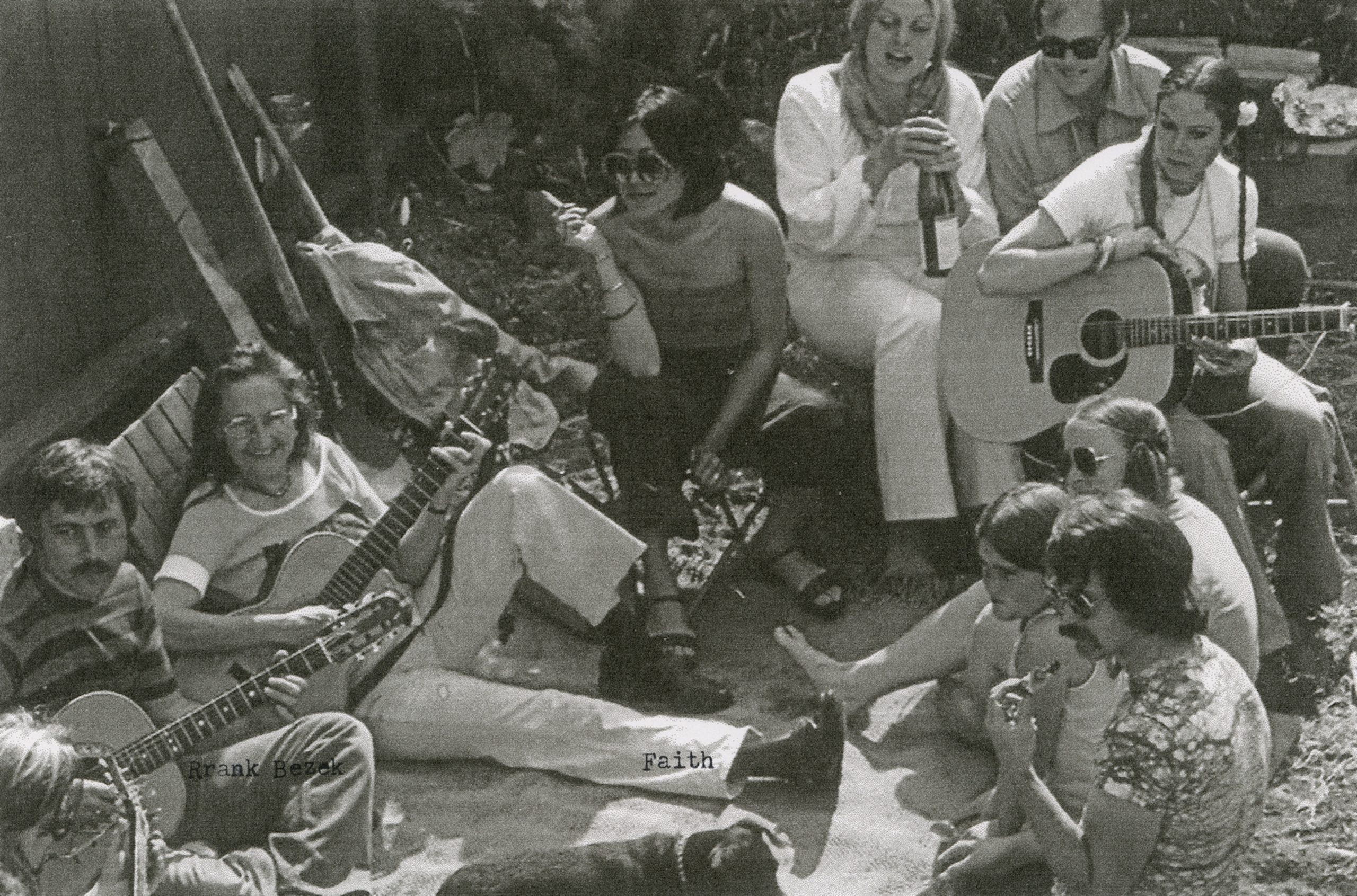
Freedman first got to know Petric through the San Francisco Folk Music Club, which was founded by San Francisco high school student Dave Rothkop in 1948. Petric became its leader in 1962, hosting the group’s meetings in her home until her death. Freedman, a historian and women’s history professor at Stanford University, became involved with the group in the late 1980s, and began recording an oral history of Petric’s life.
“I didn’t really completely understand her larger historical significance until then,” says Freedman. “She was about 77, and then this amazing life story emerged.”
At the time, with Petric nearing 80, Freedman thought the singer was probably approaching the end of her life. Instead, she remained vibrant well into the next century, long enough to plant the seed for “Singing for Justice” one evening, fittingly, at the Roxie Theater. It was there in 2010 that Freedman accompanied Petric to a screening of “Raging Grannies: The Action League.” The short documentary, about a group of older women who dress as stereotypical grandmothers and sing at protests, featured a Petric cameo.
“Afterwards, when we went out to tea, she said, ‘You know, I have all these old performance videos. I don’t know if you know any filmmaker who might want to do something with them,’” Freedman remembers.
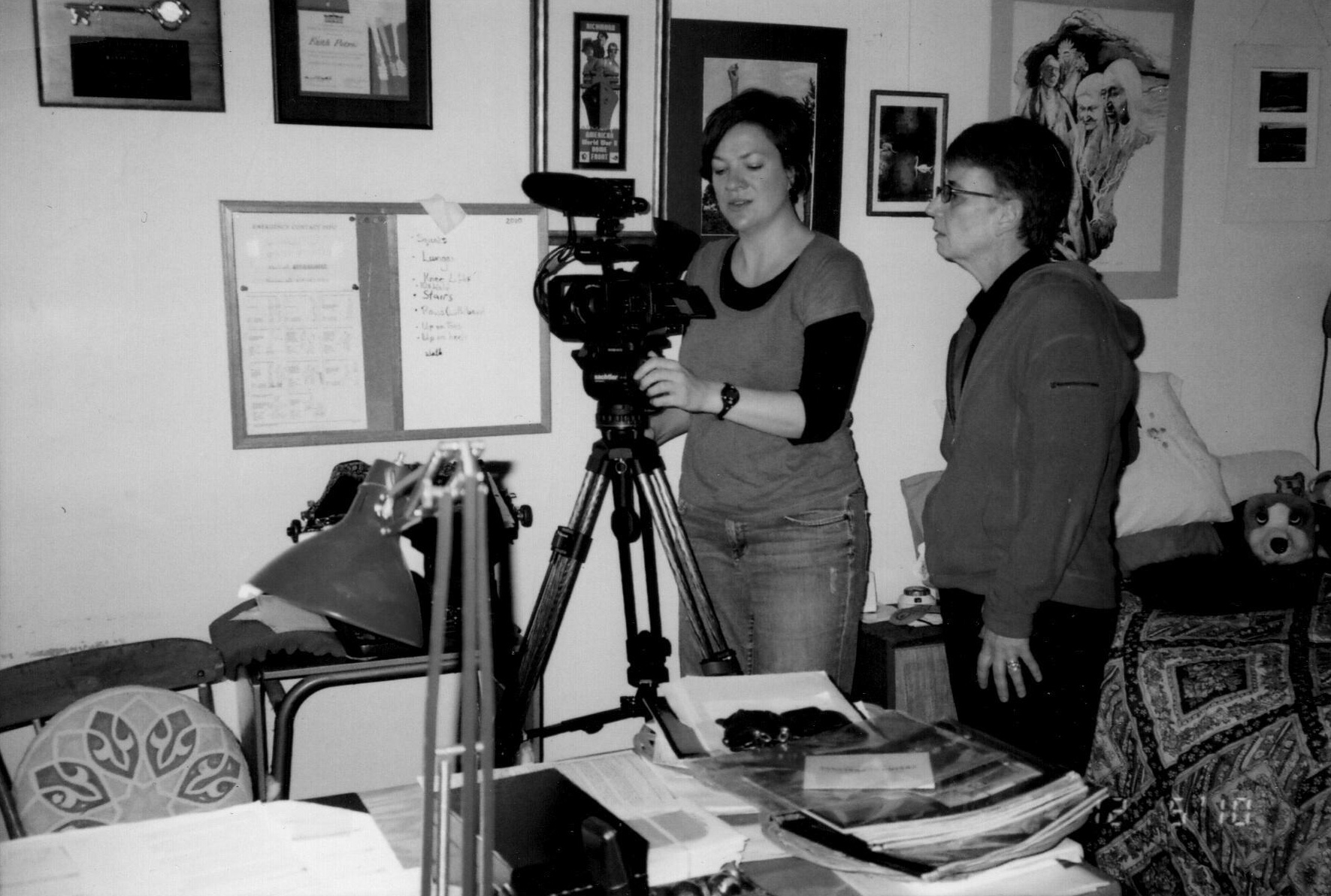
Colleagues at Stanford introduced Freedman to Herring, an award-winning documentarian who was then making “The Campaign,” a film about Proposition 8, the 2008 California ballot proposition to ban same-sex marriage. Herring remembers that she had a camera in her hand the first time she met Petric.
“I’m really interested in social protests, social movements, and I was learning about this woman, Faith Petric, who lived in San Francisco, as I was in the midst of this big moment for LGBT rights and for same-sex marriage,” says Herring. “This woman had been doing this from the late 1930s. It’s been wonderful getting to know and work with Estelle, and getting to know Faith Petric’s life.”
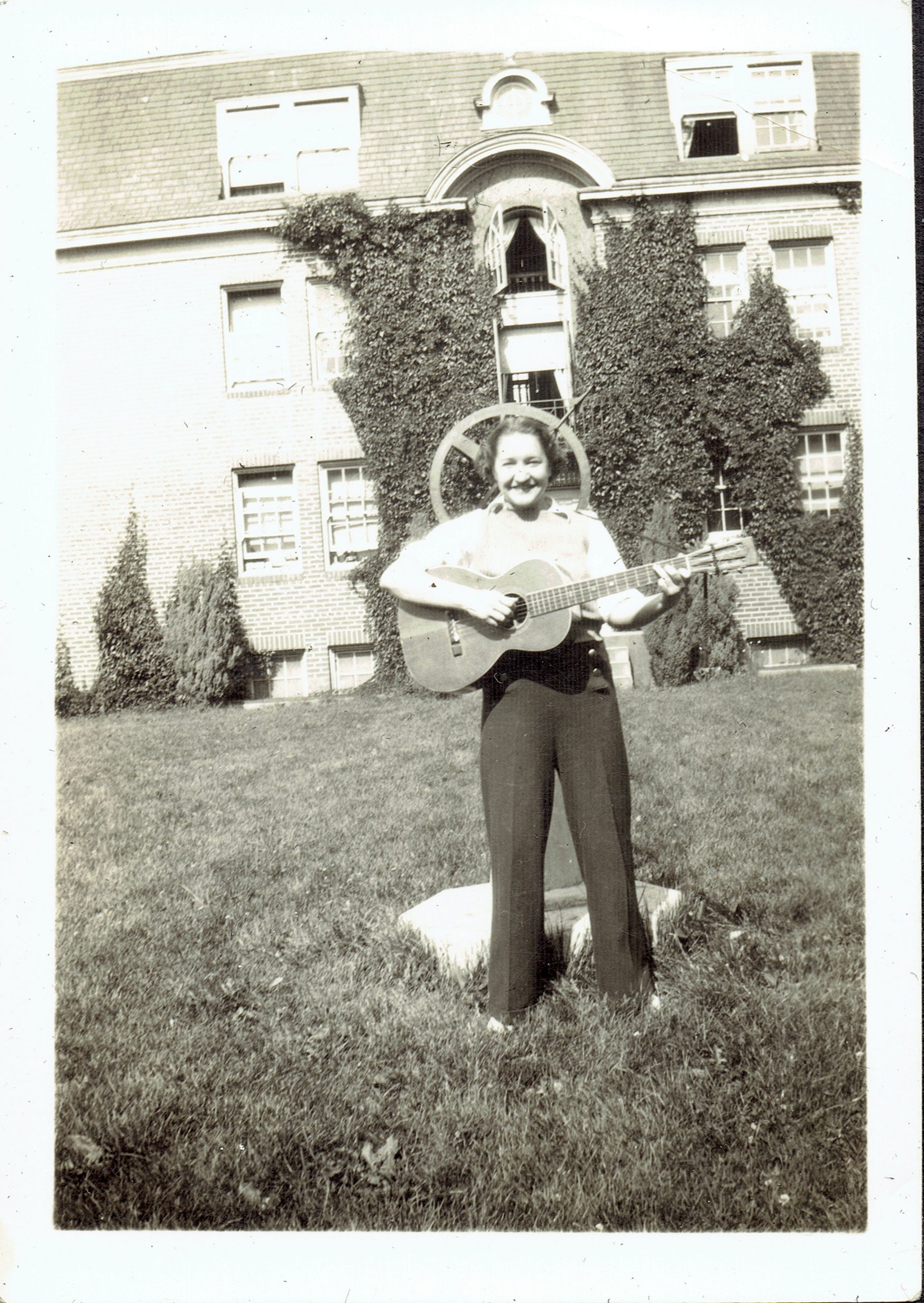
What Freedman and Herring uncovered in their work was a remarkable life, from Petric’s arrival in San Francisco from Idaho via freighter as a young woman in the 1930s, to her work as a real-life Rosie the Riveter building Liberty Ships during World War II, to a life spent in support of the peace and civil rights movements, including marching with Martin Luther King Jr. in Selma, Alabama, in 1965.
“I’m a feminist historian,” says Freedman. “I’ve been very concerned about women in social movements of various kinds, and my entree to her was my avocation in terms of folk music, which I knew overlapped with social movements. But I had not realized, for Faith’s life, how much there had been of these two interconnected strands of folk music and progressive activism.”
Discovering that Petric had documented her life, starting when she was on the yearbook staff at Whitman College in Walla Walla, Washington, in the 1930s, was another gift to the filmmakers. It turned out had 1000s of photos in her archive.
“It’s incredible to have access to these photos of her personal life, and to have them framed by her, not framed by some outside photographer,” says Herring. “That was very special for me, to get to meet her, have access to Estelle’s very long interview, and then also have access to interviews from a span of 35 years.”
The filmmakers also located interviews with Petric at the Library of Congress, as well as various public-access stations all over the country. “And then her own representation of her life through these photographs; it’s really unique to be able to do that for a woman’s story and someone who’s not famous, not a politician, not wealthy, not somebody with a lot of power,” notes Herring.
The screening of “Singing for Justice” at the Roxie, a co-presentation of the San Francisco Folk Music Club and San Francisco State University’s Osher Lifelong Learning Institute, is designed to be a celebration. Along with Freedman and Herring, Petric’s granddaughter, Alex Craig, will attend, as will some of Petric’s musical collaborators who appear in the documentary. There will be not only a Q&A but a sing-along of songs from the film.
Says Freedman, “And then we’re going to get together and party afterwards.”
‘Singing for Justice’ screens at 1 p.m. on Saturday, Feb. 22 at the Roxie Theater (3125 16th St.) with a Q&A and sing-along to follow. Tickets ($20) and more info here.
It’s so troubling to see the bias and racism among people still at an all time high. Faith Petric and her belief in justice was special and hopefully through her music will find a place for a better understanding and a respect for all people. It has to be said that know one knows what will happen in the way people treat people or the use of common sense and knowing what is right from wrong. People seem to mess things up when it didn’t have to be.
People seem to want to help change and make the world better but on the other hand some will go against making things better but will intentionally make things worse.
Doesn’t better matter… stop making things worse. Do the right thing for all people.
Who here ever heard of Whole Wheat Radio?
It was one of the first internet radio stations, with a live chat, and house concerts. Perhaps the closest thing to it, spiritually, at the time was Kulak’s Woodshed down in LA.
Whole Wheat radio specialized in playing non-RIAA music, and was run by Jim Kloss and Esther Golton from their home in Talkeetna, Alaska. It was unique at the time for the democratic way songs were played– listeners were able to vote on which songs to hear.
Faith’s songs were among the listeners’ favorites. We all loved “You Ain’t Done Nothing If Ain’t Been Called a Red,” but surely our favorite was “I Wanna Be A Dog!”
I am glad she is being remembered in a film!