

Mission Local is holding intro interviews with incoming and incumbent supervisors, including Shamann Walton, Chyanne Chen, Jackie Fielder, Joel Engardio, Danny Sauter, and Stephen Sherill. You can read those interviews as they are published here.
Mission Local also held exit interviews with elected officials leaving office after the Nov. 5, 2024 election: London Breed, Aaron Peskin, Hillary Ronen, Ahsha Safaí and Dean Preston.
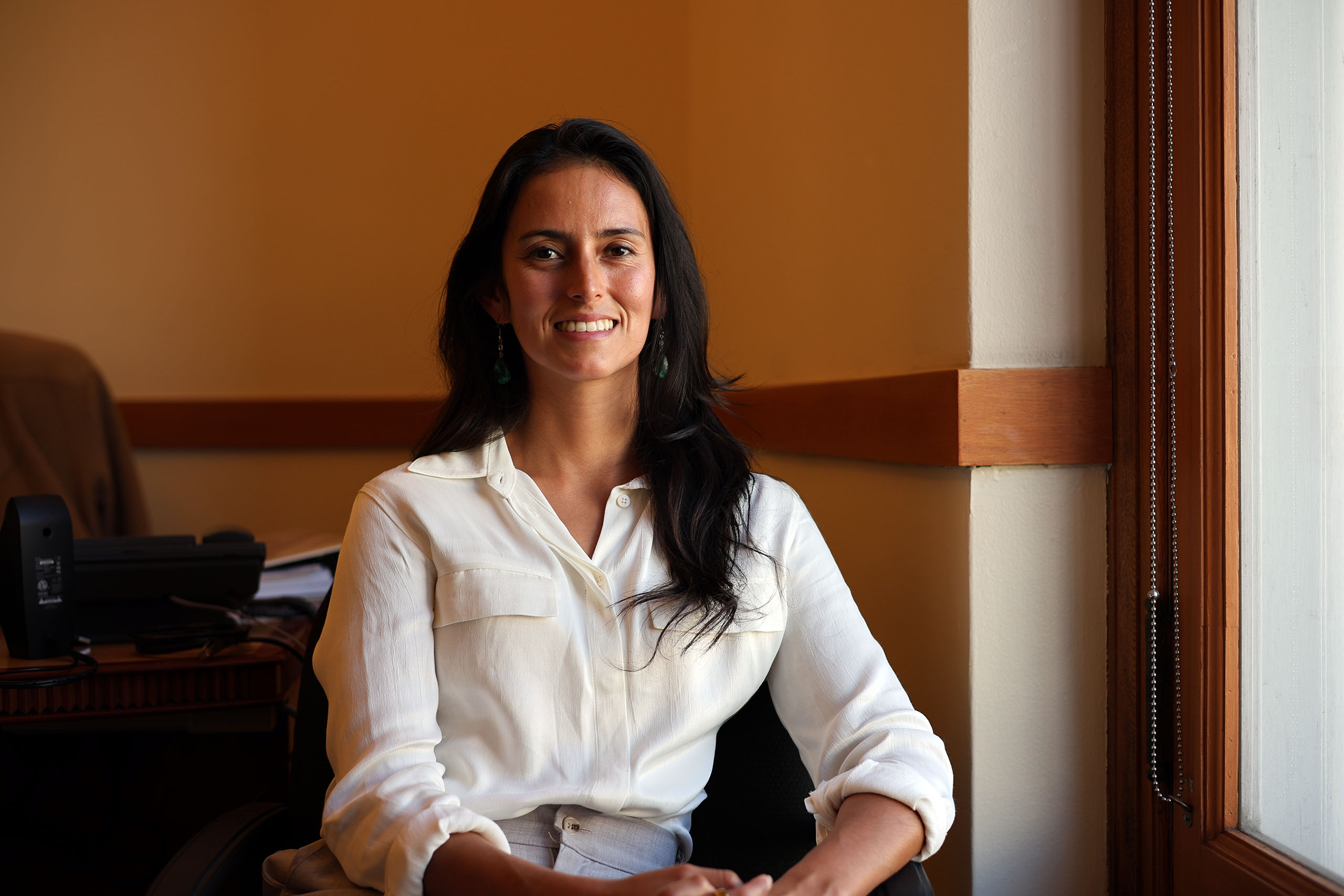
Last week, Jackie Fielder was sworn in as the supervisor for District 9, which includes the Mission, Portola, and Bernal Heights. At 30, Fielder is one of the youngest people elected to the Board of Supervisors, as well as one of the few democratic socialists.
Fielder is, political experts told Mission Local in November, the perfect fit for the district; she won with a 19-point lead over her closest contender.
As an activist and politician, Fielder has big ideals, but grassroots goals. She’s promised to introduce legislation supporting working families, immigrant communities and small businesses.
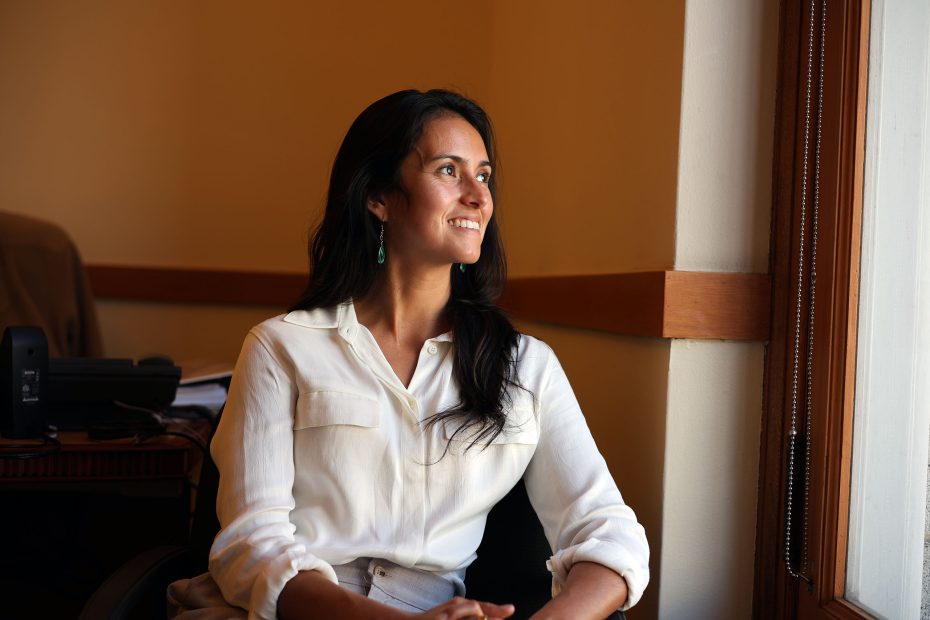
Fielder sat down with Mission Local at her new office at City Hall just a day after being sworn in as a supervisor. She talked about working across aisles, priorities, the Mission vending ban, criticism amongst other topics.
The interview took place on Thursday Jan. 9, 2024. It has been edited for clarity and readability.
OP: So today is your second day as District 9 supervisor. How are you feeling?
JF: It is my 25th hour being a supervisor. I’m feeling excited. Feeling humbled that the majority of District 9, 60 percent, voted for me.
Also feeling sober and cautious about the priorities that we have. Our district has tremendous challenges. First, public safety and the street conditions. Obviously, the vendor issue and the fencing colliding with massive wealth inequality and poverty, and inflation really doing a number on the plazas and Mission Street. Supervisor Ronen was very frank in her exit interview that this took up a lot of her time.
Secondly, the incoming Trump administration: People in the community have loved ones without papers, or are without papers themselves.There’s a tremendous amount of anxiety and worry about what Trump will be able to do, come Jan. 20. My office is collaborating with the different offices, city departments, SFUSD, and community-based organizations to disseminate trusted information as quickly as possible, hopefully to prepare people, rather than letting them feel alone.
OP: You’re representing your Mexican background and your Native American background. What does it mean to you to bring your roots to City Hall?
JF: I talked yesterday in my opening speech about how it’s a big step not just for me, but for my whole family and my whole lineage on my mom’s side. We immigrated from Monterrey, Mexico. My grandparents were laborers, blue collar. My grandmother worked in a factory. My grandfather in the orange groves first, and then as a tailor.
My mom raised me as a single mom for most of her life as a unionized secretary — retired, thankfully. On my dad’s side, my grandparents survived boarding schools. My grandfather was kidnapped from his home at age six to attend the Pine Ridge Indian Boarding School. My grandmother also went to boarding school. On that side, we survived this program of cultural assimilation and, in generations prior, outright genocide from the U.S. government. My presence here is nothing short of a miracle, and that is why I seize every opportunity to fight for our most vulnerable.
OP: Jackie, walk us through that moment of having your mom and your sister coming to see you being sworn in as a San Francisco supervisor. How were those emotions yesterday?
JF: It was emotional. The campaign pushed me to limits I have never been to before. It really prepared me for this role, having a thick skin and the ability to navigate the different complexities that are presented to the District 9 office.
OP: I’m assuming there’s a lot of paperwork that you have to fill out.
JF: So much paperwork. People don’t understand. There’s probably 10 hours of training and paperwork that I have to get done. We’ve been having hours and hours of meetings with community-based organizations, city agencies. I met with the captain of the Mission police station, and the mayor’s office and team. I’m stuck in a bog of trainings, which are necessary, about ethics, HR protocols. It’s going to be a minute before I’m personally able to respond to literally the dozens, if not hundreds, of emails I’ve gotten today and in the days since my election.
OP: Do you have any idea when you might be able to start introducing the legislation that you’d like to focus on?
JF: We’re doing a mix. I took the first part of today to focus on immigration, public safety and economic opportunity, economic justice; a couple meetings regarding that. We just kind of settled into the office. I got my desk set up. The rest of the day, I’m going to be in training. I think the first week or so is going to be like that. We’re having a mix of focusing on our priorities and the regular minutiae of onboarding.
OP: What is the most pressing issue that you would like to focus on and introduce to the board?
JF: We’re figuring that out. I would love to do something around Sanctuary City. The thing with the vending ban, and in general with a lot of these priorities, is sometimes they don’t require legislation. Sometimes they require coordination with the different departments; facilitating meetings between different departments, asking questions, asking for data. A lot of our job is oversight. [On Tuesday Jan. 14, Fielder introduced her first piece of legislation: A resolution affirming San Francisco’s commitment to remain a sanctuary city.]
I think there is this perception that one coming into the legislative branch is supposed to be introducing legislation on Day One. That may very well happen. But at the same time, there are already so many laws on the books.
Right now, I’m figuring out why things are the way that they are. I share the same frustrations about — why can’t we have a trash can on this corner? Why can’t we get this pothole filled? Why can’t we have officers walking the beat all throughout the three neighborhoods? Questions of that sort that have a lot to do with implementation, [rather] than going in and changing policy immediately.
OP: In 2020, you ran a campaign for the state senate. You lost that election, but got a pretty good chunk of votes. What did you learn from that campaign that you applied to this election?
JF: I’ve also learned in this election, too. I think a lot of our issues these days are rarely left and right. A lot of these issues, whether it’s public safety or street cleanliness, are issues for everyone.
I think it’s also the hunger for an outsider perspective. I was a SFLAFCo Commissioner for a couple of years before running for this office. I still have that sense of, “Why are things the way that they are?”
I’m not beholden to the real-estate lobby or the corporate interests that literally sent their people, yesterday, to my first day in office, to come greet me. I’m not a part [of] or beholden to those powers, so I have more freedom to hold the establishment and the current structure to different standards, and to change it in ways that benefit those of us struggling at the bottom.
OP: When do you realize that you want to be District 9 supervisor?
JF: I think a couple years ago, seeing my role as city commissioner and having a taste for what it would be like to be in city government. I’m someone who really wants to see results quite immediately after I take action. And that’s not been my experience in my endeavors. Like, the public bank is a long term project that I’ll continue to pick up as supervisor, and definitely want to take over the finish line.
I’m impatient for change in my own community. I knew that being a supervisor in San Francisco’s City Hall is, as it has frequently been referred to, “a knife fight in a phone booth.” You have to be there for something other than yourself, especially representing District 9. There are tremendously powerful grassroots and also more established corporate powers that have been contending for power and structures within San Francisco for so long. I wanted to, rather than shy away from the mess that I think the city has become to some people, actually try to do something about it.
OP: We saw the criticism and the attacks Dean Preston had to face. As a democratic socialist, do you feel concerned about similar attacks?
JF: I wouldn’t say concerned, but I am aware that they are there. There were thousands of dollars that came in to oppose me from crypto billionaires, and the kind of GrowSF crowd, so that I share in common with Dean Preston.
I’m just so honored and humbled to have gotten the 60-percent margin, which I think proves that their money is no good in District 9. District 9 is not for sale.
OP: You’ve also faced some criticism about your police stance, and you possibly using D9 as a stepping stone for a bigger position. What do you have to say to the people who’ve said that?
JF: I think you have to be a specific kind of creature to run for office at the local level in San Francisco. There’s much more accountability. There’s much more criticism. I’m not someone who has planned my life out that far ahead. People can have their opinions, but I know myself. I want to go wherever I’m most needed. For me, it was this office.
What my opponent was trying to do in the D9 race, paint me as an establishment status quo character, which is hilarious if you look at my platforms.
At the same time, conversations with constituents, especially about public safety, absolutely changed the way I think. Across all different walks of life, across all different political spectrums, people have become concerned about Mission Street and the plaza conditions. That is what has informed my approach to prioritize it.
I think with the public safety and police issue, there’s different parts of policing. We have police officers largely seen throughout District 9 patrolling. They now accompany public works inspectors to enforce the permit system, because DPW inspectors will not go out without the police, because they have have stories about threats of violence and actual violence.
A lot of people want officers walking the beat. So there’s the actual practice, and then there is the systemic policies and funding. We have $1 billion allocated to law enforcement, including SFPD and the sheriffs in the San Francisco budget. Every single year, the police have been granted their asks, especially for overtime. There was a report that came out recently about how SFPD is using overtime. Some officers are moonlighting, and it’s a domino effect that turns out to be incredibly expensive for us.
If funding has increased so much, why don’t we see improvements in the perceptions of public safety? If we are dispatching police officers to respond to mental illness, people in crisis, people who are struggling with substance-use disorder or mental illness, is it effective and financially responsible for us to send a police officer, instead of a trained behavioral specialist who can find that person an actual place to go?
Even if you are not a quote unquote “progressive” or a “democratic socialist,” we have real questions to ask the executive branch, of which the police is included, about how they are using precious city resources in a budget deficit.
OP: Have you had a chance to meet with the chief?
JF: Not yet. I briefly met him yesterday during the ceremony, and I’m meeting the different captains that serve the District 9 neighborhoods. I’m going to be meeting with him soon.
OP: Have you met with the Mission Station’s captain yet?
JF: Yes.
OP: How would you describe that meeting?
JF: Very honest with her about my trajectory on the question of policing. It’s important for me to have a relationship. We’re very lucky in the Mission to have, for the first time in a long time, if not ever, a captain who is born and raised in the Mission. And a woman, no less.
She has a unique perspective; a real care about the community, a real desire to build relationships. I’m hoping to have an open door, and that was the tenor of our conversation.
OP: Jackie, I have to ask about the vending ban. How do you see the ban’s future, past its extension?
JF: What’s interesting is that we have a ban, but it’s not really a ban. In practice, we know that when DPW inspectors and SFPD are not out there, to some people it feels like a free-for-all.
I promised on the campaign trail to have all the different stakeholders come into one room and talk about where we’re at. We’re planning that with the vendors’ association, some vendors who are not a part of the association — there are interesting, complicated dynamics there, too — DPW inspectors, community-engagement specialists. We have SFPD, Mission Merchants Association, some of the business owners around there, and community-based organizations that have been interfacing with the vendors.
I’m hoping to convene all those people this month and have an initial conversation. Just airing out how it’s going, what people want to see along three different areas.
One is the permitting system. To get a permit, there are a couple requirements, and I’m interested to hear from the vendors themselves about that. Also, from DPW, who is administering the permit? Secondly, enforcement of the permit system and how that’s been going, and general feelings of safety. There’s concerns of safety among a lot of different parties. I’m hoping to have BART be a part of this meeting, because they have not wanted for years to deal with any of this.
There are not enough inspectors for them to be out 24/7. Same for SFPD; their position is they are severely understaffed, and they often get pulled from Mission Street and the plazas, so it’s been a juggle to coordinate. There are new inspectors being hired this month. We actually have to double-check that with the Mayor’s office, because they just announced a hiring freeze.
This is the system where we have ended up, because of the state law that has been in effect since 2018, in which police officers are not allowed to enforce laws related to vending. There’s a question of, should we go back to the state law and change it to re-criminalize vending, which is personally not my natural stance, especially under a Trump administration; the majority of vendors are Latino, many of whom don’t have papers. I have a lot of concerns doing that. If we can’t change the state law, then the view is that we keep this system as it is.
OP: Would you support an extension of the ban? If so, how should it look? Also, would you support Scott Wiener’s SB 925 legislation, if he gets to reintroduce it?
JF: I support permanent vendors coming back to Mission Street in a very organized fashion. We need resources to do that. We need to make sure that they’re safe. We need to make sure that our streets are walkable. We need to make sure that we have enough DPW inspectors who are culturally competent in enforcing this permit system.
When it comes to the state law, I have more concerns than reasons to back this, to invite more law enforcement interactions with our undocumented Latino neighbors, especially in a Trump administration.
OP: You had a chance to meet with Mayor Lurie. How was that meeting?
JF: It was good. I brought up all these concerns that I shared, and my priorities. We’re in this time where we have a lot of new board members, and we have a new mayor. It’s a great clean slate. It’s definitely not the dynamic, I think, between the last mayor and the last board.
We’re going to be working together a lot. His office is going to be tremendously crucial for street conditions. I think a lot of people don’t understand what a supervisor actually does. As a neighborhood representative, we are here to advocate for constituents, raise issues to certain departments, and help assist general constituent services. There is a limit of supervisors to dictate what departments do. We cannot micromanage them. Some supervisors have in the past. There is a legal limit that I don’t think people understand.
As far as implementation, and as far as enforcing the law, that is the department’s. And the mayor has a lot more budgetary power than any individual supervisor, so their priorities are tremendously important in our strong mayor system.
OP: Do you plan on riding your scooter to City Hall?
JF: Sometimes I’ll take the scooter. Today, I took the bus. I’m very concerned about the proposed budget cuts for Muni, and wanted to make sure that I still have a constituent’s perspective on the 49 and 14, which were mentioned as potentially being on the chopping block just for reduced service.
I’m a renter. I am still, literally today, living on my savings. I will not get paid until the 28th. I have some savings left over, but I saved up for four years to be in this office. I’m a working-class person, and it’s important to me to retain that perspective.
OP: You got to experience the first set of negotiations and voting with the selection of Supervisor Mandelman to be the board’s president. How did it go?
JF: It’s interesting to have this experience as my first vote as supervisor. If you would have told me even two months ago that I would have been voting for Mandelman for president, I think both he and I would laugh. That’s just the way that it’s shaken out. We lost Dean Preston. We have a smaller bloc of progressive voters and progressive electeds on the board. I think in some ways we’re in this new era where San Franciscans wanted to send a message that they want to see people work across different lines.
Mandelman and I are going to disagree on a number of things. But the board president’s role is very someone who is not going to be vindictive with the position. Someone who can, even if they’re going to disagree with you, tell you that outright.
That has been my experience with him. The alternative is you’re dishonest, you have grudges that you hold on to. That system, I think, had its day in some previous boards and mayor’s offices and we, the city, suffered for it.
It’s not my style. My style is to be straightforward and honest, and as principled as I can be. This board president vote is very much about how you work with colleagues.
Great interview. Jargon-free, straightforward and clear-eyed.
On public safety, I think Fielder asked a question a lot of us have thought about, which is…why are the police doing so little policing, given the enormous amount of money we are paying them? There has been a real failure of leadership in the SFPD for almost a decade now, and it really shows in terms of how little interest the rank-and-file has in improving our city’s quality of life.
Use the BART plazas as a bellweather for D9 and Fielder, as they were for Ronen.
If the plazas are safe, clean, and popular, then maybe Fielder really can find the balance she claims across opposing parties. It would mean taking a position supportive of the police while ensuring sufficient restraint, balancing compassion with effectiveness, etc.
If the plazas are places of chaos, where various government and non-profit agencies are either confused, conflicting, or milking the system for all its worth, then the Ronen quagmire will continue for the district.
The wild card is if Fielder really has any chops towards compromise and collaboration; nothing she’s done to date nor showed in her campaign messaging gave any indication that she’s got experience in this regard. She needs to recognize that while progressive politics in her district are a small majority (60%), it’s only in D9, and her politics are a shrinking minority in SF as a whole. She can fight the city alone, but the city will be all too happy to send all of their problems D9’s way. This was basically Ronen’s blind spot as she departs.
Perceptor,
Feinstein had a much tougher crime era and she put 24/7/365 Police Kobans (cached from Asia and Europe’s ‘Cop Boxes’) at all the BART stops and Tourists Frequented spots but they could be dangerous and SFPOA negotiated them away with Willie for a couple of decades of endorsements and pay raises.
SFPOA’s success at getting their members the most money for doing the least amount of work keeps them in their cars with simple dedicated Foot Patrols just a glint in the Public eye since their grandfathers wore out shoe leather.
Just back from Public Safety Panel, young genius, Manny Yukatiel put together overnight in response to LA Wildfires and I pushed 2 SFFD PR Chiefs about why no Fire Chief was living in SF’s Nationally Registered Fire Chief’s house and why they don’t put ambulances in driveways at stations cause they answer 90% of the calls and they have no plans to occupy Chief Dennis Sullivan’s Monument with a working Battalion Chief or call the ambulances back home to the properly distanced 49 station houses.
Together, my read is that I’m sorry to say it but these cops and firefighters are nothing like the generation when I served in the 1970’s.
We had Pride and these guys are just about money and comfort.
We’ll see if they read this and at least polish the nose on the big brass plaque of Dennis Sullivan on the Chief’s house at 860 Bush.
And, post some video of SFFD working in LA cause they said tonite that we have 40 people down there (I conated dog food),
go Niners !!
h.
“SFPOA’s success at getting their members the most money for doing the least amount of work…” — would that comment be directed at the entirety of SFPD, or mostly District 9 SFPD?
Political difference aside, you and I would probably agree on a lot of harsh criticism of SFPD in general, but I suspect there’s something that D9 is doing — specifically — that is making SFPD’s performance worse here than anywhere else in the city. That “something” is the performative D9 politics of “we hate police, but we actually need police, but we would rather not have to need them” (Ronen’s specialty) that creates a muddled mix of responsibilities that allows SFPD to escape accountability for a job poorly done.
Set a simple goal — “get the plazas clear”
Set simple constraints — “don’t injure anybody”
Drive accountability — “SFPD to get it done by New Years”
Then I’ll be happy to complain about SFPD together
I’m excited to see what Jackie and team can do to help with the issues mentioned above, but hopefully, also… trash, graffiti, commercial vacancies and getting any number of the affordable housing (as well as market rate) projects moving. I completely understand concerns with the new President and being a “Democratic Socialist”, but most people are far more impacted and concerned by the issues they have to confront every day when they leave their house, on their walk home, on a train ride through the neighborhood and so on.
Here’s to prioritizing improving the quality of life and opportunity for those in the district and making real gains.
Did we ever get to vote on the sanctuary city policy?
Because Fielder is supposed to represent me, not undocumented criminals. If some illegal immigrant commits a crime, they should be deported, not protected.
Agreed, Carlos, it is a little worrying that supporting people who have broken the law is a top priority for her. Then again D9 is a bit of a left-wing bubble in the city, and she may need to expose herself to the greater diversity of the city as a whole if she claims to speak for us all.
She is also the only “hard left” Supe, now that Preston is gone. She may find herself isolated if she is too vested in socialist sacred cows that a majority of city voters do not care about.
“My presence here is nothing short of a miracle”
Darn right.
That is why your ancestors sent you.
Go get it Jackie.
Meet the new supe, same as the old supe.
Glad that Supervisor Fielder is listening to her constituents and moderating on police and public safety. That right there is a major improvement over her predecessor, who never listened to anyone. I also agree that it’s worth asking how money is being spent with regards to SFPD OT pay.
I agree with another comment here. 16th and 24th Street BARTs will be the metrics. I’d also add the streets and alleys nearby. If they become safe, walkable, and not a haven for drugs and stolen goods, I’ll be singing Fielder’s praises from the rooftops!
I agree with the commenter who said that Fielder needs to be careful that her “left-wing, progressive” politics don’t cause her to make our district the dumping ground of all of the rest of the city’s problems, as her predecessor did! Ed Lee pushed all of the unhoused into our neighborhood during the Super Bowl, and Hillary Ronen did nothing to stop him from making the Mission a trash-filled mess. “In this time of Trump” is *not* a good excuse for looking the other way at blatantly criminal behavior and illegal activity that destroys the working class neighborhood we all call home. The BART Plazas and Mission Street – in particular, the areas around 16th Street and the surrounding alleys – will truly be the test for her leadership. Is she up to the task of making our district livable again, as it was before Ronen?
Solving the rampant theft, sale of stolen goods, sale of drugs, violence and drug use in and around the BART plazas is plainly impossible without real police involvement. Ronen;s efforts make that clear. In this interview, she says she doesn’t want to use police, lest they arrest criminal aliens on the chance Trump will deport them. D9 citizens have had it with crime. Crime must be punished. Criminals must think the chance they will be arrested is high. Heavy camera installment around the Plazas and prosecution using the evidence they collect is critical.
A few of Supe Fielder comments gave me hope but many more gave me pause. If she is to be successful she needs to worry about the 40 percent of the people that didn’t vote for her – something that never occurred to Ronan. Sorry to beat a dead horse but I would focus on the quotidian work of city government – clean up the filth and garbage everywhere, stop the rampant theft, the hard core drug use, take the untreated mentally ill folks off the street and put them in treatment and repair our crumbling infrastructure. Address
all things that plague the once flourishing neighborhood that Ronen ignored as she visualized peace in Gaza. Now she is off in Spain spending her city pension as the rest of us are stuck with her mess. Supe Fielder please try to earn my vote – maybe this place can be a sanctuary for the undocumented but it first has to become a better place to live – ya know – like Spain.
She sounds brilliant, and I’m really excited she’s going to be my supervisor after Ronen, who had a lot of catching up to do to deal with changing street conditions. Fielder sounds like she’s coming into office with an understanding of what needs to be done. It’s really nice that we still have a few actual advocates for public housing and homeless shelters as opposed to the BS “yimby” folks who are doing everything they can to undermine actual supportive housing.
Not looking forward to her becoming a lighting rod for attacks by Moritz and his developer buddies, but it sounds like she’s ready to swim in that pool, so she’ll have my back as long as she stays true to what she’s talking about in this interview.
Jackie and Daniel,
I worked with the Tipping Point people to clear the base of the massive scaffolding left for years around the back and North sides of the Armory last year and there is plenty of room for at least fifty 10/15 foot vendor spaces in the area we cleared
My dog and I keep the vast new clear area clean by picking up trash and calling 311 for big stuff (been a big safe with hole torched in side waiting there for a week) …
All you need is a can of paint and some line and numeral stencils and you can be open for business this weekend as extension of the decades old La Pigulita Flea Maket.
Give me the can of paint and stencils and I’ll do it for free.
Go Niners !!
h.
Seems like a promising , intelligent young lady . Hope Willie Brown keeps the snake in its cage .