
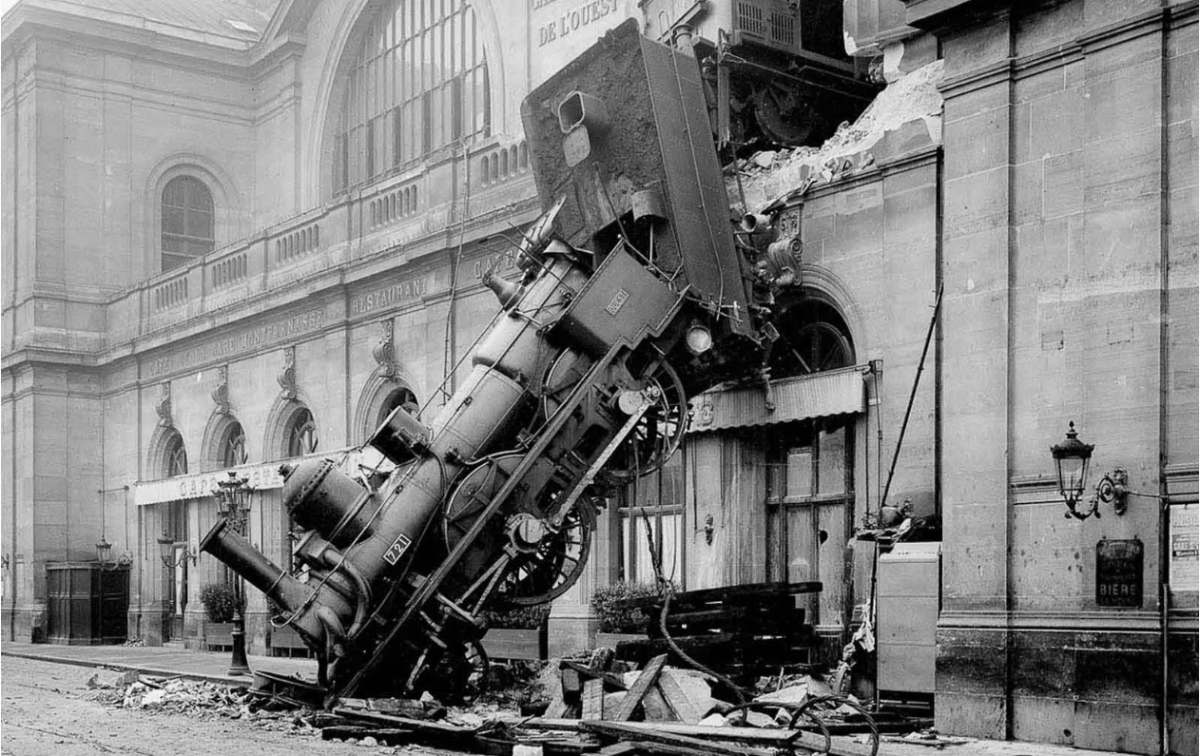

For all the bluster coming from some of San Francisco’s more bombastic mayoral candidates that they’d fire transit boss Jeffrey Tumlin on day one, they were never going to have the chance.
The next mayor will be sworn in on Jan. 8 and Tumlin’s contract is up at the end of December. He’s not coming back. It’s a “You can’t fire me! I … am letting my contract lapse” situation.
Tumlin’s bus is pulling out, but his capable director of transit, Julie Kirschbaum, will fill his place in an interim role — and, perhaps, far longer than that. If you’re looking for a sports analogy, Kirschbaum is to the SFMTA as Buddy Ryan was to the ’85 Bears: The coordinator overseeing the most outstanding element of the organization. That’s the defense in Ryan’s case, and transit in Kirschbaum’s.
But things are bad. Real bad: Frustratingly, the SFMTA’s major problem isn’t that transit in San Francisco is crappy, even though San Franciscans love to complain about it: Ridership is steadily improving and, on some lines, exceeds pre-pandemic levels. Considering few people are going downtown, that’s a neat trick.
Rather, a big part of the transit agency’s fiscal crisis stems from the evaporation of the money from city-operated parking lots, parking meters and citations. There just aren’t as many people driving out and about as there used to be, especially downtown — and, when they do, there are Ubers or Lyfts or even driverless Waymos to take them there.
And yet the department stands to be eviscerated. But make no mistake: When you eviscerate Muni, you eviscerate San Francisco. This will affect your life, even if you haven’t set foot on a bus or light-rail vehicle for years. There will be no downtown recovery without functional transit. You could run the Valencia bike lane through the businesses of the aggrieved merchants, and it would have a trivial effect compared to a transit-bereft downtown where BART shuts down at sunset.
Last month, the SFMTA sent up a warning flare, and a series of articles appeared, positing possible Draconian service cuts in the face of a looming fiscal cliff, including — quelle horreur — suspending or cutting back the cable cars. If Muni’s purpose of seeding this message was to spur the public and the city’s leadership into serious discussions about transit and what a grown-up city needs and how to fund it, that didn’t happen. Instead, the overarching response, from Mayor-Elect Daniel Lurie on down, was hands off the cable cars — and the discussions went no further than that.
This was frustrating. Cable cars are inextricable from the character of San Francisco, and they surely bring added value to the city, though San Francisco’s longstanding association with Rice-a-Roni (ding, ding!) is not necessarily a net positive. And it warrants mentioning that, while cable car service is protected in the city charter, core Muni service is not.
Speaking of net positives, the city funds the cable cars out of the same transit monies that keep core lines operating. Lay a finger on the cable cars, and you’ve got a problem. Shrug your shoulders as the core system is allowed to collapse, bringing down the city’s viability with it, and … crickets. Hundreds of thousands of San Franciscans ride Muni every day. But it’s long been apparent that they don’t organize, don’t vote collectively and don’t constitute a constituency.
And Muni is treated accordingly.
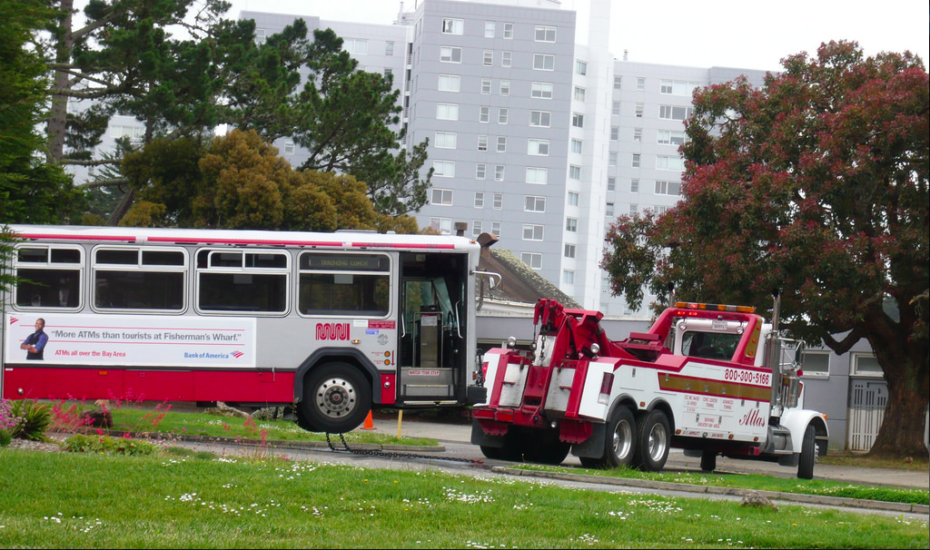
Municipal budgeting is complicated. Transit budgeting is more complicated still. But this much is approachable: When transit is run well, and when it goes where San Franciscans want to go, and when they want to go there, people take it.
We are taking Muni. Ridership numbers are at around three-quarters of what they were prior to the pandemic. On a handful of lines, ridership is equal or better to early 2020; in some cases, way better. Those lines include the 49, the 22, the 14R, the 9, the 19 and the 12.
Are you seeing a pattern here? Other than the 14R, none of these is a major downtown feeder (the 14R runs from Daly City BART to the Embarcadero, offering plenty of chances to on- and off-board without getting near Downtown).
Merely throwing money at problems rarely solves them, especially in this city. But funding transit adequately so it works well means more people will take it, and that makes it work better still. Transit, again, is complicated, but this much isn’t. Muni’s viability benefits businesses large and small, and keeps our roads from becoming parking lots.
“As a policymaker, I always felt this is lucky: This region has resources. You don’t need to convince people transit is important, and don’t need to do much convincing to ask people to tax themselves to support it,” says former longtime BART commissioner and transit advocate Tom Radulovich. And then he sighs. “So why is transit hanging on a thread, when these are our circumstances?”
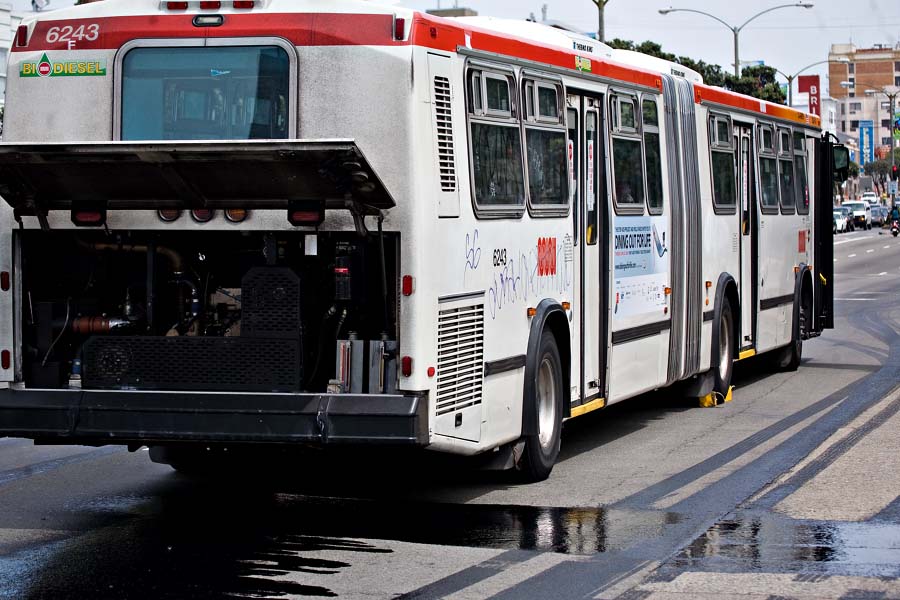
A frustrating answer to Radulovich’s question is that San Francisco went through the most prosperous period in its modern history, and all it has to show for it is the dysfunctional Central Subway. Billions of misbegotten federal dollars built it. And now we’re stuck paying local dollars to operate it.
It’s a shame that money can’t instead be used to stave off the service cuts that will undo the progress made in the past four-plus years. Riders, again, do not hop on buses or trains for a joyride, or out of a sense of transit boosterism. If Muni is not convenient and functional — if it does not go where people need when they need it — it ceases to serve a purpose. There is little practical use for a palatial train station for a rail line that few choose to ride.
In an ideal world, you could suspend the Central Subway until Muni’s finances are less insane. Shunt its piddling ridership back into the redundant surface bus lines (which are doing fine, by the way). Save the operating costs, and use that money to run the system writ large.
But that won’t happen.
Something else that should happen, but won’t, is to stop perversely funding the cable cars out of transit operating funds. Again, everyone loves cable cars. They surely make money for someone, but it’s Muni that pays for them. And, in 2023, they ran at a $55.2 million operating deficit, even with ticket prices approaching ballpark beer levels (Muni’s annual deficit will hover between $239 million and $322 million by fiscal 2026-27). Wealthy people and businesses have put private funds into backing cable cars before. That should happen again.
But it likely won’t. Other than farcical calls for firing Tumlin, mass transit was a non-issue in the mayoral race: Again, Muni riders are legion, but do not represent a constituency. Clearly, there would be social and political blowback for any move leading to a reduction in cable-car service. The political repercussions for allowing the rest of the Muni system to dissipate, however, would apparently be far less.
That’s because dialog around transit in San Francisco is reactionary and bleak. It seems to be dominated by people grousing about crime — and, for what it’s worth, reported crime on transit is down 75 percent in the past decade — or naïfs who seriously believe you could adequately replace a public transit system in a congested 47-square-mile city with 15,000 Waymos.
“The majority public opinion on public transit is formed by people who do not ride public transit,” notes Radulovich. “And the decisions are made by people who do not use it.”
The sad truth is that, while promoting the wholesale replacement of a public transit system with a fleet of private cars is inane, the city’s pending evisceration of its transit agency will actually help to bring it about. For the industries that stand to benefit from the death of public transit, these are heady times.
Just wait until they invent a driverless cable car.
Muni is my second choice of transportation. First is walking. Our transit system is something every San Franciscan should support and be proud of.
I’m not proud of deficits and mismanagement, sorry not sorry.
Newcomers may be surprised to find out it once ran without massive deficits.
the “deficits” are fake.
Think about it. Is the public works department running at a deficit? Who the F pays for all these roads? Why don’t I have to pay to drive around here? What about the sidewalks? Lots of people don’t walk, should we charge people to walk to work? Why not?
Public Transport Systems : Buses, Trains, ROADS AND SIDEWALKS are not running at a deficit unless you are intentionally trying to kill them.
I use busses (and pay for them). Over the past 20 years, they are exponentially cleaner, safer and better run. My family that didn’t used to use it, now uses busses regularly. My friends that visit are AMAZED at how good the public transit is here.
But… “oh my, they run at a deficit. we just need to cut back on service and reduce staffing and reduce cleaning and cut wages and…..”
That’s all a lie. It’s explicitly used to make positive things that make this city better more difficult to manage so people can shift money to other programs (which also don’t make any money) and cut their own taxes, while working class people who don’t own property take on the costs.
“the “deficits” are fake.”
Oh? The Central Subway is 2 Billion dollars of real.
SF got played by corrupt forces and we all have to pay for that legacy now. The Lee/Breed legacy.
You don’t pay to drive around here? So you haven’t registered your car, pay the gas tax, feed the parking meters or get a local parking permit? Man, drivers around here just openly break the law don’t they.
The author factually states:
“There just aren’t as many people driving out and about as there used to be, especially downtown — and, when they do, there are Ubers or Lyfts or even driverless Waymos to take them there”.
As a career cab driver (36 years full time), I am very disappointed that taxis were not mentioned as an option to take you from point A to point B.
Most cab drivers out there are still trapped with unpayable loans for quarter-million-dollar taxi permits sold by the MTA in 2010 to balance their never-balancing budget.
Neither Uber, Lyft nor Waymo had to pay a dime into the system cab drivers had to. Sadly, no one in the local media will say a thing or two about the downtrodden cab drivers.
I tried to use cabs for years, long before Lyft/Uber. Cab service was a joke. Cabs had a monopoly so they didn’t have to provide decent service. They refused for years to take credit cards. One cabbie told me I could always get money from an ATM — apparently not realizing that a woman may not want to pull cash out of an ATM late at night! Another cabbie refused to take me to my destination when I was leaving my office at midnight, said it was too far. He was perfectly willing to leave me on the street alone at midnight. In a city 7 miles square! Another time I flagged a cab outside 450 Sutter after dental surgery, and the driver could not get the cab up the hill to my apartment building — in San Francisco, he couldn’t drive up a hill! At least half the cabbies who drove me when I could get one went off on long rants about how awful their wives/girlfriends/exes were — talking to a woman passenger! And forget finding a cab on Friday or Saturday nights, which is of course when they are most needed. I use Lyft now. Every Lyft driver I’ve ever had has been polite, and managed somehow to drive up the hill to my building. None of them have gone off on rants about the women in their lives either.
If you had been in my cab for those much-needed rides, you would have gotten very good service all the way to your destination.
But regardless of how poor taxi service was before your beloved Lyft illegally transformed private, personally insured vehicles into on-demand taxis, cab drivers should not be the only ones paying to operate in the City.
Do you know what July 13, 2013, is? That is “LYFT DAY in San Francisco”.
If you walk into City Hall, you might see a plaque there from late Mayor Lee proclaiming July 13, 2013 “LYFT DAY in San Francisco” to celebrate Lyft’s one-year anniversary months before the California Public Utilities Commission (CPUC) had given them any legitimacy.
They operated illegally for more than one year under the false label of “ridesharing” and still got a trophy from the same mayor who was charging cab drivers $250,000 for the privilege of driving for hire.
Do you think that is fair???
I support the taxi trade and use Flywheel. I’m surprised how many of my friends don’t know of it and use the odious Uber or less-odious Lyft.
Dear Full Time SF Taxi Driver,
I’m a Tough Love advocate,
Therefore,
Please keep that in mind as you read my reply.
Life Isn’t Fair,
Move On.
As hard as it may sound to hear that, it’s a fact.
The sooner that you leave the SF taxi industry,
the happier that you will be.
The SF taxi industry,
and this definitely includes 90% of SF taxi drivers that I’ve ever interacted with,
although perhaps not you personally,
treated SF taxi passengers w/total disdain for decades before,
lyft, uber, or the SFMTA ever existed.
And that’s a fact.
And that,
more than any other factor,
was why lyft and uber captured the SF taxi passenger market almost immediately upon their appearance on the streets of SF.
It’s time for a reality check.
The SFMTA will never make you whole for your financial loss.
The public,
the media,
the judicial system,
State and Local legislative and executive government leaders,
all are not concerned about your unfair, unfortunate predicament.
They are way too busy w/other matters.
At this point,
may I suggest to you that the best thing you could do for yourself is to move on w/your life.
File bankruptcy if there is no other way for you to escape your enormous financial burden.
If you wish to remain a passenger transportation driver,
then look into any of the many
County Transit agencies around the bay.
Their Wages and Paid Benefits are outstanding.
And,
They are nearly always hiring.
You will need a flawless driving record,
However,
Since you have been a professional SF taxi driver for 36 years,
you likely have that.
You must also pass a drug screen test,
However,
You must do that every year to be a SF taxi driver.
Therefore,
You should have,
No Problem.
I wish you all the very best in the future,
and you will soon see that your future looks very good when working in another occupation.
Again,
All the best to you.
You cab drivers chose to create a transit “system” that created the “opening” (need) for real on demand transit. The way you “served” the public need is why you no longer are used. MUNI just played along…limiting cabs on the street exactly as you desired.
Being a member of the taxi industry for 36 years, I’m fully aware of how badly we failed to meet the demand and serve the public before App-summoned taxis such as Uber & Lyft, and now robotaxis from Waymo came into being.
However, the system you erroneously accuse cab drivers of creating is not to be blamed on cab drivers, it is to be blamed on the MTA – the regulators – and the City of San Francisco.
Instead of implementing policies to improve the taxi industry, they used it as a cash cow by bringing forward the Medallion Sales Program, a program charging cab drivers $250,000 for the privilege of operating a taxi on our streets.
The MTA made $63 million and balanced their MTA budget on the backs of hardworking cab drivers while at the same time the City praised Uber & Lyft and allowed them to provide the very same service without the very same medallions cab drivers had to pay for.
And now we have multi-billion-dollar Waymo also driving for hire in the City.
If all these companies are driving for hire on the streets of San Francisco, why must only the downtrodden cab drivers pay to do so? I’m okay with having as many Ubers and Lyfts and Waymos as you want, but I’m not okay with cab drivers being the only ones paying to do business in the City.
And it does bother me tremendously that the local media won’t say a thing about it.
BS. The city baited and switched cabbies and controlled the entire situation, the entire time. The decision to sell out to robotaxis was a deliberate one by connected goons close to Da Mayor and Newsom. Blaming individual cabbies is inane crap from a fountain of same.
Being a member of the taxi industry for 36 years, I’m fully aware of how badly we failed to meet the demand and serve the public before App-summoned taxis such as Uber & Lyft, and now robotaxis from Waymo came into being.
However, the system you wrongfully accuse cab drivers of creating is not to be blamed on cab drivers, that is to be blamed on the MTA – the regulators – and the City of San Francisco.
Instead of implementing policies to improve the taxi industry, they used it as a cash cow by bringing forward the Medallion Sales Program, a program charging cab drivers $250,000 for the privilege of operating a taxi on our streets.
The MTA made $63 million and balanced their MTA budget on the backs of hardworking cab drivers while at the same time the City praised Uber & Lyft and allowed them to provide the very same service without the very same medallions cab drivers had to pay for.
And now we have multi-billion-dollar Waymo also driving for hire in the City. If all these companies are driving for hire on the streets of San Francisco, why must only the downtrodden cab drivers pay to do so?
I’m okay with having as many Ubers and Lyfts and Waymos as you want, but I’m not okay with cab drivers being the only ones paying to do business in the City.
And it does bother me tremendously that the local media won’t say a thing about it.
There is a solution. Re-privatize MUNI. If you know your SF history it was created over 100 years by a predatory City government which created MUNI to crush the multiple private transit companies which built much of the rail infrastructure in town. Taxis too were a big racket, as the other commenter correctly posted “Most cab drivers out there are still trapped with unpayable loans for quarter-million-dollar taxi permits sold by the MTA in 2010 to balance their never-balancing budget”. Yeah and the public was horribly served by that corrupt, crony system too. Private transit can bring innovation and fiscal discipline and most of all better service. Hold an auction and then a much reduced MUNI can run the smaller operation of lines that remain.
Absolutely right. $250,000 salaries on public dole, NO WONDER Tumlin’s legacy is bankruptcy and deficits!
If anything at all he made it WORSE! Central Subway et al!
DISBAND THE MTA AND START OVER!
Sure, ok, but we can live without an MTA and Planning Dept bureaucracies. PD not so much, even if they do 10% of what they used to.
Yeah, I’ll vote to disband the MTA and start over as soon as you vote to disband SFPD and start over. I think we ALL know which is more corrupt and mismanaged.
If you were to ask most San Franciscans what a disability hang tag on your mirror entitles you to, they’d say, “you get to park in blue disabled spots.” That’s true. But you actually get much more – free parking *anywhere*. The meters don’t apply to you. The only argument I’ve heard even attempting to justify this is, “well, the disabled can’t get over the curb to pay the meter.” Preposterous. Are they just staying in the street? No, they’re getting to the sidewalk to go to whatever establishment they’re visiting.
Because of this spectacular benefit, disability hang tags are *everywhere*. Walk down Mission Street and you’ll see half the cars with them. No, half of Mission Street is not disabled, the free parking benefit has just led to an all-out fraud regime in the City. You’re a sucker if you *don’t* get yourself a disabled placard.
Now, how much does this cost the City year in, year out? I dunno. Maybe a lot, maybe a little. But if we just stopped giving away free parking to people willing to lie to get it, the SFMTA would get *some* bump in revenue.
I had surgery and my Doctor provided me with a form for a temporary disabled parking permit. I applied but was rarely ever to use it as almost all handicapped spaces were taken. Then when I tossed it after it expired, my friends were shocked I didn’t ask for an extension even though physically I didn’t need it.
Not sure I follow wanting to cut the T service. While the T was a boondoggle to build it is now the second highest used rail line after the N.
I ride it a couple times a week from Chinatown and it is pretty busy whenever I’m on. If it extended to North Beach which already has a tunnel it would probably be used even more.
While far from perfect – you got to cross King Street – I’ve come to appreciate the T as nice connector from Powell Station to the Caltrain station at 4th&King.
Daniel —
The T connected Powell and Caltrain before it was shunted off the Muni-Metro line to serve the Central Subway, too.
Best,
JE
The train wrapping around the Embarcadero took forever. The new alignment is much faster and connects major landmarks Chinatown, Union Square, Moscone Center, 4th and King together.
I don’t get the desire from you to shut it off after all the investment to build it. What would the cost savings even be?
Classic SFMTA failure to anticipate the consequences of their actions, and belief that people will just do what’s right without any enforcement.
They stopped enforcement of fare paying and are surprised that people aren’t paying fares.
They’ve been taking steps to make it harder and harder to drive in the city, and now their parking revenue is down.
They ban left hand turns on Valencia and don’t have any enforcement of traffic violations (OTHER cities have traffic police) and they’re surprised when people turn left anyway and mow down bikers and pedestrians (here’s an idea: left turn lights).
Technically true, though in reality, taking the loop from Powell via the Embarcadero took forever, in particular during times when the Embarcadero station was in disarray.
@Daniel agree that it is so poorly designed that the stop is on the southern part of the intersection instead of right by the Caltrain depot.
Extending it to North Beach would make lots of sense; It would make it useful to far more people than its current fairly short route does. But how much would that cost?
San Francisco does not know how to build things in a cost-efficient manner.
“There just aren’t as many people driving out and about as there used to be, especially downtown — and, when they do, there are Ubers or Lyfts or even driverless Waymos to take them there. ”
This is why the rejection (by the system, not the voters) of Prop L this year was so tragic – it won a solid majority vote, but was kneecapped due to the better-funded Prop M. Give it another try in an off-year election! Quality transit may depend on it.
This is the best article I’ve read re: MUNI and San Francisco public transportation. Thank you for your research, perspective and hard work.
Why cant (wont?) Tech and real estate billionaires like Michael Moritz, Mark Zuckerberg and Chris Larson something financially contribute to something that would actually benefit the citizens and residents of San Francisco? These oligarchs make insane profits here in our beautiful town, but they never contribute to the public good. Why? Most un gracious, ungenerous and un civic minded. Imagine if the half billion that Moritz wasted on trying to control the outcomes of San Francisco’s local elections went to public transit funding or public school funding or public housing or public healthcare. Take your pick. Remember too Zuck and Elon Musk have donated millions to Trump’s inauguration. That is how these creeps spend their money.
Expecting billionaires to pick up government slack just because it may be “the right thing to do” by anyone’s metric but theirs is misguided. They will fund what they want to fund, and that’s it. Solving taxation is a different problem.
@Greeny – Zuck and Musk and now Sam Altman, all handing over $1M in fealty for an inauguration spectacle.
Blech. Zuck & Muck……i like it.
The jealousy is palpable.
……because smart people will not throw money at systems that waste money and have a history of no results.
I’m all for billionaire bashing, but if Moritz has spent anywhere near $500 million, that number would include every donation he has made through his foundation.
Some Bicycle Coalition dark money spenders think nobody notices who signs their single-issue agenda checks. It’s the same graft.
My big concern is that Muni will be forced to make big cuts, more or less permanently crippling the system and the City. Transit rider trust takes months and years to earn, but trust can evaporate in an instant. The necessary austerity measures—e.g., cutting local bus routes to 30-minute service, ending service at sundown, etc.—will scare off riders, who will move to Tracy or Antioch, buy bikes / cars, or otherwise permanently reorient their lives to no longer need Muni. They won’t come back.
Just look at Boston. They let their subway rot and decay for decades. By 2022, subway service ran on 20-30 minute headways, the trains ran at walking pace and took double the previous travel time, etc., so people stopped trusting the T. Within the last month, MBTA finally eliminated 100% of slow zones on the rapid transit network, but the trust they destroyed will take years to rebuild. The Red Line, one of the worst affected during the slow zone era, is still at less than 50% ridership recovery even though it’s back to full speed service.
100% agreed on cable cars. Funding them with Muni operating funds is robbing the working class to subsidize the tourist industry. We should have cable cars, but they shouldn’t be competing with ordinary transit service for scarce dollars.
The 49 is a downtown feeder; the Van Ness subway stop is a major interchange, along with the 1 California at Sacramento/Clay.
It’s also an example of Muni fiddling the numbers, as they are wont to do: the astonishing ridership comeback handily ignores the ongoing Tumlin shutdown of the 47, which – following a similar route along the Van Ness “BRT” corridor – accounts for much of the “growth” on the 49.
Also odd to fail to mention either the success of Prop L (so much for “[no] constituency”!) or the legal mandate to operate cable cars in the City Charter.
Sir or madam —
I’ve mentioned the charter section in the past, but you’re right, it’d be worth mentioning again. I’ll do that. As for Prop. L: The powers that be were able to pull the plug on that without even mounting much of an opposition campaign via the poison pill in Prop. M. I don’t foresee an uprising from Muni riders as a result of that, but we’ll see.
JE
Thankyou for your kind and thoughtful reply, Joe. As always, much appreciated. Best wishes for the holiday season!
The 49 Van Ness is not a radial line, as it does not go downtown, but has been considered a radial line for planning purposes.
Downtown starts at Van Ness which makes the 49 radial in that it serves VN and Market, with interchanges to the subway system. It also serves the City Hall and cultural district area which most folks consider to be city center destinations.
“The majority public opinion on public transit is formed by people who do not ride public transit,” notes Radulovich. “And the decisions are made by people who do not use it.”
So that is a bad thing when applied to Muni but a good thing when applied to the Great Highway?
Users of a specific transit mode being involved or not involved is a weird point to grab onto. It’s all the same city population?
The transit mode of how people get around, especially in our most dense and built up areas, in all regards should not be made by the general public, period. It should be decided largely by transit engineers. Pound for pound, human body for human body, total required square footage, etc transit is more optimal than cars.
The larger point should be the reality of the implications of what the some 500,000 daily riders of MUNI within SF or the some 160,000 BART riders crossing the bay tube would do to San Francisco if they had no option other than to drive a car.
Just to ball park a scale, the typical car takes roughly 90 square feet of surface space, which x 500,000 yields an area of about 1.6 square miles, or ~36 oracle parks
Donald, you claim half a million people use Muni daily? Sorry but I do not believe that number, which is well over half the entire population of the city!
Here are some more relevant stats. The London public transportation system covers 90% of its costs from fares. BART manages about 50%. For SF Muni it is less than 20%. Now can you see the problem?
Believe it or not over 500,000 ride Muni a day. Believe it or not people come from other cities in the Bay Area and ride Muni. Just because you don’t believe it doesn’t mean it isn’t true.
Not buying it, not even close, and no evidence to support it has been offered.
Nobody buys it because it’s a lie.
And, of course, whether the majority of people ride the muni or not, they do pay for it — which is why they get to vote on it.
Kind of a bizarre comparison since, in particular, this article was about how lots of people ride Muni and, notably, basically nobody drives on the Great Highway.
“basically nobody drives on the Great Highway”. Well yeah on the weekends.
Take a trip down there mid week. So you can find out firsthand who ever you listened to told you a lie.
About 3500 commuters in morning hours per the Chron, so like a fraction of a bus line.
It’s over 20,000 per day. Over 25,000 prior to the pandemic. All of that is going to be routed through traffic-control free residential areas due to Engardio’s lies.
Both the 28 and 29 will suffer once the GH has closed.
So like considerably more than a lot of bus lines.
It’s a perfectly apt comparison. The districts impacted were ignored in favor of downtown techie/lawyer yuppie tourists who don’t live on the west side and never intended to. It was always class warfare and lies.
convenient, no?
Couldn’t they raise money by ticketing Amazon/FedEx/UPS delivery trucks that park illegally, and/or delivery/rideshare drivers in private cars that stop in bike lanes? Seems to me like a common sense solution that would increase road safety and raise revenue.
Ah Ah! The clowns didn’t know the war on cars was also a war on city revenues. Only solution to get revenues back on track: now tax the bikes! Also cutting Muni looks like a stop-loss to me while the article seems to infer that Muni is not dysfunctional, nothing make sense: black is white, white is black, up is down, down is up. It is not what it islmit is what it is not.
“tax the bikes”
yes yes yes. Mandatory registration and insurance.
Absolutely! And traffic enforcement!
Blow a stop sign twice in a year, impound the e-bike.
While “reported crime” might be down 75%, anti-social behavior is not. One of the lines you mention — the 9 — is the absolute worst in my experience. It’s rare that I ride the 9 when someone isn’t either blasting music, yelling, fighting, smoking meth, or prepping their fix on the bus between SF General and SOMA. I now try to take other lines that are less convenient but also less cray-cray. The 27 is great in the Mission, but once it crosses Market into the Tenderloin? Say a prayer.
Yeah, I think the author’s insistence that public transit in San Francisco is great is contradicted by most people’s lived experience.
True, but maybe Joe’s experience is different depending on where/when he takes MUNI. My experience is:
9 — cray cray unless you’re looking for a contact high
12 — never on time
14, 22, 33, 49 — can be great; but can be so crowded during rush hour that you can’t get on
19, 48 — so slow you’re better off walking
27 — great in the mission, mixed in soma, hell in the tenderloin
Hi Greg —
I take the 14, 14R or 49 on a twice-daily basis (have to start biking again; it’s the only exercise I can do) and there’s a bus every five minutes along the Mission corridor. Service is frequent enough that I don’t feel the need to squeeze onto the crowded buses.
JE
I ride Muni regularly to get around town when I can’t walk or ride my bicycle. And yes, I do drive sometimes too. I was hoping this article would mention the number of people who ride Muni without paying. I see it all the time, but I don’t know the numbers and I don’t know if that is a factor in the budget shortfall. My guess is that the budget is so bad that even if everyone paid, Muni would still be in trouble, but I would like to know more about that.
Gail —
Fairbox recovery prior to the pandemic was 23 percent. Muni isn’t posting its present totals, but they’re undoubtedly lower. So we’ve seen a significant decrease, and that’s real money, but Muni only made back a sliver of its operating money via fares prior to 2020.
Yours,
JE
Sounds like Muni needs to learn some transparency before we hand them over too much money.
“Reported crime is down 75%”
Sure, but unreported nuisances — people screaming, smoking drugs, and whatever other unpleasantries occur on MUNI is a real issue that discourages ridership. Most people won’t report these crimes, they’ll get off the bus or train, and think twice about using MUNI the next time.
As soon as the sun sets, the entrances to Van Ness station are surrounded by drug use.
Addressing antisocial behavior on and around MUNI is a necessary part of the solution.
Fund the Cable Cars with existing or new taxes on tourist revenues. Recover some of the funds wasted by SFPD each year – start by capping overtime to half of a cop’s salary.
Stop saying that ridership is up. 49 bus has more passengers, because 47 bus is no longer there. it used to be 2 busses running on Van Ness. Now it’s only one. So whatever number of riders you have on 49, divide by 2.
It’s ironic that the anti-car MTA that has removed thousands of parking spaces is “eviscerated” because fewer drivers generate parking revenue.
For non-drivers like me, public transit is the best way to get around apart from taxis, which are expensive. Now that I am also a senior, public transit is a lifeline. The reason I hate suburbia is that there is no public transit.
I ride Mini fairly often, and I’ll bet that less than 1/3 of the riders pay a fare.
MUNI does have a constituency – the many thousands of riders who get on and off MUNI every day. The problem is that we have no effective way to influence policy decisions. The SFMTA serves the Mayor — who appoints all of the commissioners — not the riding public. I don’t know how many times I have seen riders band together over some particular issue, then pound their bodies against the SFMTA’s brick wall, and finally go home defeated and deflated.
If there is a solution short of socialist revolution, I would suggest that the SFMTA should be directly elected by the people, preferably by district like the supes. Then riders might get some respect.
Problem is, from my observation for years when I am riding the mini buses, i.e., 38 Geary, 1 California, 30 Stockton to name a few, that only about 10-20% of riders pay the bus fare. There’s absolutely no accounting for this unlawful and disgraceful practice. Majority think it’s free to ride the buses. And we wonder why Muni is not making it.
You do know that some people have passes that don’t require them to tag on, right?
I use MUNI regularly and do not work downtown. But I do not have the rosy vision of MUNI and its management that you and Radulovich have. Why should we entrust more taxpayers’ money to managers who brought us the leaky Central Subway, disruptive and extremely late construction of the Ness BRT and the disruptive Valencia bike lanes?
Sir or madam —
Transit budgets are complicated and you are by and large talking about capital budgeting issues while running the buses and trains comes out of the operating budget.
JE
“The majority public opinion on public transit is formed by people who do not ride public transit,” notes Radulovich. I find this to be true among my acquaintances who excoriate MUNI then admit they’ve never used it. I’m a senior and could ride free, but I choose to support MUNI to offset the shocking number of riders who blithely get on without paying.
This is a self fulfilling prophecy if I’ve ever seen one. The agency has been making San Francisco completely hostile to a vital source of it’s revenue. The war on cars is a major part of the death of San Francisco as we know it. Idealogues are quick to point out statistics from other (non hilly) cities but a sad cross city transportation experience which is focused on the same old solutions or ones that serve able bodied singles will perpetually fail. Hmmmn, why do we think Stonestown is bustling and Market street is flailing?
I do not drive. I have never driven. A city designed for drivers excludes people like me.
No, it doesn’t whatsoever.
give it a try. You might like it.
I think if we had a few more billionaires move to SF and start a podcast that totally trashes the city, we’d find a solution.
Brilliant article. Nicely explains the problem and the failure of the political and wealthy classes to do anything about it. I am sure some of the supes use public transit (certainly hope so), but it brings to mind the issue of housing and state assembly rents. A huge portion of Californians rent, but very few assembly members do. Until it is clear that it is indeed their circus AND their monkey they won’t do squat. Probably same issue here. Thanks Joe, another fine article.
During the EIR review period for Central Subway, I learned from 1 transportation engineer and 1 public works architect that SF proposed to the FTA that it would pay for operating the new subway by reducing bus service. I accused them of misrepresentation until they pointed out the paragraph in the EIR. It made no sense to me. I asked if they showed this to elected officials. They said they showed it to Mayor Newsom, Congresswoman Pelosi, and Senator Feinstein who were honest enough to not deny it. But a deal had been made to deliver the subway. SF paid for 50% of the project cost (of a total of around $1.5 billion that is considered a bargain now). Having honored their part of the deal can officials now allow SFMTA to mothball the subway to help rescue surface transportation?
During construction of the Central Subway, i kept asking online, “so how many bus trips on the surface will this new transit line eliminate” and largely got crickets as response. We now know the answer was always meant to be “zero”, so the benefits of the subway were pretty limited from there.
Julie Kirschbaum is an extremely poor choice! She organized the recent outreach about the new fares.
There was EXACTLY one meeting at the Richmond Library in the small meeting room. One man from Bayview complained that he had to bus it there which took forever.
It always seems MUNI does not want people coming to their meetings.
Not only was this the ONLY movie, the fare hikes — and the hiring of additional fare gestapo (who do not earn their keep) at unknown expense — was already a done deal.
They announced the “end of the Clipper Card discount” which would have been an increase of 50 cents per ride (or 20%). As it turns out, they not only increased this fare (25 instead of 50 cents), they also (outrageously) hiked the senior and lifeline fares!
This woman needs to be replaced with someone who will be responsible and responsive. The entire decision making structure of the agency needs to be substantively reformed.
Why is it that MTA is “running at a deficit”, but the public works department, which is running at a 100% deficit is totally fine. Why am I paying for a public bus when my brother isn’t paying for this public road? Why am I paying for a public bus when my wife isn’t paying for the public sidewalk she walks to work on? Why am I paying for a public bus when my Mom isn’t paying protection money to SFPD ?
Maybe this “deficit” of muni is a political “deficit”
Numbers! Numbers! Numbers!
San Franciscans should be forgiven for believing their lived experiences do not match the sunny statistics about crime being down or ridership on public transportation being up.
W. Edwards Deming once said something like “one does not need to read a thermometer to know if one feels hot or cold.”
I’d love to find the source of that quaint saying!
Although I have a discounted Clipper Card, I increasingly find that there are simply fewer destinations in the city worth going to. (At least ones that aren’t accompanied by a hefty price tag in time, affordability, or personal equanimity.)
Some destinations puzzle me as to why they are destinations at all!
Like the Giant Nose Hair at the Yerba Buena Station (where I’ve been occasionally stranded). Should it take approximately 40 minutes (including walking, waiting, and escalating) to get to it from Caltrain?
Just as decent public education and public health are requirements of a well-functioning and civilized society, so too is decent public transportation.
Unfortunately, our oligarchy views everything as either an unavoidable expenditure or a source of profit– with all adjustments and projects, including public ones, addressed accordingly.
Certainly, one of San Francisco’s 50 billionaires can get naming rights if they save our cable cars, but I won’t hold my breath waiting for any of them to save Muni.
Nor will I wait for Washington to come to its rescue, especially now.
@Robert B. Livingston – Tiresome! Tiresome! Tiresome!
The thing about this oft-repeated attempt to deny what statistics find, is that your “lived experiences” filter observations through subjectivity: your feelings, your prejudices, your grudges, your upbringing, the tabloid-adjacent spin of the media you consume. Systematic measurement is easily the best way to cut through this noise.
Of course, it’s possible that the measurement is flawed, a flaw that can be identified and even repaired with — get this — better systematic measurement. But the appeal to “lived experiences” with random anecdote to abandon objectivity entirely? That’s just more noise.
Tiresome indeed!
And my own anecdotes? Noise certainly, but no more noisier than yours, Jym.
W. Edwards Deming had valuable ideas about problems in management science that arise from an excessive reliance on data. Credited for saving Japan from its “doom loop” back in the last century, many think his ideas are quaint and no longer relevant.
I am so glad that Mr. Eskenazi’s article hit a nerve– and gave us quite a number of opinions to count… and consider.
Some are quite admirable; some are chilling.
In our increasingly compartmentalized city, it is helpful to learn who some of our neighbors are. I think I will stay near home today rather than take a bus anywhere.
Best wishes to all!
Go ahead and disclose your corrupt employer before you pretend to be just another SF opine, thanks Bicycle Coalition Lobbyist trolls.
@Derps – Neither my employer nor the Bicycle Coalition has anything to do with any of this. The point is simply that hand-waving about “lived experiences” is malleable blather; bring facts to the table.
So you won’t admit you work for both, and bring Bicycle Coalition curated “facts” to your slanted table every time, because that’s your actual occupation as a MUNI influencer.
We know what you are, it’s not like you aren’t infamously part of the MTA graft machine that paints curbs for millions for no actual benefit. You are at the teet.
Thanks for more “me” noise and zero information as usual!
Ironically, I think it is SFMTA’s painted red lanes that have really improved Muni service. Taking the 9 downtown is considerably faster now with red lanes and no private cars on Market street. That plus apps like NextBus giving you up to date arrival times have made the experience so much better than it was 20 or 30 years ago.
If you are one of the many San Franciscan’s who says that Muni is slow and dangerous —- “the majority public opinion on public transit is formed by people who do not ride public transit” — maybe give it another shot.
Because the clipper card allows everyone to get on the back door, drivers no longer shame you into paying — hence a lot of people not paying for Muni. That’s a harder to fix issue, since there is so little enforcement — maybe Delancey St. ex-cons can be Muni “intern” fare inspectors?
Finally — what SF department is Tumlin going to mess up next? First the Dept of Homeless Services, then Muni, next ?
Muni would be in a better financial state if riders paid their fares. I frequently ride several different lines and pay/tap my clipper card each time yet see about 90% of other passengers that do not pay. The other day I heard a passenger-who did not pay their fare-state that they would not pay the upcoming fare increase. They don’t pay now!!! Maybe they will reconsider once they do not have a bus to ride!!
It’s a little too pat to snark that people who don’t ride Muni make decisions about it. People pay for Muni through sales taxes. When I ride Muni (mostly the 29 and the J) there appear to be few paying passengers on a completely full bus. Mr. Eskenazi uses the word eviscerated but why not smear some guts on your reporting and game out what may happen in the event of service shortfalls. Probably a business opportunity for small private buses and vans just like south of the border. A transit business where patrons will feel pressure to pay for their ride unlike the current situation on Muni. Your article seems to have a premise that Muni as is must continue as is. Federal money paid for the Central Subway but get a clue: those projects brought jobs, and the feds handed out lots of cash in the pandemic while SF homeless dined at the Mark Hopkins to spare our local politicians the heat from the activist class. Trump’s election revealed that a majority of people reject business as usual. The crickets you hear about Muni cuts come because the people footing the bill have had enough Tom-foolery.
@Mr. DoLo – Those sales taxes go to the SFCTA to satisfy a voter mandate to build out the Muni Metro system, not the SFMTA to provide an operations budget.
There’s no mandate to build out MUNI graft to the point of unsustainability, deficits, cutbacks. You’re just green with graft.
Bicycle influencers need real jobs.
I took the T line last week from Dogpatch to Market Street at an off peak hour and it was reasonably full.
I suspect there isn’t a lot of traffic yet to Chinatown, but when the line is expanded to North Beach and Fisherman’s wharf. I have no doubt that portion will be well traveled.
Maybe it’s time for a city tax to find MUNI?
Weren’t driver absentee rates over 14% recently? How much could the service save if it brought those rates down to 6% (the rate for LA’s public transit services)? Agree with asking private donors to do more for the cable cars.
I always appreciate your factual articles. But I saw a big gap. Federal funding is what made city transit and subways possible for 100 years here and in every city. When fed funds to transit get cut, the cities cannot make it up.
Here’s ideas…..get the homeless and the junkies off the streets. Then the “local” tourist will come back and….they will park their cars in the parking garages which will fund the MUNI.
Get the homeless and the junkies and the bottle off the MUNI vehicles and the voting public will start using the MUNI and vote for funding measures.
The problem is far more basic than getting money thrown at the MUNI system.
Tom you wrote exactly what i was about to write..that phrase jumped out of the article.And usually the people who complain about this or that, are not even concerned but they made their opinions loud and clear, often at the ballot box for things they are not even concerned, affected or even have a clue.
You can’t fix stupid
Even if they claim they’re the smartest guys in the room, but act like the Keystone cops
You can’t expect people to take service that is unreliable and slow, especially since most people live on a timeline of needing to get where they’re going.
Attention Joe Eskenazi, if you can re-issue my prior proposals, I still stand by most of them
Most specifically the skip start that reduces time from A to point B
Instead of spending their time, reducing parking spaces and spending money like drunken sailors on projects of little value
One reason I’m glad that Tumlin will be gone is exactly that “spending money like drunken sailors on projects of little value”. So much aspirational nonsense and impediments to travel while practicality seemed to elude them. A well-run SFMTA is crucial to a healthy SF so the next director has a lot of work to do, as does Lurie.
Nobody wants to fund a criminal transportation device. You would probably be the first one screaming if they actually tried to clean it up. Predictably, you probably will not let this comment through since this outlet is one of the most censorship crazy when it comes to dissenting opinions.
Sir or madam —
Our comment policies are to not publish ad hominem attacks, comments that require fact-checking we can’t do, or comments with no redeeming value. Yours certainly qualifies for that, but, O Happy Day, here you go: Now everyone gets to know what a genius you are.
Yours,
JE
Seems a lot of first timers (from SFiST? – bummer) have discovered the Mission Local comments section and are unclear on the concept.
Most Americans are unclear on the concept that speech needs to be preapproved.
Tumlin is gone, but Julie Kirschbaum is part of the problem, not the solution.
SF MUNI should have been privatized decades ago.
Ditto BART.
Public Sector,
Public Transit Unions,
are the problem,
they are way to powerful
and way too greedy.
The motorcoaches that regularly travel between SF and high-tech employers in Santa Clara County are operated by private sector transportation companies,
employing drivers who are union members in private sector transit unions,
who receive union wages,
and paid benefits,
at a far lower cost to the employer than the cost of MUNI operations.
The answer to MUNI’s financial problems is overwhelming simple.
Reduce the cost of one of their highest cost items.
And that’s HR costs.
As I said,
This should have happened many years ago.
The right time to do this is NOW.
while we’re at it, why don’t we privatize the Public works department. Make every road a toll road, since they run at a 100% deficit. Maybe all the sidewalks too, I mean, why should I pay for people to walk on a nice sidewalk? And that handicap stuff, they should pay more, right? I mean, I’m not handicap, so why should I pay for that? Let’s privitze public parking too! Make it so I can pay $10000/ year and then park wherever the F I want and others can walk a half mile to the store (if they pay the sidewalk toll, of course).
And lord help us if you get mugged and can’t afford to pay SFPD protection money, because they sure as hell aren’t paying their cost!
oh…. you mean, just privatize the stuff you don’t like. My bad.
MUNI is bloated and mismanaged. It’s a hyperbolic argument to say that replacing a bloated and mismanaged agency with anything else is tantamount to saying all agencies in existence need replaced also. Talk about disingenuous. You and Dyer should hang out and compare propaganda.
Private shuttle operations are much, _much_ simpler affairs managing a comparatively small number of routes at limited times during the week. If a line isn’t used by enough employees, they can simply cut it entirely. Municipal transit systems have to accommodate a greater variety of populations and must cover less traveled areas. Certainly there’s some bloat in Muni, but these two systems are not comparable.
” Certainly there’s some bloat in Muni ”
Tumlin wouldn’t admit any. Certainly didn’t cut any.