

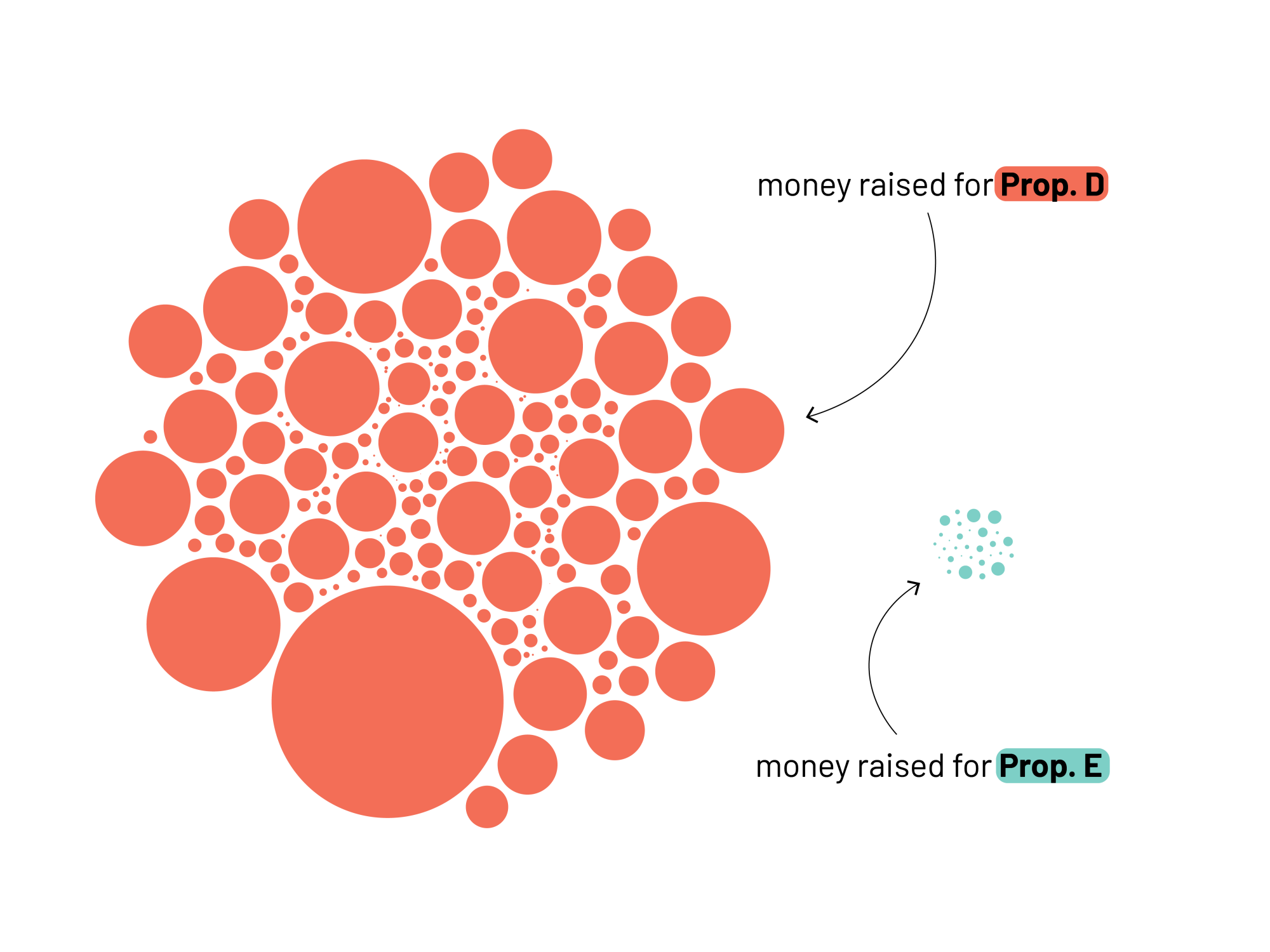

Close to $17 million has poured into the 15 local ballot measures in the San Francisco November election, more than 30 percent of the $53 million raised overall.
Voters will weigh in on consequential ballot measures — including a $790 million school bond, and overhauling the city’s business taxes — which have attracted large contributions from wealthy donors.
Proposition D, the TogetherSF measure that would reduce the number of city commissions and broaden mayoral powers, has raised the most: $8.7 million. That money came largely from a handful of wealthy donors, particularly Michael Moritz, a venture capitalist who has given nearly $3 million to the measure.
Proposition K, which would permanently close the Great Highway to cars, has raised more than $600,000, half of that from Yelp CEO Jeremy Stoppelman. Proposition L, which would tax ride-hailing and autonomous vehicle companies to fund Muni, has raised more $300,000, but faces more than $900,000 in money raised to oppose the measure, primarily from Uber, one of the companies which would be taxed should Proposition L be enacted.
Use our tool to get an idea of how each proposition reached the ballot, what each proposition will do, and who is supporting or opposing it. You can select a measure, click the bubbles to see who is giving and search for donor names.
Explore the ballot propositions
Note: Contributions to committees supporting and/or opposing multiple measures are duplicated in this chart. For example, contributions to the committee supporting Propositions C and E, and opposing Proposition D will appear under all three measures.
This chart includes contributions reported up until October 15, 2024. Source: San Francisco Ethics Commission.
Chart by Kelly Waldron.
According to SF Heritage, the Historic Preservation Commission will be eliminated or significantly disempowered:
“Proposition D, a city charter amendment on the November 2024 ballot, proposes to eliminate most city commissions, including the Historic Preservation Commission… If passed, a task force would have 16 months to decide on whether to reauthorize or restructure eliminated commissions up to a limited number. If the Historic Preservation Commission does return it would be stripped of decision-making authority.”
Why doesn’t this show who is paying once it passes? Property taxes? Homeowners’ or business property taxes? Sales taxes?
Great piece, Mission Local and Kelly Waldron. I mean it.
Even if I disagree with ML’s progressive leanings, I like how this publication breaks down local elections.
With regards to Prop D, I fail to see how these commissions and advisory committees are considered “democratic.” Each of them are subject to the Brown Act. Which means in order to have quorum, a majority of members must be present. Members cannot join via Teams nor phone-in, as the law requires in-person attendance .A number of these commissions have members who don’t even live in the Bay Area.
So when the commissions have a quarterly meeting cadence, and are responsible for policy decisions that impact the abilities of the agencies to do their jobs, it’s a major problem if they can’t even get quorum more than half the time. This is bad governance, pure and simple, and San Francisco is the only major U.S. city that has let it get this bad.