


Embattled San Francisco Unified School District Superintendent Matt Wayne arrived at Harvey Milk Civil Rights Academy in the Castro on Wednesday for an “information session” and to answer questions about the school’s proposed closure and merger with Sanchez Elementary School.
And Wayne, who has been strongly criticized in recent days by the mayor, the school board, and every major mayoral candidate, did not receive a respite.
He was confronted outside the school by a loud crowd of teachers, staff, parents, students, alumni, and supporters pressuring him to keep the school, one of 11 on the chopping block, open.
”We Love Our School” and “Save Harvey Milk” were written on handmade signs carried by students and staff rallying shortly after the end of the school day — the second such rally at Harvey Milk in just a week. The Sisters of Perpetual Indulgence, the drag queen troupe, and other supporters filled the street to listen to angry speakers’ impassioned praise of the school and its teachers.
Harvey Milk, located on 19th Street in the Castro, is one of 11 San Francisco public schools that have been proposed for possible closure or merger, according to a list published earlier this month by Mission Local and verified by the SFUSD.
The small school is one of the only schools in the district to offer a civil rights curriculum, and one of the few with numerous gender-non-conforming bathrooms. One parent described it as a “safe haven” for LGBTQIA+ students, and many said they were worried about losing their community.
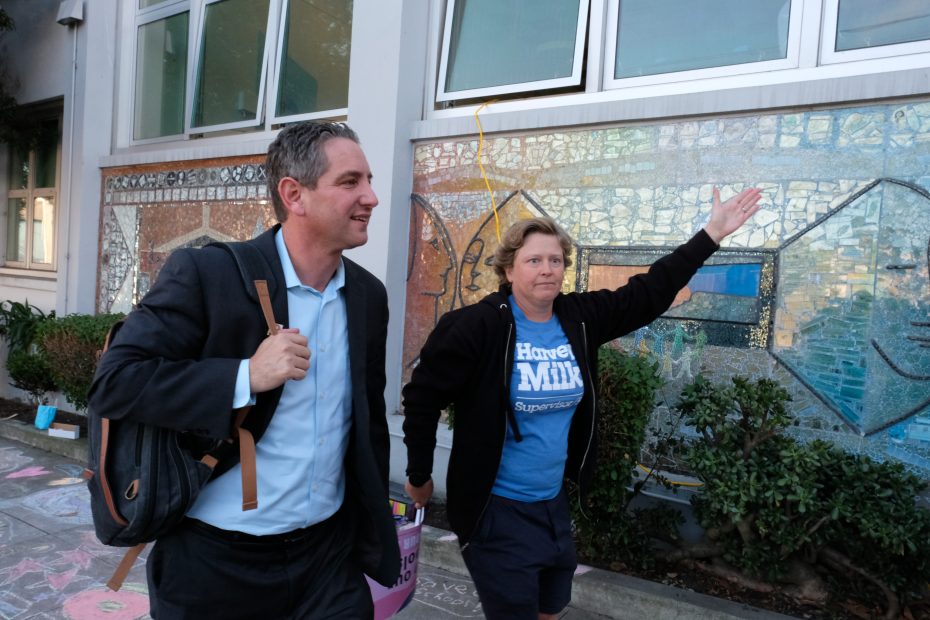

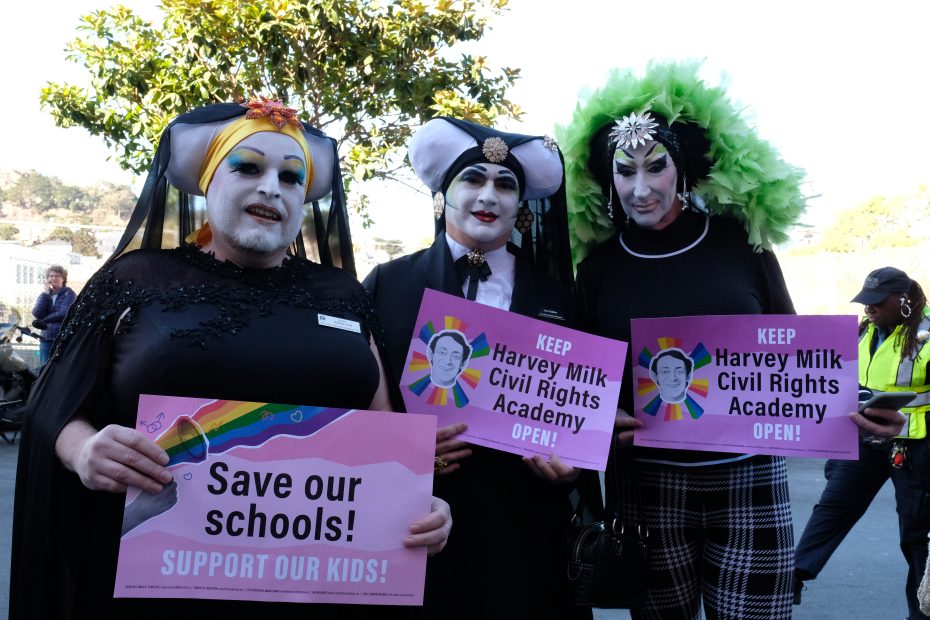
Iris Tarou, the mother of a gender-non-conforming student, explained of her child, “They came out at school before anywhere else, because this school is genuinely inclusive of everybody. Other schools and other places might say that they are, but I know that there is a difference at this school. It has profoundly impacted us as a family.”
“All schools are special,” said Monica Becker, who used to drive her children a long distance from their neighborhood to attend Harvey Milk. “But this is a really special place. To have this place sitting empty would be [harmful to] LGBT rights.”
As Wayne and his staff arrived for the meeting, parents and a handful of students filed into the school auditorium, prepared with a list of questions sent to the district last weekend.
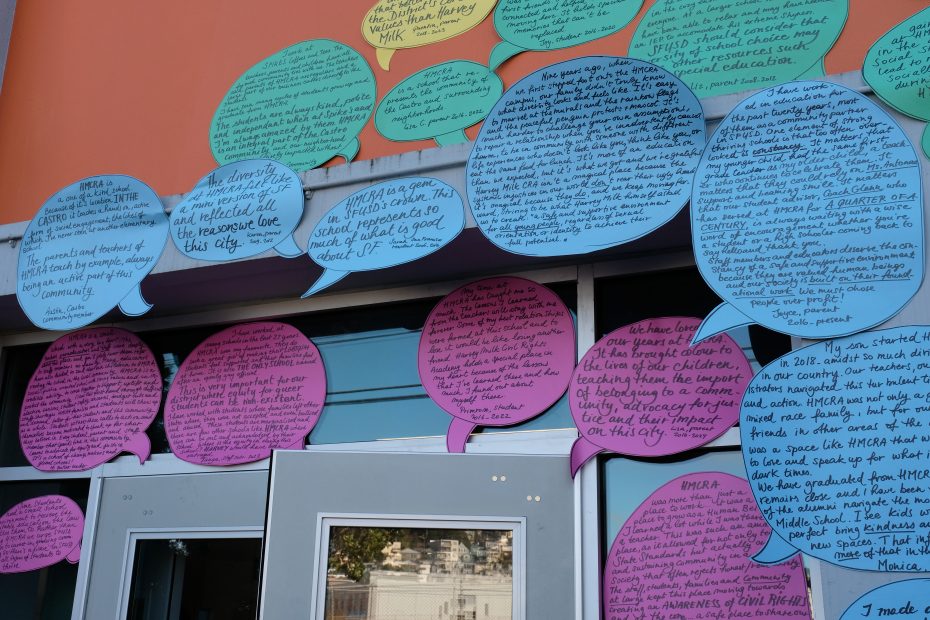
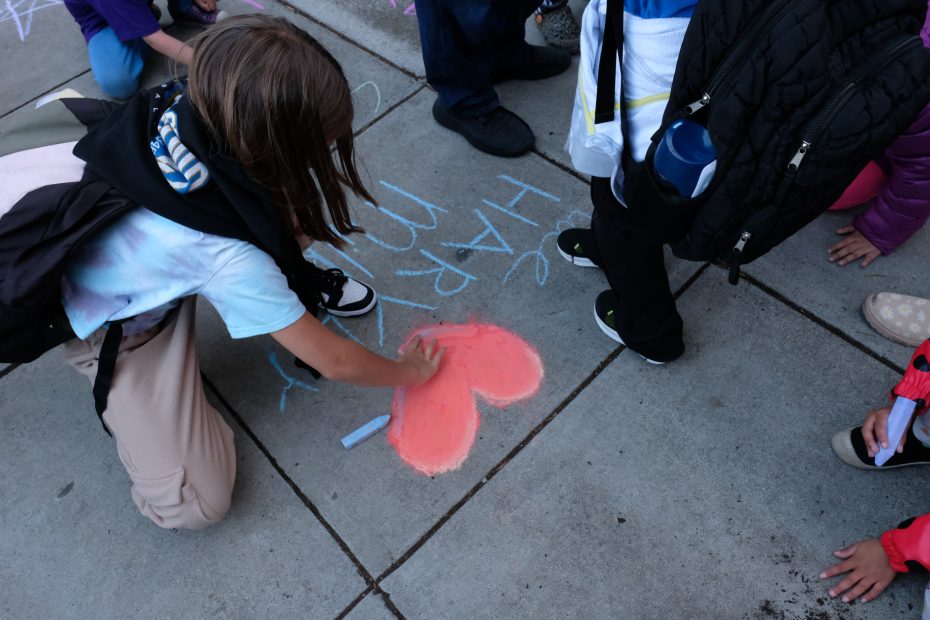
The superintendent began with an overview of what parents and staff had heard before: That small class sizes, under-enrollment, and failure to meet nebulous criteria listed in the school’s “composite score” had led to placing Harvey Milk on the closures list.
Met with shouts of “Liar!” and boos from the audience, Wayne opened a contentious question and answer session. Audience members asked about the failure of his staff to answer their previously emailed questions, what protections Sanchez would offer for LGBT students, the reasons for low enrollment, and the one hour and forty minute change in starting time at Sanchez Elementary — 9:30 a.m. at Harvey Milk vs. 7:50 a.m. at Sanchez.
Wayne largely remained silent, referred questions to his staff, or promised to follow up.
Before Wayne and his staff headed to their next information session at Sutro Elementary — where another rally was planned to protest Sutro’s potential closure — he addressed the crowd. “This will inform any final recommendation,” said Wayne, to shouts of protest. “The key takeaway is that you love your school and don’t want it to close.”
Privileged parents. There’s a perfectly good elementary school within walking distance. This school closure makes sense.
Progressives think there’s no such thing as a “budget.”
Harold’s comment doesn’t hold up to scrutiny. Over 70% of the family base comes from outside the local area of attendance; the feedback was filled with parents, including many people of color, who testified that they intentionally travel to HMCRA from farther away because of the community that has been built. (One mom of color, who travels to the school from the Bayview, said she did so because of the school’s supportive character and called out the district for artificially imposing barriers to equity by no longer providing buses to the school and by turning families away in the application process.) The testimony was also filled with parents who poked massive holes in the “math” that Wayne and team had used to identify schools that they want to close. (As another parent pointed out, HMCRA has the second-highest facilities condition score in the city; closing it after a recent $10 million renovation flies in the face of fiscal responsibility.) It’s easy to repeat a mantra about progressives ad nauseam, but it doesn’t hold up to the facts.
The assumption that closing schools would save money, immediately and forever, is one that has been tested nationwide and found to be lacking. Pew Charitable Trusts (hardly a radical organization of privilege) did a nationwide review of closures and found less than one million dollars in savings for each closure, and that only after several years of immediate costs.
It’s not that we progressives think there’s no such thing as a budget. It’s that we ask questions about the math.
Let the State take over. They can cut without worrying about consequences.
It’s a gorgeous school with a truly unique welcoming environment. This is beyond sad. I know a parent who drives there every day from the Bayview specifically for the school climate. I also know LGBT families who this school means a lot to. It’s really sad that a school honoring one of our city’s greatest civil rights pioneers will be shuttered. Sure they may use it as an ECE center but then it’s just a a name without the intentionally built school climate and curriculum in his honor.
I’m passionate about educations and San Francisco. I’m disturbed by the state of sf schools as a whole.
Here’s some rough math I just did and I’m scratching my head. Back of the envelope math.
SFUSD school budget is $1.3bn
There are roughly 50k students
That means SF budgets $26k per student per year.
As a comparison, in SF you can go to a private high school for $30k to $60k per year.
SF schools are not competitive at large and the district is too big to run effectively.
Having a school that is run at 66% capacity (Harvey milk) doesn’t make sense and speaks to the demand for the school on its own.
What am I missing?