
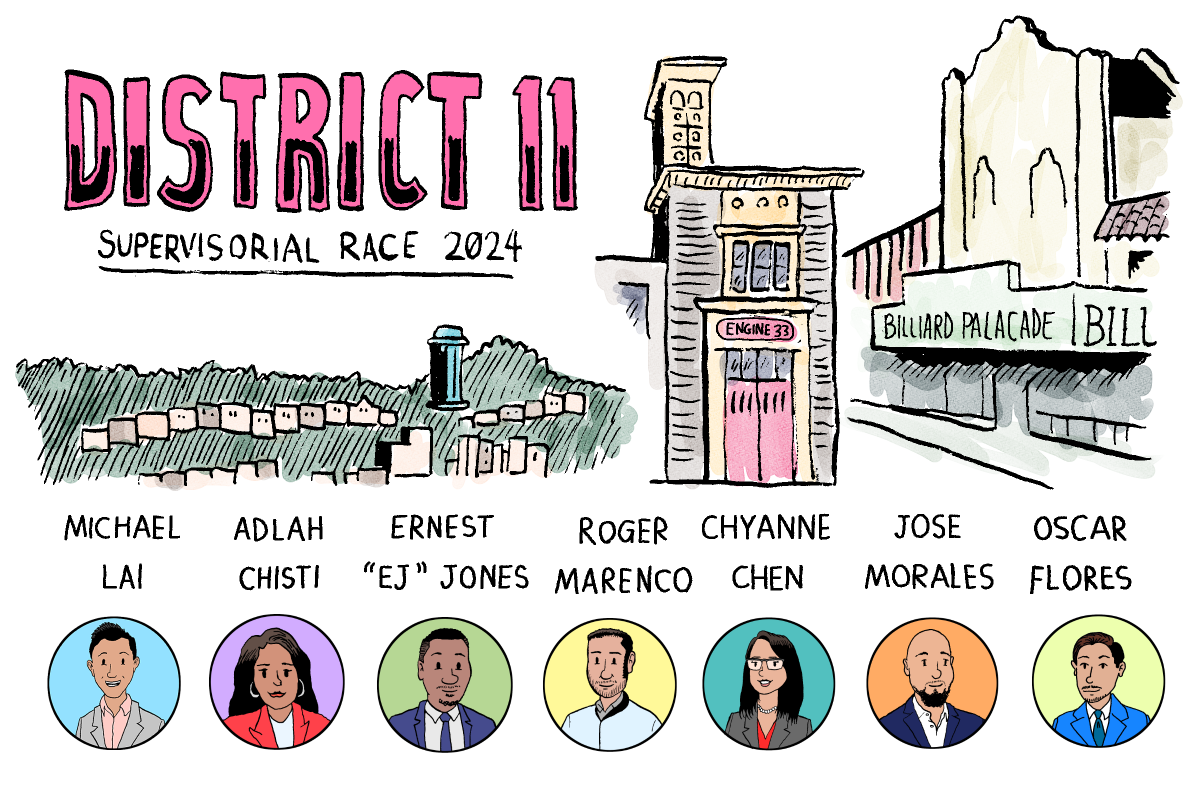

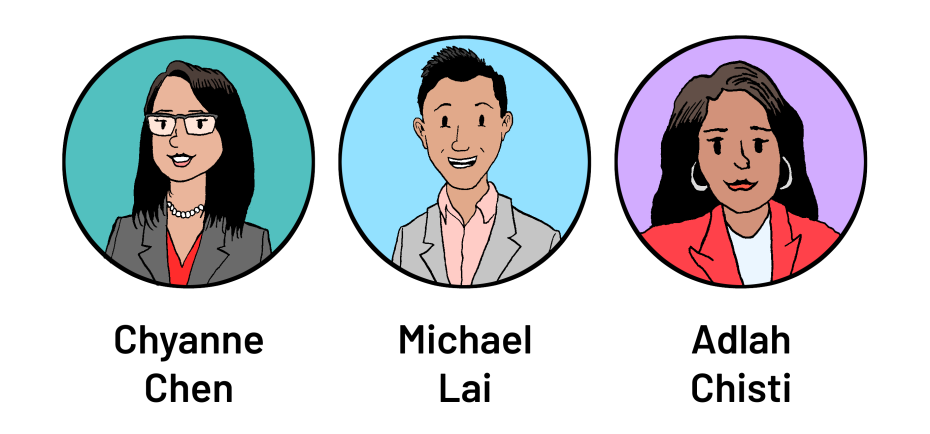
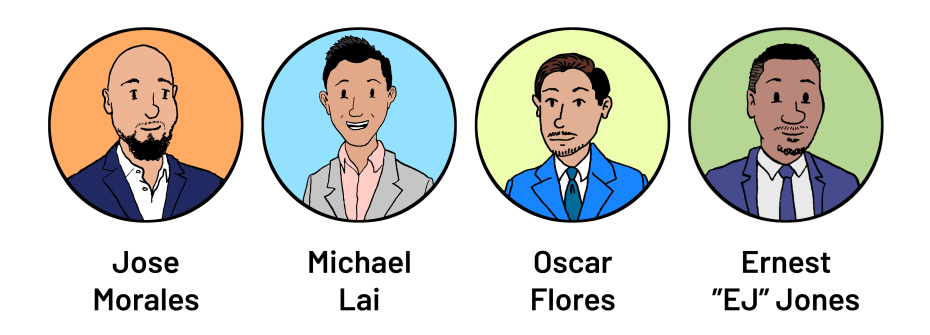
As we wrap up our weekly Q&A with the District 11 candidates two weeks before the election, we thought it would be most useful to voters to look at how the seven candidates running to replace Supervisor Ahsha Safaí, who has termed out, differ on citywide and local issues.
To make this easy, we’ve created a table to illustrate their biggest differences on mayoral picks, March propositions, Prop. K, encampment sweeps, and more.
In answering most of our other weekly questions, the differences were more nuanced.
To understand their stances better, we categorized the questions and summarized their answers.
Click on each of the topics below to see the main takeaways.
Public transit
Six candidates were able to name at least one transit shortcoming in District 11.
Four mentioned improving bus lines — including the 29-Sunset, 54-Felton, 44-O'Shaughnessy, 52-Excelsior, and J-Church — to make them safer, cleaner, more frequent, on time, and accessible.

Three of them underscored street safety for bikers, pedestrians, and transit riders.
Jones highlighted the lack of connection through hilly terrains.
Marenco said road conditions need to be improved.
* We asked the question on public transit before Flores joined the series.
Housing
San Francisco is required to build some 82,000 homes, of which 46,000 must be affordable, by 2031.
Candidates proposed various ways to help the city hit its target.
Three candidates mentioned cutting red tape and making the city’s permitting easier.

Chisti and Jones both mentioned zoning for more density on transit and commercial corridors.
Chisti also wants to reform zoning policies and increase ADUs and in-law units in the "house-rich but cash-poor" district.
Jones, Marenco, and Chen proposed more funding and tax incentives for housing.
Marenco, who talked tough on crime, also suggested citing property owners for vacant property.
Jones and Marenco also suggested identifying sites for housing.
While Marenco failed to give a specific solution, Jones underscored the existing community mapping to pinpoint sites for affordable housing.
* We asked the question on housing before Lai, Morales, and Flores joined the series.
Public safety
Public safety is a hot topic in this election year, and also in District 11. Chen, Chisti, and Jones all suggested increasing staffing levels and recruitment.

Both Jones and Chitsi also called for more community policing and patrols, such as community policing and ambassador programs.
Jones and Chen both mentioned programs for crime prevention or community engagement. Jones talked about activating corridors with community-led programs, while Chen emphasized public education and youth programs.
Three candidates called for support for more public safety roles in a broader sense. Chisti suggested street response teams, behavioral health specialists, and deputy sheriffs for commercial patrols.
Jones and Chen focused on community-based preventive measures such as education and traffic calming.
* We asked the question on public safety before Lai, Morales, and Flores joined the series.
Small businesses
To boost small businesses in District 11, four candidates see the solution in safety and cleanliness.
Chen called for expanding foot patrols, street-crisis response teams, and community ambassadors. Jones thinks it's important to remove graffiti and trash. Marenco, the Muni driver, wants to sanitize buses.
Marenco, Chisti, and Lai all pointed to the need for more funding.

Marenco mentioned more funds for loans and grants, but didn't offer any details on how this would work. Lai wants to reduce permit fees and restructure the tax codes. Chisti also suggested reevaluating the vacancy tax, expanding the vacant to vibrant grant program, and continuing the first year free program that was created to help businesses recover from the pandemic.
Increasing foot traffic is another key to revitalizing the local businesses that two candidates pointed to. Jones was the one candidate who first proposed a marketing campaign to bring in more foot traffic.
* We asked the question on small businesses before Flores joined the series.
Asian community
The supervisor of District 11 will be elected to serve a constituency where 56 percent of residents are Asian. What have they said about reaching and supporting the Asian community?
Ensuring language accessibility was underscored by five candidates.
Public safety was highlighted by Chisti and Marenco.

Jones, Chen and Lai brought up community building and culture. Jones wants more partnerships with community organizations; Lai advocated for cultural events on the Lunar calendar; and Chen pointed to the need to recognize cultural diversity and the varied needs within the Asian community.
* We asked the question of supporting the Asian community before Flores joined the series.
Multi-generational households
To support multi-generational households in house-rich but cash-poor District 11, housing is on everyone's mind.
Accessory dwelling units, also known as ADUs or in-law units, were underscored by three of the candidates. Marenco wants incentives for building them, Chisti supports legislation to expand them, and Lai proposes flexible financing tools for them, as well as lot splits and duplexes.

For youth, Jones and Lai mentioned after-school programs and Jones mentioned universal childcare.
For services and infrastructure, Jones wants health and activity services for seniors; Chen, specifically, wants expanded library and community center hours and improved transportation options. Lai wants more public spaces.
While Jones called for education opportunities, Chisti specified the need for education for homeownership and estate planning.
* We asked the question of supporting the multi-generational households before Flores joined the series.
Community outreach productivity
To make community outreach more productive, three candidates underscored the importance of time management. Jones emphasized early input from community for city programs, while Lai suggested transparent and time-boxed approaches. Chisti called for timelines.

Marenco, Morales, and Lai want to leverage technology. Lai proposed multiple engagement formats to get more community involvement. And Morales wants to use digital platforms for outreach.

Accessibility is on the mind of three candidates, including Marenco, Jones, and Lai.
Community representatives are important to two of the candidates. Jones promises staff with community connections while Chisti calls for a specialized task force with community representatives.
* We asked the question of community outreach productivity before Flores joined the series.
Get city resources for District 11
To get to District 11 a fair share of the city's resources, candidates share similar views.
Community engagement is key for three candidates, including Chen, Chisti, and Jones. Chisti emphasized town halls, and Chen talked about building coalitions.
Four candidates — Chisti, Morales, Marenco, and Jones — see the solution in the city's budget and its transparency.
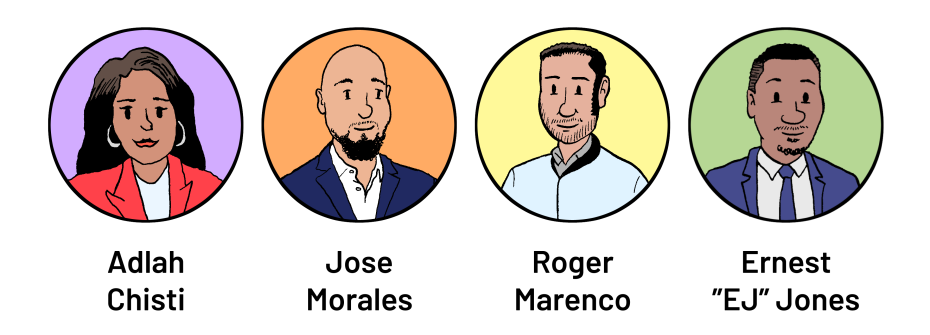
Marenco, Chisti, and Jones, mentioned collaboration with city departments. Chisti specifically wants to work with the mayor's office and establish an SFMTA satellite office in District 11.
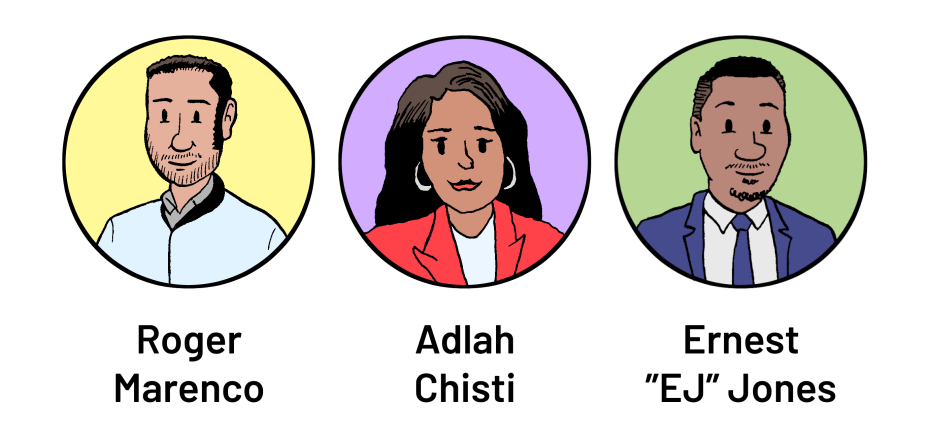
And there's the talk of building relationships, as was mentioned by Lai and Chen, respectively using their past organizing and fundraising experience.

* We asked the question of city resources distribution before Flores joined the series.
Plans for Persia Triangle
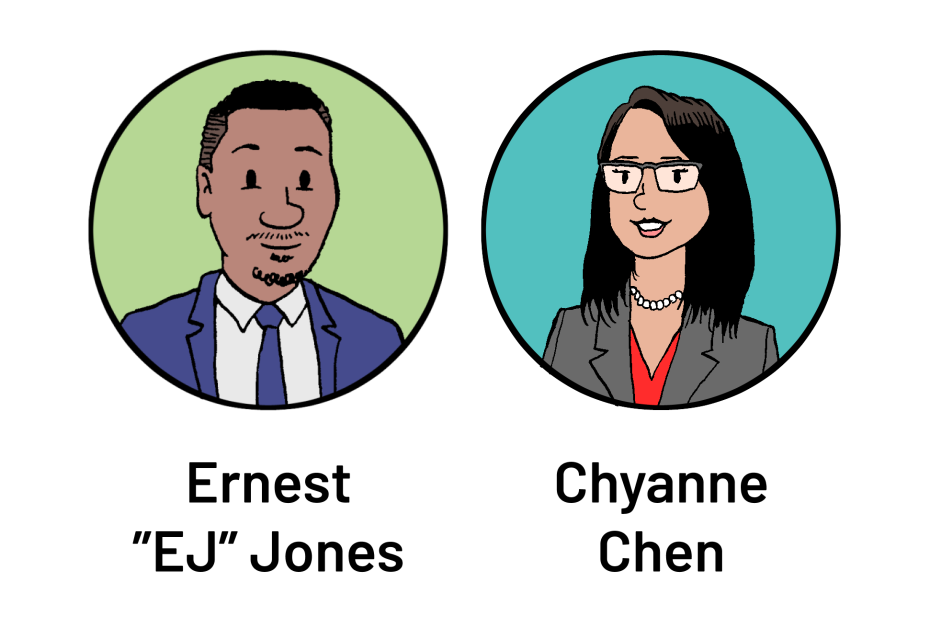
Two candidates, Jones and Chen, want the Persia Triangle to become a community hub.
Marenco wants the space to be the venue for a massive District 11 event.
Chisti wants to establish a task force to develop initiatives to activate the area.
Lai calls for farmers markets, street festivals, regular community events — and eventually turns it into a park.

* We asked about the plans for the Persia Triangle before Flores joined the series.
Cayuga Slow Street
The Cayuga Avenue Slow Street, also known as "Slowyuga," is the district’s only slow street, yet it has one of the highest median speeds and the most traffic.
While all six candidates are supportive of it, three candidates — Chen, Lai, and Jones — think "Slowyuga" needs improvements.
* We asked about the plans for the Persia Triangle before Flores joined the series.
Boxer Stadium and Balboa Park's athletic fields
The candidates share similar ideas to keep the Boxer Stadium and the Balboa Park's athletic facilities open for more hours.
Three candidates — Marenco, Jones, and Lai — all underscored the usage expansion for these spaces. Jones and Lai both want to expand the usage of the facilities for more teams and events, while Marenco proposed hosting monthly community events.
Three candidates — Chen, Chisti, and Morales — mentioned community engagement and accessibility. Chisti called for accessibility for all, including seniors, children and families. Morales advocated for more funding in accessibility improvements.
Four candidates — Chen, Morales, Lai, and Jones — underscored the importance of modernizing and improving the infrastructure of the fields and facilities.
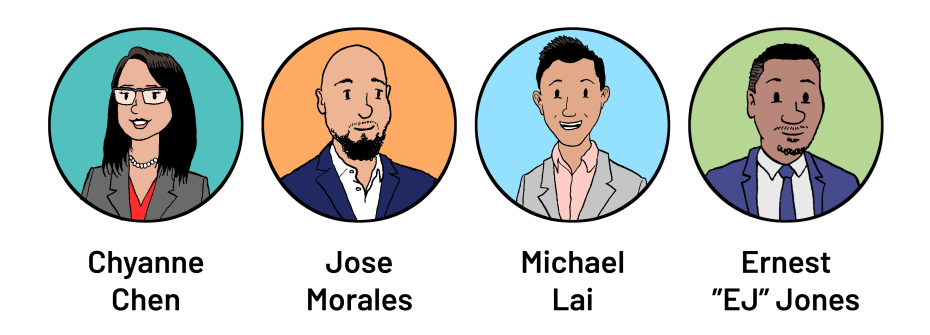
More funding and resources are key to four of the candidates.

* We asked about the plans for the Boxer Stadium and Balboa Park's athletic fields before Flores joined the series.
SFUSD funding
While district supervisors don't have the power over the school board or the school district, the candidates weighed in on the San Francisco Unified School District's resource alignment initiative, which includes the school closure and consolidation plan that was raised and then ended.
Two candidates — Jones and Chisti — see inequity in education and resources in the plan.
Lai proposed increasing revenue by turning fallow SFUSD land into teacher housing or revenue-generating housing.

*We asked the question on SFUSD's resource alignment initiative before Flores joined the series.
More grocery stores
Four candidates — Chen, Lai, Marenco, and Jones — highlighted the importance of financial support and incentives for grocers. Marenco wishes to eliminate fees, offer tax reductions, and low-interest loans and grants for grocers but didn't specify how to.
Chen wishes to map out "food deserts" with the city and make target investments based on the map.
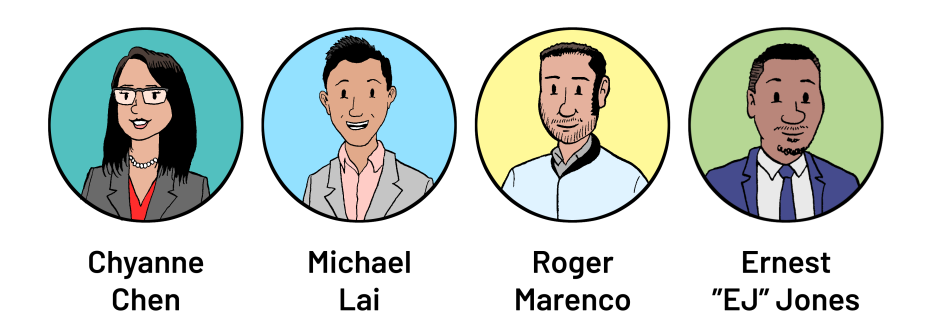
Zoning and development are on the mind of three candidates, including Lai, Chisti, and Jones.
Lai suggests upzoning and building more mixed use commercial and residential developments on Geneva, Broad, and Randolph.
Chisti wants to revise parts of the zoning laws to make it easier for grocery stores to open and succeed — but didn't mention what part. She also wants to create dedicated commercial zones.
Jones wants to work with newly built developments that have commercial space attached early in the development process.

Chisti and Flores both brought up streamlining permit processes for grocers.
Safety is underscored by Marenco and Flores.
Marenco emphasizes clean streets, safer public transit, and safety measures to eliminate shoplifting. Flores wants to focus on addressing homelessness and crimes.

Community resources are also a key according to Morales, Lai, Flores, and Jones.
Both Lai and Jones want to support farmers markets. Lai emphasized on supporting neighborhood grocers and Flores wants to expand them. Jones also wants to promote community gardens where families can grow their own food.
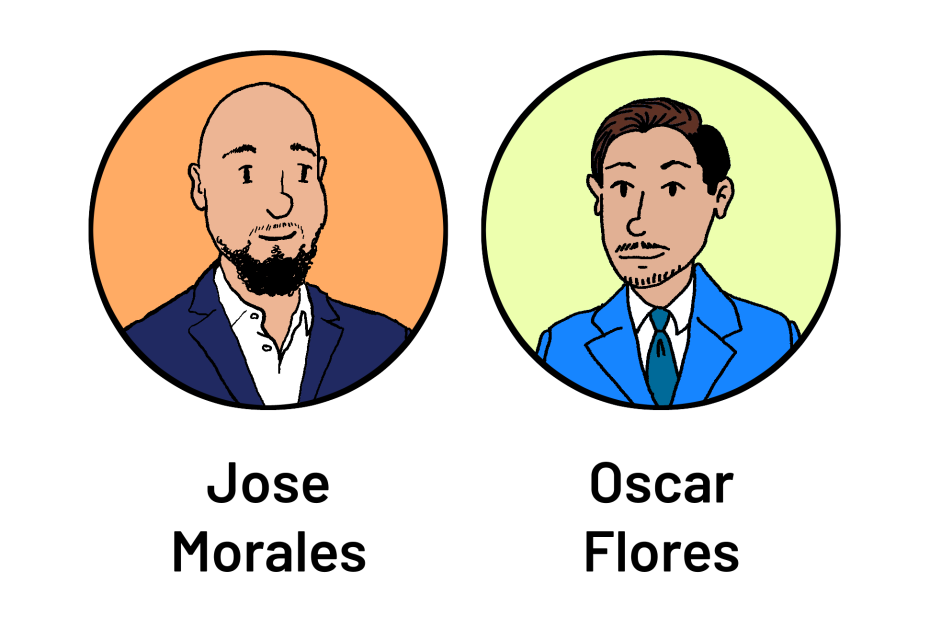
Morales wants to collaborate with local businesses and aspiring entrepreneurs from the district.
Lai wants to leverage his experience in business and finance to make better pitches to grocers to open businesses in the district.

Issues impacting the OMI
We asked candidates to name the top issues impacting the OMI.
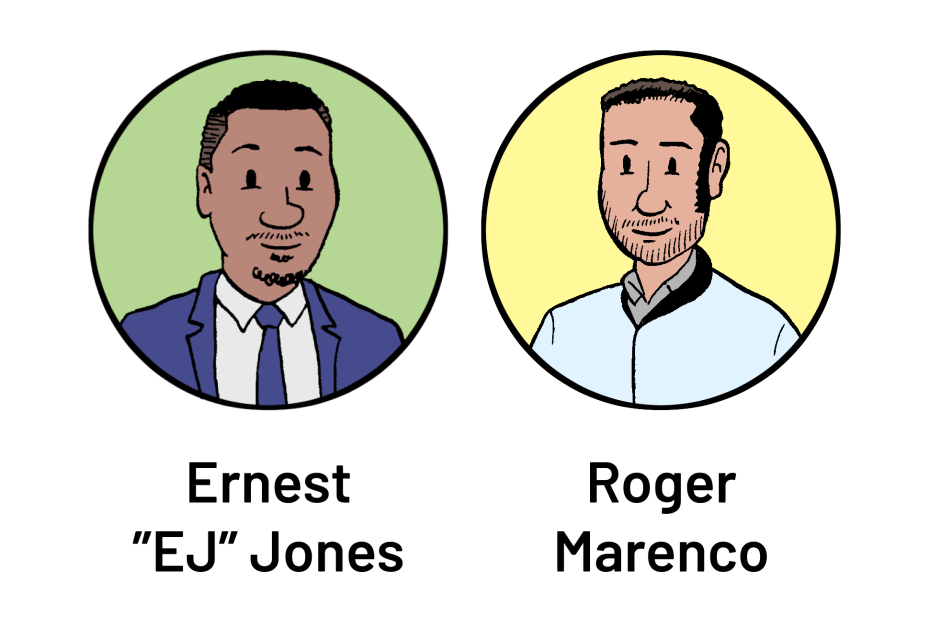
Marenco and Jones both highlighted street safety. Jones proposed specific solutions such as installing more three-way mirrors at four-way intersections to increase visibility for drivers and more traffic calming near schools and parks.
Marenco's solutions are less concrete — re-appropriate funds to repair roads and clean the streets, more police patrols, more foot traffic to small businesses.
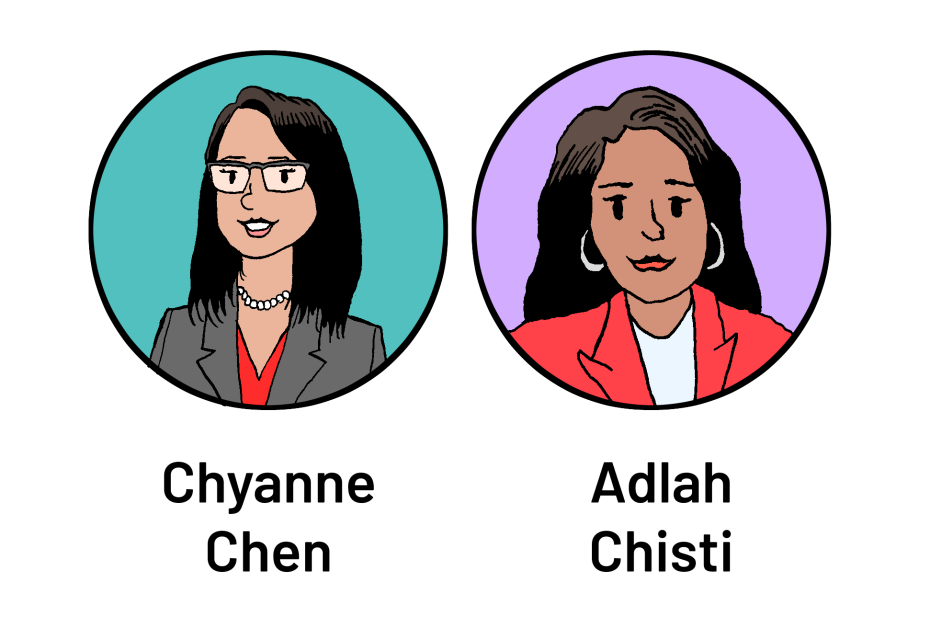
Three candidates think the OMI needs more community resources. Chen wants to listen to local residents for solutions. Chisti and Lai both want night markets.
Moreover, Lai wants to rezone parcels and upzone and build more housing on Randolph or Broad. He also wants more foot patrols and community businesses.
Chisti wants an affordable grocery store and farmers market, more lighting, speed bumps and stop signs, renovating Oceanview library.

Morales and Flores see top issue in public transit. They both want to improve existing Muni routes and conditions. Morales wants to enhance safety measures at bus stops while Flores suggested a shuttle program for residents.
Issues impacting the Excelsior
Candidates see similar top issues in the Excelsior.
Both Chen and Chisti think street safety is the top issue. Chen proposes mapping out streets with SFMTA that are wide enough for conversion to 90 and 45 degree parking, and to increase enforcement. And Chisti has a list of solutions — better lighting, more speed bumps and traffic calming measures, stricter enforcement of stop signs, more angled and shared underground parking.
Jones and Flores both agree parking is the biggest issue. Jones, like Chen, also wants to explore the possibility of diagonal parking. He also wishes to reform the cost structure of the parking-permit system. Flores, on the other hand, wants to establish short-term parking zones that take effect during peak hours.
Lai and Morales point to illegal dumping. They have similar ideas to alleviate the problem — more cleanups, trash bins and bulky pickups, stricter fines. Lai also wants to audit Recology.

Marenco is the only candidate that sees the top issue as the lack of communication from City Hall. He wants to host monthly community meetings in District 11 and meet workers the first Wednesday of every month to address their concerns.
You can also read their full answers in our archive of all District 11 "Meet the Candidates" answers.
Illustrations for the series by Neil Ballard.
