

Mission Local is publishing campaign dispatches for each of the major contenders in the mayor’s race, alternating among candidates weekly until November. This week: Aaron Peskin. Read earlier dispatches here.
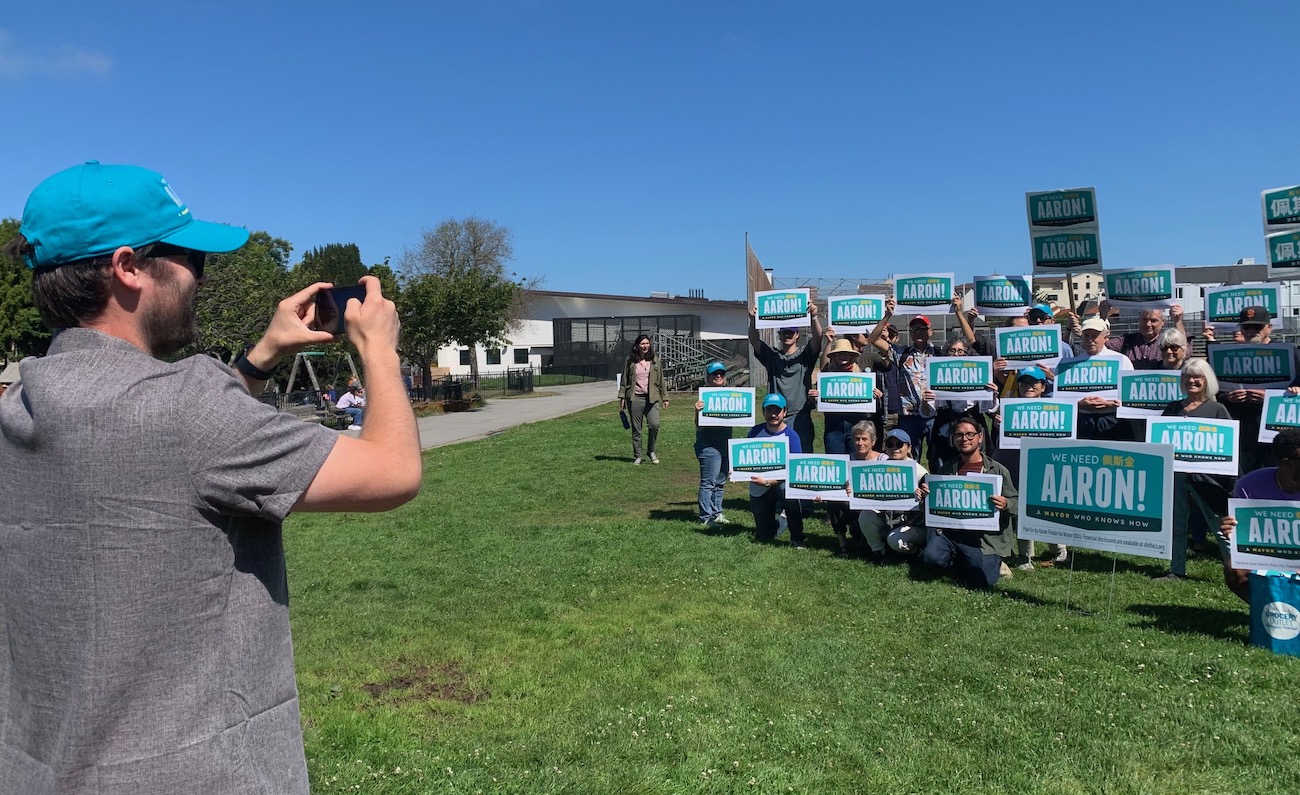
People who are canvassing for the first time are usually better at it than people who have been doing it for awhile, says Otto Pippenger, to the crowd that has assembled on the grass of Rossi Playground on the cusp of the Inner Richmond. That’s because they don’t have a script memorized yet (Pippenger has, admittedly, just passed out a sample script — don’t memorize it!). “They do better, because this is about authenticity. You’ve all come as individuals, to talk to your neighbors.”
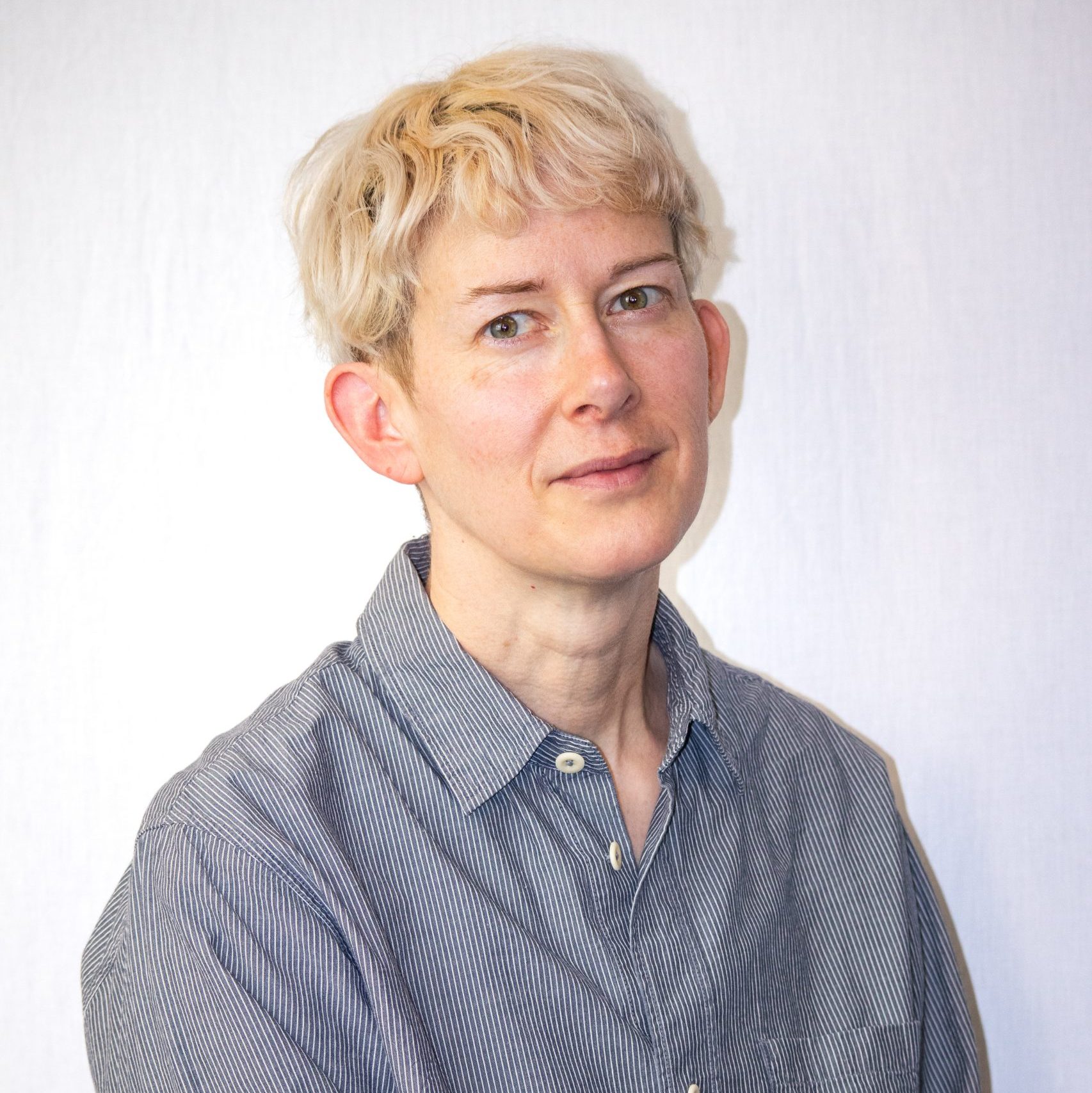
Pippenger’s formal title in the campaign is director of engagement. He got involved in politics after enrolling in a film studies class at City College of San Francisco, with the modest goal of talking to someone about “Rashomon.” At the time, he was a high-school dropout living with an addiction to painkillers that had bloomed into a full-blown heroin problem and, he says, City College saved his life.
When the school was abruptly threatened with closure, Pippenger began organizing with other students, testifying at state hearings, occupying administrative buildings, interning at the American Federation of Teachers. At the time, he was studying journalism and considered trying to make a career of it, but he got impatient with quoting people who weren’t willing to come out and just denounce things directly. Seeing political organizing from the inside made him realize that there was no reason he couldn’t be a part of local government.
Pippenger begins talking the canvassers through the MiniVAN app — essentially, a condensed form of the voter rolls where users log their progress. Most of these logs will be “Not at home.” (about 75 percent of all interactions will fall in this category) but there’s also “Language spoken” (if you can’t tell, take your best guess, and another volunteer who speaks that language will try to follow up). If someone is rude to you and you want to spare any other volunteers from dealing with them, there is a way to take them off the list — but it takes them off forever, so use it sparingly.
Canvassers also do best when they work solo, Pipppenger continues. Part of that is math; working in twos means you cover half the territory per canvasser. The other part of that, he says, is that when there are two of you, it gives off a Mormon vibe.
It is important to look approachable. If you have a hat on (nearly everyone has a hat on) take it off. Same with the sunglasses. Knock on the door, ring the doorbell, then take a few steps back, and benignly wave up at the windows. Wait about 30 seconds; it can take surprisingly long for a person to make it to their front door.
Try not to introduce yourself right away. Meet the person first. Make sure you have their name right. If the voters on your contact list are gone and new people are living at the address, just say, “Welcome to the neighborhood. I was coming to tell the Andersons about this guy I’m really excited about, who’s running for mayor.” If you find the person on your list has died, say, ‘I am so sorry for your loss, my condolences,” and get out of there.
If you live in their neighborhood, let them know that. Do your best to not make people feel uninformed about politics (a lot of people are uninformed about local politics). Don’t say “Aaron Peskin: How do you feel about him?” says Pippenger. “That makes people feel ignorant, and wonder if they can fake their way through it. It’s not a good feeling. Try ‘Aaron Peskin: Have you heard of him?’” Pippenger scans the crowd of 20-odd volunteers and campaign staff who have showed up on Labor Day to knock on doors for the Peskin campaign.
“Yeah,” says one of them. “I think so.”
“Oh, fantastic,” continues Pippenger, smoothly. “And if people say ‘no,’ you’ll say, ‘No worries. We’re a grassroots campaign. That’s what I’m out here for. I’m so glad to catch you.’ You give them the who what when where why and the permission not to know.”
After that comes the hard ask, says Pippenger. This is when he levels with people. “I say, ‘Hey, I’m a renter. My parents are renters. They’ve lived here their whole life. They just retired. If they get evicted again, there is no way they’re getting another place. They would be either homeless or scattered to the rest of the country. I feel a lot better with somebody like Aaron in office, who I know has been fighting for them. And I was wondering if I could count on you to vote for him this November?’”
“I say very lightly, but I don’t undercut the sentence. People are a little legalistic. If you say, ‘Will you think about it?’ They’ll go,’ I’ll certainly think about it.’ And then close the door. So you just need to ask them: ‘Can I count on you to vote for that?’”
If somebody asks you a question you don’t know the answer to, continues Pippenger, just say “I don’t know. But I do know that Aaron or his team would love to talk to you at some point fairly soon. Can I take down your question, and is this a good number and time to reach you?’ That’s what notes are for.”
Working on campaigns is hard, says Pippenger, after the crowd has dispersed to knock on doors. But in late 2015, he made a promise to himself that he would dedicate the next decade of his life to political organizing. It’s something that he feels good about. “My parents have new rights because of me. They’re more secure in their housing because of me. The school that saved my life at least has a lease on life in part because of my actions.”
He remembers, from Robert Putnam’s book “Bowling Alone,” a statistic about how the average American only has two close friends. Working on local campaigns is a bulwark against that — joining an inter-generational, interracial, inter-class, community, brought together by common cause, and a not-insignificant amount of mutual adversity. “It changes people’s minds. You have wonderful conversations. You find out things you otherwise wouldn’t find out about.”
Peskin joins the canvassers on the tail end of a long, circuitous Labor Day — one that started at a picket line in Union Square held by UNITE HERE Local 2 (part of a nationwide hospitality workers strike). He decided not to get arrested this year, he says, which reminds him of a time when he was trying to get arrested: Taking over the Gilroy Garlic Fries stand at Oracle Park with a group of concession workers. The police were, at first, unwilling to arrest them and then, once persuaded, unable to find the jail in Oracle Park where local detainees are held. Peskin had to wriggle out of his (insufficiently tightened) handcuffs and call Alfie Felder, who oversees the ballpark’s operations department, for directions.
After the Union Square picket line was a vaguely worded event at a banquet hall in Chinatown; part of Peskin’s schedule as District 3 supervisor, rather than as a candidate for mayor. It turned out to be the 35th anniversary of a statewide organization of interracial AAPI/white gay male couples. “I was like, ‘thanks for having your convention here and fighting back against the right-wing narrative about everything that’s emanated out of San Francisco,’” Peskin says. “They were all super excited.”
From there, more actual mayoral campaigning at the Bayview Boat Club and the Mariposa Hunters Point Yacht Club, which were deep into Labor Day day-drinking. “They were like, ‘Can we get you a drink?’ I was like ‘Noooooooo.’ I got a 0.0 Stella Artois, I did.” After this is another banquet in Chinatown: The swearing in of the new director of the Chinese Six Companies.
When the canvassers return, they come back with reports of people not at home, people who are obviously at home but not wanting to open the door, people who are quite pleasant and excited to talk, people who take window signs and put them up. One woman comes back with a report of being screamed at; that guy’s off the list.
“I’m only going to say this once, Otto,” a returning volunteer says, looking pointedly at the pack of cigarettes in Pippenger’s shirt pocket. “You need to stop smoking.We need great young people like you to stay alive.”
“Yes,” says Pippenger. In addition to the 10-year plan, he had a plan to quit cigarettes when he turned 30. He’s now pushing the boundaries of his own goal set; he’s officially 30 now.
“I will be frank with you,” he replies. “I doubt it will happen by November.”
Great story about a great person.
Ah yes, Aaron Peskin. The champion of housing, for himself. He lives in a duplex that was illegally converted to a single family home, a conversion he and his wife formally opposed through the neighborhood organization they lead…. Until they decided to buy it in a secret sweetheart deal! Now he just lead the BoS to downzone the area next to that house so we CANT build more housing in an ideal spot for lots of new homes. Protect your view Aaron! What a great guy to have lead us during a housing crisis. 🙄
Sick puppy
Aaron’s “duplex” is nice, located on a quaint, historic stairway through a beautiful garden with cottages and small homes on either side, I can’t really imagine destroying the beauty and uniqueness of Telegraph Hill for glass box high rises …it reminds me so much of “Barbary Lane” in Tales of the City. We have an iconic and beautiful waterfront which is spectacular to behold from ferries, and cruise ships arriving to the City, and even though I don’t live on that hill, I get to enjoy weekly walks in that neighborhood so close to my home. For me, personally, my experience is Aaron is pro housing, pro tenant and pro neighborhood. I own my own deeply affordable one bedroom flat because he fought to save and protect housing for low income immigrants and workers in Chinatown/North Beach. I would never be a homeowner in San Francisco without people like Aaron Peskin making it possible.
He’s beholden to his billionaire neighbors, pawn of the NIMBYs that say they want more housing, but just not in their entitled neighborhood. How can you think this bought man would give a crap about anybody but his rich enablers?
Do conservatives just open the comment section of Mission Local stories just to trash the progressives? It seems to me that they’re just here to talk shit about progress and progressives instead of keeping up with the news. And of course, their comments only reveal their affluence and class loyalty. I’ve yet to see a person of modest means talking shit about Peskin’s policies that benefit common people (not billionaires) in this city.
Sadly Pippenger is unlikely to attain the American dream with Peskin’s plan, too bad he/she/they can’t think beyond being scared about housing. There is way more to life and politicians like Preston and Peskin are just there to play on your fears, to win your votes to stay in power.
I am an immigrant. Let me tell you, you live in the best country in the world, you have more freedoms and access to everything. Do not be defined by Peskin.
It’s always telling to look at the human beings who volunteer for and work for causes, campaigns and issues. Thanks for this article. Organizing for change is largely thankless work. Apathy, anger and anxiety are prevalent in today’s electorate. But the only way to reach people is to door knock and try to have conversations with fellow San Franciscans and residents. Otherwise the Tech and real estate oligarchs win and will hijack our local government. The world needs more Otto Pippengers and fewer Elon Musks, Garry “die slow” Tans and Bill Oberndorfs.
Here here! Thanks Otto, for fighting the good fight 🙏🏼
It’s not being “scared about housing.” It’s being aware of exploitive landlords, speculative developers, and the causes of homelessness. Peskin and Preston are pro-renter in word and deed. Go Aaron!
Otto is such a bright and dedicated person who’s sincerely passionate about helping to ensure access to fundamental resources and improving the infrastructure for our city’s residents. Keep it up!
Great story, I was there, a first time canvasser, I believe in the candidate, and Otto gave encouraging guidance.