


Like a recurring nightmare, Hangama Soroor’s story always seems to hit the same devastating notes.
After becoming a successful pop star in Afghanistan in the late 1970s, she fled the country after the Soviet invasion, then gradually established herself in Europe and North America, performing for audiences rapt by her Farsi repertoire. The rise of the Taliban in the mid-1990s seemed to shut down any future possibility of performing in Afghanistan, as women were barred from public life. Then, in the decades following the 2002 U.S. invasion, that all changed: she triumphantly returned to sing her beloved pop anthems and ghazals (a poetic Persian song form also popular across India, Pakistan and Tajikistan).
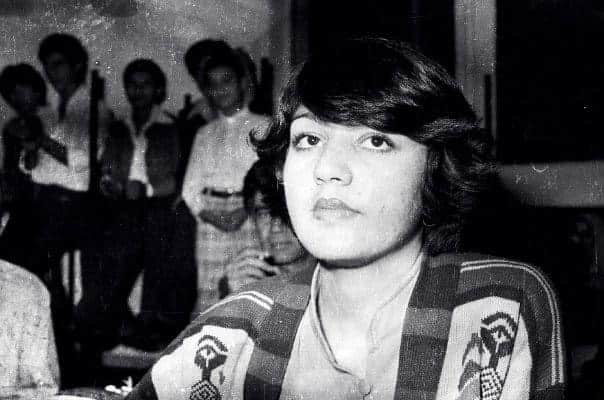
But with the Taliban back in power and women increasingly targeted by the regime, Hangama is once again locked out of her homeland. Long based in Toronto, she’s a featured vocalist this Friday, Sept. 6 at Diaspora Arts Connection’s eighth “Let Her Sing” concert at the Yerba Buena Center for the Arts. The performance serves as a musical proclamation that women from Afghanistan, Iran, and neighboring countries refuse to be silenced.
“When I came from Afghan, it was Russian people invading, and we also had problems,” said Hangama, switching between English and Farsi. This interview was translated by her daughter, Sara Soroor, a vocalist who’s making her Bay Area debut at “Let Her Sing.”
“I was very famous, and suddenly, we came out to Germany as refugees, with no musicians around me to perform with. I didn’t even know the language. It was very hard for me, particularly being separated from music. But I believed one day music would return, and I think so now. Of course it’s hard for musicians. They are in jail,” said Hangama. “For women, Afghanistan is a jail.”
Even amid the many ongoing humanitarian disasters around the globe, the crushing of women in Afghanistan in the three years since the United States’ chaotic evacuation stands out as draconian. More extreme than anything dreamed up by Margaret Atwood, life under the Taliban continues to plunge women deeper into darkness and invisibility: just last month, a decree stated that no woman should be heard singing, reciting, or reading aloud in public.
A defiant affirmation
For Nazy Kaviani, the Iranian-born founder and artistic director of Diaspora Arts Connection (DAC), “Let Her Sing” defiantly affirms that no matter their style or tradition, women are an essential part of the musical spectrum.
An East Bay arts organization, DAC presents regular concerts showcasing Iranian artists, most of whom have been forced to flee their homelands. “Let Her Sing” both expands and sharpens the focus to female vocalists from countries where, for a variety of reasons, their voices have been suppressed.
“Even before the Taliban took over again, many women who wanted to sing faced societal and family pressure not to,” Kaviani said. “I know an artist who was disowned when she decided to be a singer.”

This year’s Let Her Sing program features eight women, all of whom live in exile and are participating in the event for the first time. Steeped in Persian classical music, Saba Zameni has spent the past two decades performing jazz, blues, Iranian pop, traditional and folk music around the world, and recently received political asylum in Canada.
Taraneh Mousavi is an Iranian artist based in Vancouver who blends jazz, classical and contemporary music inspired by the Persian poetry that suffuses Iranian culture. And Ayda Rastgoo is a young Iranian pianist and vocalist based in Hamburg.
An artist’s gender isn’t the only factor that can lead to suppression. London-based Olcay Bayir is a Kurdish singer/songwriter from Turkey, where “it’s forbidden to sing in their mother tongue, men or women,” Kaviani said. “And in Saudi Arabia, nobody can sing in public.”
Fostering future collaborations
Hangama’s story speaks to the upending of life in Afghanistan. Born into an artistic family, she grew up watching her father, an actor and musician who had trained in India. She was drawn to music as a child, and found her calling as a young teenager. Her father supported her love of singing.
She was 15 when he brought her to the Radio Afghanistan studio, “and I started broadcasting and recording right away,” she recalled. “It was difficult for women to be singing in the 1970s. Families didn’t want girls to go onto the radio and sing. There were only six or seven women singers in Afghanistan at the time.”
For “Let Her Sing,” Hangama plans to perform several of her best known works. She’ll sing some duets with her daughter, and Sara Soroor will also perform solo. They’ll both be accompanied by the production’s house band featuring Israeli wind player Asaf Ophir, oud player Sara Saberi, percussionist Mohammad Shabani, guitarist Mohammad Talani, Niloufar Shiri on kamancheh, keyboardist Nima Hafezieh, Narges Jajarmi on accordion, and bassist Safa Shokrai. Aside from Ophir, all of the musicians hail from Iran, and the ensemble is directed by drummer Yahya Alkhansa.
While the concerts have gained recognition as highlights of the Bay Area summer music season, much of the action takes place out of sight. Kaviani has designed “Let Her Sing” as a week-long confab where the performers rehearse in Richmond and hang out together, forging relationships that foster future collaborations.
“One of the things we do is make a sisterhood of singers,” she said, noting that the event has presented 89 women so far, and this year will add another eight. “This incredible band of musicians has helped many of these women when they needed an ensemble; they showed up to play. We look bigger than we are, and spend more money than we have. It’s a dream that many have bought into fruition.”
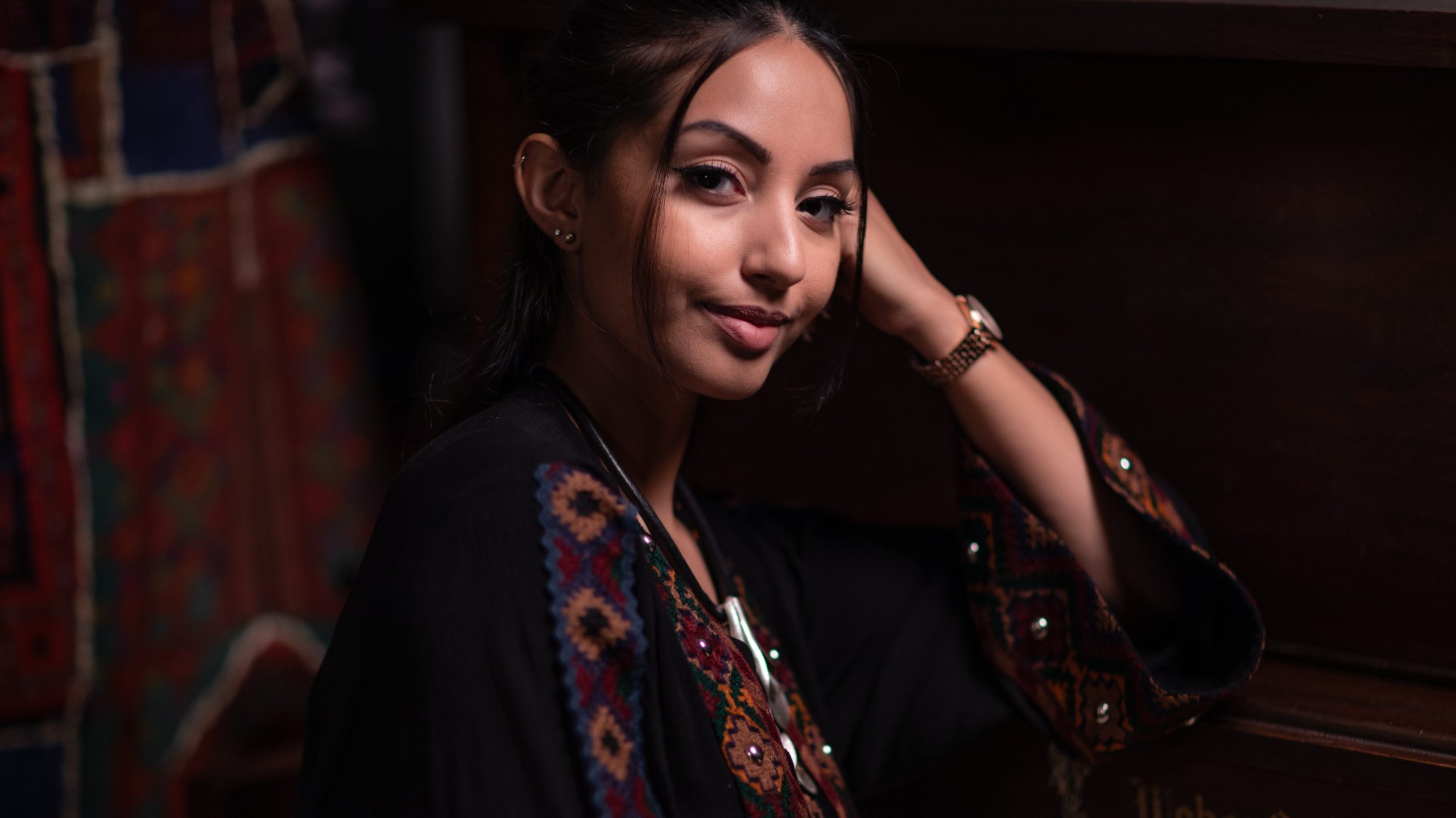
This year, the dream also expands to Los Angeles for the first time, with a performance Sunday, Sept. 8 at the Zipper Concert Hall. With the largest Iranian popular outside of Iran, the move makes perfect sense. Los Angeles-based actress and director Sarah Chang Tadayon hosts both concerts.
Kaviani focuses on the suppression of women in countries with Islamic governments, but she’s also eager to champion women who’ve been persecuted in other situations. In 2020, “Let Her Sing” included Vietnamese activist and musician Mai Khoi, whose performances were shut down by the communist government after she recorded songs with explicit sexual references while delivering pointed social and political critiques.
No matter the particular kind of oppression, Kaviani created “Let Her Sing” as a forum for women in the face of authorities who want to direct “what should a woman say, what she should sing, or whether she should sing at all,” she said. “Women are the vessel by which humankind is introduced to music. In every language, we sing lullabies to children. When you silence women, you’re turning your back on this legacy for all humanity.”
***
“Let Her Sing” takes place at 7:30 p.m. on Friday, Sept. 6 at Yerba Buena Center for the Arts. Tickets ($68 and up) and more info here.
As expected, it’s crickets in the comments department. Maybe because Afghan and Persian women oppression isn’t nearly as popular and trendy as “palestine”? And also horrors, an Israeli participant was mentioned in the article as well! (Can’t support that.) The collective oppression by the taliban and current Iran regime, not to mention Sudan darfur, Syria and Yemen in probably 100x the civilian casualties in gaza (which is solely the fault of hamas mind you.) But just mention gaza and you have thousands of brainless monkeys yelling and protesting on campuses, in our cities, etc. So what’s the difference here? Oh right, Israel is Jewish, and all the 100x oppression happening in these other countries is Muslim on Muslim (for the most part) violence. That insanely disproportionate media and civilian protest response has only one name: antisemitism.
Stay informed. Peace out.