

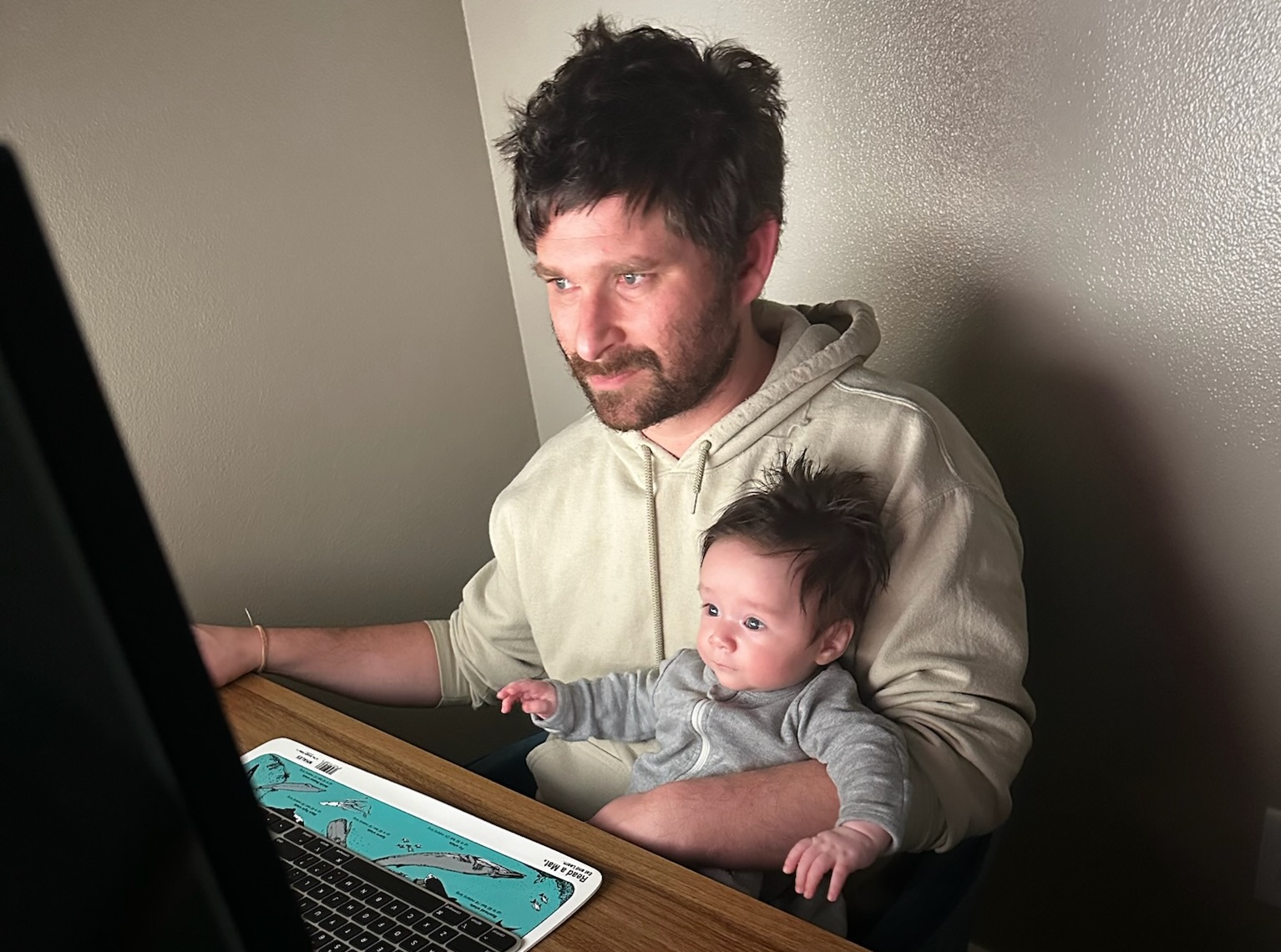

Dr. Aaron Bodansky, 37, was finishing his pediatrics residency at the Children’s Hospital of Philadelphia when the Covid-19 pandemic hit. He remembers being relieved that kids seemed to be spared from the worst of covid.
Then kids began to get sick. Very sick. From weeks to months after a bout of covid, Bodansky said, children arrived in the emergency room showing signs of severe inflammation. Their symptoms included persistent fevers, rashes or pinkeye — all common in childhood viruses — but blood tests revealed high inflammation, including inflammation of the heart that impeded its ability to pump blood.
After starting his fellowship at the University of California, San Francisco, in July 2020, Bodansky began taking care of kids who were critically ill with what came to be known as multi-system inflammatory syndrome in children, or MIS-C.
“It was tough, because we really didn’t understand what it was,” he said, adding that for the parents of kids who end up in the ICU, “it’s maybe the worst day of their life.”
Bodansky said that, luckily, the syndrome presented similarly to another condition called Kawasaki disease, for which safe and effective treatments exist to “calm your immune system.” Watching children recover as they began to receive treatment was heartening, Bodansky said. Still, he wanted to understand the link between covid and MIS-C.
Now, Bodansky and a group of collaborators appear to have found that link. In a paper published in Nature this week, they showed that MIS-C patients experience a phenomenon called “molecular mimicry,” which causes a child’s immune system to attack its own cells following a covid infection.
The immune system tries to learn to attack foreign bodies, Bodansky said. But in kids with MIS-C, the immune system develops a response to a part of a protein found in covid that looks nearly identical to another protein found naturally in the body. This protein, called SNX8, plays a role in the body’s own immune response. Bodansky said that after clearing a covid infection, the child’s immune system confuses the two and begins to attack itself, something that happens in about 1 in 10,000 children, though the exact reason is unclear. Three children died of MIS-C in 2023, according to a report released by the U.S. Centers for Disease Control and Prevention.
Bodansky initially approached Dr. Joe DeRisi, president of Chan Zuckerberg Biohub San Francisco, and Dr. Mark Anderson, immunologist and director of the UCSF Diabetes Center. Together, they hypothesized that autoantibodies — antibodies that target the body’s own cells — were involved in MIS-C. They used a technology for autoantibody discovery pioneered by DeRisi to identify three that were elevated in the young patients.
One targeted SNX8, and the researchers were able to identify the part of the protein that looked nearly identical to part of covid’s N protein. Subsequent experiments showed the autoantibodies binding to “the exact region of overlap, which was really convincing,” Bodansky said.
MIS-C grew rarer over the course of the pandemic, Bodansky said, and now occurs mostly in unvaccinated children. While the precise knowledge of how covid and MIS-C are linked may not be used to develop treatments, he said, the paper demonstrates how to experimentally show a link between a virus and a subsequent autoimmune condition. Later, this could lead to better treatments for other conditions with a “similar story.”
“What this paper provides is a blueprint for how to understand an enigmatic type of immune dysregulation,” he said. “Previously many people kind of felt like, ‘We can describe this, but it’s going to be very hard to ever find a mechanism of how it’s linked to the virus and exactly what’s happening in the patient.’”
The work wouldn’t have been possible without the efforts of scientists around the country, including from the CDC, Harvard University and St. Jude Children’s Research Hospital, Bodansky said. “Team science and collaborative science is definitely the way to go.”
Bodansky splits his time between research and seeing patients. He showed me his recently received UCSF professor badge, and talked about his plans to focus on this kind of research. He’s excited to apply findings from the covid and MIS-C work to other childhood illnesses.
Pediatrics wasn’t always the plan for Bodansky: Before becoming a physician-scientist, his interests ranged from physics to global health. But he now calls the lack of research funding for childhood illnesses “the thing I feel strongly about.”
“My real hope with this paper is that, because MIS-C did kind of capture people’s attention a little bit more, that maybe these findings will help inspire people to realize that there’s all sorts of other conditions that have a lot of similarities that are occurring in children all the time,” Bodansky said. “And it is really important to try to fund that research.”
Disclosure: Joe DeRisi sits on Mission Local’s board of directors.
During the peak of the pandemic, overconfident, insufficiently circumspect infectious diseases “experts” like UCSF’s Monica Gandhi were loudly, persistently advocating for reopening the schools, saying children were not at risk (never mind the administrators and the teachers, one guesses). I would hope there are some lessons learned, some humility acquired, maybe even a little crow eaten. It would’ve been wiser to have designated spokespeople with a proven track record of being more careful and accurate in their public pronouncements. First do no harm.
Great article. That is also the cutest picture.
Stoke that Fear!!