

On Aug. 1, the latest campaign-finance filings in San Francisco’s 2024 election were released, giving everyone the first detailed look at how much money the candidates in the November race have raised. Six supervisor seats are up for grabs, and five major contenders have thrown their hats in the ring for a chance to occupy the mayor’s office.
Let’s take a closer look at what the filings tell us:
1. A quarter of the money comes from just 10 donors
Twenty-four percent of all funds poured into the November races — $5,551,917 out of $23,584,801 — came from only 10 donors. To put things in perspective, those 10 donors, responsible for 24 percent of all the money, represent just .06 percent of about 16,042 overall donors.
Those top donors include Miriam “Mimi” Haas, the billionaire mother of candidate Daniel Lurie; Michael Moritz, a venture capitalist who has poured millions into local politics; Neighbors for a Better San Francisco, a political advocacy group backed by deep pockets (like William Oberndorf, a major Republican donor; Louise Muhlfeld Patterson, a former executive at American Express; and Brandon Shorenstein, from the real estate family); Lurie himself; and Chris Larsen, a senior tech executive.
Top donors overall and their largest contributions
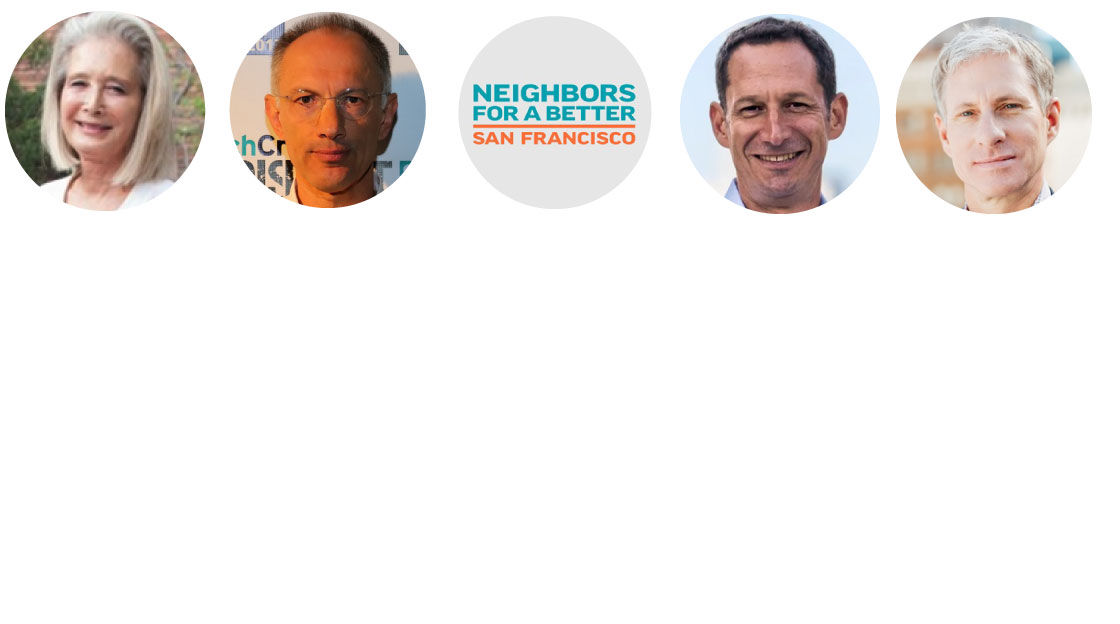
Michael Moritz
Miriam Haas
Neighbors for a
Better San
Francisco
Chris Larsen
Daniel Lurie
TogetherSF
ballot measure
on commission
reform
($996,323)
PAC for
London Breed
($400,000)
Daniel Lurie
for Mayor
($1,000,000)
Daniel Lurie
for Mayor
($590,000)
TogetherSF
ballot measure
on commission
reform
($950,000)
PAC supporting
Trevor Chandler
($50,000)
PAC against
Dean Preston
($50,000)
Michael Moritz
Miriam Haas
Neighbors for a
Better San
Francisco
TogetherSF
ballot measure
on commission
reform
($996,323)
Daniel Lurie
for Mayor
($1,000,000)
TogetherSF
ballot measure
on commission
reform
($950,000)
Chris Larsen
Daniel Lurie
PAC for
London Breed
($400,000)
Daniel Lurie
for Mayor
($590,000)
PAC supporting
Trevor Chandler
($50,000)
PAC against
Dean Preston
($50,000)
Graphic by Kelly Waldron. Source: San Francisco Ethics Commission.
Aside from Lurie’s donation of $590,000 to his own campaign, each of these top donors has injected money into a political action committee — which, unlike candidates, can collect unlimited funds.
Out of a total of $11,676,382 raised in the mayor’s race, more than half of that went to just two committees: $5,203,399 to the PAC supporting Lurie, and $850,120 to the PAC supporting Breed.
Haas donated $1 million to the committee supporting her son. Other major donors to that committee include Jan Koum, the co-founder and former CEO of WhatsApp, and Oleg Nodelman, the owner of a biotech investment firm. Both Koum and Nodelman gave $250,000.
Major donors to Breed’s independent committee include Larsen, who donated $400,000; former New York City mayor and presidential candidate Michael Bloomberg, a billionaire businessman and philanthropist, who donated $200,000; and the Northern California Carpenters Regional Council, which gave $125,000.
For the most part, these major donors are not hedging their bets: They are backing only one mayoral candidate and one supervisor candidate per district.
In the supervisor races, the top four donors have each given $50,000 to the PAC opposing District 5 Supervisor Dean Preston’s reelection. That committee is sponsored by GrowSF, another political advocacy group, whose notable funders include Larsen, Y Combinator CEO Garry Tan and Pantheon CEO Zack Rosen.
The donors to the PAC against Preston include three executives at Y Combinator: Tan, Jessica Livingston and Emmett Shear. The startup incubator is a golden ticket for aspiring founders, and has launched a number of tech companies, such as Airbnb, DoorDash and Dropbox.
2. The TogetherSF ballot measure has raised far more than other measures
The long list of measures that will appear on the ballot has yet to be finalized, but fundraising efforts for some of them are well underway.
A measure from the public-pressure group TogetherSF would cap the number of city commissions and enhance mayoral powers. It has raised $4,665,729, surpassing all others by a wide margin.
Much of that has come from large donations, including nearly $1 million from Moritz, the main investor behind TogetherSF, and $950,000 from Neighbors for a Better San Francisco.
Almost one-quarter of the money the measure raised has gone to mayoral candidate Mark Farrell’s committee supporting the measure. Farrell has been using this committee to share expenses with his own campaign, an arrangement that has drawn criticism from his opponents.
Second in raised funds is the business-reform measure sponsored by both Breed and Board of Supervisors President Aaron Peskin, with $770,000. It aims to lower taxes for large companies in the city, and exempt smaller ones from the gross receipts tax.
Its war chest mostly comes from Google’s $500,000 contribution and Airbnb’s $250,000 donation.
A measure to tax ride-hailing vehicles to fund public transit has raised $121,579. The Muni measure has received six $15,000 contributions, primarily from transportation activists such as Cyrus Hall and Chris Arvin, alongside smaller contributions.
Explore the donations made to the ballot measures:
Chart by Kelly Waldron. Last updated on August 7, 2024. Source: San Francisco Ethics Commission.
3. Peskin started fundraising last, but is fundraising the most quickly now
When the latest campaign filings were released last week, some of the top mayoral contenders were quick to justify how they had raised the most money, even though Lurie, directly and indirectly, has raised more funds than the other candidates.
“The campaign-finance filings for this fundraising period showed that Farrell outraised all of his opponents, and more than Mayor Breed and Daniel Lurie combined,” wrote a spokesperson for Farrell’s campaign. Meanwhile, Lurie’s campaign also claimed to be “outraising the field in this race.”
And for Peskin, who joined the race last, in April, his campaign also sliced the totals a different way: “We started later than all the other candidates, but are raising money five times faster than some who have been in the race for over a year,” said Peskin in a press release.
These claims are all true, depending on when you start clocking contributions. Breed has had a head start: She has been collecting money since 2021 for her reelection campaign. Lurie and Safaí both began fundraising in 2023, while Farrell and Peskin only launched their campaigns this year.
Take a look at who has led in fundraising over the course of this year. Each stream shows the total amount received by each candidate committee each month.
Streams of money raised month-by-month

Daniel Lurie
Peskin joins the race
Farrell joins the race
London Breed
Ahsha Safaí
Mark Farrell
Aaron Peskin
February
March
April
May
June
July
2024

Daniel Lurie
Peskin joins the race
Farrell joins the race
London Breed
Ahsha Safaí
Mark Farrell
Aaron Peskin
Jan.
Feb.
Apr.
May
Jun.
Jul.
Mar.
Note: Includes funds received through public financing.
Graphic by Kelly Waldron. Source: San Francisco Ethics Commission.
4. Farrell has the highest average donation, Breed the lowest
While Breed and Lurie have seen independent committees overshadow their individual fundraising, the candidates are running a closer race when it comes to the funds raised directly by their own campaigns in small amounts.
Candidate committees, excluding public financing and donations from the candidate themselves, can only receive contributions of up to $500 per person.
To get an idea of who is relying on larger donations from fewer donors and vice versa, we calculated the average size of donations received by each candidate, based on their total number of unique donors. Committees are not required to disclose donors who gave less than $100, so this average only includes donations from those who gave at least $100 in total. Actual averages would likely be lower if accounting for those unitemized contributions.
Breed has the lowest average contribution, $331, meaning more of her donations came in smaller amounts. Breed had about 2,814 donors.
Peskin is just $13 higher with an average of $344 from his approximately 1,312 donors. Safaí was the next largest, at a $359 average, while Lurie was ahead of him at $370.
Farrell had the highest average: $402 from about 1,596 donors.
A similar disparity plays out in the supervisor races: Five candidates stand out in terms of direct donations: Preston in District 5, Marjan Philhour in District 1, Bilal Mahmood in District 5, Jackie Fielder in District 9, and Michael Lai in District 11.
Preston, who is the incumbent in District 5, outraised his opponents by gathering smaller average contributions than his main opponent, Mahmood: $298 versus $315, respectively. Preston has about 791 donors, whereas Mahmood has 537.
Philhour, who is running to oust incumbent Connie Chan in District 1, outraised her opponents, but also relied on larger average contributions: $372, on average, from 511 donors.
Philhour is followed by Michael Lai, a political newcomer who is running in District 11. Lai, too, has outraised his opponents so far, and has done so by collecting larger donations than most of his opponents, an average of $339 from 425 donors.
Meanwhile, Jackie Fielder, one of the incumbent-backed candidates in District 9, has an average donation size that is middle of the pack in the District 9 race: $255 from about 606 donors.
Explore: Total fundraised vs. average donation size for supervisor candidates
Chart by Kelly Waldron. Average (mean) calculated using the total number of unique donors per candidate. Does not include public financing or a donation from a candidate to themselves. Source: San Francisco Ethics Commission.
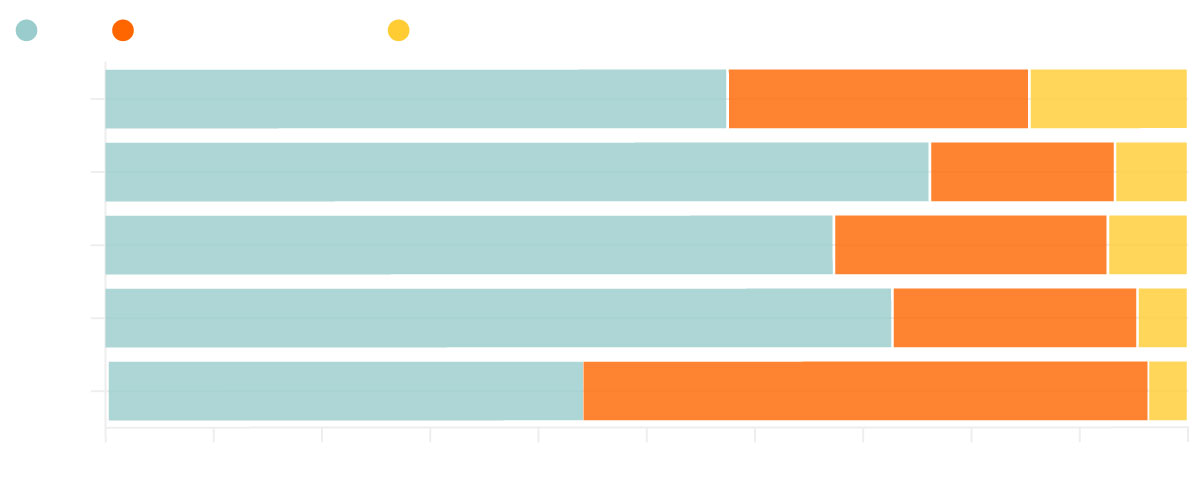
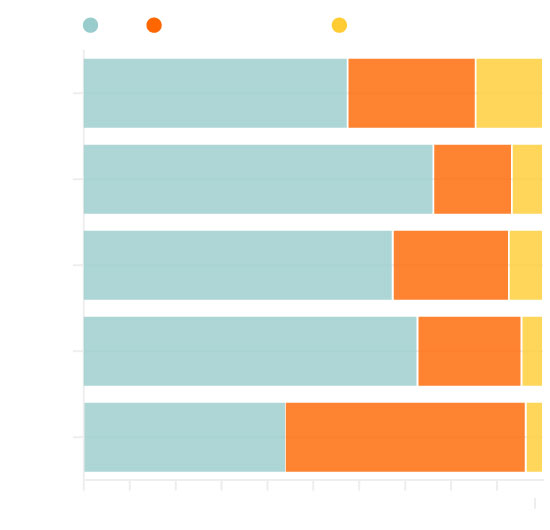
5. Safaí relies on funds from outside SF the most
By and large, the wealth pouring into the November race comes from San Francisco or nearby. Of the $5,027,727 contributions to the ballot measures, only $25,000 came from outside of California, and more than $3,361,735 came from within San Francisco.
Likewise, among the mayoral candidates, each of the major candidates collected most of their money from San Francisco residents, except Safaí, who only had 44 percent of his contributions come from the city.
Breakdown of funds by location
Outside SF, in CA
SF
Outside CA
15
28
57
Breed
7
17
76
Farrell
7
25
67
Lurie
5
23
73
Peskin
4
52
44
Safai
40
0
20
90
80
60
50
30
70
100
10
SF
Outside SF, in CA
Outside CA
Breed
57
28
15
Farrell
76
17
7
Lurie
67
25
7
Peskin
73
23
5
Safai
44
52
4
0
40
20
80
90
30
60
50
70
100
10
Graphic by Kelly Waldron. Source: San Francisco Ethics Commission.
Methodology
Data was obtained from the San Francisco Ethics Commission.
Average donation size (mean) was calculated using all contributions a committee received from when it started receiving contributions, up until June 30, 2024. The average was calculated using the total money a candidate received, divided by the number of unique donors to their committee. A unique donor was identified based on their first name, last name, occupation and zip code. The average did not include a donation from a candidate to themselves.
Committees are not required to disclose donors who gave less than $100, so this average only includes donations from those who gave at least $100 in total. Actual averages would likely be lower if accounting for those unitemized contributions.
Mission Local’s average donation size differs significantly from the averages reported by campaigns themselves, which are based on total contributions, not unique donors.
The breakdown of funds raised by location was obtained from existing columns in the dataset from the Ethics Commission.
If you see any errors or missing information, please let us know at kelly@missionlocal.com.

This is not the impact of money because I had never heard of the Together SF ballot measure before reading about it here (thanks for all the political coverage BTW; the Chronicle doesn’t care anymore.)
Capping commissions? That sounds like a GREAT idea. Mission Local has reported more than once about just how many commissions we have and how little they do.
I’m neutral to increasing mayoral powers but I’m gonna vote for it to cap commissions unless a good reason not to emerges.
THIS is what excellent, factual, real investigative journalism looks like. Thank you, Kelly!
“Peskin started fundraising last, but is fundraising the most quickly now”
Pretty impressive seeing how he’s the only mayoral candidate without billionaire backing. Why would they cough up when he’s trying to expand rent control ? Go Aaron!
Tech and real estate billionaires, most who do not live in SF or in the local communities of D1, D3, D5, D7, D9 or D11, are spending MILLION$$$ to insure that our lowly votes (and voices) are negated. They fund and promote recently arrived carpet bagger candidates who know next to nothing about our communities and our districts. Investment bankers, venture capitalists and Big Tech seek to control the outcomes of our local election so that they can reorder San Francisco’s City Charter (our Constitution), while financing and promoting their chosen candidates (Mark Farrell, Bilal Mahmood, Trevor Chandler, Michael Lai, Marjan Philhour) in order to rig the Board of Supervisors toward pro venture capitalism, pro Tech and pro real estate. Follow the moolah.
I sure hope that 10 people cannot buy an election, but I fear they might be able to.