

Hosts of the San Francisco Polyamory Happy Hour warn guests to “check your expectations at the door.”
“This is a social event, not a dating event,” the event posting explains. No cruising is allowed, to prevent the monthly gathering — for people interested in relationship styles that are non-monogamous — from “feeling like a meat market.” The event is primarily for building community and friendship among polyamorous people, not just finding people to date.
Guests trickled into Azúcar Lounge in SoMa on Wednesday around 7 p.m., heading to two reserved tables in a corner of the lounge. There, they fill out name tags with their pronouns, and a couple of topics they would be excited to discuss.
“Oatmeal, bottle caps and pigeons,” the boring things that Bert from Sesame Street likes, ended up on one name tag. Others listed bad movies, international travel, conflict resolution, and more.
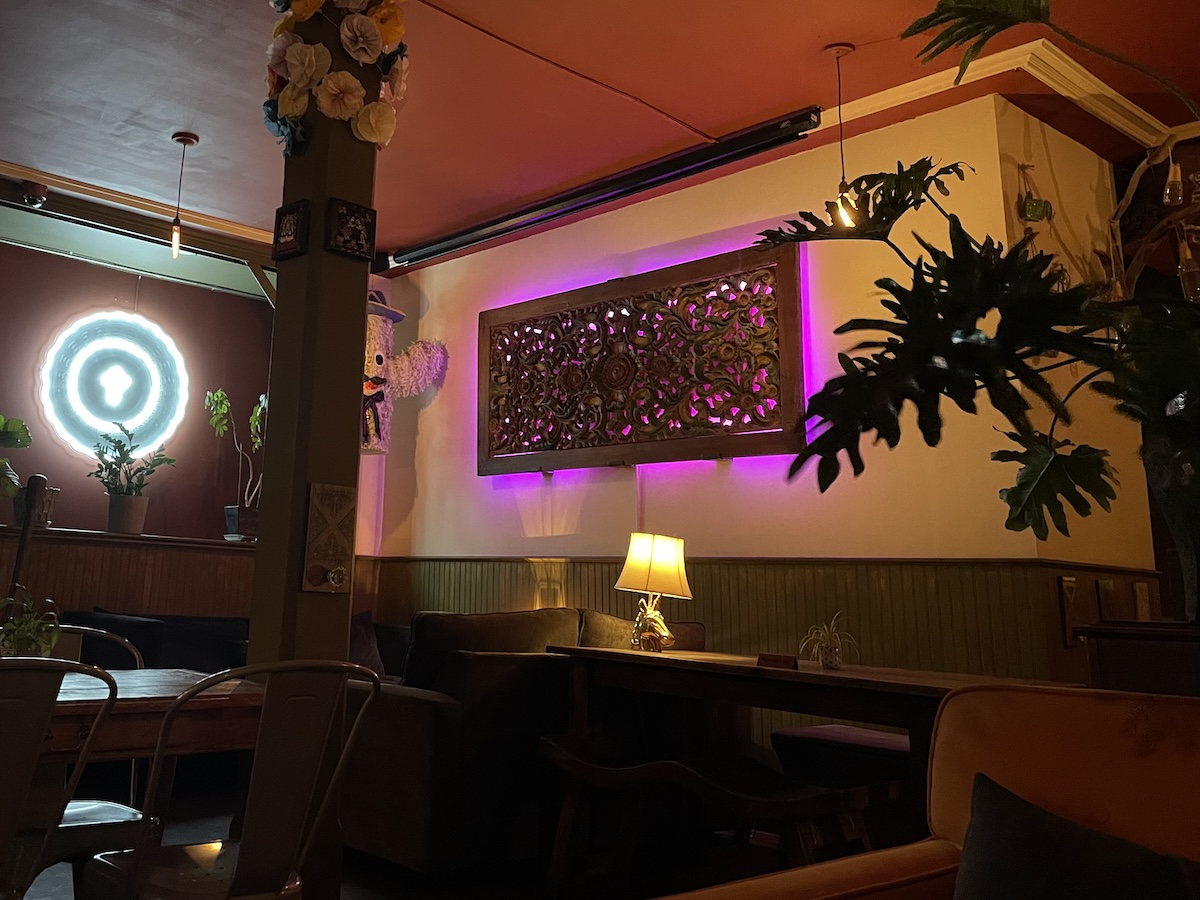
The few dozen guests ordered drinks and tacos and split into groups of two to five, some standing by the bar, others settling onto warmly colored suede couches. Synth-y music thumped in the background. Most of them were millennials, the majority were white, and many had become polyamorous just in the past year, deciding to open up long-term committed relationships. Only a smattering of attendees had been poly for more than a year. Some knew each other already from events like this one.
Not everyone at the happy hour would necessarily call themselves polyamorous, though. “I don’t really care about the label,” said Nick, who was there with his partner Betsy. “We just know we’re not monogamous.”
Though labels can be good shorthands, Betsy explained, every situation is unique. Being non-monogamous “doesn’t look the same for any two people,” she said.
For others, being polyamorous — as opposed to another kind of non-monogamy — was an important distinction. As Ashley, a tech worker with brightly dyed pink and purple hair, explained it, “non-monogamous just means that you’re willing to have various relations outside of your primary partnership. But polyamorous means that you’re willing to have loving and committed relationships outside of your primary partnership.”
Randy, a long-time attendee whose name tag listed succulent propagation, nearby hikes, and neurodivergence as interests, said identifying as polyamorous was not a requisite. “Events like this one tend to be big tent,” they said, adding that people who identify more as swingers or “monogam-ish” have come.
At this Wednesday’s polyamory happy hour, most people did seem to identify as polyamorous, though, and by 8:30 p.m., a crowd of about 40 people had gathered, a little smaller than the typical draw of around 60 people. The sun had set, the space becoming dark and moody, lit only by table lamps and neon signs.
Some people talked about topics related to polyamory and their relationships — one group had a long discussion about having safer sex and genital herpes — but most chatted about other topics. One woman detailed her experience at an all women powerlifting gym (“You’re allowed to tell your trainer, ‘I’m on my period.’”).
Attendees agreed that San Francisco, and the Bay Area in general, is a good place to be poly. Though there is definitely still some stigma — most people declined to give their full names for the article — they find San Francisco accepting.
“Anything goes in the city,” said attendee Nicole Raleigh, who recently decided with her husband to become polyamorous.
“Any kind of abnormal relationship style,” from BDSM to polyamory and beyond, will attract a large community in the city, added Will Draffin, who explained that because he had recently gotten out of four relationships, he was only at the happy hour to meet friends and not start anything new.
“It’s kind of a transplant community. People move here because they might not fit in other places,” he added.
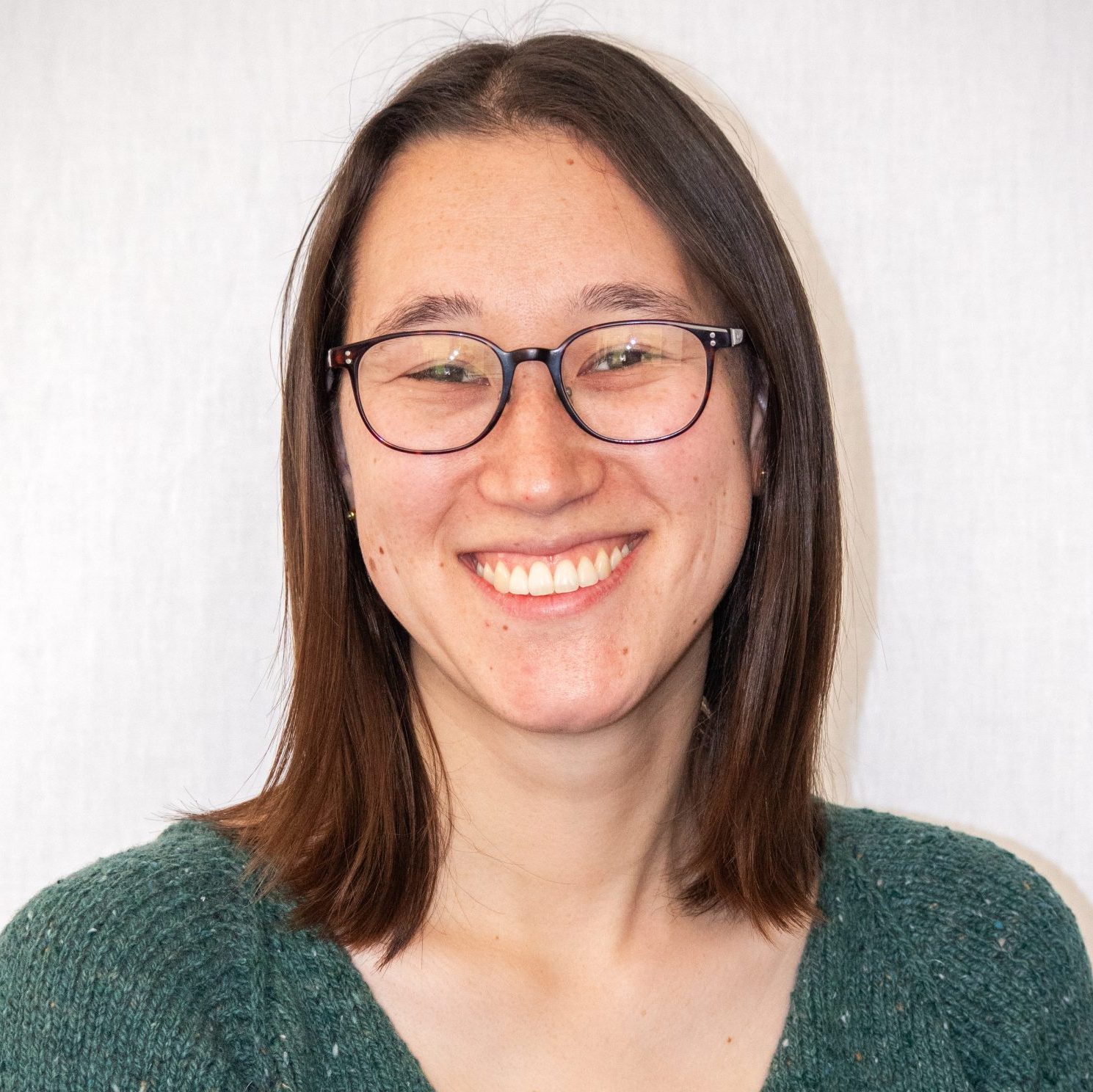
Event co-host Mollie Pettit, who restarted the polyamory happy hours in August 2022, explained that the poly community in San Francisco seems “big and amorphous” to her.
In an interview prior to the event, she explained that, in most places, she’ll assume that the people she meets are monogamous. “In San Francisco, I don’t even really bother guessing,” she said, suggesting that data from the Burning Man survey — in which 53.8 of participants described their relationship style as monogamous — could maybe provide a rough estimate.
To some degree, Pettit said, the prevalence of poly people in San Francisco means that events like the polyamory happy hour are superfluous. “Most people do not need a poly-specific event in order to find poly people,” she said.
Nevertheless, attendees seemed very happy to have found a community. At closing time, workers began clearing small plants off tables and putting up chairs, but a group of around 15 attendees remained, talking excitedly. They eventually brought their conversation outside, not ready to wrap up.
“It’s a very loving community,” Raleigh said. “Poly people in general have a lot of love to give — which is why they’re poly.”