

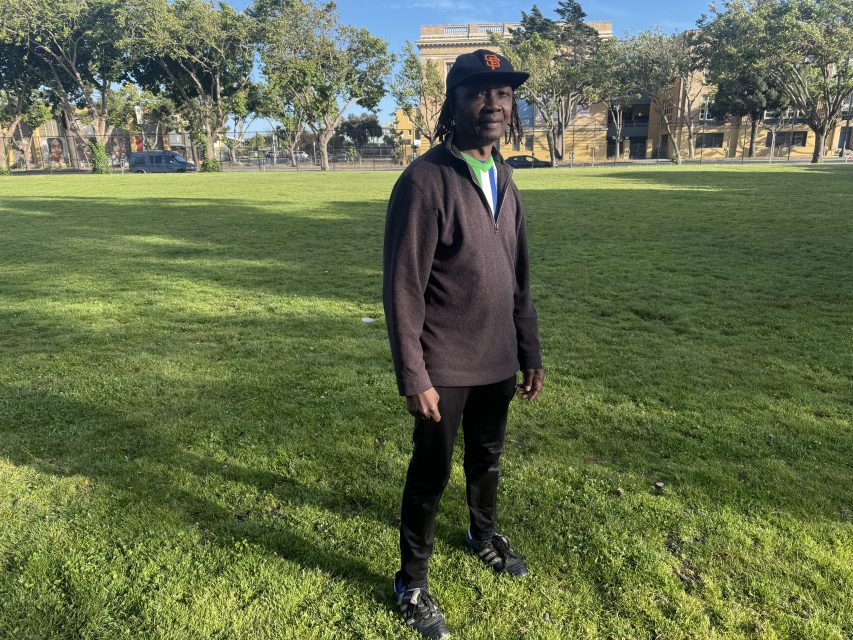
On a recent Saturday evening, James Mannah, 69, sat covered in sweat on the sidelines of Hamilton Park’s grass field in the Western Addition. He had just finished a soccer game that lasted a couple of hours and, while his team had lost, he, as usual, had scored a goal.
Mannah has been playing soccer since he was 3, in his native Freetown, Sierra Leone; a natural striker, he has scored thousands of goals, he said with a smile, since he started playing at “the sacred field” in 1982.
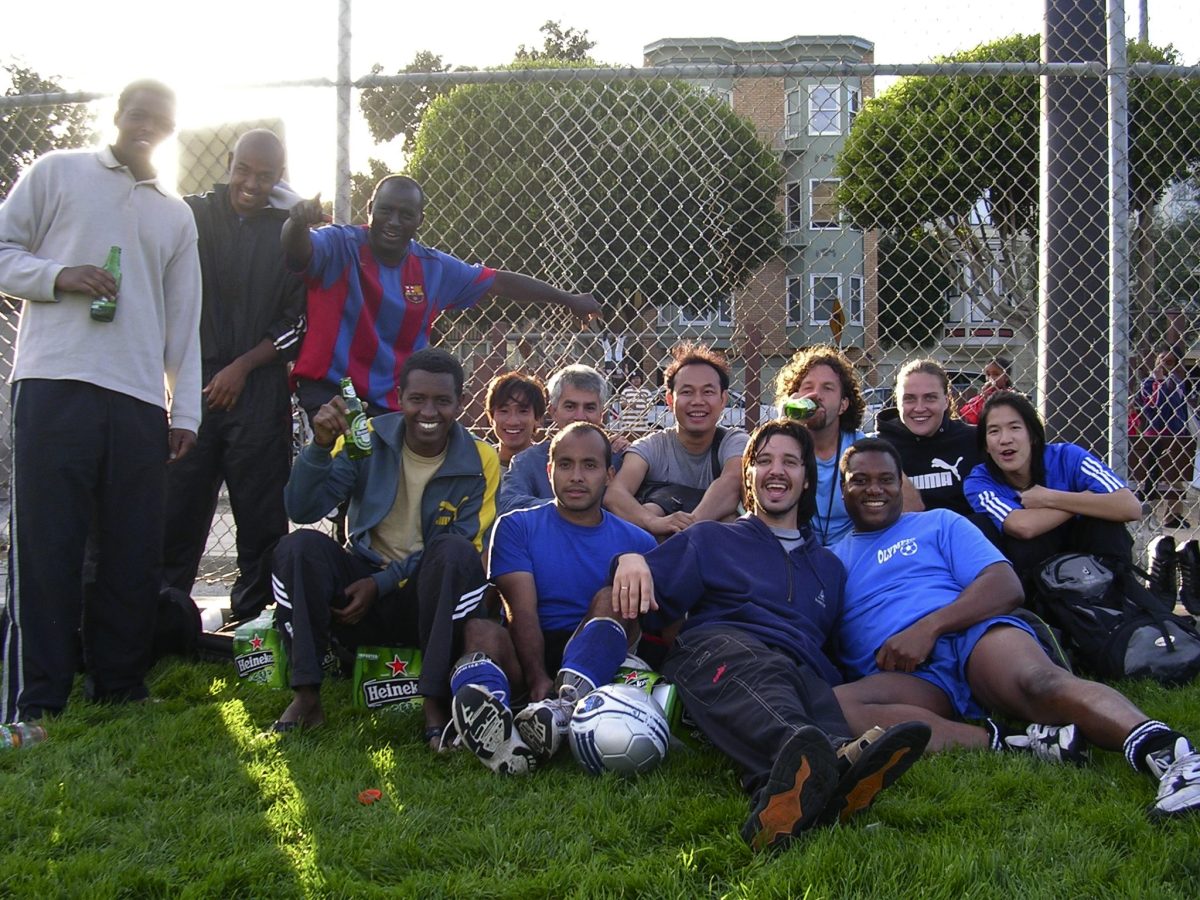
For the last 44 years, international soccer aficionados from every continent, save Antarctica, have been kicking off every Saturday in the Fillmore, a weekly tradition started by international students from the University of San Francisco. Over the years, the games have become about more than soccer. The friendships have meant weddings, deaths, job references and children. But, through it all, the Saturday game always kicks off between 3 and 4 p.m.
“Most of us are looking forward to Saturday afternoons like children,” said Raul Fernandez, now 58, from Mexico, a relative newcomer who found the game in 2002.
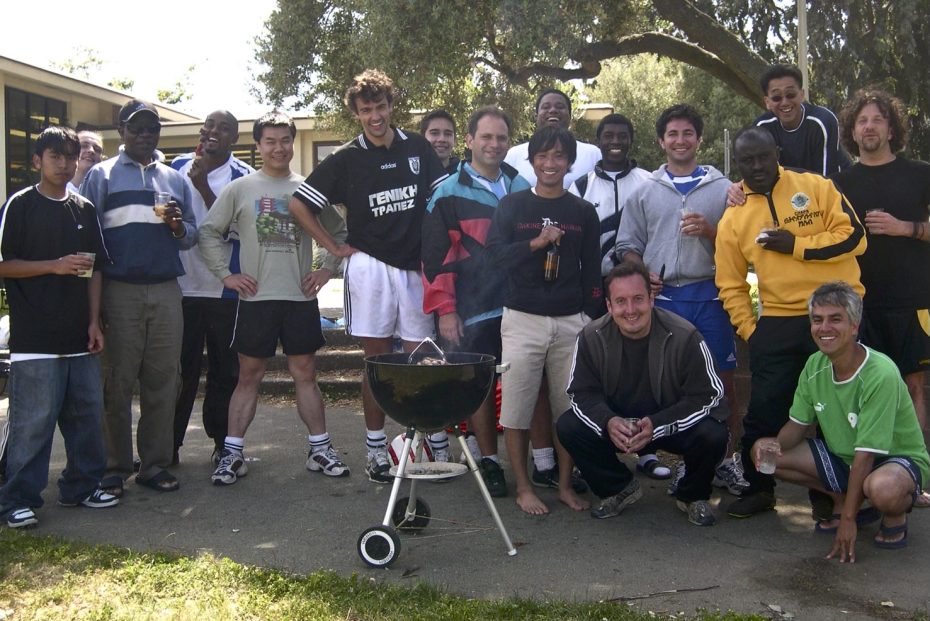
When Mannah moved to San Francisco to pursue his master’s degree in international business at the University of San Francisco, he was out driving on a Saturday morning and noticed the group of mostly African players.
“Most of those guys were playing for the University of San Francisco soccer team, a Division-I soccer team then,” said Mannah. “They won some championships too, mostly Nigerians. While they were playing here, they played for the Nigerian national team. That’s when I started playing here, in 1982.”
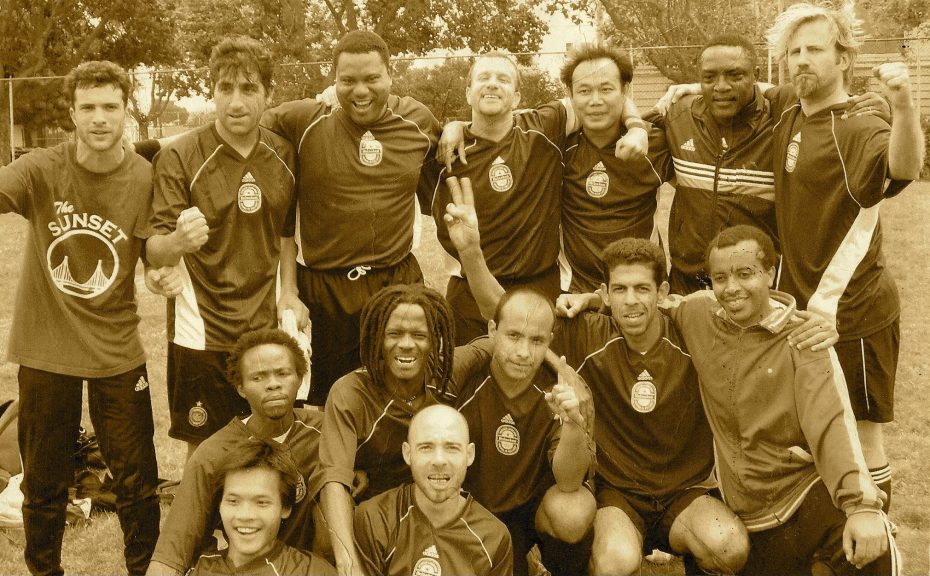
Today, hundreds of players have spent time playing with the SF International Soccer Family, which counts players from upwards of three dozen countries. As soon as the ball starts rolling, nationalities go out the window and the only thing that matters is the game and the comradery, said Mannah.
The games are not complete if there’s not a fair amount of trash talking: “You’re scared and shaking,” “Go cry on the sideline,” and other not-so-PG-friendly jokes.
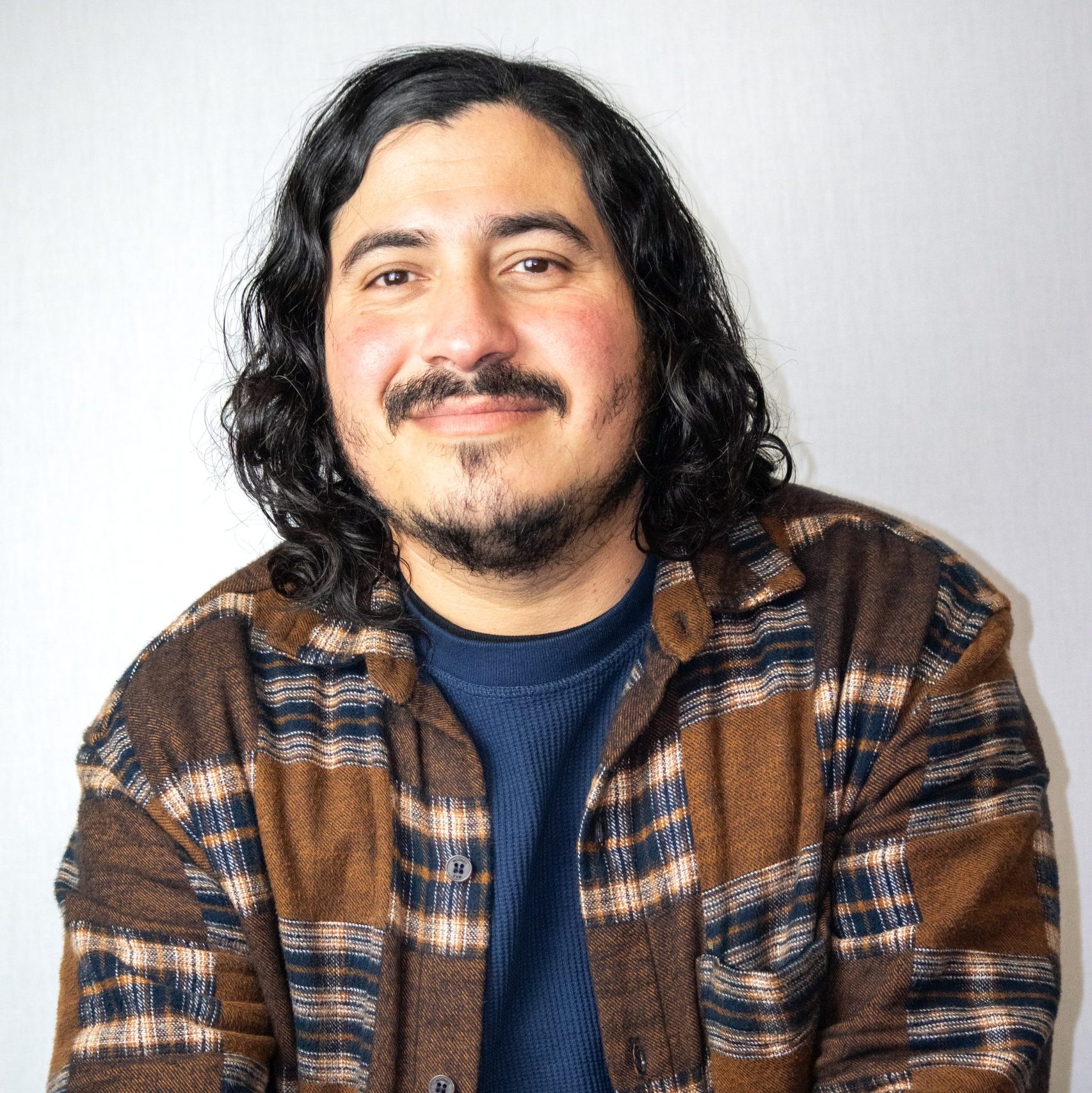
Damian Nuñez, 48, a musician and teacher from Buenos Aires, has been playing with the team for 20 years. He moved to San Francisco to study music at San Francisco State University in 2002; two years later, a friend invited him to play with the group, and he quickly became a regular, especially after he discovered that several of his teammates also played instruments.
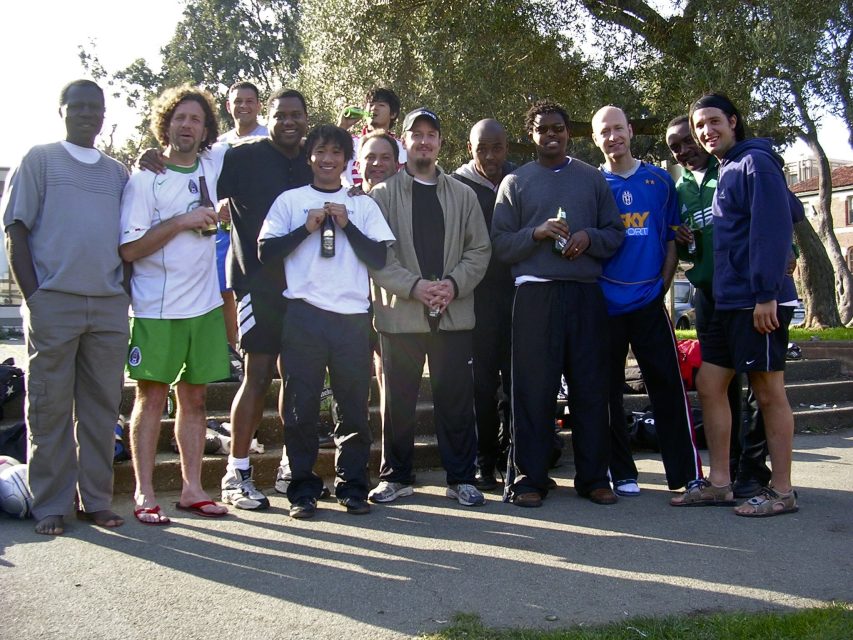
After the games, while some players were barbecuing and drinking, Nuñez and a few other musicians in the group started jamming. They officially created a band in 2006 that took them from the soccer field to stages throughout the Bay Area. They chose Pangea FC as their name, a reference to the supercontinent that, millions of years ago, grouped the Americas, Europe, Asia and Africa. It reflected the group’s composition of musicians from California, Madagascar, Italy, Chile and Argentina.
A community that supports each other
The “sacred field” is actually two fields: the Raymond Kimbell field between Scott and Steiner streets, where Mannah started out playing, and then the field across the street at Hamilton Park, where the team moved in 2002. It is one of 171 similar fields across San Francisco, each with its own culture. Hamilton is surrounded by the Western Addition library to the west, and a recreation center to the east with a swimming pool, and basketball and tennis courts.
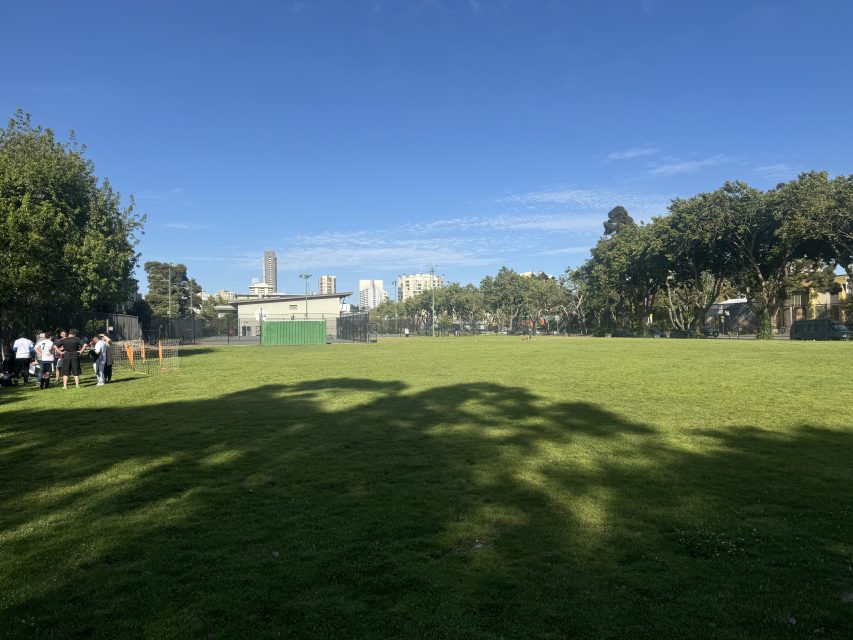
Fernandez never liked soccer much, but he came across the game while on a run. It’s the sense of community that got him; one of bankers, lawyers, cooks, engineers, and sometimes, players who might still be looking for a job.
They turn to one another for help — with a job, raising money for someone in need or hiring entertainment.
When Mannah needed an activity for his annual fundraiser to build schools in his native Sierra Leone, he didn’t have to look far. Pangea FC became the signature headliner at the benefit at El Rio.
“We’re building our 44th school right now, and three libraries, so a lot of these guys here support me by coming to my event at El Rio and donating on the website,” said Mannah. “And Pangea, they’re always there too.”
During the more than two decades of being part of this community, Fernandez said he has seen everything: Births, marriages, baptisms, birthdays and, inevitably, deaths.
Raduan Sadrane, a player from Casablanca, Morocco, who has been playing with the team since 1989, still remembers one of the players the group lost after being struck and killed by a car.
“I bought these beautiful Diadora soccer shoes, but they were too tight. I played one game or two, and they didn’t break in easily, so I gave them to him,” said Sadrane. “He was an awesome guy. I still remember the guy’s face.”
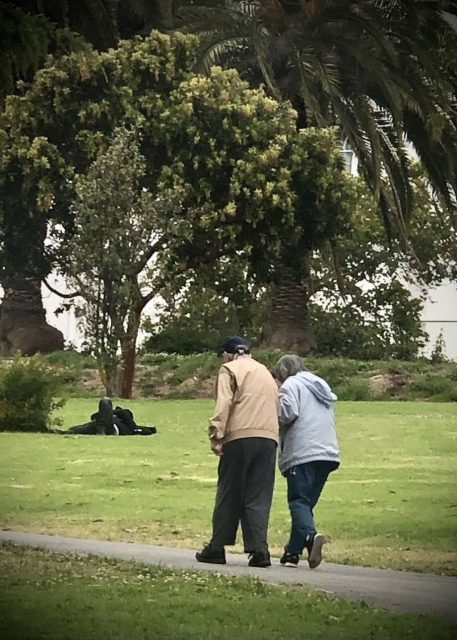
The group took another hit three years ago with the passing of two others — not players, but beloved members of the extender soccer community nonetheless.
“Jackie Lafferty was the grandfather of the family, an old-timer from Scotland and his wife from Japan. Very sweet people. They were our elders, and we always treated them as such, with much love and respect,” said Fernandez. “I’m describing how playing soccer is therapy for myself, but I think for other people, like Jackie, too, who just happen to live in the neighborhood.”
Lafferty, who came to watch the games and drink a beer or two, died three years ago, in his early 90s, but his departure left a big void in the group, said Fernandez. “He adopted us, and we adopted him. It was a loving relationship with our grandpa and grandma.”
The park is located across the street from a senior center. Fenandez remembered an older man who lived at the center and would sit on a green bench that looks at the field every Saturday, watching games while he smoked a cigar. At times, the man offered to buy beer for the group.
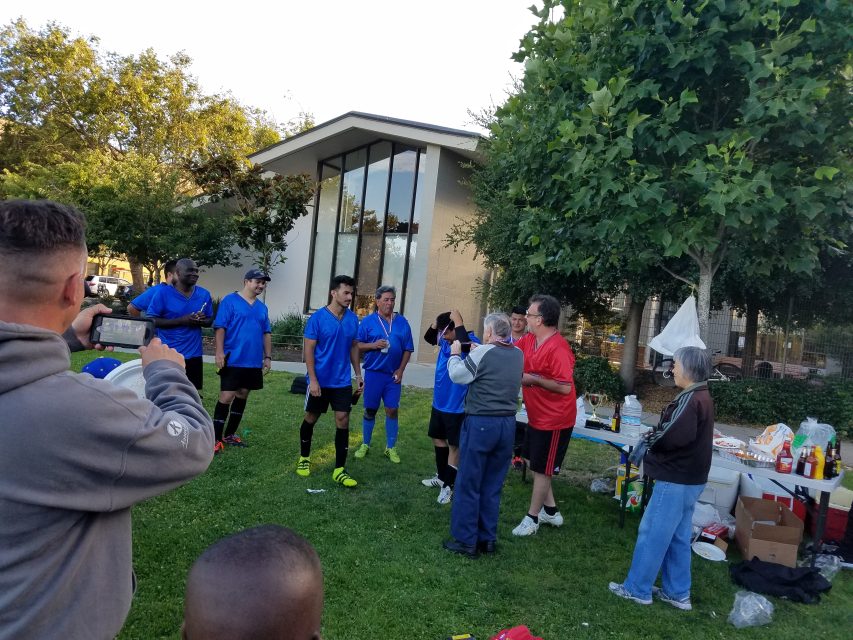
Fernandez remembers the old man telling him how much joy the games brought him. That joy is a feeling that Srecko Percobic said he has felt since he found the group six years ago.
Percobic suffered a serious ankle injury in his native Montenegro when he was 18. At the time, his country was part of Yugoslavia, and war raged across the region. Doctors told him he needed surgery that could only be done in Germany or the United States, but he couldn’t leave because of the war. He dreamt of becoming a professional player, but never did. Two decades later, he is playing again; no surgery, but a love for the game fueling him.
While Percobic reflected on those times of war, he watched his friend Edgar Pacheco kick the ball with his 4-year-old son after the game.
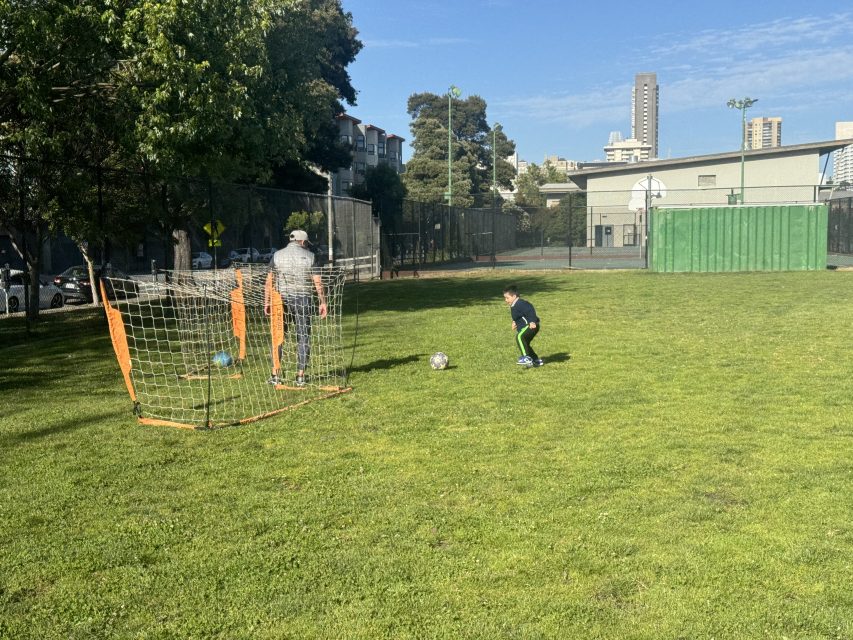
Nearby, Mannah looked on and talked about playing with an older generation. Those who are playing now, he said, “their fathers would bring them here.”
“When they grow up, they play with us, and it just keeps evolving,” he said. “The same thing is happening right now.”
Mannah and Percobic smiled as they sipped a post-game beer.
“Soccer is the biggest family in the world, and finding great people, it’s a blessing. We not only play soccer but also we have friendships with the guys who play here,” said Percobic. “It just feels nice. I’m super humbled knowing all my friends here.”
Great read.
Sports have always found a way to bring people together.