

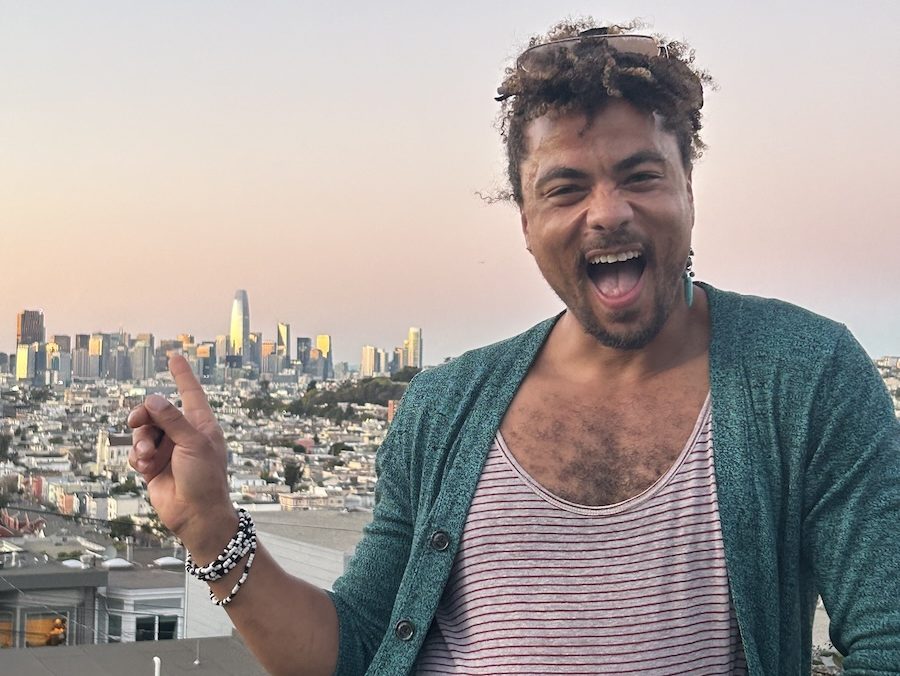

An unapologetic “force of nature,” a “reflection of a disco ball in the sunlight,” a man who lit up any room he walked into: Randy Dudley lived multitudes. He helped direct television shows and created iconic fashion statements; he worked in radio and bars and in the theater; he taught, he learned, he advocated.
Friends and family knew Dudley as their personal cheerleader. His motto was “Fuck that noise,” and he encouraged those around him to make the most of their circumstances, fight for themselves, and often to just get up and dance.
“He would even dance just walking down the street,” said his sister, Chanell Dudley.
It was with that zest that Dudley lived life, whether putting himself through school, defending himself in an unfair work environment, or traveling the world with whatever means he had.
Dudley would have turned 35 last Saturday. Instead, he was found hanging from a tree on Bernal Hill, dead, on April 30, sending shockwaves throughout his vast community. His housemates could not believe the initial ruling of suicide made by the medical examiner’s office, and still don’t. His sister said she is awaiting a full investigation by the city.
Regardless, Dudley’s death, while raising suspicions particularly in the Black and LGBT communities, has been an indicator to others of the often hidden toll of mental health issues.
“Everybody has struggles and he was no stranger to that struggle, but the way he moved through it was always with so much grace and with so much confidence,” said Dudley’s cousin, April Laks. “I think that’s what made this news all the more shocking and unbelievable for everybody.”
Randy Leo Dudley was born on May 11, 1989, and had a turbulent childhood and home life that often kept him apart from his four younger siblings, according to his sister. He was forced to move frequently, primarily living in Los Angeles and Orange counties.
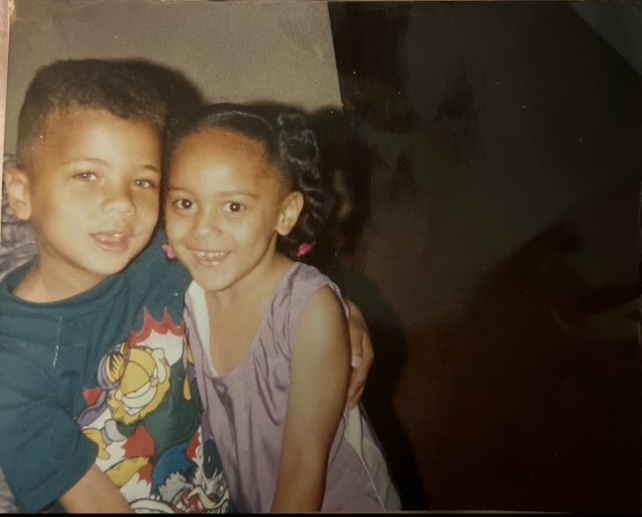
From a young age, Dudley was a fighter: He worked to keep his siblings in touch with one another, discovered a love of theater in grade school, and later hustled to further his education.
“He took lemons and made lemonade, without anybody teaching him,” said his longtime friend Rachel Clark.
Dudley first moved to the Bay Area to study Broadcast Electronic Communication Arts at San Francisco State University, interning as a student at CBS radio and working part-time in San Francisco theaters.
After graduating in 2011, he moved to New York City and took an internship at MTV before moving back to California in 2013. In Hollywood, he joined the Directors Guild of America as a trainee, working on several television shows including Shameless and Melissa & Joey.
His heart lay with fashion, though, as was apparent in the colorful, often-bedazzled outfits that he devised himself.
“He was always designing clothes, sewing, he had a sewing machine and everything,” said his sister, Chanell Dudley. “He always got a lot of compliments on his clothes, he didn’t wear what other people did.”
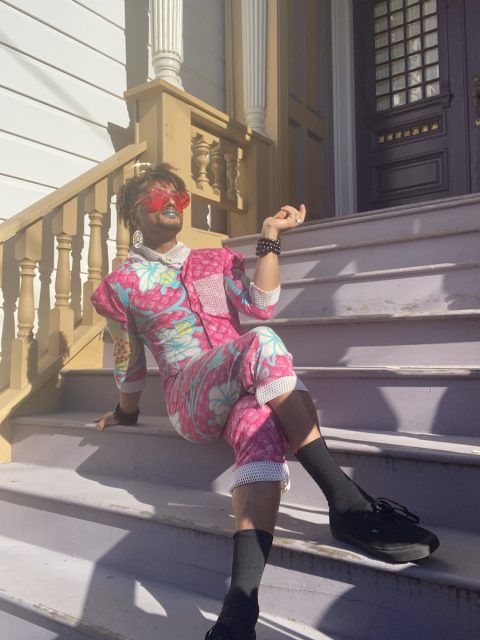
After a couple years working in Hollywood, Dudley returned to New York in 2017, with a scholarship to attend Parsons School of Design.
“He always stayed on the move, he always had a smile, he was always doing a dance,” said Clark, who met Dudley when they were both working at the same restaurant in Hell’s Kitchen, trying to make it in the city. “He was always manifesting and proving that he is moving forward and he’s not dwelling on anything that he can’t control.”
Not only did Dudley work various jobs — both he and Clark were fired from that first job they worked together, but no matter, they found another — he was also often globetrotting, at times saving just enough money to board a plane, and figuring the rest out as he went along.
“He inspired me … and made me realize I don’t need all these things to do all the things,” said Clark.
Whenever Clark would express jealousy of Dudley’s adventures, Dudley would push back: “Well you can, honey, you can do the same things I have — I don’t have shit, just like you!”
And while Dudley could make the most out of any situation, preferring to turn on a Donna Summer track and twirl around rather than dwell on negativity, he also knew not to take shit from anyone. This was especially evident when he worked in the service industry in New York, and would quit or get fired rather than tolerate abusive or toxic management.
Clark and others said Dudley taught them to advocate for themselves, too.
“He somehow had this innate understanding that people needed that support and reassurance, and those connections were ultimately the biggest thing,” said his younger cousin, April Laks. She added that Dudley pulled her out of her shell and supported her as a budding artist, even flying her to Mexico with him earlier this year so she could start seeing more of the world.
Dudley’s close friend, Anastas Rosher, said Dudley embodied the shine theory: “When you shine, everyone around you shines a little brighter … it was kind of impossible not to feel better when he was in a space.”

During a trip to Miami, Rosher remembered the pair walking two blocks every night from their hostel to the same nightclub. Every night, Dudley would don an extravagant self-designed outfit just for the brief walk.
“The last night we were in Miami, he had this silver jumpsuit that he had sewn himself and he paired it with this red mesh hoodie and these huge probably size 11 platform pumps that were also bright red,” said Rosher, who dressed in all black, and said he was originally anxious about the spring breakers’ reactions.
But “people were cheering out of their cars, people were yelling, ‘You go, girl!’” Rosher said. “He planned all of that out, just to make everyone’s day.”
When they arrived at the club, Dudley quipped: “I do it for the girlies.”
Those who Dudley kept close knew they could count on him to truly see them, and create a safe space for them — whether it was remembering their dietary restrictions when they came to visit, sending postcards from every stop along his travels or even within New York City, or offering the blunt but judgment-free advice they needed.
“He supported my art in ways that nobody else really knew how to … he would just tap into that energy,” said Laks, remembering long messages he would send her about her works. “He would speak straight to my soul, where I was like, ‘Oh my God, you just get it.’”
In 2022, Dudley moved to Colombia to backpack and teach English. Along the way, he kept in touch with his people; even Clark’s mother received postcards and kept them on her mantel. Among Dudley’s things after his death, Rosher said he found an entire bag full of unsent postcards.
“He treated you with a sort of love that was intentional: warm, fun, but also truthful,” Clark said. “He’ll be sassily honest, he’ll be snarky about it, but it would be followed by a bellowing laugh … like ‘Obviously you need to get your shit together. Now let’s go skip down the block.’”
Dudley wasn’t just focused on his own community, according to those who knew him best. He was also deeply interested in politics and bettering the world around him.
His death came just days before he was set to begin a new job with the Black Health program at the San Francisco AIDS Foundation.
HIV/AIDS advocate Paul Aguilar said he and Dudley had relied on each other since they first met, when Dudley was a college student looking for a gig at the Curran Theatre, where Aguilar was an usher. Aguilar is now a board member and resident at Marty’s Place, a co-living space for low-income, HIV-positive people — where Dudley had taken up residence in recent months upon moving back to San Francisco.
Aguilar talked Dudley through the news of his HIV diagnosis a decade ago; in turn, Dudley supported Aguilar through personal losses and the end of his marriage.
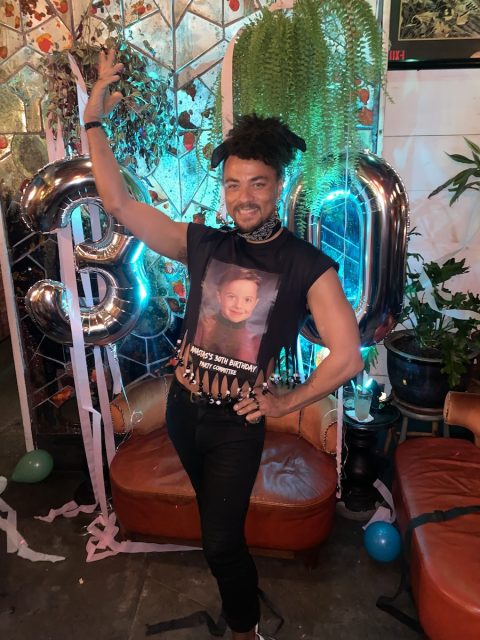
“He was my little brother that I’d never gotten,” said Aguilar, 61. “Even after my divorce, he was there cheering me on, [saying] ‘You’re not old!’”
Over the years, Aguilar would keep Dudley abreast of goings-on in San Francisco and at Marty’s Place. And, since moving back to San Francisco, Aguilar said Dudley was immersing himself in the city’s political landscape — studying budgets and attending organizing events, and fitting right in as always, even winning over the “old crotchety” clients of Marty’s Place.
Although he was of a later generation, Aguilar said Dudley uniquely understood the havoc that the AIDS epidemic wreaked on the gay community, and envisioned Marty’s Place as a space for the younger queer community to mingle with and learn from the older generation.
“He knows the fires that I walked through, starting at the age of 18 with the AIDS pandemic … just the devastation that it had in the community and the trauma that it inflicted,” Aguilar said. “He honored that more than any other young person I’ve ever met.”
In true Randy Dudley fashion, after just an hourslong visit to Marty’s Place during a layover in 2022, he followed up with an uplifting letter:
“The self-proclaimed Queen of Clubs sends you these gifts from New York City.
Keith Haring’s creative vision. James Baldwin’s literary brilliance. Bayard Rustin’s civil disobedience. Alvin Ailey’s rhythm and philanthropy. Marsha P. Johnson’s Strength and courage. Halston’s sense of fashion and entrepreneurship. Larry Kramer’s sharp tongue and relentless passion. Crystal LaBeija’s guidance and motherhood. The village people’s mainstream melodies. Andy Warhol’s point of view on pop. Lady Bunny’s hair and humor. Nathan Lane’s comic relief. Sylvester’s siren call.
And lastly, I give you the sum of community and camaraderie built by generations of queers that gather around disco balls and city halls from Ellis Island to Fire Island. The legacy of queer New Yorkers, everyday people with both talent and vice alike.
And yet, just like Maya Angelou, still we rise — in a stiletto, personally speaking.
Let these legends inspire you to grow beyond your roots, to stretch taller than the trees, soar beyond the buildings to the sky, because the storm has passed, and the rainbow that connects us is glistening like the stars we all are.”
The news of Dudley’s untimely death came as a shock to those who relied on his positivity and determination. Given that he had recently returned to San Francisco, was set to start a new job, and was brushing up on his Spanish in a class at City College, the nature of his death has raised questions within the community.
The medical examiner’s office has given a preliminary indication of suicide, but is conducting a full investigation; the results are not expected for weeks. Dudley’s family is awaiting additional information about his death.
He is survived by a large community of friends and family. A funeral is expected to be held in Los Angeles in June, and an all-night rave, at Dudley’s request, is expected this summer in New York City.
If you are in crisis, please call, text or chat with the Suicide and Crisis Lifeline at 988, or contact the Crisis Text Line by texting TALK to 741741.
Anyone with information is asked to contact the SFPD at 415-575-4444 or text a tip to TIP411 and begin the message with SFPD. You may remain anonymous.
What a hideous loss to all the communities he embraced.
Wonderfully written article honoring a unique soul. Rest well Randy. A unicorn. You are so missed. Shine on.
Randy was an incredible person. He’ll be loved and missed forever ♾️❤️