

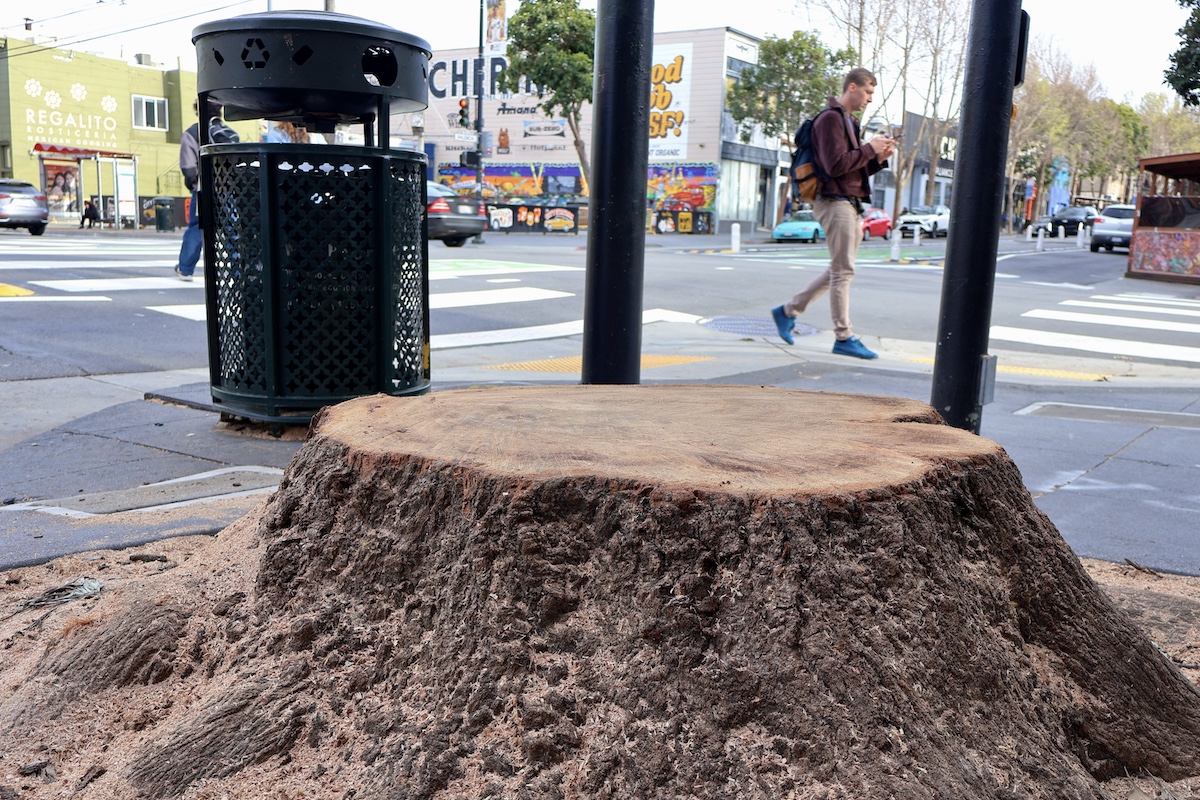

A massive tree stump now sits at Valencia and 18th streets. Around it, a flow of pedestrians and bicycles stream through the intersection, hardly noticing the felled former silk oak.
But the stump is new; it’s the remnant of a silk oak — which, despite its name, is not an oak at all but part of a completely different family of trees — that city crews cut down on March 16. Its exact age and height were not recorded by the city, but it was at least 30 years old and 50 feet tall, according to an estimate by Allegra Mautner, a Public Works urban forestry inspector who has kept an eye on the tree.
“It was kind of sad,” said Cassandra, who works at the nearby Fellow Barber. “It was just here one day, and then it was gone the next.”
The tree’s death sentence was issued only after multiple discussions, “because it’s such a high-profile tree, and it’s so important to a lot of members of the community,” said Mautner. Earlier, she discussed the issue with multiple supervisors at San Francisco Public Works before defining the tree a hazard that needed to be removed.
“It’s a very respectful tree,” said Mautner, who’s now going through a process of coming to terms with the decision. “Every time I biked past that tree after I made that decision, I always felt like, ‘Am I making the right decision?’”

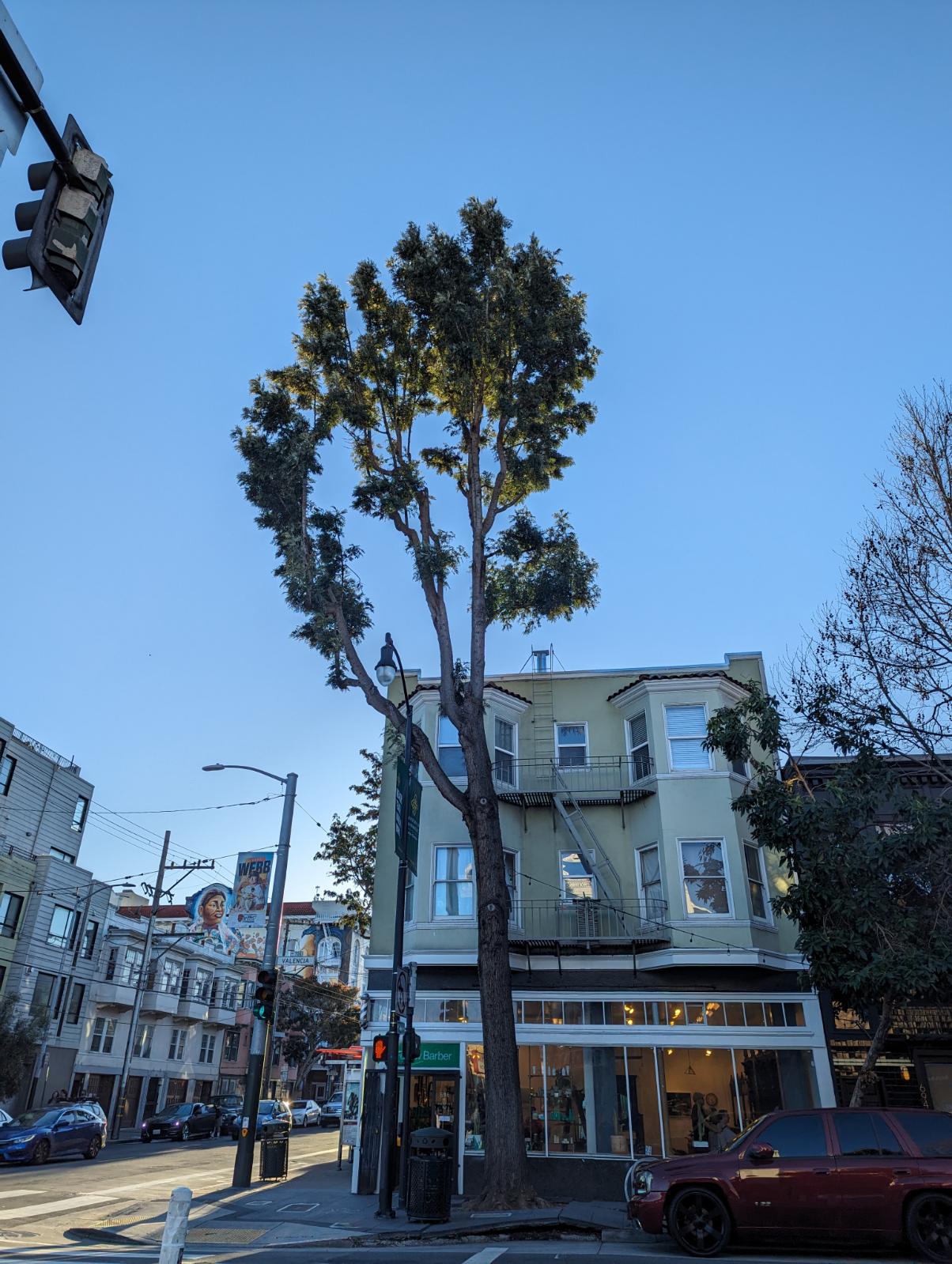
The coup de grâce for the silk oak came in February during a series of windstorms. It dropped several large limbs, and that was that.
In addition, the tree’s excessive size had rendered its surrounding sidewalk a tripping hazard, impassable for people with disabilities. This constricted foot traffic and activities at a busy intersection, according to Mautner, one of San Francisco’s five urban forestry inspectors who collectively oversee the city’s roughly 125,000 street trees.
“This tree is very close to me,” she said. She has lived about a block from the silk oak since 2012, and she bikes past it every day on her commute. She took a longer look at the tree during the pandemic, when she did a lot of walking. She noticed the tree because it was a species she had never seen before.
But that was also one of the factors necessitating its removal. “It had very poor structure, which is common for this species,” Mautner said. Plus, because of frequent failures of small limbs, the tree’s crown had grown much smaller over the past several years. Its roots also topped the sidewalk, and became more unstable after the recent storms washed out some of the soil underneath.
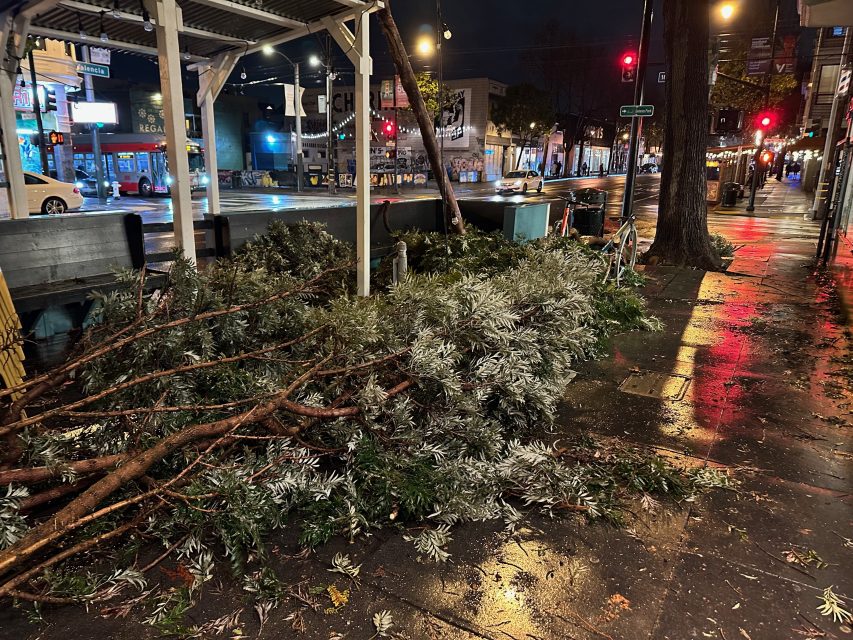
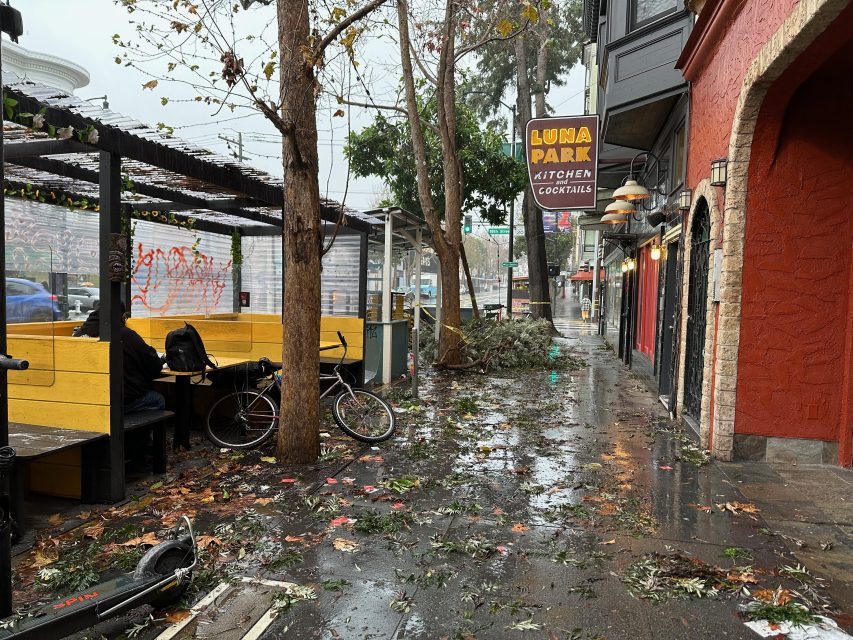
“We really do try to maintain large trees in the urban environment, because they add so many benefits. but we also have to balance the risk that they pose to the public,” Mautner said. Throughout the years, the urban forestry team had added some asphalt patches to temporarily fix the area around the oak. These had degraded over time. City officials also considered a longer term-fix of doing more sidewalk work, but that was deemed infeasible because of the tree’s massive root structure.
Its size also prevented it from being transplanted. And even if moving the tree were an option, its deteriorating health made the odds of it surviving a transplant low.
Mautner conducted a final assessment in February, and deemed the silk oak a hazard. “I’m such a tree hugger. Then I have people who tell me that I’m such a tree hater, and I want to remove all the trees in San Francisco,” said the 34-year-old University of California, Berkeley, forestry major.
Between Feb. 12 to 27, tree removal notifications were posted on its trunk, on the street light posts around it, and on the Public Works website. With an annual tree mortality rate of four percent in San Francisco, Mautner posts new removal notices almost every week to let the community know in advance that a tree is leaving.
No one protested.
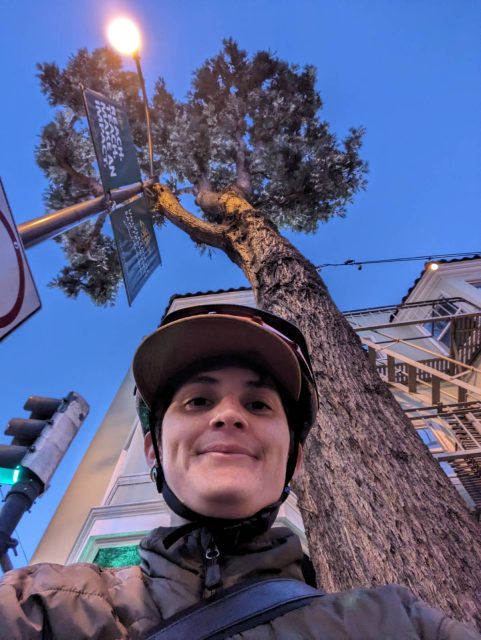
Mautner took some selfies with the silk oak when she knew it would soon be gone. On March 15, an arborist removed the tree. Soon, the whole site will be paved over.
A few days ago, Mautner passed an indigenous ceremony in front of City College’s Mission campus on her way home. She knew it wasn’t related. But it struck a chord with her.
She took comfort in knowing that “the tree had seen so many activities like this, so many marches came by and it lived a good, long life. We were able to keep this tree for a long period of time.”
Thanks for this in-depth dive into a complex and fascinating issue! Forestry and conservation are difficult and often require trade-offs, and it’s great to see a piece that reckons with them so elegantly.
RIP silk oak.
Re: “the tree’s excessive size had rendered its surrounding sidewalk a tripping hazard, impassable for people with disabilities. This constricted foot traffic and activities at a busy intersection”
We should be widening sidewalks and planting new trees in what’s now the parking lane.
Valencia’s sidewalks are below the Better Streets Plan “minimum” width, except from 15th to 19th, where they meet the minimum but are still below the “recommended” width. The conflict between pedestrian traffic and greenery is avoidable. Plant them in the parking lane.
“We should be widening sidewalks and planting new trees in what’s now the parking lane.”
Scottf, have you asked the residents if they would prefer a tree to being able to park?
The Valencia businesses already hate the center bike lane because it took away ~19 parking spots. Taking more spots away for trees likely won’t win the business votes.
Thank you for covering the loss of this tree.
This beautiful tree was not an oak. It was a Grevillea robusta, an Australian native in the same family as macadamia nuts and protea flowers. The common name “silky oak” also comes from Australia, where oaks are not native.
True oaks are in the genus Quercus. One of SF’s two main native trees is the coast live oak, Quercus agrifolia.
the photos above tells the actual picture of the sorry state of so-called tree maintenance in SF. instead of actual pruning and trimming the tree so that it will achieve a bulbous shape, those bozos of DPW and their contracted companies just cut off smaller limbs. it’s called lion’s tail pruning “and it damages the health, and structural stability of the tree. It is a pruning method where all of the interior branches are removed, leaving only tufts of leaves and small branches at the ends of the large limbs. Trees suffer from malnutrition, sun burn, and increased limb breakage.” (quote)
it’s literally a hack job those guys deliver.
compare this with the more affluent areas such as Pac Heights where the owners hire actual professionals and you see well managed trees.
I agree as an urban forester the average life of a downtown street tree is less than 25 years. Communities can always plant more trees to replace those that are removed for public safety.
I had a large branch fall off that tree and graze my shoulder a couple years back, a few more inches and it would have killed me
They came through and chopped down dozens of trees on Haight, which couldn’t all have been ailing. But what’s up with Rec and Parks? Have you seen the clearcutting they did at the 9th Avenue entrance to GG Park? Not just trees but all the tall, lush shrubbery. It’s totally denuded. And, as the plans show, they’re going to do the same to that nice grove of trees on the western entrance to Kezar Stadium. Wreck the Parks, why don’cha!
Herbicide damage. Thinning crown, cupped leaves..
This is not an “oak” tree in the California or even North America sense and it seems like the writer was using the work Oak in the headline to draw attention/outrage to the article. The Silk Oak Tree’s scientific name is Grevillea robusta and is native to Australia. It is a shame that this mature tree has met its demise, and more regular pruning could have prevented it. This tree is not a good street tree as it is well known that its branches fall off and cause safety concerns and that the roots tear up side walks as noted in the article. It would be good to know if the city plans to replace the tree any time soon? I hope that they replace it with a tree suited for its location, like an Arbutus, London Plane, or Jacaranda.
Connor, we did not use the word “oak” to draw outrage or attention, we were simply unaware of its classification. Thank you for pointing that out.
Unfortunately the planting site no longer meets updated planting guidelines. This site was less than 10′ from the adjacent traffic signal; we require a minimum of 25′ for crosswalk safety. As far as species, I’m a huge advocate of planting climate appropriate trees and trees that will suit their grow space at maturity. We are trying to steer clear of the Arbutus and Platanus due to widespread disease. Platanus is also the most commonly planted street tree species so we are not planting it as much to increase resiliency. I successfully advocated for inclusion of Jacaranda in our Mission Street planting palette just a couple blocks away, so you should see more of those planted in the neighborhood soon!
I’ve never seen a city that hates trees like SF does. This city has less trees than any place I’ve ever been, but the city spend millions chopping them down. Fixing the sidewalk around the tree is cheaper than chopping it down. The huge park bond measure of a few years ago devoted $10 million to the park next to my house, and almost all of it was spent on clear-cutting trees. The park now looks like shit.