


A group of some two dozen affordable-housing experts and housing advocates presented findings from their report on affordable housing to the Planning Commission on Thursday, with a single overriding message: San Francisco needs more outside money to reach its housing goals. Under the state-mandated Housing Element passed last year, the city needs to build 46,000 homes by 2031 for extremely-low- to moderate-income households.
The typical cost for a single affordable-housing unit is more than $900,000 and, for the most part, it’s not the city that foots the bill, according to Daniel Adams, the director of the Mayor’s Office of Housing and Community Development.
“San Francisco can’t do this alone,” he said. Adams presented the report by the Affordable Housing Leadership Council, a group that has been convening meetings since May 2023, and includes the executive directors of affordable-housing nonprofits that are in partnership with the city.
Between 2018 and 2023, two-thirds of the funds needed to build affordable units came from outside San Francisco — about $2.6 billion from state and federal funds, and $1.2 billion from local funds.
Affordable housing in San Francisco relies on outside funds
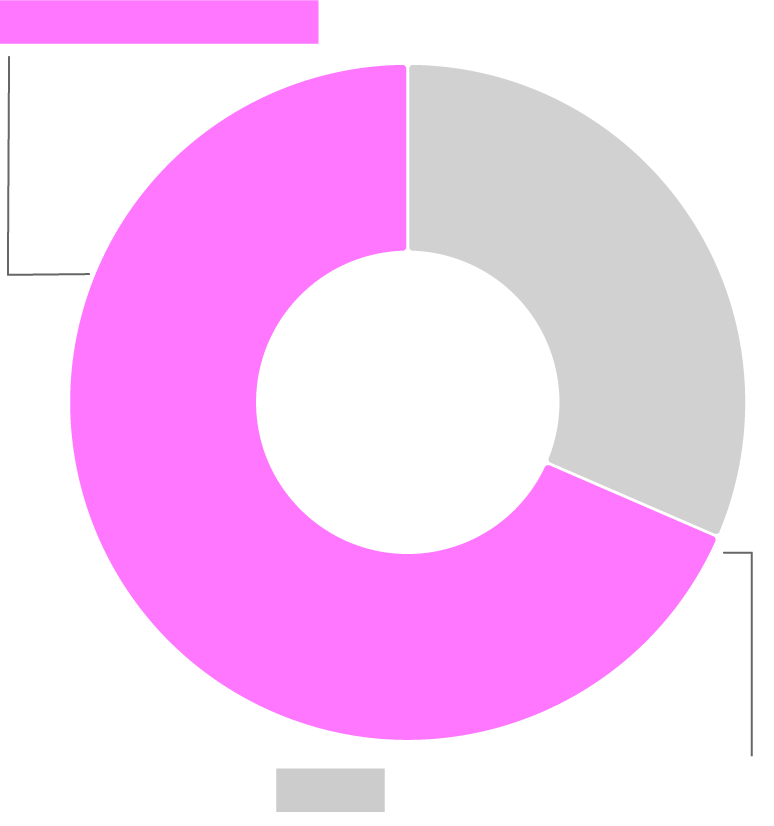
State and federal funds: $2,590,659,695
Local funds: $1,191,728,732
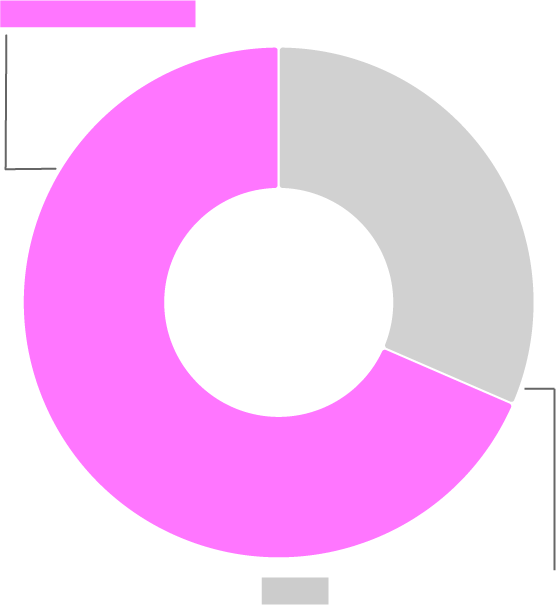
State and federal funds: $2,590,659,695
Local funds: $1,191,728,732
Data shows funding for 100 percent affordable units from 2018 to 2023. Source: Affordable Housing Leadership Council. Chart by Kelly Waldron.
“It’s darn expensive to build affordable housing in San Francisco,” said Adams.
While finding more outside funding is a challenge, so is securing local money. On March 5, voters will decide on Proposition A, a $300 million housing bond that would infuse much-needed cash into affordable-housing developments. There is concern, though, that the measure may not reach the two-thirds of the vote required for it to pass.
Commissioner Sue Diamond called the measure’s prospects “distressing.”
“If the bond doesn’t pass, we’ll have to scramble,” said Adams. But, it could be argued that the city is already scrambling to build more affordable housing.
“We have all these projects sitting around the city … that are essentially waiting for a combination of state, federal and local funding to be available,” said James Pappas, who works for the Planning Department and worked on the council’s report. Hundreds of units, he said, are permitted but awaiting funding.
For each affordable housing unit, a patchwork of agencies chip in

City and County of
San Francisco
$300,027
Federal
$443,108
Permanent
Loans
State
$118,390
$87,431

City and County of
San Francisco
$300,027
Federal
$443,108
Permanent
Loans
State
$118,390
$87,431
Data shows per unit funding for recent 100 percent affordable housing. Source: Affordable Housing Leadership Council. Chart by Kelly Waldron.
Charlie Sciammas, who works at the Council of Community Housing Organizations, said the report lacked “a sense of urgency and a clear set of benchmarks.” Sciammas noted that, to reach the housing target, the city would have to increase its housing production fivefold. “Now is one of those moments where we need to be reaching much further than we are,” he said
As well as the need for funding, the report, which is not binding, made two other main recommendations: The city should expand its capacity and coordination locally to produce affordable housing, and it should innovate with diverse partnerships in the philanthropic and private sectors to do so. Affordable housing in the city is already constructed by nonprofit partners, whose executive directors largely staffed the working group that created the report.
“We’re ready to roll up our sleeves and get to work,” said Adams.
I’ve followed SF housing development for about a decade and as a 35 y/o who’s watched dozens upon dozens of my friends family and peers have to leave the region bc of the housing cost stories like this is why people my age are supporting the YIMBY movement more and more.
I live in D3 and Peskin has preached AH for years but I don’t see what we have to show for it. I am 100% in support of more affordable/social housing but if the dollars aren’t there we need a new plan. Waiting around for a more progressive president/governor to allocate HUD funds to SF/bay is not a plan. Our city and state is losing people bc of housing. We need more of it – market affordable social all of it.
SF Supes like Peskin are making it harder to build. The harder it is to build the more money a project needs. Not surprising its so expensive. Thank the supes and SF gov for that.
The devil’s in the details. These days, they all chase “units” mostly, i.e. 1BRs and studios. Under this MO, your friends, if that’s what they were after, would still have been left in the cold looking for 2BR+ family housing. And at the current cost of construction, it is mostly ultra luxury projects that might get built, a la 955 Sansome.
If we want to see affordable housing funded at a level that will meet RHNA targets, then condition the approval of market rate units on the identificaiton of funding for affordable housing to further the full requirements of state law.
Have we not been doing this with the inclusionary housing program and in-lieu fees? I was under the impression that 12% (which often gets nudged up closer to 20%) is set aside affordable for projects of larger capacity and then relatively large sums of cash get dumped into the city fund.
Serious question: Didn’t SF politics do this to itself? Sure construction costs are high, but repeal rent control and see maybe thousands of units freed up.
Many renters keep units because they’re so cheap, even if they live in another unit in SF. Those units would be available if brought to market. People occupying a 3-4 bed when they’re a single person would move to a 1 or 2 bed. Costs would be shared equally with new & older renters, and purchase prices would drop too.
Without rent control the rents would plummet with all the new supply.
If 20% of the existing housing stock could house 1 more person this alone would give 80k residents an affordable home.
Are you suggesting that developers and lenders seek lower prices and lower profits and that landlords seek lower rents and lower profits?
I am indeed suggesting that increased supply brings rents down. We are already seeing this with the tens of thousands who left in the pandemic.
Maybe shake things out in SF, and even the playing field but you can’t have rent control as is, that’s what keeps prices artificially higher for new comers. Like it or not.
Over $900,000 per unit of “affordable” housing tells you all you need to know as to how wasteful government is. This problem was created by the government throttling supply with excessive red tape over the decades. It won’t be solved by the government’s $300,000,000 band aide, which will provide just a little over 300 measly housing units. If the government got out of the way and let private industry build, supply would surge and housing prices would, if not drop, at least increase at a much slower rate. Will builders supply low cost housing? Probably not, but increase the supply and the cost of all housing is affected. There isn’t a constitutional right to live in newly constructed housing, after all. I’ve even heard of (and experienced myself) living in older housing that is less expensive than new construction. Gasp!
” $900,000 per unit”. This *is* the private industry price tag – the City funds, industry contractors build.
The government produces the red tape. The contractors have to conform to it. And let’s not forget the epic corruption at SF DBI.
“The typical cost for a single affordable housing unit is over $900,000”
How much would a comparable unit cost in South SF, Daly City, San Bruno, or elsewhere nearby? Is it the best use of resources to place these units here?
Building elsewhere, oh you mean sprawling out ? Like we have been doing for decades. Building up is something we should try doing.
Building up sounds great! But this discussion is about spending state taxpayer money on lower income housing, not building up. What is the best use of state resources? The 900k unit in SF or some presumably less expensive unit in a very close city that has easily accessible public transportation? We are not talking about sprawling out to San Jose.
Here’s a novel concept… What if we (er the neighborhood groups who fight tooth and nail to stop any project that doesn’t conform to their ideals) didn’t derail every other project due to a borderline superstitious belief that cigar-chomping, secret GOP housing developers are going to steal every last lot and go out of their way to stop dedicated and funded BMR projects from breaking ground?
It’s not a stretch to imagine the hundreds (if not thousands) of units of affordable housing would exist and currently be occupied by deserving families and individuals if it weren’t for the limitless delays, obfuscation, stone-walling, dishonest tactics, and sketchy politicking by the same groups that complain about a lack of local support.
It is the state that you’d expect find the funds for a state mandate. Of course they won’t, so now we got Peskin and others trying to push back against RE developers who aren’t interested in anything other than cherry-picked prestige projects, leaving desperately needed workforce family housing development fallow. That YIMBY thing looks increasingly like a scam TBH. Scott Wiener’s lost my vote BTW.
Peskin is literally what is wrong with this city. Not building for decades has put us in this position. High rents and high costs. How is this a YIMBY problem? Nimbys put up the barriers for projects like this. Scott Wiener is one of the only people doing the right thing in CA gov.
San Francisco is in Doom Loop already, from catering to the lowest human behaviors. Creating more subsidized parasite housing will only further more destruction and decay. If you can afford, it the smart money is packing up and leaving, just like Macys and Nordstrom. This city is in leftist political cemetery.