


If Melky Cabrera’s RBI triple in the first inning of Tuesday night’s game was a text message, his RBI single in the 11th inning of Wednesday night’s game put the exclamation point on a successful opening homestand for “your” SF Giants.
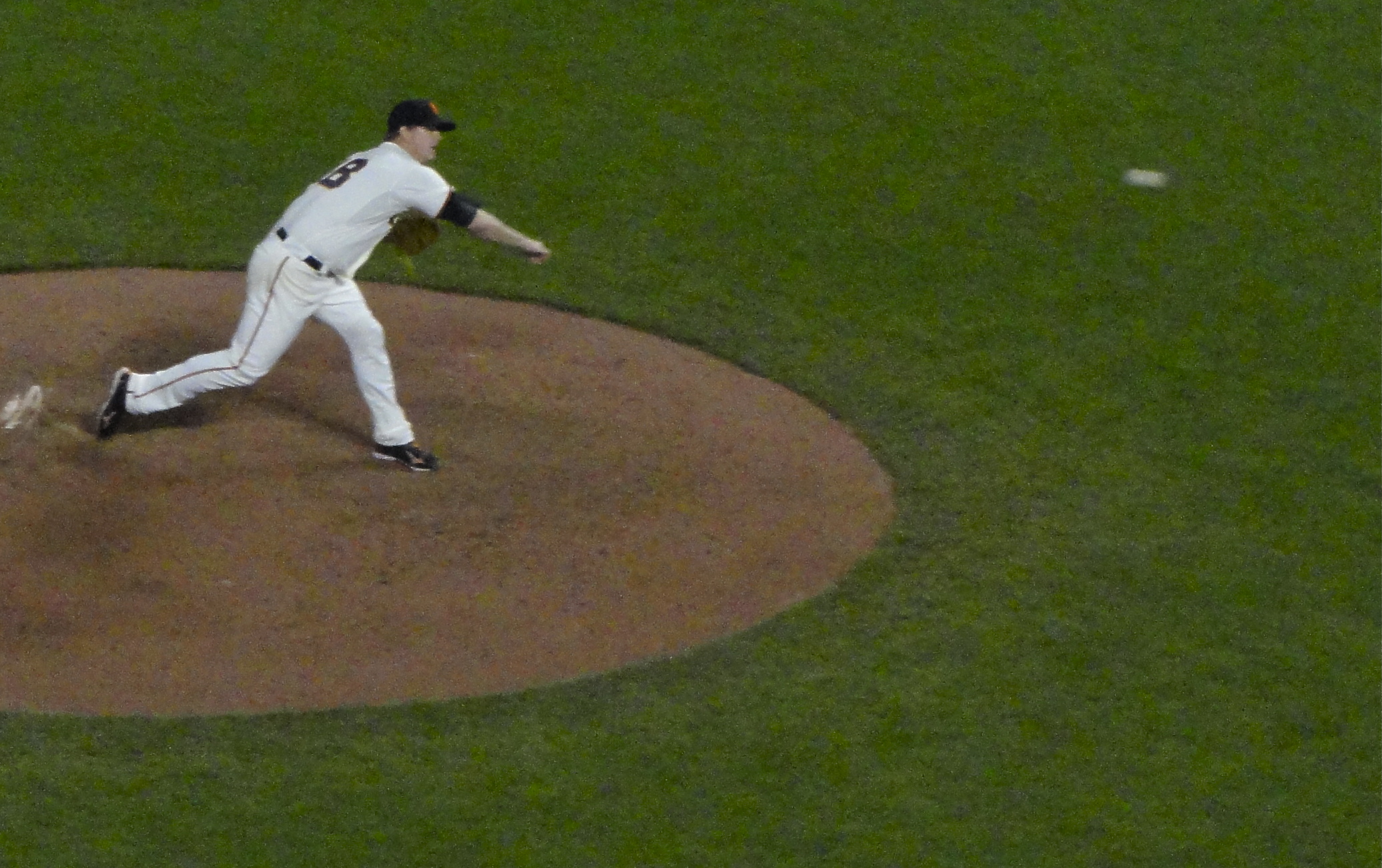
The hit concluded the final game of a three-game series with the Philadelphia Phillies, presenting baseball in one of its most compelling motifs: a pitchers’ duel among the gods. Two of contemporary baseball’s best, Matt Cain and Cliff Lee, held opposing batsmen and more than 40,000 stunned observers enthralled for over nine innings — pitching quickly, pitching deadly, allowing a few hits but no runs whatsoever.
An exaggeration? In 10 innings, Lee threw 102 pitches; 82 were strikes. He gave up no runs. This was Cliff Lee’s game: fast and furious. Time after time he threw the ball how he wanted to throw it, where he wanted to throw it. Giant batters knew the ball was going to be in the strike zone, but exactly where and when they could never quite figure out. Lee makes you “uncomfortable” at the plate, said Cain, who appears comfortable making such understatements.
A number of fans complained (loudly) that “your” SF Giants were swinging on the first pitch too many times. That was a bad habit of Giants2010, but it proved to be a good habit when they met Lee in that year’s World Series. What’s the point of waiting on the first pitch when you know it’s going to be a strike? Tonight it didn’t make any difference.
The only difference was Matt Cain and a parade of relievers. In the home opener last week, Cain pitched the almost-perfect game, allowing one hit. Wednesday night he allowed two hits and one walk over nine innings, when he was pulled for a pinch-hitter. In response to Monday night’s Freak-out, a reader commented that “they’ll all follow in the footsteps of Barry Zito,” meaning that fat contracts inevitably produce fat ball pitchers. Not so Matt Cain, the newly minted member of the $100 million players’ club. Not yet.
Even though three runners reached base on Wednesday night compared to only one on Friday, Cain figured the recent performance surpassed his previous outing because he was hitting “both sides of the plate.”
For perspective on what it means for a pitcher to hit both sides of the plate, consult legendary pitcher Warren Spahn. “Home plate is 17 inches wide,” he said, “but I ignore the middle 12 inches. I pitch to the two and a half inches on each side.”
Wednesday night’s game brought back memories of Warren Spahn in his classic 1963 duel with SF pitching great Juan Marichal at Candlestick Park. In what some call “the greatest game ever pitched,” Spahn and Marichal traded zeroes for 15 shutout innings. Finally, in the bottom of the 16th, an exhausted Spahn delivered Willie Mays a screwball that screwed the wrong way. Oops.
Without Willie Mays, or any established hitters, Giants2012 resembles Giants2010 more than Giants1963. Victories this year will count on quality pitching to hold down the fort until batters finally connect. While that effort may take a few innings, it will certainly produce many dramatically magical moments, like Javier Lopez striking out Jim Thome in the top of 11th with a runner on third and only one out.
Two or three weeks into the season, baseball games have even less meaning than baseball games in September — if that’s possible. What can be said? With one notable exception, the pitching looks as good as advertised. The scoring department has improved, but there is plenty of room for more. Defense has been a problem, though last night it was superb (for the Giants — an infield error cost the Phillies the game).
As true Dolores Park aficionados know, baseball is a game of timing, timing and most of all luck. So when the game reaches into the metaphysical realm, baseball is more than just any old “spectator” sport. Dig up the old charms; bring out the old gear; indulge any and all fantasies or foolish rituals, for “your” San Francisco Giants are going to need all the luck they can get. That’s true for any team. Just ask the Phillies.