

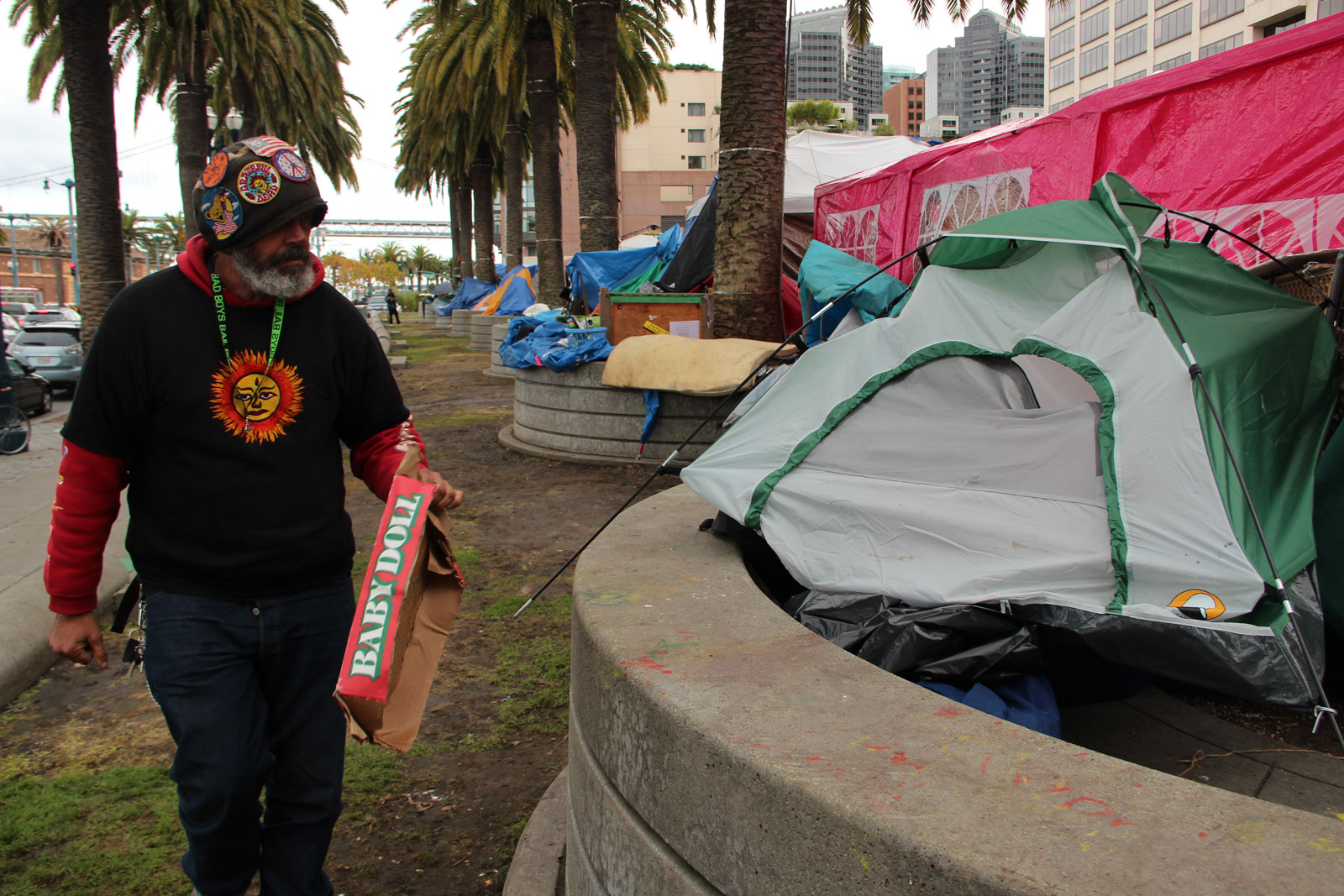

Early this afternoon, Occupy SF at Justin Herman Plaza got a visit, but it wasn’t from police.
“They had a new and interesting approach today,” said Robbie, who has been camping at the encampment since Oct. 3rd.
San Francisco public works crews, fully suited in disposable jumpsuits and masks over their mouths, moved in on people camping on the grassy area along the Embarcadero.
But because city authorities had declared the area a public health nuisance and posted notices on Thursday, campers knew that city workers were coming, and acted quickly before they arrived.
“We all took our stuff down,” said Robbie. “They didn’t actually confiscate a single thing from us.”
There was a small amount of resistance when it came to moving personal belongings from the dozens of tents to the other side of the concrete barriers.
“Some understand that they can participate in this but there are rules they have to abide by,” said Robert, a homeless man helping people move their tents. “And some don’t think police have a right to tell anyone where they can pop up a tent.”
Campers helped one another carry damp tents from the grass to the dry edges of the main encampment, leaving room along the borders for a walkway, and leaving city workers with little more than trash to remove.
“There’s your new condo,” said Robert, as he helped Fred, Dan, and Amy plop down their large REI tent at one corner of the encampment.
The three have been camped on the bricks by the row of palm trees lining the grassy area for around two months. “It’s better to be safe than sorry,” said Dan, as he unloaded sleeping bags and blankets from a shopping cart.
Fred has been sleeping in the area since long before Occupy SF moved in. “As long as we comply to their demands, I think they’re just gonna barricade us in,” he said.
Rows of metal barricades, brought in two days ago, sit at each corner of the encampment, which is made up of close to 100 tents.
Another man, sweeping an area above the grass where the tents once stood, agreed that compliance with the city is the key to staying.
“They were gonna move tents,” he said. “But people volunteered to help them, so they worked together.”
Now that the tents are gone, he has his eye on the grass.
“It will probably lead to better things,” he said of the order to remove the brightly-colored tents. “We’d like to garden this space.”