

Is voting on the fate of a highway three times in four years weird and strange? Not in San Francisco.
Barring unforeseen lunacy, come November, you’ll be voting on cars on the Great Highway — for the third time since 2022. Like PAY YOUR PROPERTY TAXES BY DECEMBER 10 AND APRIL 10!!! there are some things you can apparently mark in permanent pen on your calendar. At the statewide level, you’ll be voting about kidney dialysis and, locally, you’ll be voting on this.
There figures to be a great deal of performative hand-waving from the proponents of Sunset Dunes Park about the inanity of taking this to the ballot — yes, again — only two years after 54.7 percent of city voters decided this matter.
Fair enough: But, in the annals of San Francisco voting, this is hardly Hall of Fame-level inanity, let alone Wins Above Replacement-level inanity.
In the not-so-distant past, San Franciscans, in fact, voted on the fate of a roadway three times in three years. As Casey Stengel would put it: You could look it up.
In 1997, 53.5 percent of voters approved Proposition H, which authorized the reconstruction of the earthquake-damaged Central Freeway. One year later, 52.8 percent of voters approved Prop. E, which undid Prop. H of 1997. Finally, in 1999, 52.6 percent of voters inveighed against Prop. J, which would’ve undone Prop. E, which undid Prop. H.
Yes, San Francisco voting can indeed begin to resemble the “Chad Gadya” song; Then came Prop. J which undid Prop E. which undid Prop. H that allowed rebuilding the Central Freeway that father bought for two zuzim …
For good or ill, this ballot box freeway roulette ended in 1999. And, as a result, you can see the sunlight and breathe the air on Octavia Boulevard.
You’ll note that, in this case, repeat voting altered city history. A majority of the electorate in 1998 undid what it had ratified in 1997; like “The Godfather, Part II,” this was a worthwhile sequel. One year later, voters indicated they’d had enough; like “The Godfather, Part III,” two was where things should’ve stayed.
But you don’t have to venture back to the pre-WiFi Dark Ages to reveal that San Francisco voters can be mercurial.
In 2020, a full 61.3 percent of the electorate approved the creation of a Department of Sanitation and Streets to replace Mohammed Nuru’s scandal-plagued Department of Public Works. Two years later, 74.6 percent of voters said never mind, and eliminated the Department of Sanitation and Streets before it was even formed.
From a governance and logic perspective, it all seems a bit dumb — and dumber. But it’s succor for the proponents of bringing cars back to the Great Highway: To borrow the line from “Dumb and Dumber” — not its sequels — “So you’re tellin’ me there’s a chance? YEAAAH!”
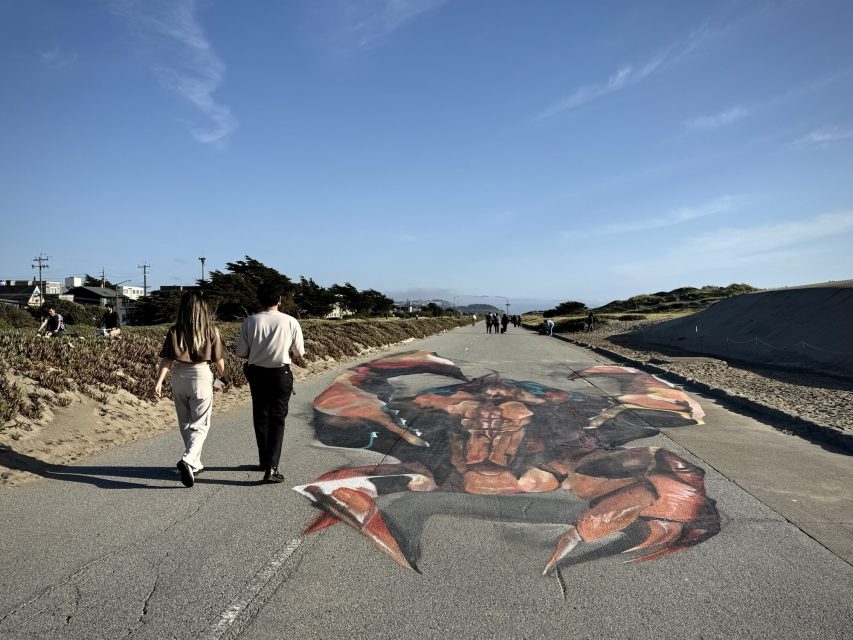
Soon — perhaps this week, perhaps in February — Great Highway partisans will make it official. Lawyers are already involved. Ballot language is already being tweaked. An intent to gather signatures will be ratified, and a deadline to amass the necessary 10,000 and change will be set.
It figures to be an easy flex for the kung-fu army of Joel Engardio recallers who, last year, hit a 99.3 percent accuracy rate in gathering some 10,500 signatures for his ouster in District 4 alone. Now they have 10 other districts they visit.
In San Francisco, we vote on a lot. And that sets us up to vote on the same stuff again and again. And that’s our own fault: Everyone says they hate sequels, and everybody goes to see them.
Retired police commander Rich Corriea, a leader in both the Engardio recall and the nascent effort to put cars back on the Great Highway, says he expects to prevail in November.
God knows he’ll give it the old college try, but his is not a common sentiment.
It does not logically follow that voters will sour on Sunset Dunes Park only two years after nearly 55 percent of them were for it. The rapid making and unmaking of the Department of Sanitation and Streets indicates that minds can change quickly, but it warrants mentioning that this department was never actually created.
Say what you will about Sunset Dunes, but it exists. People go.
It’s a lot harder to take something away from people once they’ve gotten accustomed to it. Anecdotally, there are voters out there who opposed the creation of the park who now go to it and have come to accept it, if not love it. There are, again anecdotally, fewer people to be had who voted for the park and now really wish it was a road.
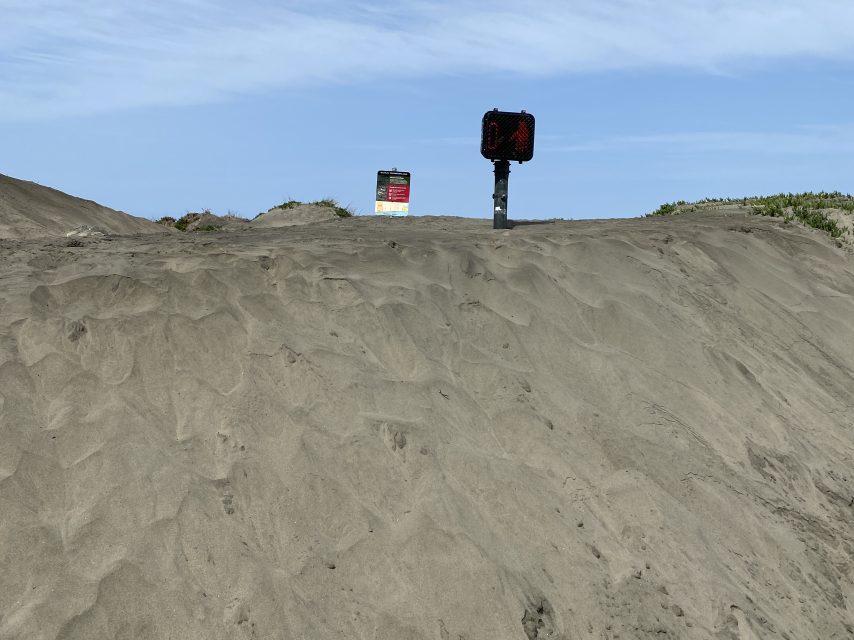
So this is an uphill drive for Correia et al. If, as Supervisor Alan Wong had hoped, this was on the June ballot, pro-highway forces would’ve had a better shot. District 4 and District 2 are voting in special elections, and a disproportionate number of Westside and/or moderate to conservative voters would be thundering to the booth.
But Wong’s attempt to legislatively place this matter on the June ballot crashed and burned, and so it’ll be up in November — before a bigger and less Westside-centric electorate.
There are reasons to put things on the ballot other than the stated goal of the measure, of course. Last year, it seemed likely we’d be voting on the Great Highway because it would drive a cavalcade of motivated, Chinese Westside voters to the booth — where they’d note that Supervisor Connie Chan is running for Congress.
Since that time, the labor forces backing Chan have been laser-focused on placing a CEO tax on the June ballot. That’s just the sort of thing that a cavalcade of moderate-to-conservative Westside voters would likely vote against, so there have been no labor machinations regarding the Great Highway.
Sometimes, a banana is just a banana. And, in the case of voting to put cars on the Great Highway, this now appears to be a measure put forward by people who really, really want to put cars back on the Great Highway. That’s all.
Their road to victory would seem to be narrow. And, after November, it stands to reason that this matter will have run its course. Or maybe not.
“Call me after election day,” says Corriea. “And I’ll tell you what’s next.”
The irony of the central freeway votes is how many West siders (likely some in these very comments!) will say some variation of, “how about we vote on closing a road on the east side and see how you like it.” We did! Many times! And you’ll never believe which neighborhoods repeatedly voted for cars.
Oh no, westsiders, please don’t punish us by putting a measure on the ballot to tear down I-80 north of Mariposa. That would really show us.
@Michael H – It wasn’t covered in this op-ed, but part of the reason for multiple central freeway votes is some misleading wording on the first ballot measure, which the second measure reversed with clearer wording. The ballot measures that followed weren’t just another vote on this, the were specifically for and against the boulevard plan.
The Sunset was laid out as a quasi-suburban car-dependent subdivision, BUT it now sits within the second densest city in North America. That urban/suburban culture conflict is no one’s fault.
But the personalized poison thrown back and forth on this issue is tragic. Urbanists tell the other side: “You car dwellers don’t care about the environment!!!” Suburbanists reply: “You cyclists don’t care about getting to school or work on time!!!”
We can help to resolve this……..by seriously adding north/south transit (shuttle from Richmond to Daly City; HOV lanes on 19th or Sunset; BRT; westside BART) on the westside.
DO you expect for BART out Geary to be ready next year?
I want BART to leave Daly City and stop at Stonestown, then come north under 19th Ave with stops at Taraval and Judah. A stop in Golden Gate Park and then a right turn to the east at Geary and it connects back to the system at Union Square.
I also want lots of public transit upgrades like your suggestions, Ralph. The point is – we should not be closing arteries until such infrastructure is in place. The closure of the Great Highway is a textbook case of how NOT to do urban planning.
All of those suggestions are 15-20 years out.
“We can help pretend to resolve this.” Gee.
The process was and is hugely the problem, as is now apparently the “impartial journalism” for whatever value that term once had. Millions were spent to privatize the commons for control by the few – who do not live in the district yet pretend to.
Google lawyers secured a win over locals who were deliberately mislead and last-minute usurped by same. If we need a paved roadway called a “park” in SF, let’s do that under legit circumstances. Let’s not fund it with dark money from corporations against the will of the locals in the district, at the last minute for deliberate effect. There’s a very different thing going on with YIMBY flexes using Billionaire private money right now well beyond their pretend environmentalism.
“locals in the district” don’t get a veto over changes the whole city wants. It doesn’t matter that I don’t live in the district—I live in the city, I pay taxes in the city, I use parks in the city, so my opinion on this (and my usage of it) matters. If you want to live somewhere where you can have ironclad control of a few blocks, and don’t have to care about other people, find an HOA in a distant suburb. If you want the benefits of living in a large, prosperous city, you have to pay attention to the opinions of your fellow citizens even if they live (gasp) more than a mile away from you.
A public park is not “privatizing the commons.” This is both common sense and factual. Stop lying.
What we have are the BMW and Benz drivers of the Sunset wanting a private highway for their luxury cars. They don’t want a park for working class people to enjoy. They want to go faster in their Beemers.
Would love some followup reporting on who (if anyone) will use this to initiate some ballot reform proposals. No second/third bites at the apple for at least a decade, no non-binding topics, no topics placed on the ballot by supervisors if they can just vote to do it themselves, nothing on non-November ballots to try to select for a skewed electorate. That’s off the top of my head. What else is on the list?
I know the mayor’s charter reform working group has some ballot measure changes in their sights, and someone is actively polling about it. I got a survey a couple weeks ago specifically asking about changing the signature threshold…..for tax measures. Hmm.
Anything they come up with is going to be focused on limiting the power of the rest of us to put stuff on the ballot big business and billionaires don’t like.
They’ll never suggest the reform that would do the most to keep crap off the ballot: banning paid signature gathering.
Initiatives were supposed to be for issues with genuine, widespread popular support. The wealthy have hijacked this system by paying to saturate every grocery store parking lot with temp workers going, “Want to help support responsive government?” until enough distracted San Franciscans fall for it to qualify the latest big-money power grab for the ballot.
The highway reopeners don’t exactly fit that mold but will use similar tactics to a degree. When they were qualifying the 2022 measure to undo car-free JFK, paid gatherers repeatedly lied and told signers it would do the opposite of what it did: it would *make* JFK car-free.
Right, so who is proposing a progressive version of this? Anyone? Bueller?
Progressives are impersonating potted plants and taking no steps to organize a popular charter reform movement to out flank the crypto swindlers.
It did not used to be this way.
A bunch of sore losers are going to cost the city money we do not have so they can drive their cars where they want.
You don’t live in the district, don’t commute, don’t have children playing in these once sleepy avenues that now have 25,000 extra cars on them where a highway once took that traffic safely instead. You speak for yourself somewhere else unaffected.
@Fake Futurists – “Yer not from aroun’ here, we don’t take kindly to strangers in these parts” is the invalid riposte of someone without any actual substantive argument. Speaking of which, where did this magically ballooned into 25,000 number come from?
There are Stephen Millers and Trumps everywhere, apparently.
I’m happy to have a vote on the rest of the city withholding taxes from the Sunset. Wanna do it?
As long as the whole city funds your public services, you have to deal with the votes of the whole city. This is how democracy works. If you don’t like it, secede.
Until then, there’s a park for the working class to enjoy. And you’ll just have to drive your BMW elsewhere
According to the merriam-webster dictionary, a road is a road, a road is not a park, and a park is not a road, it is a park. Sorry, but what’s difficult to understand about this? Why a park? a 100 years after a quickly defunct Fleishhacker Pool under the same weather conditions. Go to an existing park, and come back to reality!
☒ Barring unforeseen lunacy, come November, forseen lunacy will be on the ballot.
You don’t live in the district.
If you keep doing that Stephen Miller impression, one day you’re going to turn into him.
Okey dokey, put it on the ballot yet once again.
Last time it lost by 55% to 45%
Come November, it’ll lose by 65%to 35%…. as will the perennially-lame Connie Chan.
A twofer!
Which world-class city has a highway at its ocean front?
Why not make the frontage road below the Great Highway a boulevard ala Octavia?
Take out the houses on the east side of the street? Remove the parking by the “park?”
San Francisco doesn’t “roll” but mires itself in unnecessary bureaucratic sludge. Major cities everywhere in the world roll without putting these things up for vote.
they seem to think it’s the government’s fault they can’t run a campaign and lose again and again
the only people thriving in all of this are the money people who make money off campaigns
meanwhile the losers lose
For those of you who really don’t give a crap about parks and making this city a nicer place to live, just look at it purely financially.
How many cars will be driving on that road and how much per car will it cost to maintain that road as it gets eaten away by the ocean more and more each year.
So when I see people insisting that I vote to be taxed so they can have their cars running along this endlessly “eroading” road, and then tell me that I don’t go to this park…. well, it is a hard sell.
Loved the history of SF’s groundhog day vote syndrome. One point worth mentioning is while it’s true some westsiders just want cars back on the highway, they also are against upzoning along that stretch. Whether or not the same two issues are bankrolled by the same YIMBY donors, in the mind of the voters they are intrinsically connected.
@Sally Hanley – Certainly there were campaigners trying to link the two, particularly in the Recall Engardio campaign. An actual connection hasn’t been demonstrated, though some bizarre conspiracy theories have come out of it.
We now have a “Forever War” over the Great Highway. This will probably not even be settled after November. Sadly, it didn’t need to happen this way, but a well funded minority had to have it all their way.
I’ve been out there and have seen how things are this past year. I now support the compromise solution. Open on weekdays for cars, closed on weekends for recreation.
That’s not a compromise. There was a vote, and the people said they wanted a park.
The BMW drivers of the Sunset don’t get priority over the working class who uses parks.
Advocacy under the guise of journalism was there all along.
“people who really, really want to put cars back on the Great Highway”.
Not exactly, you’re missing the mark. It’s about people being stuck on 19th Ave/Crossover Drive or Chain of Lakes everyday. (I’m not one of them thankfully). Imploring SFMTA to improve traffic flow there, as well as on Sunset Blvd, has come to nothing of effect. How do you not get the impression the City is out to penalize drivers/westside residents. Hence the verdict in many peoples’ minds: Open Great Highway again effers.
I think westsiders need to understand this is a city with traffic and they are not the only neighborhood with traffic. This is a CITY not a suburb. You are not special. Instead of re-opening roads, fight for better public transit options and you will have the whole city on your side!
“need to understand”. Textbook paternalistic attitude.
What is paternalistic is the west side wanting special privileges for their BMWs and thinking the rest of us don’t matter.
Privileges? The west side always played second fiddle. That’s why in 2026 there’s still overhead power&cabling, no auxiliary water supply system and surface Muni LRVs.
An ever increasing amount of cars is not the answer. We have not even reached close to peak traffic. A highway along the ocean is necessary? Reminds me of similar controversy over tearing down the Embarcadero freeway. Let’s move forward people.
San Francisco is a tiny city with too many cars. The traffic is so bad that biking is two to three times faster than driving in much of the city. San Francisco needs solutions that help people to get out of their cars and still get where they’re going, not a special west side drivers enclave.
The west side routinely fought MUNI and BART expansion. It’s clear: these are millionaires who want to keep the rest of the city out. They want a private road for their BMWs.
Daniel, the car haters on the east side who voted for this “park” never visit it. They just want a tribal war between the east and west sides of town, because they thrive on anarchy and conflict.
If we are going to have district supervisors then we should have district propositions. The east-side voters should have no say on this.
Car hater on the east side here. I go to this park every week, but if we’re going to do district propositions, let’s start with one on surveillance. I’d love for my neighborhood to be free of all the ICE-collaborating Flock surveillance cameras westsiders voted for (see March 2024, Prop E) that we voted against.
I’m not sure you actually want a future with “district propositions.” I live in D5, which has one of the lowest car ownership rates in the city, yet many high capacity roads running through it. Proposals to put road diets on Oak/Fell and Octavia would be quite popular for me and other car-less D5 residents tired of the danger, noise, and pollution of those streets. But of course it would lead to genuine travel nightmares for the sunset. So instead let’s operate as one unified city: feel free to use other neighborhoods as a cut-through to the highway/downtown, but let the residents there use your neighborhood as a park.
Sorry. Then no money for the rest of the city should ever flow to you. Pay for your own cops, firefighters, etc.
The west side wants to be a gated community. They won’t allow shelters for the homeless in their neighborhood. They won’t allow BART and MUNI in. But they want the rest of us to keep paying for their roads.
Now there’s a park we can all enjoy and they’re mad. They want it to go back to being a private highway for their BMWs. Just say no.
Hysterical comment. thanks for the giggle Tom.
If you want to have district propositions then you should have district taxes. Westside get to pay for the maintenance of their Great Highway, not force those who don’t live there to pay for the ever eroding road. Make it a toll road, and see how many people continue to use it.
An obvious compromise would be to do what was done to MLK drive in Golden Gate Park, and was not this controversial. Have it as a vehicular highway on weekdays, and a car-free promenade on week-ends.
But of course SF doesn’t do compromises. We have to have winners and losers.
You are wrong,MLK drive is open 7 days, it is JFK drive that is mostly closed to cars 24/7, and it’s wonderful! I also am a Mission dweller who visits Sunset Dunes Park as well as the promenade on JFK drive every month, for my weekly long walks in beautiful car free places.
Hum, how do you, the Mission dweller get to the West side to enjoy this park? I bet public transit is not it!
Huh? You can ride a bike there or take the N-Judah or the 48-Quintara. This is not hard.
@Glen Parker – Also the 33-Ashbury.
It is not about hard, Glen. One can easily walk from the bay to the beach if they like. It will take about 5 hours or so. Muni between the bay and the beach takes 1 to 1.5hrs depending on end points. Bike – slightly less time than the bus. Driving? Average 20mins. Now, what mode do you think most people prefer to take?
I take the 23 bus. Stops right at the park entrance on Sloat.
The compromise is that out of the Sunset’s 45 north-south streets, only one was turned into a linear park, and the other 44 remain fully open to cars.
@Tom – In fact the 2022 vote was a measure put on the ballot to destroy this compromise, in favor of putting cars there 24/7. How did you vote on Prop I in 2022?
Come 2024 and these very same people opposed Prop K (and later, Joel Engardio) by suddenly being all kumbaya about The Compromise as the be-all and end-all of obviousness.
2 days out of 7 is not a compromise.
Yes! Why begrudge commuters a decent commute? We go to the VA regularly. Using 19th ave or Sunset blvd doesn’t work well. So selfish to have yet a third park right next to the ocean.
Campers,
Whatever temporary plans Man may have for that coastline, God prefers it to be a long sand dune.
Spent plenty fighting ‘God’s’ plan has San Francisco.
A future version of Elon’s FSD will solve the problem.
Connie for Congress !!
Why haven’t you asked AOC about her endorsement ?
h.
Simple compromise: widen the existing bike path, open the road on weekdays.
This time Daly City, Pacifica and Marin voters should have a say though
Simple compromise counter-proposal (also from a Westside):
Cars get half the streets, people get the other half.
I propose cars keep the odd-numbered avenues and California, Geary, Balboa, Fulton, Lincoln, Judah, Lawton,…etc.
People get to use the rest car-free except local trips, enforced by use of traffic diverters and forced turns.
I get that most on the streets given over to cars will resent getting stuck with the traffic.
Maybe we can find other ways to get around, so no one has to sacrifice quality of life for driver convenience.
It is still a road.
Not a park.
And it was better during the “compromise”. It was still mostly empty much of the time on weekends, but that was rather pleasant.
And there were no rusting giraffes or other fake “art” to ruin what, aside from the road and the traffic lights, was a natural environment.
What is overlooked in this piece is the way this was both initially decided (brought out, like the ridiculous “slow streets”) during Covid and placed on the ballot by three supervisors (only three?) without the supervisors holding even one meeting with their constituents. (Melgar was too busy at YIMBY meetings and kissing Garry Tan’s ass to meet evidently; she has never held an open meeting).
We should not be wasting time on this because the road should have been removed (a legal impossibilty because of the needs of ambulances to use it — if they can) if it was to be a park.
Or Engardio, Melgar and Preston should have consulted with their constituents before putting this on the ballot — at the last possible moment!
It is not “environmental.”
What it is in fact is sneering elites looking down on working people and unfairly manipulating the system to get what they want.
And they did and probably will.
It’s been told to you and so many others, so many times. Just because you had access to a piece of land that happened to be a road for a while doesn’t mean you get to use it as a road until the end of time. As a road this parcel, which never had a number or official name, has ceased to serve a practical purpose because the connection to Skyline and points south is half closed and fully closing soon. All it would ever be is a detour around a grid. Given a ‘detour’ often means people abusing speed limits, making unnecessary noise, and endangering others with their cars, there’s not much good argument for a stretch of road that saves anyone who isn’t egregiously speeding at most three minutes of time. It’s not about being a sneering elite—it’s about understanding data and how data can help government agencies figure out the highest and best use of a right of way or parcel of land.
We ALL had access to the Great Highway before the closure – cars on the road and cyclists, joggers, walkers on the multi-use path. It was a great place to walk or cycle and also an incredibly safe and efficient way to get around the outer avenues. These are facts supported by data. The south of Sloat portion is called the Great Highway Extension. It’s closure does not diminish the Great Highway’s appeal – as motorists need to drive just a short distance from Sloat to Skyline.
Talk about overanalyzing and overblowing this situation. It’s really not that big of a deal.