


We at Mission Loc@l have really been enjoying the coverage — just in time for Pride weekend — of our nation’s new, hard-won gay census data. We’ve come a long way since 1990, when census collectors would automatically turn gay households into straight ones by changing the gender of the partner who was not listed as head of household.
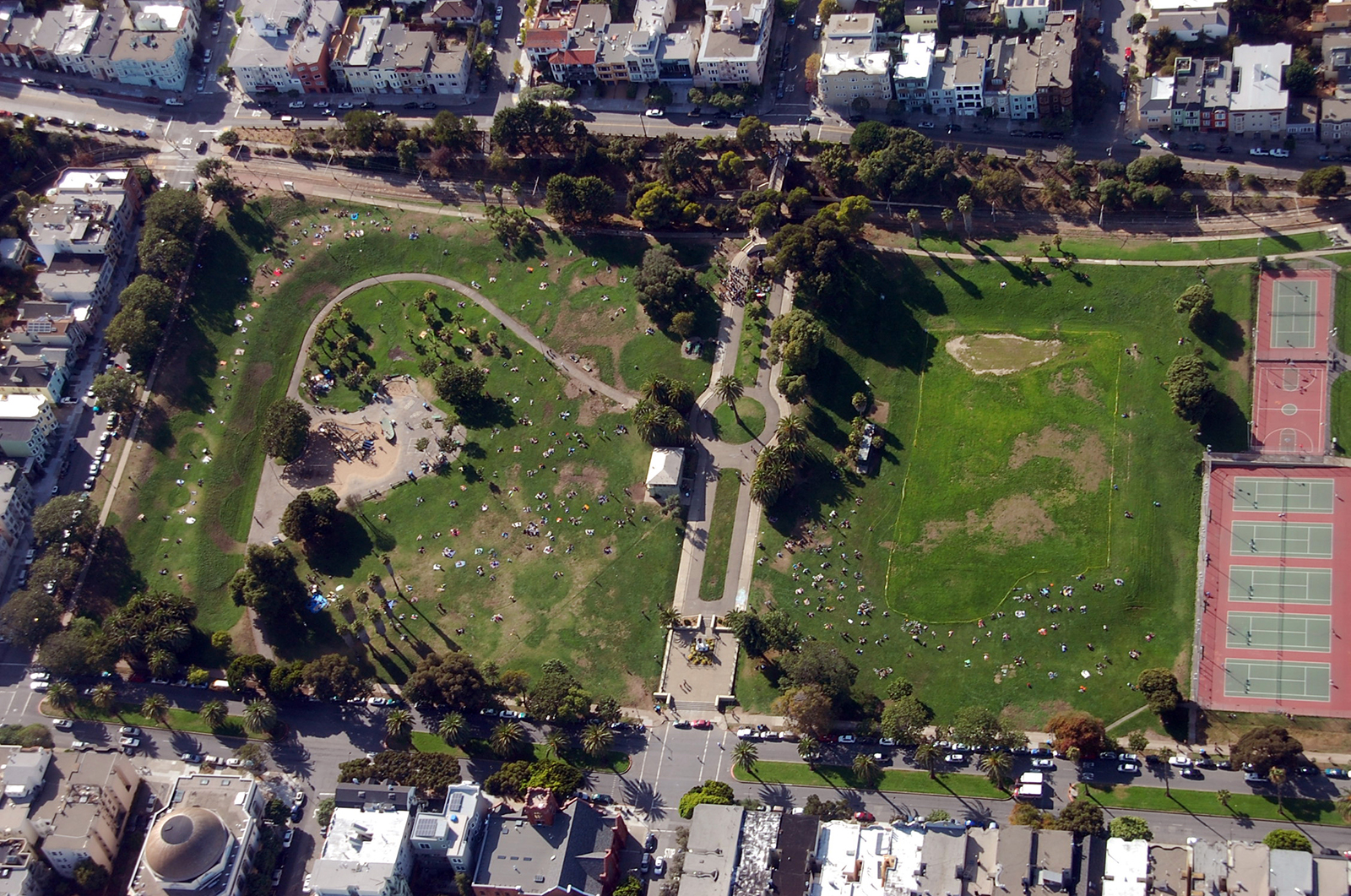
Because where, then, would be the pleasure in discovering, thanks to some excellent infographing by the Bay Citizen, that 19th Street is gayer than 16th? Or that the neighborhood around Garfield Park (census tracts 229.01 and 229.02) are the least gay in the Mission? Or in seeing that Dolores Heights (now often referred to as Google Heights for the number of well-to-do Google employees who have bought property there) is still one of the gayest census blocks in the city? Or in seeing that, despite all the changes that Bernal Heights has gone through, it is still lesbian town up there? La Lengua, the newly invented neighborhood so touted by Burrito Justice? Kinda gay.
Of course, this data only measures those gays and lesbians who live together and who feel like announcing that fact via census. Count the unsettled, un-U-Haulish queers, and the Mission is likely to look very different. Maybe they’ll be included by 2020.
The 2010 Census, you may recall, didn’t ask about sexual orientation. There was just the simple act of declaring your own gender and checking either the “husband or wife” or “unmarried partner” box when disclosing your love life to the government. Those people with no partner to evaluate their own gender against were left untallied.
But that doesn’t make the tally any less compelling. Bloomberg reports that the number of households headed by gays and lesbians in California grew six times faster than those of opposite-sex spouses between 2000 and 2010 (back then gays and lesbians could identify themselves in the census as in a relationship, but not as married).
The Chron reports that San Francisco as a whole has the most gay couples, but that obscure Tulare County, way out by the Sequoia National Forest, has the most gay couples with children — 46 percent. San Francisco has the lowest, at 7 percent.
Most interestingly, the Los Angeles Times has a great article that puts the whole issue of changing households and family structures into a broader context. Between 2010 and 2000, the percentage of Californians living in “nuclear family” households — a married man and a woman raising their children together — dropped by a full 10 percent.
Now, less than a quarter of Californians live in nuclear families. Unmarried couples, single parents and married couples without kids are all on the rise. Categories that used to hardly exist at all — like single dads — grew by 36 percent over the last decade.
Why such a shift? The Times quotes one man who says, pragmatically, that he and his girlfriend can’t afford to get married. Doing so would merge her good credit with his debt and bad credit, brought on by some real estate speculation. Which makes us a little curious, given how many couples we’ve seen struggle with the issue of merging finances — could the decline in nuclear families have been brought on, in part, by the 2005 changes to federal bankruptcy laws?
There’s love, and then there’s taxes. Those gay couples who idealistically registered their love with the state and declared themselves an item got clobbered when April taxes were due. If this country really believes in marriage as a legal institution, it may behoove us to make marriage a little more appealing — to everyone.