
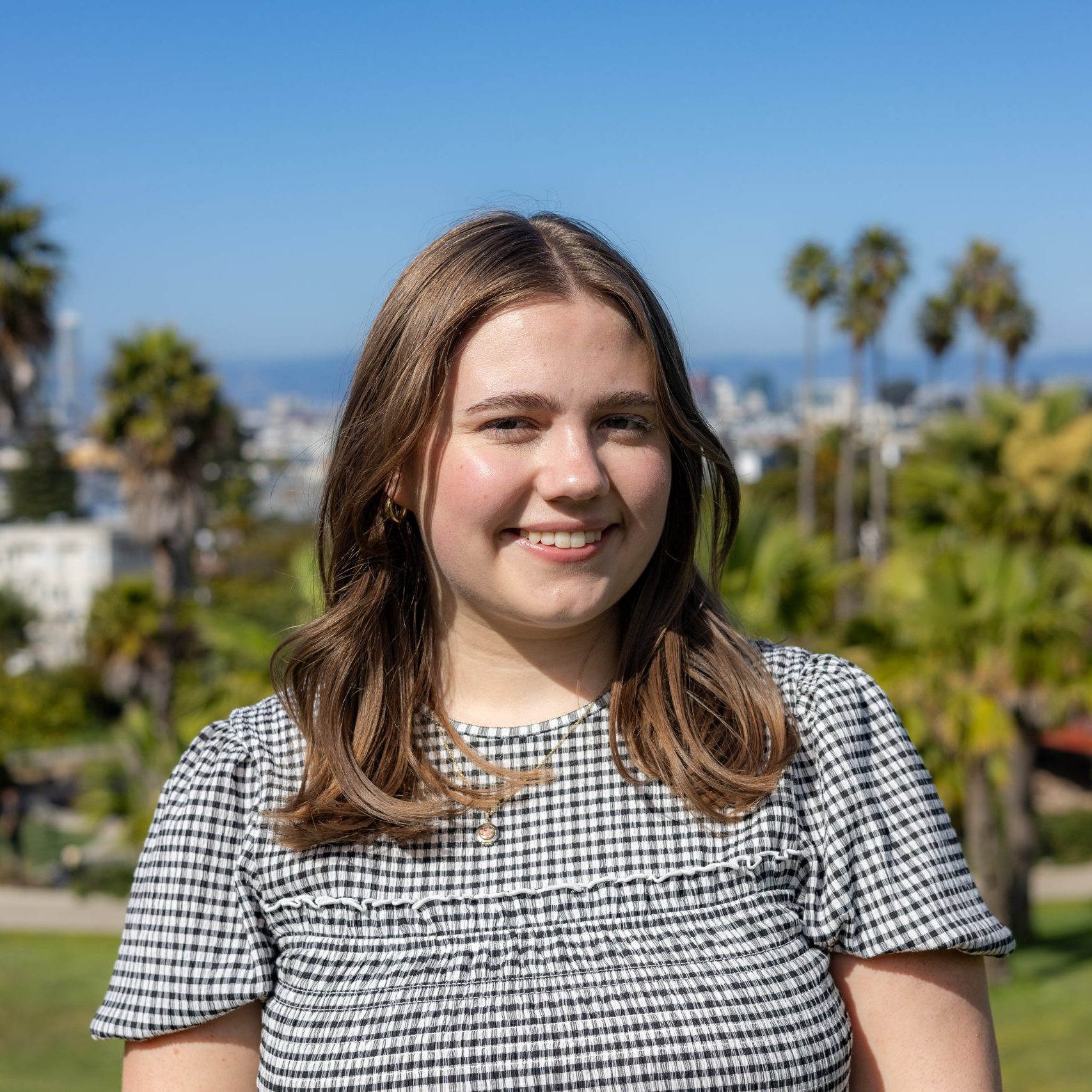

For the last decade, Beth Jaeger and her child Z Skigen have spent a week watching the San Francisco Giants’ spring training session in Arizona.
They go to about 10 or 15 games more during the regular season at Oracle Park, too.
“We are die-hard fans. We support you even when you suck,” Jaeger said. “I will cheer for you.”
Two weeks ago, fans celebrated Pride Night at Oracle Park. But three Giants pitchers wrote a Bible verse on the rainbow Giants Pride caps the team was told to wear — a verse often used by right-wingers to claim the image of the rainbow for God, not gays. A fourth pitcher declined to wear the Pride cap at all.
The event sparked a national uproar, and local gay fans were further irritated by a “both sides” response from team leadership.
Buster Posey, the president of baseball operations and former Giants catcher, declined to answer any questions about Pride Night in a press conference on Tuesday. The same day, fans protested outside Oracle Park.
The Gay San Francisco Giants Fans Facebook group, a space that would normally be focused on praising hot players or posting anti-Dodgers messages, has become a space to discuss what happened on Pride Night 2026.
Longtime gay Giants fans
Richard Dupler was flipping channels in the 1990s with his now-husband because nothing good was on. They landed on a Padres/Giants game, and admired a handsome Padres player named Ken Caminiti.
Dupler turned to his partner: “I think we’ll stay here a bit,” Dupler announced. He knew nothing about baseball at the time.
In the ensuing decades, Dupler learned to appreciate the strategy, skills and even the slow-paced nature of baseball — all very unlike football, which he grew up with. Though he’s moved to Oakland now, Dupler said he will always be a Giants fan. But Dupler doesn’t take the events of Pride Night 2026 personally.
“Someone once told me, ‘you’re never gonna change their minds until you change their hearts,’” Dupler said.
Emmanuel Romero, whose sister introduced him to baseball when he was about 6, says he likes the supportive environment he finds in the gay fans’ Facebook group, where he shares memories of the team.
A big one for Romero: Giants pitcher Matt Cain participating in the 2012 It Gets Better project in 2012 to support LGBTQ+ youth.
Romero says he met his late friend Ed in 2009 through Dignity SF, an LGBTQ+ Catholic group. Ed, a gay man with an encyclopedic knowledge of baseball and the Giants, would take Romero to Giants Pride games.
“Christians who are against LGBTQ people, they do not get to have a monopoly on representing Christians,” Romero said. “Not all Christians are against queer rights or acknowledging and celebrating queer people.”
Romero will be sporting Ed’s 2016 Pride Night giveaway hat at this Sunday’s Pride March.
Russell Kaltschmidt, a Gay Softball League player, attended the controversial Pride Night with his team. He said he was disappointed in the pitchers’ action, but will keep going to the games. “We shouldn’t let this become a fixation for us,” he said.
Sharon Melatti, who grew up watching the Giants with her dad, isn’t going to stop going to Giants games either.
After the drama over the Bible verses, Melatti still went to the game on Tuesday, since she already had tickets, but opted not to spend any money in the stadium. Instead, she wore her own all-rainbow outfit and participated in the protest outside.
Jaeger and Skigen also attended a game after Pride Night, decked out in Pride merch and carrying a protest sign that said: “Queer fans support you — support us, too.” They said they were welcomed with only positive responses, and did not spend any money in the stadium.
Nate Bourg, another member of the Facebook group, says he’s been a Giants fan since birth.
He doesn’t go to games to drink beer: He cares about the actual game, with lore passed on from his family, and remembers the version of the Giants that embraced its LGBTQ+ allies, supported AIDS causes, and raised money for gay youth.
But that doesn’t reflect what he sees now, he says.
“You can’t exist on your resume of tolerance and acceptance alone,” Bourg said. “What you’re doing in this moment matters even more than what you’ve done in the past.”

I don’t care how many “xxxxx night” games the Giants have as at the core of it, it’s a marketing ploy to sell more merchandise. All franchises do it, and they don’t care what race, gender identity or etc you are. Genuine question for the offended- How many of you attend the “Hunky Jesus” event at Dolores each year? Have at the downvote button.
Not just queer fans. Among many other things, I can’t get over the difference between the Giants response to this and the NFL’s response to Kaepernick.
With all due respect to the reporter, what a disjointed piece on this subject. First: I am a homosexual who is only disturbed by the fact, the 3 Giants protesting players borrowed a stunt from a misguided (now retired) Dodgers player who did not know the meaning of the rainbow in the scriptures he used.
That said, should the Giants have a litmus test for all players? Should people who have had a negative experience with someone from the LGBTQ community be expected to “Suck it up buttercup”?
I would rather move on then try and ruin someone’s career over their beliefs even if they are in my opinion misguided.
To the 4 players, yes, 4: I respect you. I claim to be a homosexual who has saved the life of a heterosexual. If God can use anybody to save someone’s life, what would you say to the homosexual who saved your life? Would it be Genesis 9: 12-16? Or would if the best surgeon in the country who performs “Tommy John” surgery was a homosexual and was called on to save your career would you allow him or her to perform that surgery on you? If you would, you need to read this scripture first: Matthew 7: 3-5. If any of you would not allow that professional to perform surgery on you, then you don’t know God. Because if God can bless you with the talent to play the game, God can bless a homosexual with the talent to perform surgery.
If this type of disrespect was directed to the Asian, Black or Latino communities, civic leaders and politicians across the state would be publicly hammering the Giants to ‘do something.’ But because it is directed at LGBTQs, and the cowards choose to hide behind the Bible that they have weaponized, it is somehow acceptable.
I read someplace that compared to homosexuality, there are 3 times the number of mentions of adultery in the Bible. But because most of those castigating LGBTQs are (or have been adulterers), they choose to cherry pick the “sin” of homosexuality to condemn, as if that is their entry ticket into Heaven.
I’m not sure what is more irritating – the Giant’s (and Mayor Lurie’s) lack of response to this or the blatant idiocy and hypocrisy by these “Christians” who chose to denigrate LGBTQs. Mayor Mamdani wouldn’t choose Mayor Lurie’s approach – that is cowering on the sidelines, hoping that this will blow over soon.
They should either not do the rainbow hats so it doesn’t put players in an uncomfortable position or let players have a day off if they really don’t want to wear it. They are free to be dickheads if they want.
They should know how to read the rules and regulations of defacing their uniforms.
You can get over it or not.
You can make 88% of players wear a Pride hat, but you can’t change who they are or what they believe no matter how much you bully them online.
If you don’t want to know who MLB players vote for, don’t ask.
You can get over it or not. Progressives are generally unable to accept the existence of viewpoints other than their own so maybe the Giants will be dead to them? Your choice.
0% of MLB players are required to wear pride gear; the union makes sure they can opt out.
There is no law against deciding not to support a baseball team that doesn’t share one’s values, or for any other reason. I personally don’t watch baseball so this does not affect me personally but I know some die-hard fans who feel pretty hurt that a supposed special celebration of the queer community became a platform to slight their joy and existence by the very players they were there to support.
Nobody was forced to wear a hat. They chose to deface their uniforms for their “faith”. They could’ve worn a regular Giants cap. The stance would’ve been the same. They chose to violate MLB rules and regulations about defacing their uniforms. “Progressives are generally unable to accept the existence of viewpoints other than their own…”. That’s quite the broad brush you have.
@FM – Indeed, “Progressives are generally unable to accept the existence of viewpoints other than their own” is one of those every accusation is a confession things. Especially coming from someone trying to support intolerant bigotry and thinks they have a gotcha there.
Nobody was forced to wear a cap. They could’ve worn regular uniform caps. They Chose to create an issue where there wasn’t one. They Chose to deface their uniforms. There’s rules/regulations regarding defacing uniforms. Had they read them they would’ve known. Their stance would’ve been the same. You can get over it or not…your choice.