
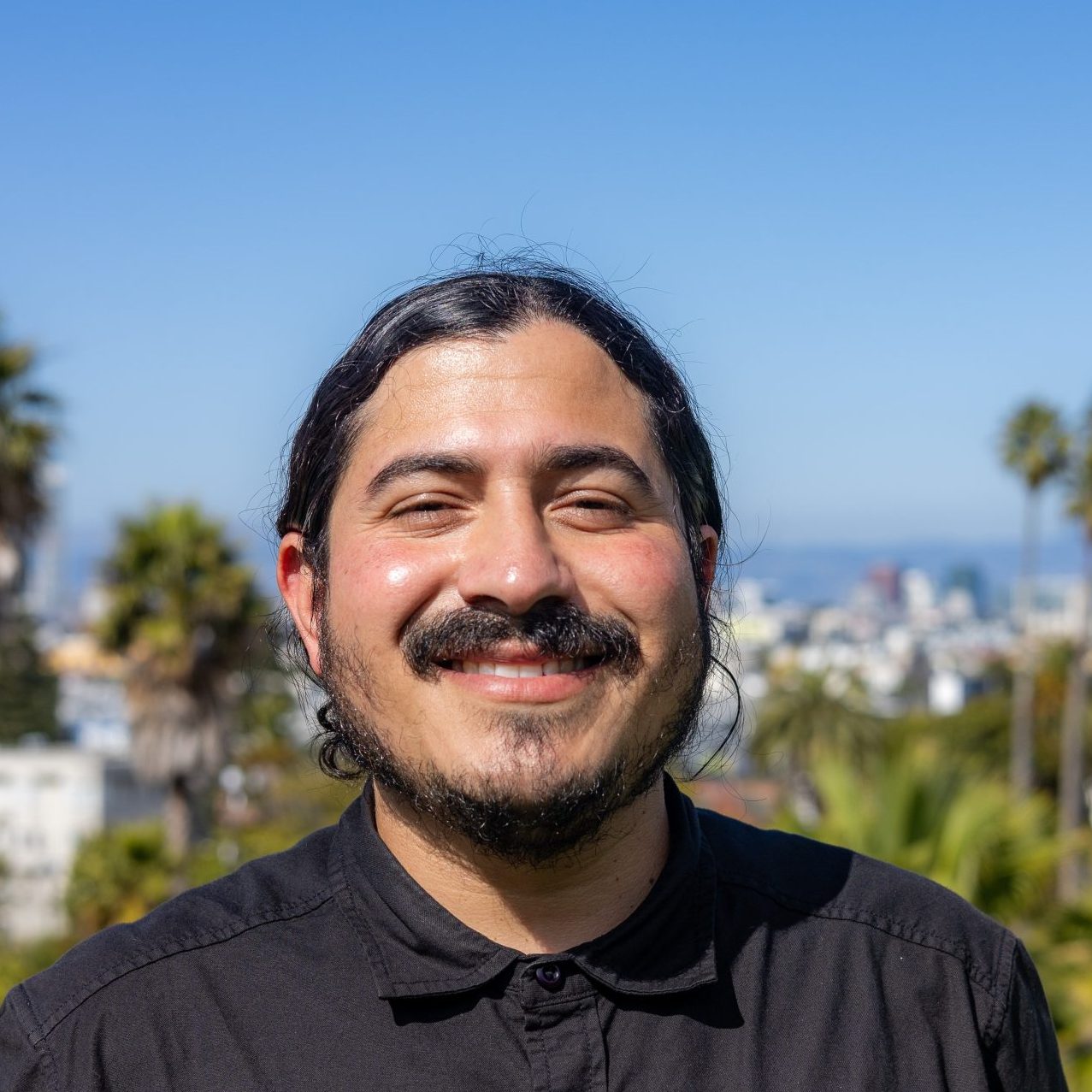
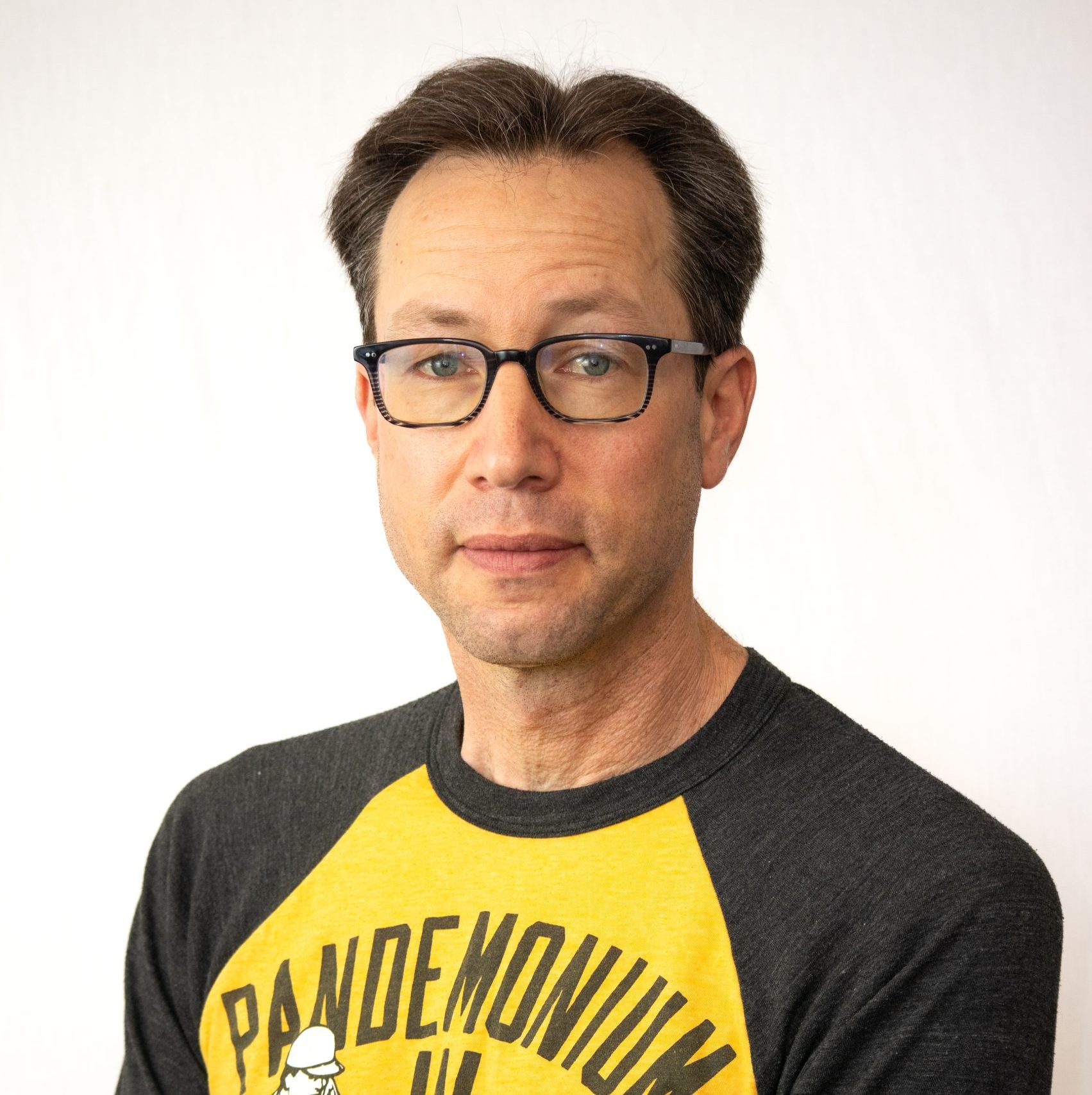

Five neighbors of Shotwell Street in the Mission District filed a lawsuit Tuesday against San Francisco over what they called the city’s inability to address sex work on their street, as well as frequent public urination and drinking at Jose Coronado Playground.
The lawsuit has quickly resulted in action: Mayor London Breed and Supervisor Hillary Ronen announced this morning in a press release that the city will install barricades and cameras along Shotwell, similar to the barriers on Capp Street nearby, to deter sex work and cruising.
The city will also start issuing “Dear John” warning letters that would be mailed to the owners of cars “seen in a known area for prostitution activity,” in order to “discourage such behavior by notifying drivers” — and, perhaps, their families.
“Additionally, it is possible that others residing at the vehicle owner’s address may also become aware of the letter’s content upon its arrival,” the announcement continued.
The plaintiffs claimed the city’s decision last year to install barriers on Capp to deter sex work had only moved the problem onto Shotwell. Asked if the city’s hurried response to install yet more road barriers was satisfactory, lead plaintiff Ayman Farahat responded that “We will believe it when we see a real difference, not a press release.”
Farahat stood alongside his neighbors and co-plaintiffs Wednesday morning at a press conference at Jose Coronado Park, at Shotwell and 21st streets, officially announcing the suit. He said then that he is looking for permanent solutions, not road closures.
“Moving Johns and pimps from Capp Street to Shotwell Street does not help address the root causes,” Farahat said.

Most of the plaintiffs live on Shotwell near the park which, most weekend nights, is a haunt for sex workers. Several stand on the corners of Shotwell and South Van Ness Avenue for a block in either direction of 21st Street.
The plaintiffs said they have no option but to file the lawsuit after City Hall, the San Francisco Recreation and Parks Department, and the San Francisco Police Department failed to act after multiple calls and complaints.
“For years, we’ve been pleading with the city to address these problems, but our efforts have been met with rehearsed indifference that borders on neglect,” said Farahat, who has lived on Shotwell for seven years. “These conditions have taken a considerable toll on our quality of life and enjoyment of our property.”
Vicky Mojica, a nearby resident, exited Jose Coronado Park on Wednesday morning just minutes after the plaintiffs’ press conference ended. She has two kids and brings them to the playground three times a week.
“It’s uncomfortable, because there are men who are smoking, and sometimes they hang out at the playground,” she said in Spanish. She said she was glad someone was pursuing a lawsuit.
The City Attorney’s Office, for its part, said it would review the complaint whenever it receives the official documents.
The lawyer representing the plaintiffs is John Potter from Quinn Emanuel Urquhart & Sullivan. Legal observers recognize Potter as an excellent lawyer, and his firm is internationally known. The communications consultant for the plaintiffs is Jess Montejano, who also currently works as the spokesperson for mayoral candidate Mark Farrell.
When asked how the neighbors were paying for attorneys and professional communications consultants, Farahat said, “No comment.” When asked about Montejano’s relation to the suit, he said, “We work with the best.”
San Francisco has been sued over street conditions before
This is not the first time that San Francisco has been sued regarding chaotic conditions and a lack of city services.
In 2020, University of California Law, San Francisco (formerly UC Hastings), sued the city over street conditions in the Tenderloin. The city subsequently entered into a settlement in which it is mandated to make good-faith efforts to reduce the neighborhood’s tent count.
But that settlement did not set a precedent. In March, a group of Tenderloin residents and two hotels sued San Francisco, claiming the city was not doing enough to address open drug dealing and consumption, tent encampments and violent behavior. That federal lawsuit was gutted on July 19 by U.S. District Court Judge Jon S. Tigar, who dismissed eight of its 11 counts.
“The strongest case is if you can show the city actively did something to bring the problem to the neighborhood. The mere failure of the city to enforce laws and not take action regarding the obvious prostitution and drug-use on Shotwell — that usually is not going to survive.”
Matthew Davis, attorney
Matthew Davis, a UC Law alum and one of the lead attorneys for the law school, sees both similarities and differences between the 2020 case and the suit filed yesterday.
“It is similar in that it is a suit borne out of the city clearly treating these neighborhoods differently,” said Davis. “There is no doubt that if what is happening on Shotwell were happening in the Marina or North Beach, the city would respond differently. There would be tremendous enforcement if it was happening at Divisadero and Broadway.”
But, while similar, the situations are not identical. The law school has alleged that San Francisco, critically, has taken “affirmative conduct” that has worsened the conditions in the Tenderloin. This would include disseminating drug kits to addicted persons living on the streets in that neighborhood, thereby both entrenching them on-site and potentially drawing outsiders.
It is not clear if anything alleged in the Shotwell suit constitutes “affirmative conduct.”
“The courts and legal doctrine have set up a pretty high burden you have to clear to sue the city, ” Davis said. “The strongest case is if you can show the city actively did something to bring the problem to the neighborhood. The mere failure of the city to enforce laws and not take action regarding the obvious prostitution and drug-use on Shotwell — that usually is not going to survive.”
Davis is not certain if the contention made in the suit that erecting vehicular barriers on Capp Street triggered lawlessness on nearby Shotwell will suffice.
“That,” he said, “is going to be for a judge to decide.”



For a safe, walkable city I thought we needed Vision Zero. Turns out the backlash to prostitution and sideshows works much faster.
Thank you to our neighbors on Shotwell for taking action to improve our street conditions.
Walking my dog and baby down the stretch of Shotwell in question, I’ve seen used condoms on the ground. There’s a school in the area. It’s infuriating that it requires press conferences and litigation to get the city to take the concerns of Mission residents seriously.
Why don’t these people just go to a non-residential area? No one would care if this were happening in some warehouse district.
You’re missing the point, the Bicycle Coalition would love to set up barriers to cars on every city street with any type of crime. That’s why they’re secretly pushing this through under the hype of local interest.
The city’s contempt for Mission residents is appalling. Hillary Ronen would sooner barricade every street in the Mission than inconvenience the “sex workers.” She shows the same “consideration” to the RV dwellers, illegal vendors, and people shooting/smoking dope in the street.
Ronen has long refused to consider the taxpaying residents who are forced to pay for this disorder. The Mission needs a supervisor who will not tolerate it.
SFPD could not possibly police prostitution, substance use, vending and RV dwellers even if they wanted to even if the district supervisor demanded it even if they were fully staffed.
SFPD would probably need to double in staffing to enforce all of those laws, and that would mean spending around $2b/yr on an SFPD run by the SFPOA who’s reputation precedes it which alienates potential qualified applicants.
That supervisor thought she was fixing the problem. She looks like a deer in the headlights. One of the many out of towner who has screwed up the city.
Is there a good reason not to legalize it? Allow it indoors only, at designated places of business that are permitted and are routinely inspected (similar to how restaurants are given report cards periodically). And then clamp down hard on any illegal operations (similar to gambling).
I have to think this would not only improve the lives of those who live adjacent to these current, ad hoc operations on the street, but the lives of the workers themselves. If they are assaulted today, who are they going to go to without exposing themselves to legal action? If it’s legal and they’re registered, they now get the backing and protection of the legal system.
Oh, and tax it.
Seems like a good idea to me. What consequences am I not considering?
All of the plaintiffs have direct leads pointing to their true incentives behind suing the city.
Between Joyce ferman’s city tours that require the city to look pleasant to tour, to David quinby complaining that Valencia streets very sane bike lanes destroying business, ie measures that make the city more livable and usable to people who don’t drive who live locally. To Ayman Farahat’s opinion articles about how the mission is somehow is worse than the tenderlion, which just comes off as wishing they could afford to live in a better district…
These people are seemingly educated well off individuals who are better off lobbying the city for universal basic income or better safety nets to support these individuals. The fact that these people can breathlessly claim that these are sex trafficked individuals harming their community is simply ridiculous. Do they have any evidence for these claims or is that just what they think.
Whenever i’m walking down shotwell at night and i see these sex workers i know they’re working and just trying to survive. These people are rarely out during the day and are minding their own business. The mission should talk to these people suing and actually try unwind their rhetoric and dig deeper into why they’re pursuing these legal actions..
We should defund the poverty nonprofits and direct those dollars to UBI for poor people.
The issue with sex work on Capp or Shotwell to my mind is not the selling of sex per se, rather conducting business in a residential neighborhood. These residential streets are not zoned for whoring.
I find the “pretend to care” about addicts overdosing and sex workers being abused to be little more than covering for their personal moral objections to sex work and substance use.
SF should find a location in a light industrial or commercial zone that are abandoned at night in Showplace Square and contain sex work there, providing services and toilet and sanitary facilities.
You do realize a big part of the money that makes SF “livable” is brought into town from people visiting. And if you paid attention walking down Shotwell at night, you’d know the biggest issue is drunkass John’s clipping parked cars, pissing and throwing up on residents’ frontstairs and the like.
I have lived nearby for 34 years and there has been prostitution on Shotwell and Capp for all the years I have lived here. I remember it being way worse in the 90’s, as the gangs were worse then too.
What’s the purpose of this post? Are you saying residents should just shut up and stop complaining because it used to be worse? If that’s not the message you were trying to convey, then what?
There needs to be reeducation, a safe house, job training and therapy for the prostitutes. The pimps and the johns need to be arrested and jailed. Barriers are ridiculous bandages to this problem.
Like the homeless situation, address the root causes and develop services for those root causes.
SF and bandaides! Crazy stupid!
I hope there are larger plans to include more people and parts of the Mission to address this issue. I worry about this street-by-street, street vs. street model.
I sympathize with Farahat, et al’s frustration — I live on Utah Street and often feel the city does not listen to or care about our street and block’s residents. I love Shotwell St and that area, take my family trick or treating there, play basketball and take my child to Coronado often, and lived just a block or so down the street on Florida for some time. I would prefer it to be free of the issues noted in this article and the lawsuit. Though it must be said that some of these issues cited have been going on for years if not decades (and I hope Farahat and others know that too), I agree that tolerating these issues as they are is unacceptable.
Nevertheless, I am seeing coalitions, street-by-street, rather than broader coalitions across the neighborhood forming to deal with issues that affect all of us across the neighborhood. Solutions that simply push problems to neighbors, even just one street over, are not solutions in the interest of the neighborhood’s residents broadly, and we cannot move forward one street vs. another. For what it’s worth, the argument that more affluent areas get more attention than others applies directly to this more listened-to, affluent section of Shotwell St., a “slow street,” compared to most of the other streets in this part of the Mission.
Farahat, to my knowledge, is a landlord on Folsom, and appears to have purchased his property very recently (2018). (Granted, he may have lived in the Mission before, I don’t know.) I hope he and others work on connecting with people, communities, and organizations that have lived in, defined, and stood up for the people of the Mission for a long time. I hope this Shotwell group is interested in helping the neighborhood beyond just their street, as I hope that the Capp St group, who pushed for a solution and received the bollards, is interested as well.
I have lived near Jose Coronado Playground for 30 years, and the combination of drunks on that corner during the day and prostitutes on Shotwell Street at night has been a chronic problem that entire time. A rectangle that includes Capp, Folsom, and Shotwell between 17th and 21st Streets (give or take a block) has been a well-known prostitution zone for decades.
In the early 2000s, in response to numerous complaints from residents, the police experimented with placing temporary metal barricades at every intersection of Shotwell Street in that zone from 11 pm until dawn. This response is documented in an SFGate article dated April 30, 2001. But the cops were inconsistent about moving these barriers from the sidewalk to the street at the appropriate time, and anyone could move them back to the sidewalk whenever they wanted. So this solution never really worked. After several months or maybe a year, the barricades were removed.
Back in the late ’90s and early 2000s, cops played a cat-and-mouse game with prostitutes and would occasionally arrest them (loitering for prostitution used to be a crime in California). But the DA rarely if ever prosecuted them for what were often viewed as “victimless” crimes. And the pimps mostly stayed in their cars and out of trouble.
Meantime, there was, and is, so much money to be made when 20 illegal sex workers can each bring in $1,000 or $1,200/night. Thus the city has allowed a highly lucrative criminal enterprise to flourish for decades, with pimps transporting young women from Oakland, Hayward, Vallejo, Sacramento, Las Vegas, and other distant cities to our quiet residential neighborhood.
But, by all means, let’s move the problem to Treat or Alabama. Is that really the best solution that elected officials, SFPD, and the DA’s office can come up with?
Legalize it like we did Gay Marriage !!
Sex ain’t goin’ away.
Neither are our sexual appetites.
Bob Seger calls it, ‘the Fire Down Below’ and …
“Here come the banker and the lawyer and the cop …
one thing for certain it ain’t ever gonna stop.”
The biddies say that anything that’s so much fun must be a sin.
SUV cops need the girls to cooperate to protect them from the pimps and exploitation by other cops and others in positions of power.
Cause legally, all these workers, women and men alike are criminals.
Folks, this is a leftover vestige of damned near all of Human History.
It doesn’t have to be that way.
Amsterdam has legal Red Light Districts that bring tourists from around the entire Earth.
So should San Francisco.
Let’s start looking at this and City/Ohlone Casinos in the Armory and Twitter buildings.
Challenge Vegas and Amsterdam and give the City a valuable new industry that is Renewable.
Fill some of those 55 empty storefronts on Mission Street.
I challenge Ronen to call for a Committee hearing to study the issue.
It makes sense.
Let’s fight this with the traditional American Battle Cry when faced with someone doing on the couch across from you or in the back of your car or wherever …
“Get a Room !!!”
Go Niners !!
(our D-9 LWVSF Forum is up on SFGTV for the real perverts)
h.
LOL.
Capp Street residents complain about sex work on their street — which has seen sex work for actual decades — and then the City puts up barriers. So then the activity moves to Shotwell Street, just as everyone predicted.
Shotwell Street residents complain about sex work on their street.
Next, the City will put up barriers on Shotwell, pushing sex work to … “Some Other Street.”
Then, “Some Other Street” residents will complain about sex work on their street.
Shockingly, “make it go away” has for the thousandth time proved ineffective. If only there were studies and expertise and decades of lived history that showed it was always going to be ineffective. Don’t worry; a lawsuit is coming, and that will change things.
Then
Ugh. Rich people getting their way again. It’s just an excuse to get the street made into cul-de-sacs just like Capp.