


The votes have been tallied — people on 24th Street want increased lighting, less graffiti, more neighborhood events and workshops for local businesses. And with $35,000 to start, community members circled up their chairs Thursday night to figure out the first steps.
Over the last eight months, District 9 Supervisor David Campos, together with the Office of Economic and Workforce Development and the Local Initiative Support Corporation, led a public process to determine the priorities for a transitioning corridor.
“It’s a process that recognized that the community has changed and is changing,” Campos said. “There is a way to balance, on one hand, trying to maintain the character of the neighborhood but on the other hand welcoming these new people into the community. I think the process allowed people of all walks of life to have a discussion, to hear one another.”
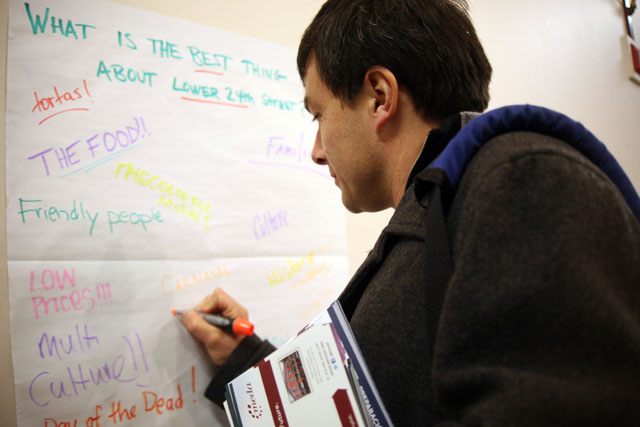
The organizers hosted meetings inviting community members to voice their concerns. They asked what people like about 24th Street, and what the problem areas are. They studied vacancies on the street and the demographics of the neighborhood.
The Latino culture, unique diversity, public safety and community resources added up as strengths; gangs, poverty and crime as weaknesses. Gentrification also became part of the discussion.
Out of these meetings, a steering committee of 22 people was formed, and after hundreds of volunteer hours, it whittled the public input down to the three goals of more light, less graffiti and more events, or a friendlier 24th Street.
Thursday night, 60 people crowded into St. Peter’s Church near 24th and Alabama streets and split into three groups to focus on the separate priorities.
The largest group rallied around creating a more pedestrian-friendly street. They discussed lighting, replacing dying trees with ones that let in more light, and repairing sidewalks.
The second group discussed the kind of community events they could organize to bring residents and business owners together.
Martin Steinman, who led the group, said they were focused on “low-impact events” that don’t affect transit systems or parking.
One idea that caught interest was a monthly Friday night event that’s been tried in neighborhoods like the Haight. Suggestions included businesses staying open later and bringing in performance groups. “It would create an atmosphere to bring people into the corridor,” Steinman said.
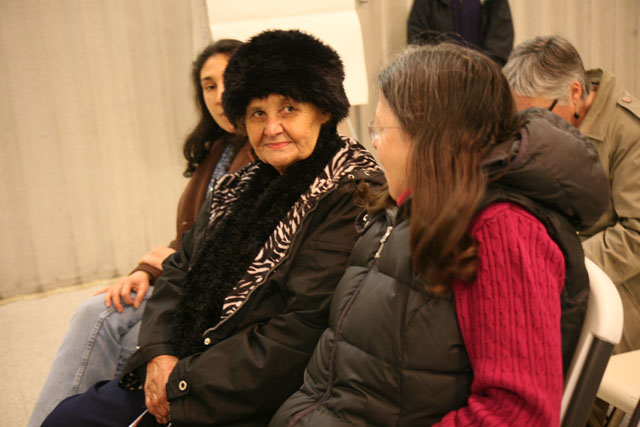
Rita Alviar has lived on 24th and Bryant for 50 years and runs the Mission Education Project. She liked the idea of a Friday night event because “right now there’s a lot of people who don’t know what the businesses are.”
Alviar wants to focus on uniting residents and businesses, and said the meeting Thursday was good for that. The change she’s witnessed over 50 years, she said, is “part of life. As long as it’s for the benefit of the community, I have no problem with changes.”
The third group discussed supporting existing businesses and attracting and retaining customers.
Hetal Patel, from La Brava Theater, who led the group, said merchants should work together to help each other bring in customers.
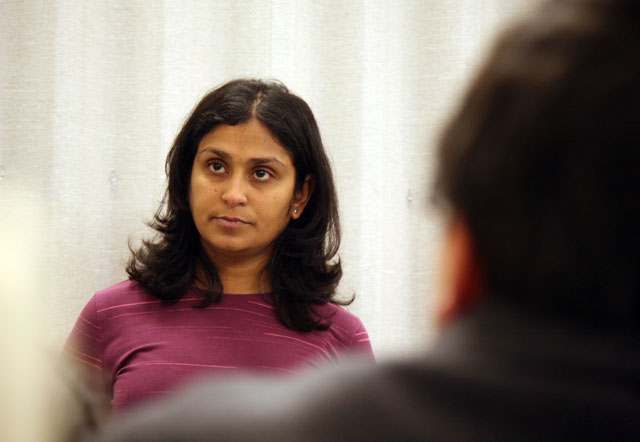
When she has performances, she said, Casa Sanchez will bring in food, and in return they put an advertisement for the business in their program.
“We’re trying to cross-pollinate our patrons, finding a way to interact. When I have a show, I want taquerias and St. Francis, right next to me, to benefit.”
Other ideas to promote the economy on 24th Street include helping businesses secure their leases, mentoring long-standing merchants on marketing and operations, and talking to the visitors bureau to promote the street as a destination.
Improving the economy on the street has been a priority for Erick Arguello, with the Lower 24th Street Merchants and Neighbors Association, who facilitated the meeting.
“The corridor is becoming more vibrant, there’s more business coming in,” he said last week. “We want these businesses to stay — it helps the economy on the corridor in the long run. Over the years, a business goes, another comes in. It’s always revolving.”
Organizers hope people who participated will meet regularly to implement the steps that lead to completing the goals. Some of the steps won’t cost anything, like organizing the low-impact events or meeting with the visitors bureau. But the improved streetscaping and workshops come with a price tag.
For now, that’s all right — the $35,000 “seed money” that comes from the U.S Department of Housing and Urban Development can get things started.
“We do have a small but significant amount of funds,” said Jordan Klein with the Office of Economic and Workforce Development. “We can pay for almost everything we have on the list.”


Another clarification… the Friday event is planned for once a month, instead of once a week.
On another note, it is very important to mention that if any neighbor/merchant would like to be involved in this process, they can contact http://www.lower24thstreet.org/
Any participation would be greatly appreciated.
Thanks, changed it to a monthly event.
Thank you for covering these community meetings. It’s one of the things (along with your education coverage) that I appreciate most about Mission Local.
I’m wondering if you or Supervisor Campos could elaborate on who “these new people” are in the following quote:
“It’s a process that recognized that the community has changed and is changing,” Campos said. “There is a way to balance, on one hand, trying to maintain the character of the neighborhood but on the other hand welcoming these new people into the community. I think the process allowed people of all walks of life to have a discussion, to hear one another.”
Supervisor Campos was referring to new merchants coming onto 24th Street. Thanks for the question and I apologize if that wasn’t appropriately contextualized.
Thanks for the clarification!
great story, great work 24th st residents and merchants and community. thank you all !