
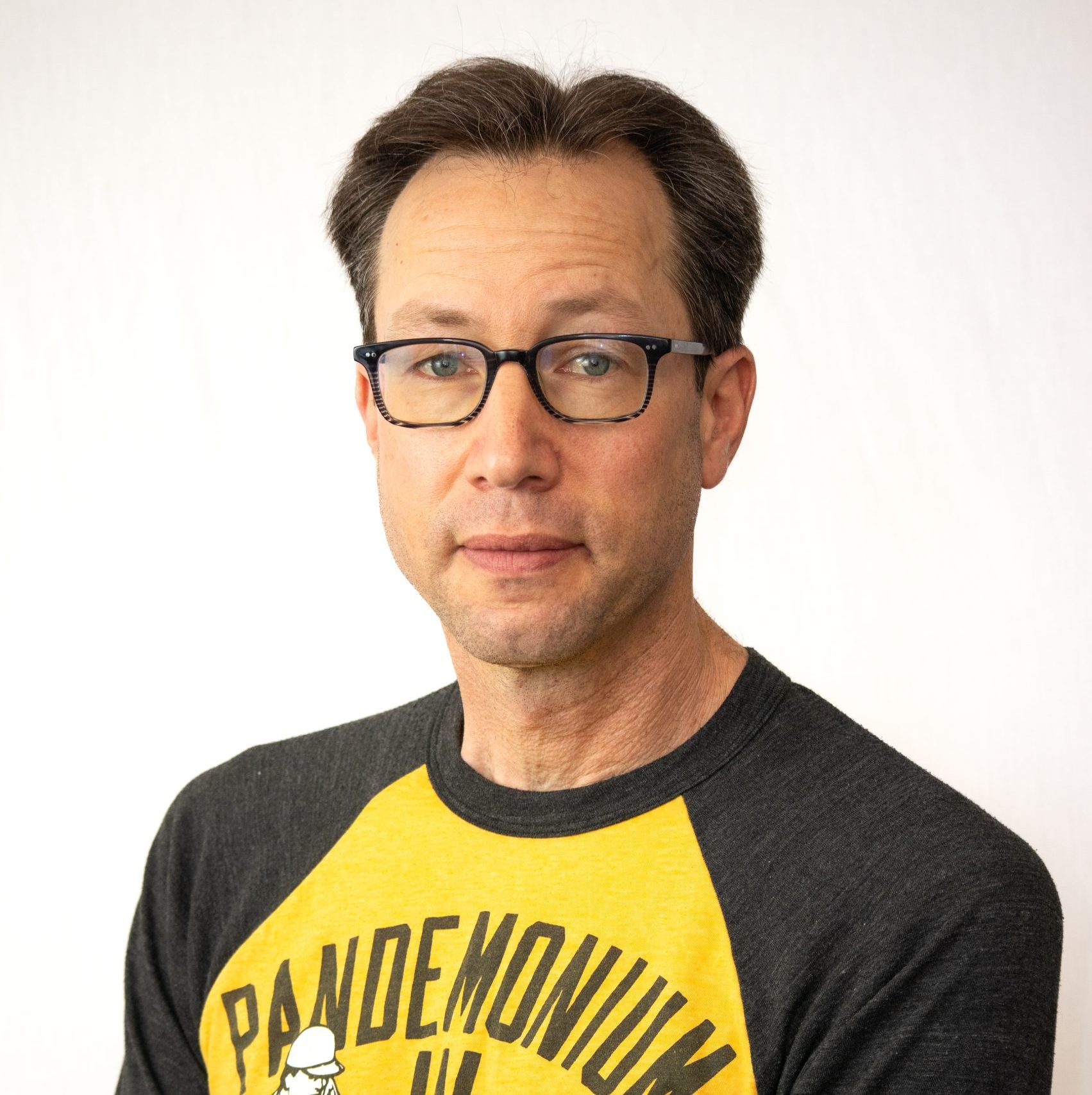
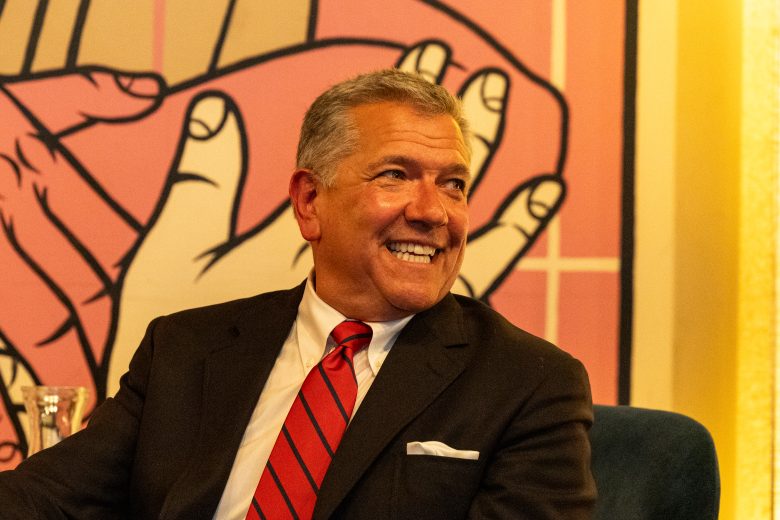

Supervisor Matt Dorsey speaks in a mellifluous baritone reminiscent of a 1950s radio announcer. Everything he says, literally, sounds sincere.
But that’s also because Dorsey is a sincere person. Even his most strident critics believe the SoMa supe means well. Dorsey, for good or ill, appears to believe all the things he says. That does set him apart from a number of his City Hall colleagues.
So when the District 6 supervisor says he wants to create drug-free permanent supportive housing for people in recovery, it’s a reasonable assumption that’s what he wants.
It’s also a reasonable ask: There is definitely a place in this city for drug-free supportive housing, in which formerly homeless people in recovery are living indoors, with far less in the way of temptation. Dorsey is carrying legislation to create it, and it’s hard to see how it won’t advance.
Much else, however, is difficult to foresee. Dorsey’s legislation is not the easiest to parse: Its opening sentence is 150 words long. The famously long first sentence of the Declaration of Independence, by comparison, is just 71 words.
“Guilty as charged,” Dorsey said at a public interview last week. “I struggle with brevity.”
Dorsey struggles with more than just brevity, and he’s been very open about this. The District 6 supervisor’s battles with addiction and subsequent recoveries have become his core political identity.
During the pandemic, he relapsed into a methamphetamine addiction not once, but twice while working as the San Francisco Police Department communications director, a command staff position.
In a different time or place, a police department higher-up buying and consuming hardcore drugs and relapsing multiple times would’ve been fodder for an attack ad. In the present day it’s the basis of Dorsey’s own campaign ads, and his defining attribute as San Francisco’s de-facto Recovery Supervisor.
Now, the Recovery Supervisor has set his sights on the city’s thousands of units of permanent supportive housing, which he refers to — orally and in his legislation — as “drug-tolerant housing.”
This is loaded language from the longtime comms guy. Homeowners do not have to piss in a cup before receiving their mortgage interest tax deduction; all of Pacific Heights and Forest Hill are drug-tolerant housing.
One of the takeaways of the Bob Lee murder trial, which was largely set in Dorsey’s District 6 and squarely centered in the luxurious Millennium Tower, is that drug-use among this city’s elites is rampant — and tolerated.
By depicting the city’s permanent supportive housing stock as chaotic drug dens, Dorsey is, presumably unintentionally, giving the city a black eye and providing succor to the legion of online San Francisco shit-talkers, including those holding federal office.
Nailing down funding for permanent supportive housing is already a difficult and years-long process. Self-inflicted bad press doesn’t help.
“I am baffled why they have to attack permanent supportive housing to achieve sober housing. I don’t understand why it’s this zero-sum game,” says Sam Moss, the executive director of Mission Housing, which runs several hundred units of permanent supportive housing for the formerly homeless.
Moss lamented that Dorsey’s legislation “makes it harder to build housing.”
“Banks see this. Investors see this. It’s another self-inflicted wound,” Moss said. “I’d put my kids’ college savings on lenders seeing this and building in San Jose instead. It’s deflating.”

The funding mechanisms for permanent supportive housing are complicated. Not Bill Wyman’s family tree complicated, but plenty complicated.
A great deal of permanent supportive housing is funded through a blend of local, state and other funds, and permanent supportive housing that receives state dollars cannot evict someone for merely using drugs. That provision is thanks to state “Housing First” policies aimed at keeping the formerly homeless housed.
Dorsey’s legislation would take aim at that provision, stating it would “bar the City” from funding permanent supportive housing for the formerly homelessness “that prohibits evictions on the basis of drug use alone.”
Sounds serious! But there are major caveats. That’s because this local ban would not apply to housing proposals funded with blended dollars that include state funding sources that prohibit such evictions. And, right now, that’s most every proposed supportive-housing proposal.
Dorsey’s legislation only applies to future San Francisco permanent supportive housing, not the current supply. And it would only apply to wholly city-funded permanent supportive-housing proposals, or proposals funded all or in part by abstinence-minded private sources.
But nobody’s planning to fund anything that way. Virtually every proposed supportive housing site, in both the abstract and the concrete, is being underwritten with the blend of sources that would preclude Dorsey’s legislation from being relevant.
As such, Moss refers to Dorsey’s legislation as “virtue-signaling.”
Dorsey’s district builds a plurality, if not a majority, of the city’s new housing. He’s a YIMBY champion and described District 6 as a realm of self-selecting YIMBYs.
YIMBYs, however, hate his proposed legislation.
“Making it harder to build permanent supportive housing, at a time when San Francisco is already far behind on its state housing production goals, is exactly the wrong thing to do,” said Leora Tanjuatco Ross, the California director of YIMBY Action.
Nowadays, a city imposing undue burdens on residential development — be it a 25-story Marina tower resembling a Princess cruise ship or housing for the formerly homeless — can face legal ramifications. YIMBYs notice these things.
“This bill will have a chilling effect on permanent supportive housing,” Ross said, “at a time when San Francisco has produced less than 5 percent of our Very Low Income state housing goal.”
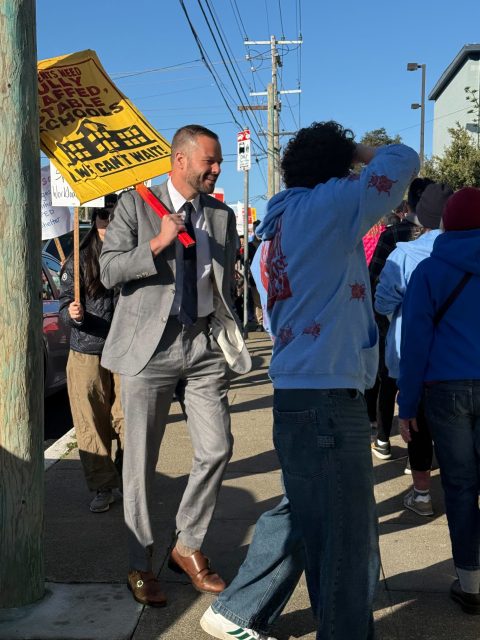
But what if the law changed, and you could more easily fund sober housing with state dollars? Well, that might change everything. It could take Dorsey’s plan to bar the city from putting money into all but drug-free supportive housing out of the realm of the theoretical and into the realm of the possible.
In fact, the law nearly changed last year: Assemblymember Matt Haney’s legislation to put state funds into sober housing passed through both houses unanimously, only for Gov. Gavin Newsom to veto it.
The city of San Francisco was blindsided by Newsom’s veto. So was Haney, and so were lots of people working in the interstices of housing and addiction recovery.
Haney went back to work. He’s preparing a similar bill and working with the governor’s office on it. Haney fully expects that, this time, the governor will sign. That could come as soon as the end of the year, with the law potentially coming into effect in January.
So that could be significant. Instead of Dorsey’s proposed legislation applying only to essentially nonexistent funding models — “virtue-signaling,” in Moss’ words — perhaps it really could allow the city to take state money for supportive housing and still restrict tenants to abstinence-only conditions. That would give Dorsey’s legislation real teeth.
But just how the preliminary state and local bills would interface is hard to say; they are preliminary, after all.
Haney and Dorsey also clearly have different ideas of what sober housing entails. Dorsey said last week that any permanent supportive housing resident who wants to live away from drugs and its associated troubles could have a place here.
Haney is envisioning a far more regimented and intense situation in which residents are just into recovery and immersed in programming.
It’s also unclear what would happen when someone relapses. The ability to evict for drug use alone is a major tenet of Dorsey’s legislation, though he stresses that a single relapse will not be “automatic cause” for an eviction.
His legislation states that the homeless department must make its “best efforts” to move someone who’s flunked out of sober housing to somewhere more suitable. But this is hardly ironclad language.
Haney’s preliminary sober-housing bill, by contrast, has a lot more specifics — and stronger protections for residents.
It establishes “a prohibition on the eviction or discharge of a resident” who uses drugs unless not one, but both of the following conditions are met: The resident “rejects a warm handoff to permanent housing” and then subsequently also rejects a “warm handoff to an emergency shelter, interim supportive housing, or an appropriate level of care consistent with the American Society of Addiction Medicine criteria.”
This level of protection and specificity is important: Evicting people using drugs indoors so they can use drugs outdoors is counterproductive. But it’s also not sober housing if people aren’t sober.
Separate and apart from the fixation on evictions, it’d just be prudent to have units set aside where people who fall off the wagon can be transferred. This is how it’s done elsewhere.
Even people with good-paying jobs and high-quality insurance and sympathetic employers and loving families relapse. When, in the course of human events, it becomes necessary to write sober housing legislation, it’d be good to remember this. And plan for it.
I’ll be the strident critic who doesn’t think Dorsey means well. The other day he tweeted “Yay!” about Israel violating a ceasefire and murdering over 203 civilians in Beirut. This is a guy who gets off on cruelty – at home as well as abroad.
There are two political paths I’ve seen people take who emerge from the throes of addiction. Some want to genuinely help as many other addicts recover as they can, so they listen to the evidence and support what actually works: harm reduction to keep people alive until they’re ready to enter voluntary treatment. This is Gary McCoy’s path, and he is a total mensch district 8 would be blessed to have as supervisor.
Dorsey, however, has gone down the second path: disgusted by those who didn’t make it into recovery like him, his repulsion drives him toward cruel, punitive policies that are proven failures. It doesn’t matter to him that evicting people who relapse will cost lives. He thinks the lives of other addicts, who weren’t as fortunate in recovery as him, are disposable. Everything he says, like this nonsensically Orwellian phrase “drug-tolerant housing” (which includes all housing affluent people live in, as you point out), is calculated to push the conversation toward normalizing social murder on our streets. None of it will do a single thing to curb addiction or boost public safety, but he’s having a blast doing it.
Say what you will about Dorsey’s policy proposal, but he certainly did not say “Yay” about Israel violating a ceasefire and murdering over 203 civilians in Beirut. Feel free to scroll his X account and read for yourself.
At least let’s have honest conversations about our elected leaders (and everyone else, for that matter). Sheesh
Yeah, I don’t see anything like that on his feed, and I scrolled back a few weeks. Scott, what tweet did you have in mind?
Likely this one: https://x.com/i/status/2041976183529861457
Thanks, that was the one. I realize now it wasn’t explicitly in response to the war crime in question, so I apologize for using the word “about.” However, Israel killing hundreds in Lebanon in violation of a ceasefire was the biggest Middle East news at the time.
NBC News, April 8, 10:29am: “Israel’s military launched what it described as its most powerful attacks on Lebanon on Wednesday, killing hundreds of people and turning joy over the ceasefire in Iran into panic.” https://www.nbcnews.com/world/lebanon/lebanon-israel-attack-iran-ceasefire-hezbollah-rcna267260
Matt Dorsey on X, April 8, 1:27pm, “Yay! I’m a self-proclaimed Zionist, too!” with an Israeli flag emoji.
Dorsey thinks Truman was a champion of the Jewish people and that Israel is committed to plurality and democracy. Hilarious.
Will not work. But I’m willing put all my money on the fact, when it fails there will be no one to hold accountable.
It seems clear that Supervisor Dorsey is pushing his own desire to be drug free onto the entire homeless community. He should recuse himself from influencing this decision.
Happy to piss in a cup if my mortgage gets paid. Let me know where I can sign up? I’m sure you know at least one NGO that fits the bill?
Like many addicts, Dorsey pushes back on his devils by proselytizing a ONE WAY. Continuously reminding himself of his slippery hold on sobriety. It’s a form of empowerment and affirmation to project his choices on to everyone else. Dorsey’s idea of “evict tenants for drug use — if it poses a danger to others’ sobriety” is a formula for abuse and arbitrary/unfair decision making. It establishes a policy of punishment for uncontrollable behavior without a certain path to change. Dorsey favors punishment and pain because his experience is punishment is motivating. He advocates it for everyone. He’s wrong. In truth, pain is often the cause of addiction. Inflicting pain on addicts as a remedy is like taking a drink to relieve a hangover.
Given that close to 30% of the city’s fatal ODs occur in permanent supportive housing, it’s time that SF gets serious about sober living facilities.
Why are we doubling down on spending city dollars on any substance and psych residential treatment, PSH, for a population that is predominantly drug tourists, who are neither homeless, from San Francisco or particularly inclined to cease using?
Last time I looked it was illegal to use and sell drugs . Courts will never legalize the usage of the street drugs currently in use .
That the city and some think that taxpayers money need and should support housing for those to use is wrong .
Asking taxpayers to support enabling and harm is evil and those asking need to get themselves into some medical care and treatment .