

Nigel Poor’s dining room wall appears to be covered entirely in trash.
In the space above the dining table in her Hunter’s Point townhouse, where one might normally hang a painting, are pinned an ornate, Victorian-era-looking spoon, a lone Barbie doll leg, a crumpled badminton birdie and various smushed tin objects that may have once been sardine tins and aerosol cans.
There are only two objects with any text on them: the ripped front cover of a book, “Of Human Bondage,” and a little scrap of a poem titled “JESUS THE BIKER.”
“He was a lot like you and me,” the poem reads. “The government didn’t like him.”
I ask Poor, who is trained as a photographer, if the collection is part of ”FOUND,” the 1998-2000 black-and-white print series she took of found objects. “Some of it is — but I can’t stop doing it.” She likes to collect objects, she says, and gestures to her partner fussing around in the kitchen behind us. “And so does Rick.”
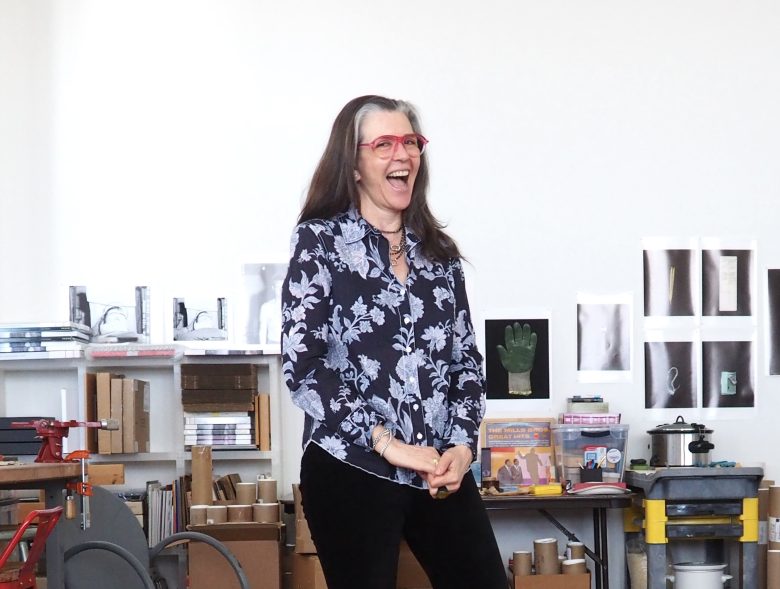
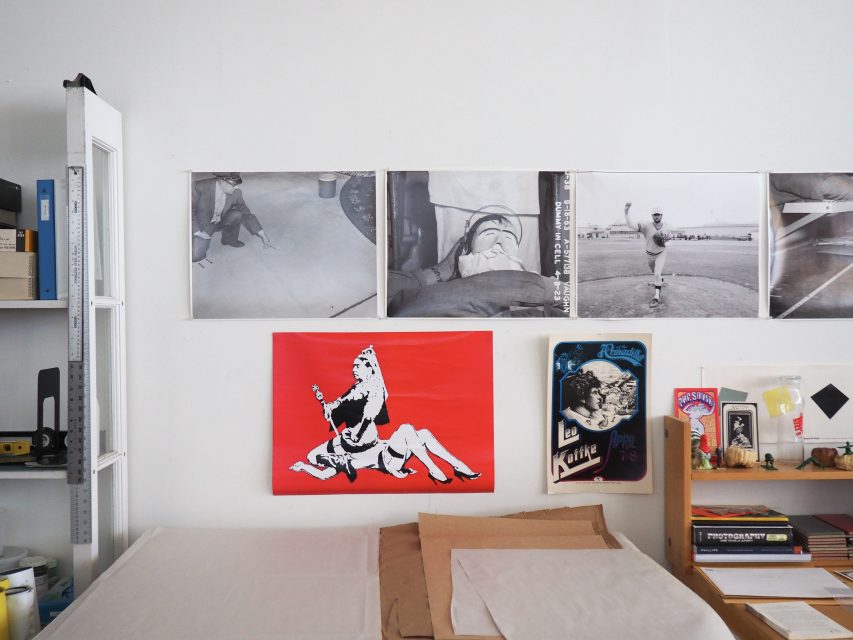
Poor grabs her keys and drives us to the former San Francisco shipyard off Hunters Point, and parks in front of a weather-worn wooden barrack. It’s her art studio. We walk inside.
“You can open any drawer or anything that’s interesting to you,” says Poor.
“Why would you give me so much freedom?”
“Because that’s what I would want to do.”
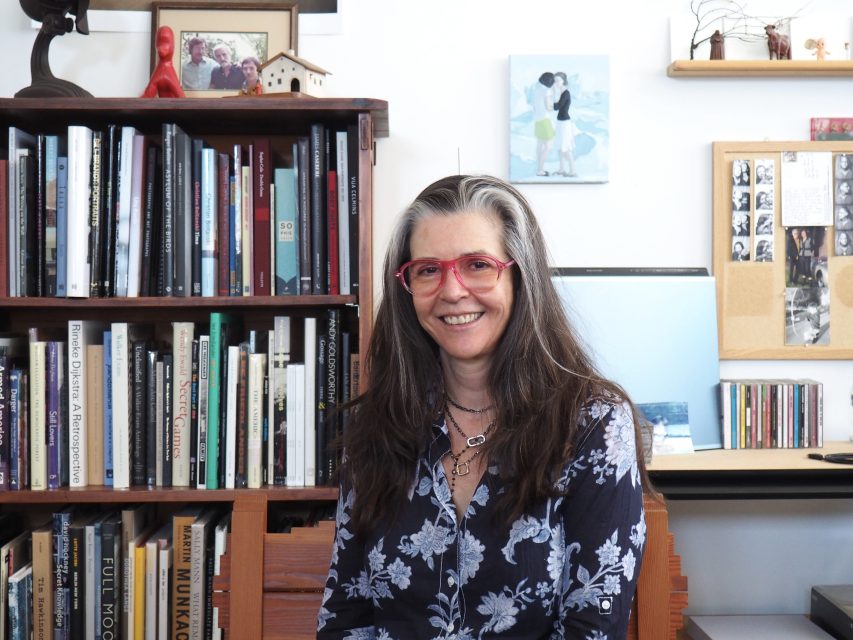
But that’s not quite what I want to do. I look at Poor. Poor is lean and, at 62, looks younger. She has two shots of birch-white that streak through her otherwise dark brown hair, one on either temple. She’s been an artist for most of her life — and a podcast host for the last decade or so, having co-hosted “Ear Hustle” since 2017, a show about the daily realities of prison life in San Quentin State Prison.
“Ear Hustle” has since been so successful that it’s spawned over 75 million downloads across 130 episodes, a Pulitzer nomination and four cross-country tours. This Saturday, Poor and co-host Earlonne Woods will kick off the first leg of their latest cross-country tour, this time at San Francisco’s own Toni Rembe Theatre downtown.
Poor first got interested in working in prisons through three separate events, she later tells me. First, hearing a chance radio broadcast about Kresty Prison inspired Poor to visit the detention center in Russia.
Standing outside the Saint Petersburg prison, she became fascinated with these strange cone-shaped objects littered outside the prison: prisoners would write notes on pieces of paper and then weigh them down with the bread that they ate inside. Throwing these breaded-paper objects outside their window was their only way of communicating with those outside.
Some time later, at home in San Francisco, Poor received a misdelivered letter from an incarcerated person at San Quentin Prison. Then it happened to her two more times. By the time she heard that the Prison University Project was looking for a history of art professor, she knew she had to apply. (Poor is a professor at California State University of Sacramento.)
Working at the prison, Poor quickly learned that many of her incarcerated students were serving draconian sentences under California’s former three-strike policy. “At first when I didn’t know a lot about it, I was like, well, people commit three crimes. Maybe, you know, maybe it’s the right thing.”
But then, Poor tells me, she found incarcerated individuals who would get a third strike for “ridiculous” things: One individual received a third strike — and ultimately a life sentence — for stealing $40 from a cash register.
Poor gravitates to prisoners for the same reason she collects found objects in her studio; she likes neglected things. As a child struggling with dyslexia she remembers being rejected by teachers at her school, who called her “stupid.” It might sound silly, she tells me. But the experience has never quite left her — and she has since taken an interest in the downtrodden in life.
And the random, which includes objects in her home. When I ask her to show me her favorites, Poor picks up a small clay house with what looks like a spinning wheel that loops in and out the structure. She tells me that her parents brought it back for her when she was a kid, probably from Switzerland. She twists the little crank on the side of the house. Music plays. The cart starts spinning round on the track until suddenly — click.
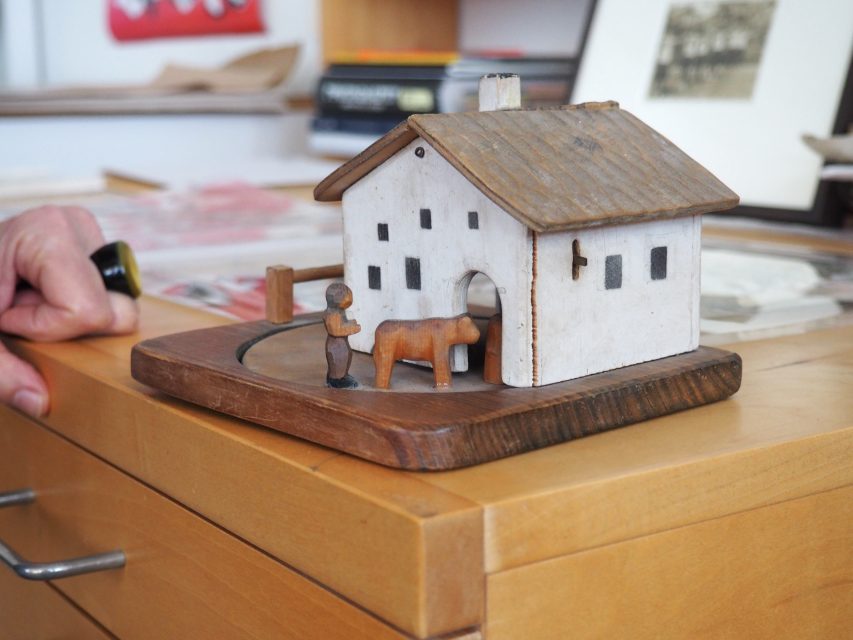
“Did you hear that?” she asks. The music stops.
“There was something about that click that even as a little kid, it was so definitive to me that it was about the end of something, and it reminded me — or it made me think about, like, everything’s going to end,” she says.
I tell Poor she was a profound child. She smiles.
One of the reasons that photography appealed to her as a child, she says, was because it’s about freezing a moment in time and “making time something you can hold in your hand and look at.”
We walk to the other side of the studio. Poor hands me a small glass jar. It’s filled with flies — about 287 of them, more or less — that Poor has meticulously collected and photographed and blown up to fill nine-by-nine-inch prints. The flies are so large and detailed that I start to have the sense that there is something surreal to the photos.
Poor starts rattling off facts. The average fly lives for 14 to 21 days; it lays a quintillion eggs. It’s a number she had never thought of before, she says, and flies she associated with excrement and disease. “But then it does something that’s more amazing than any of us will ever do, which is to make us think of the number quintillion, right.” Even though facts about the common fly say otherwise, it’s a word that Poor associates with flies and that she’s never thought of before.
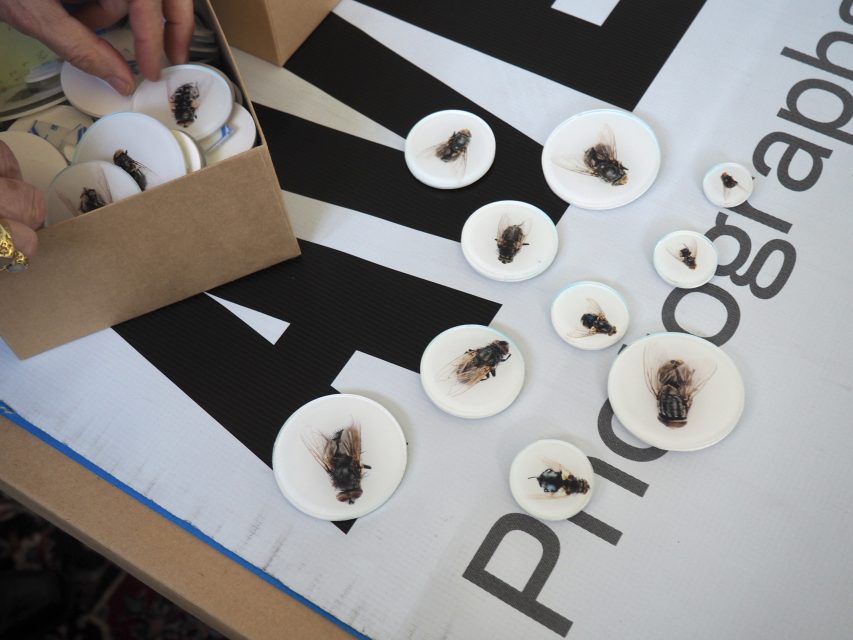
She pauses. “And so I started thinking of the fly as, like, the skull at the bottom of a monk’s bed. Something to make us think about time passing.”
Ear Hustle Live! is coming to the Toni Rembe Theatre in San Francisco on Saturday Apr. 11 at 8 p.m. Get tickets for the Apr. 11 show or see all upcoming tour dates.
