

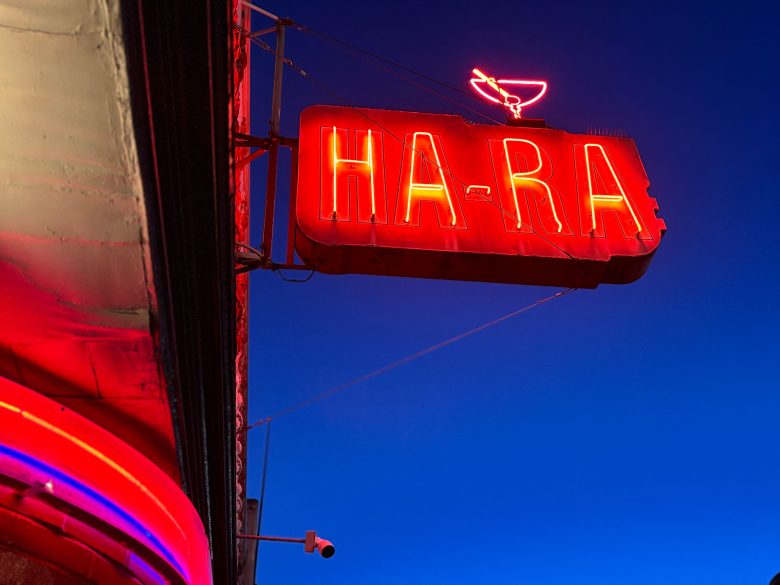
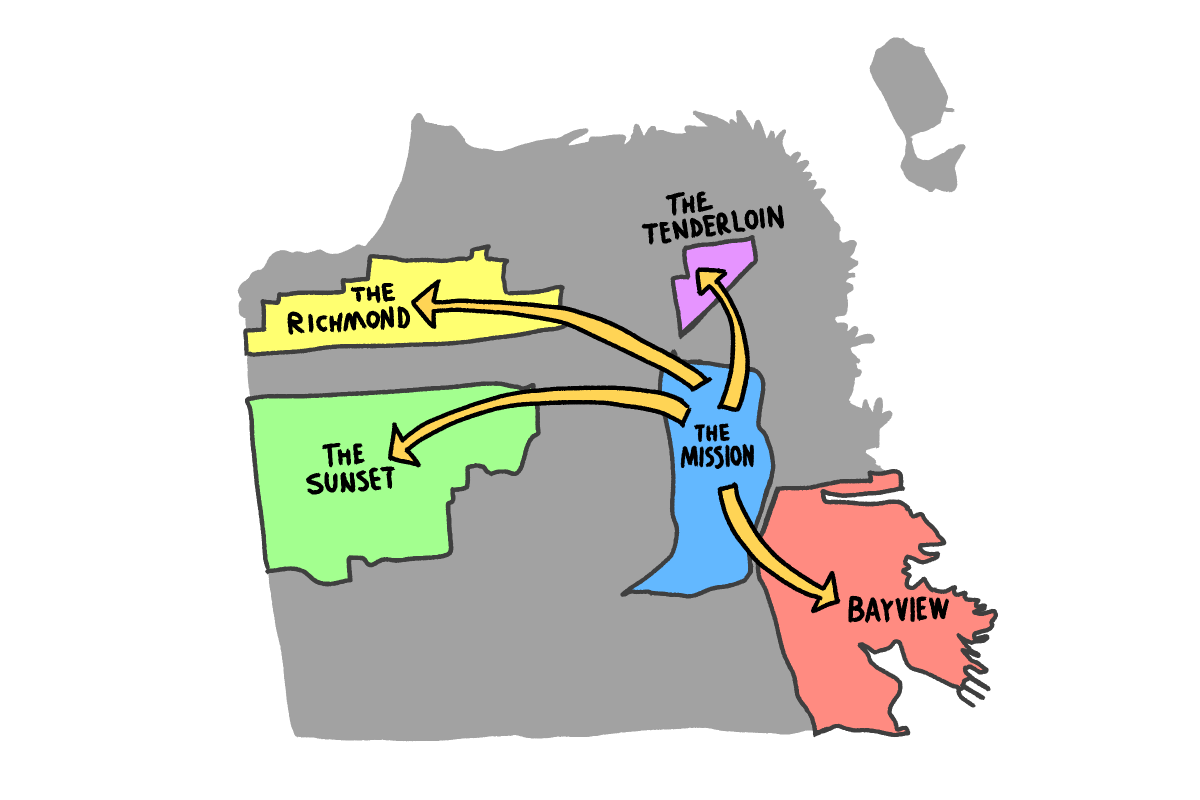
In 1956, boxer Ralph Figari and wrestler Henry “Hank” Hanestad leased a building at 875 Geary and Larkin Streets that had housed the Sarong Club, rumored to have housed an illegal gambling operation.
Figari and Hanestad and opened a new bar in the spot, and named it after themselves — the Ha-Ra Club.
This year, the Ha-Ra Club celebrates its 70th anniversary. It has officially been the oldest bar in the Tenderloin since 2018, when the Gangway closed. Since 2019, it’s been a registered legacy business — one of only five in the Tenderloin, along with Glide Foundation, Eros, Curry Senior Center and Hyde Street Studios.
The bar has stayed more or less the same since it’s opened, but the cast of characters running it has changed. In the 1960s, Hanestad left the business. In 1987, Ralph Figari passed away, and passed ownership of the Ha-Ra Club to his son, Rick.
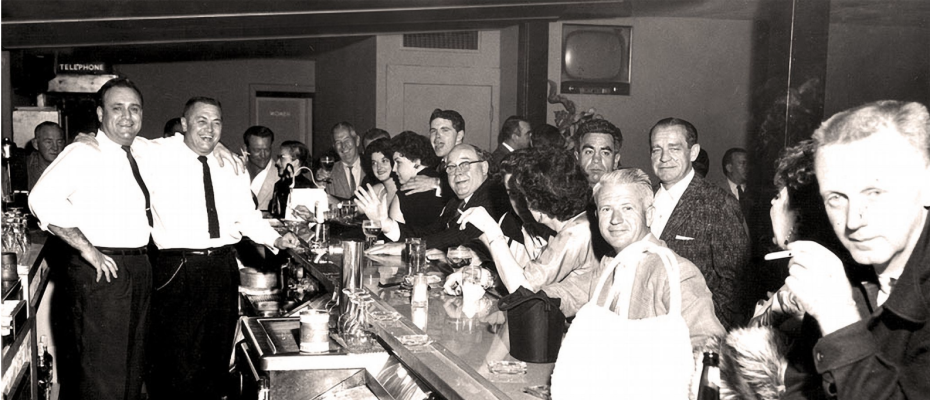
“I grew up in that bar,” Rick Figari said. “I spent more time there than I did in my own home.” He also credits his existence to it — his parents met at the Ha-Ra and family lore has it that he was conceived on the pool table.
Starting from when he was a child, Figari said, he spent countless hours helping his father with day-to-day operations. “My oldest memories were of coming in as a kid with my dad,” he said. “You could smell the soda guns and the spilled beer.”
To his father, learning the ropes of the business was just as important as what he was learning in school. “This neighborhood was rough and you had to be streetwise,” Figari said. “My dad said: “You’re going to get an education. Now boy, I did! I mean the things you see and have to deal with…”
For the 25 years he owned the Ha-Ra, Rick Figari was reluctant to make any renovations. “It was hard to change the place,” he said. “I just couldn’t bring myself to do it.” In 1994, Figari bought the building the Ha-Ra is housed in. But eventually, with no children to pass it on to, he made the difficult decision to stop running the bar itself. “Sometimes, you have to let things go, even if you really don’t want to,” he said.
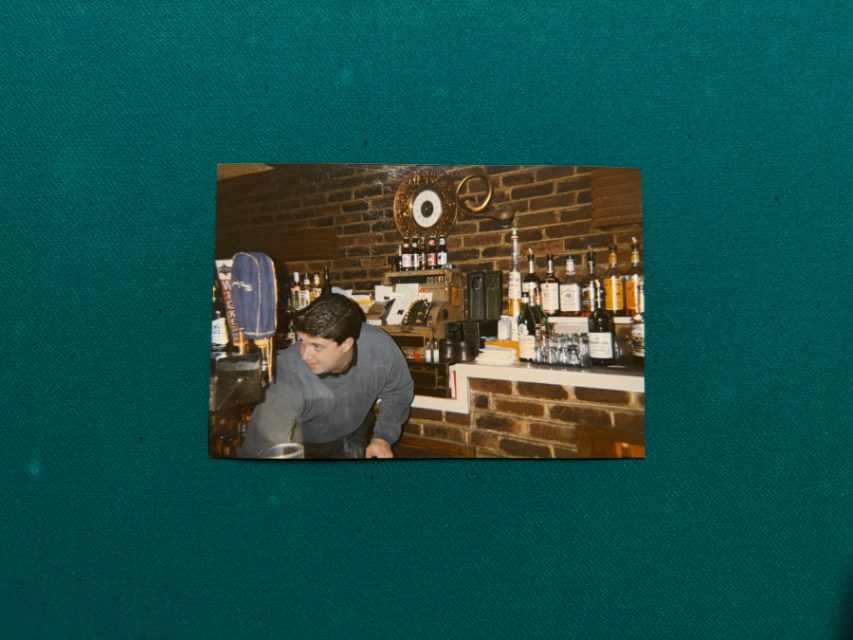
Sometime around 2011 or 2012, Wizz Wentworth was working as an ATM repairperson when a call led him to the Ha-Ra Club. To some, the Ha-Ra might have looked run-down and dated. To Wentworth, it was an absolute knockout — the kind of historic interior that could never be built from scratch.
“Imagine somebody sees a 1947 Ford truck in the middle of a field. It might need a lot of help to get pretty again, but it’s still a 1947 truck,” he said.
The ATM repair gigs were just a side hustle. Wentworth had been in the bar business for decades, most recently as a co-owner of Amante in North Beach. In 2015 Wentworth teamed up with two associates, Tom Whalen and Scott Broccoli, and took over the Ha-Ra business (though not the building) from Figari.
The next challenge, as Wentworth put it: “How do we clean this thing up, not rob it of its soul and hold on to the story? And then still be contemporary enough to still make the market happy?”
They restored the original upholstered bar, refinished the scratched oak floors and kept the old phone booth, revamping it first as a phone charging station, then as a photobooth. They kept the vintage lights and re-papered the walls with new, but 1930s inspired, wallpaper.
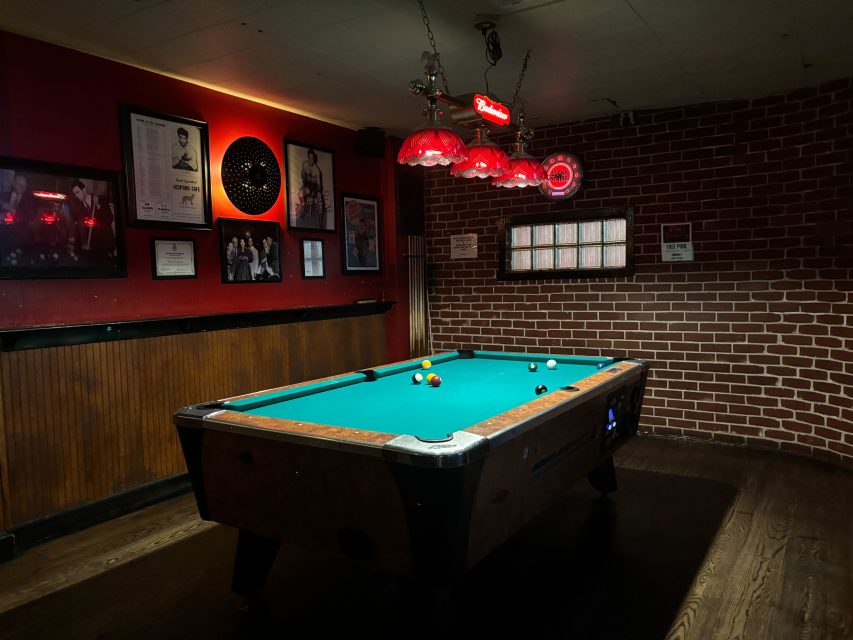
“The public responded immediately and super favorably, because it was still the Ha-Ra,” Wentworth said. “It wasn’t some contemporary bastardization, some hipster place. It’s just a bar, like it always was.”
Ha-Ra went through difficult times during the pandemic. “We got decimated in terms of our revenue,” Wentworth said. He estimates that they lost about a million and a half. Today, business is almost on par with pre-pandemic levels, Wentworth said.
Its status as a beloved neighborhood dive likely helped. On a recent Thursday night, the vibe was laid-back and calm. A DJ spun a funk and disco playlist, and about a dozen patrons sat scattered along the bar. A few chatted with the bartender with the familiarity of neighborhood regulars.
“When you walk into the Ha-Ra today, you’re basically walking into the Ha-Ra in 1947,” Wentworth said. One thing that has changed — patrons now take their smoke breaks outside, under the glow of Ha-Ra Club’s iconic neon sign.
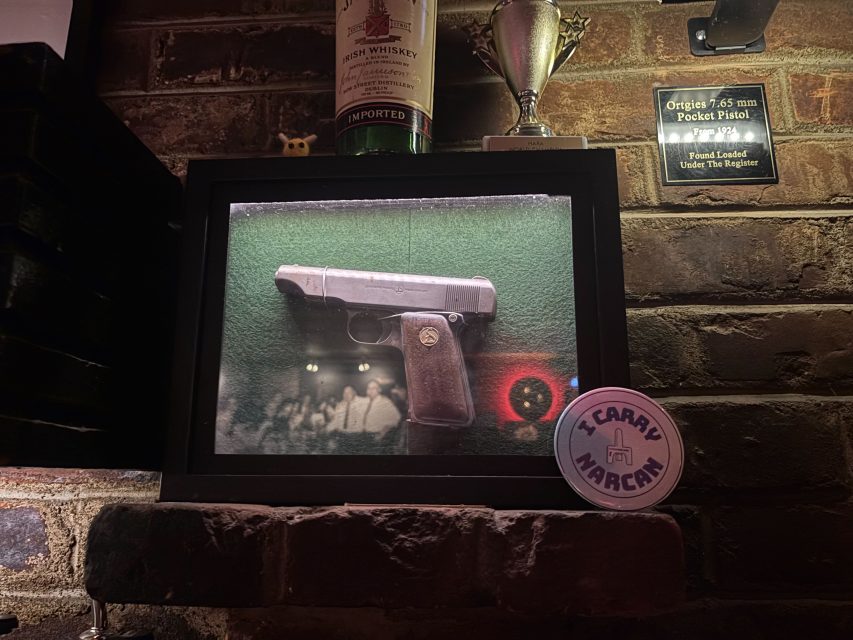
Inside, pieces of the Ha-Ra’s history are everywhere for the eye to see—from vintage boxing gloves to old operating permits. A piece of the original 1930s wallpaper is on display in the back, and pictures of the original owners Hank and Ralph fill the walls.
Behind the counter is even a framed gun, a 1922 7.65 mm Ortgies pocket pistol which the owners found in a cigar box next to the cash register, loaded. (According to Figari, the gun was a gift from a police officer in the early days of the bar).
They took out the firing pin and converted the gun to display-only. Otherwise, said Wentworth, the Ha-Ra will continue as-is. “You wouldn’t,” he said, “want to mess with it.”