

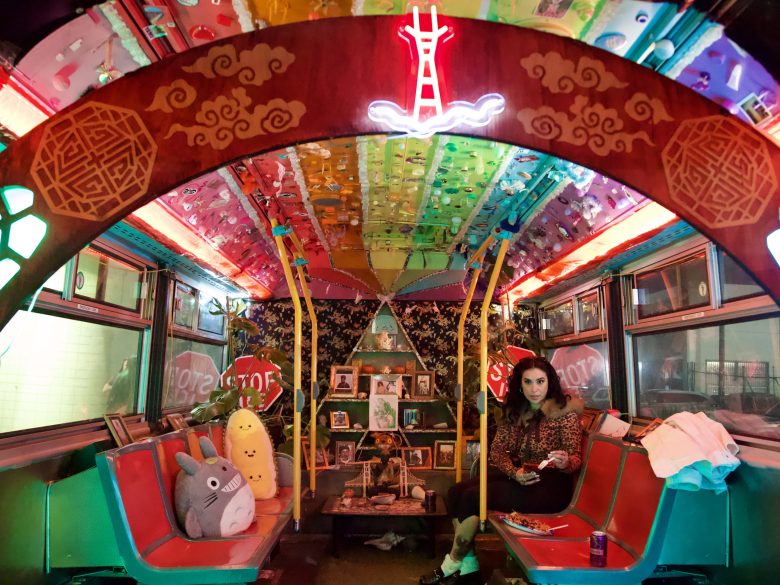
For the past three months, a ragtag group of San Francisco artists hammered into walls, nailed together scrapwood into a stage, and wired together a concert-grade sound system using borrowed and repurposed parts. They even drove in a decommissioned Muni bus painted ceiling-to-wheel in bright pastel hues — and decked out the interior in astroturf and neon lights.
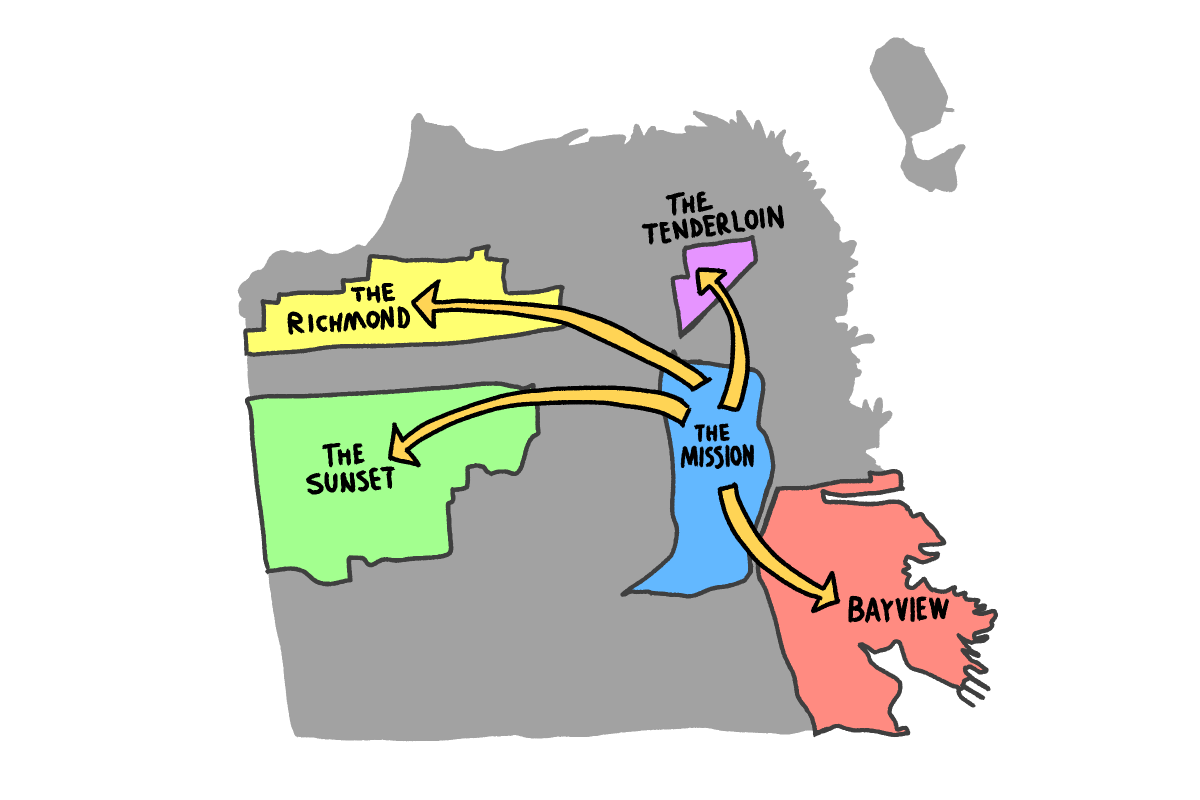
On Saturday, it was showtime for the “Sucka Free Collective,” a Bayview-Hunters Point-based group of muralists, musicians and print-makers who transformed an unassuming electrician’s warehouse at Quint Street and Custer Avenue into a new music venue for the rap performer “A-1”’s birthday.
They’re hoping it will become permanent.
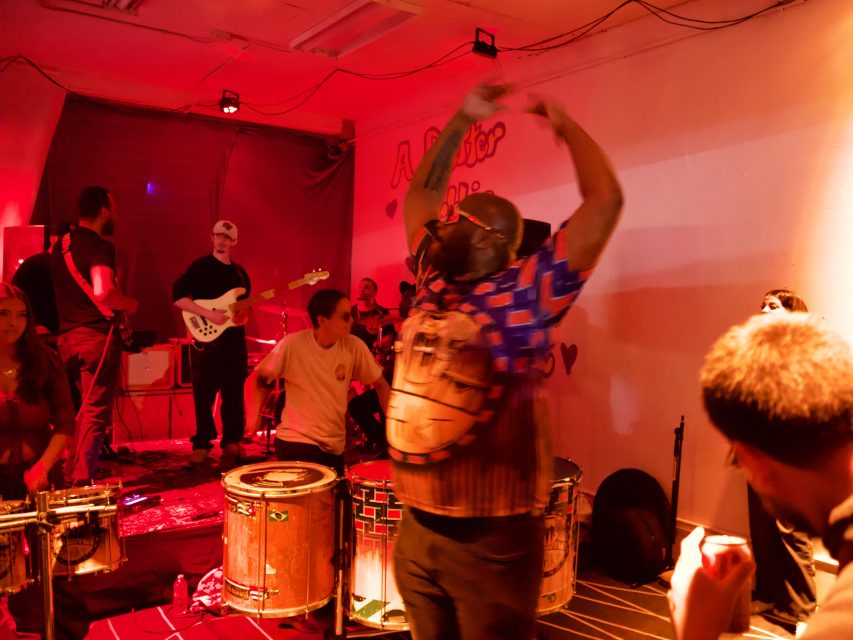
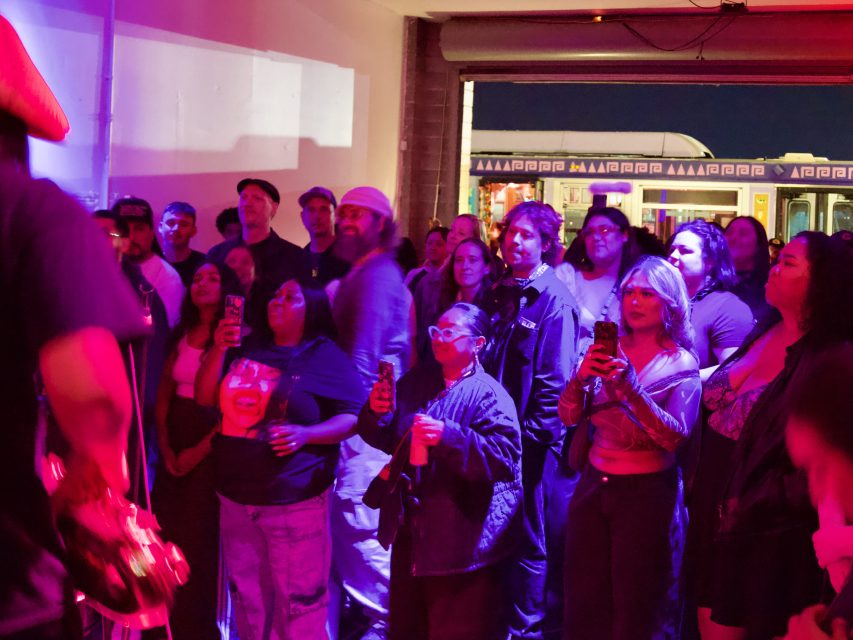
Nearly 150 party-goers packed into the warehouse on Saturday night, jumping and thrashing to A-1’s infectious, yet earnest verses and the rhythmic sounds of Bateria Batuki, a local Afro-Carribean drum group. Others who decided against pushing through the crowd idled on the sidelines by the Muni bus, eating rice and beans off paper plates, or relaxed in couples onto couches.
Tickets were sold on a “pay what you can” scale, and the artists needed to return the sound equipment borrowed for the event the next morning. But the warehouses’ collective hopes that the buzz generated from the event may be enough to support another similar event in the future.
“We’ll need a significant amount of fundraising and capital investment,” said artist Alejandra Rubio, sitting inside the Muni bus the Friday evening before the birthday party, as other members hammered and drilled into the stage. “We’re relying on each other a lot right now.”
Adam Vida, the man behind “A-1,” popped into the bus, taking a pause from the last-minute construction on the stage outside. “It’s overwhelming,” sighed Vida. “Right now, we’re dialing in the sound, but there’s still so much to do.”
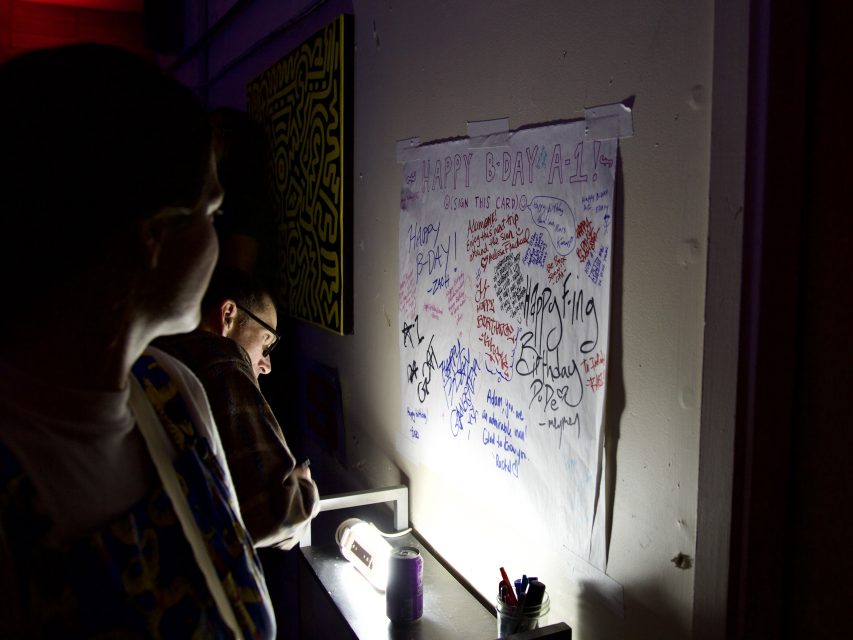
Most items in the warehouse were donated to the group or found at SCRAP, a massive warehouse of secondhand materials, including draping velvet curtains and wall-to-wall carpets, transforming the former electrician’s workspace.
This year, several decades-old and beloved San Francisco arts venues will shut their doors, including Thee Parkside and Bottom of the Hill, citing high rents and a competitive real estate market. But in Bayview, the neighborhood’s sprawling and isolated warehouses make an ideal location for low-rent artist studios — with the opportunity for massive parties.
Neighboring warehouses and arts spaces, including the Midway in Dogpatch and Public Glass, a glass-blowers’ studio which holds the popular event, “Hot Glass Cold Beer,” have garnered high-traffic and massive crowds in a region of the city that has struggled with foot traffic and economic recovery after the pandemic.
So when artist Meymey Lee’s father decided to hand over the lease to his electrician’s warehouse, it posed the perfect opportunity for a new, and affordable venue. “So many arts spaces are closing,” said Lee. “We understood how important it is to preserve these spaces.”
Lee, along with the rest of the collective, grew up in San Francisco, but has struggled to live and work in the city as an adult creative. “We wanted this to be a kind of ‘art gym,’” said Rubio. “A place for folks to practice their art — but also a place where people can just hang out.”
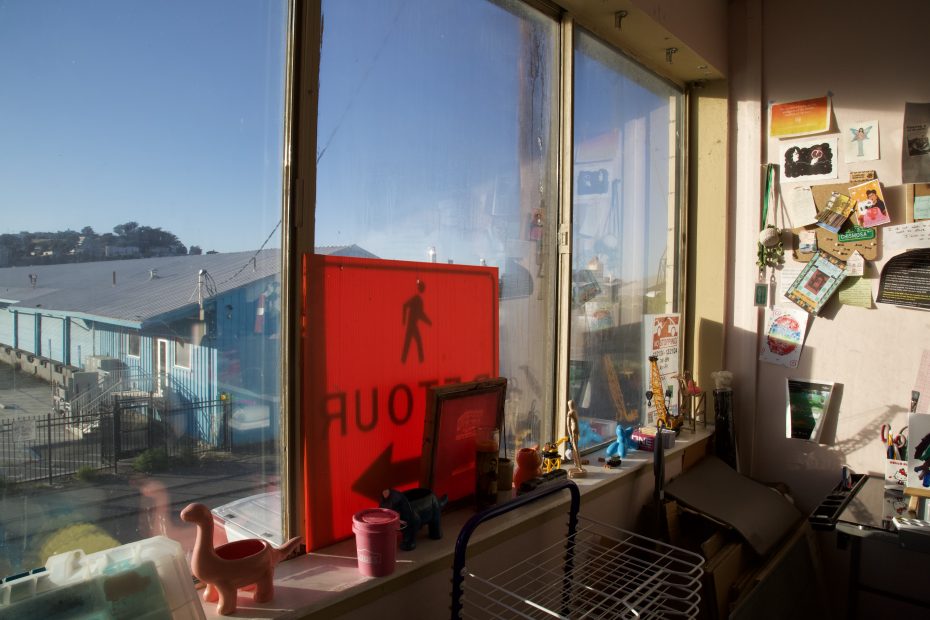
Upstairs from the party, some of the group of nine artists have begun to set up studios overlooking the city’s industrial center. It’s also functioned as a free storage space for young artists with large-scale projects — and nowhere to put them. Sheets of plywood, which would later be arranged into a wall-length map of Gaza on display Saturday night, stood in the corner of an upstairs studio. Downstairs, Lee parked their converted Muni bus.
The bus, a permanent fixture of the “Sucka Free Collective,” was donated by the San Francisco Municipal Transportation Authority for SoMA Arts’ 2023 exhibition, “Muni Raised Me” — and Saturday night, it was an awe-inspiring curiosity. Party-goers warily entered the bus through its still automatic fur-lined doors, and explored the inside of the neon-lit psychedelic interior. “Wow,” muttered one guest, gazing up at the doll furniture and foreign currency-covered ceiling, while another sat on the bus seat, eating off a paper plate.
It’s an ode to being a “city kid’ explained Lee, one of several artists who created the bus. “It’s a thread that pulls us all together — we were bound to find each other,” said Lee on Friday, looking around at the other members of the collective, sitting inside the bus.
If the group secures the funding to keep their doors open and afford their own permanent sound equipment, they hope it will become a safe haven for other artists and neighborhood residents to work — or dance all night to performances by local artists.
“I believe that we can support and sustain it,” said Lee. “If not us, who is going to?”